






You’ve booked the car in for what sounds like a quick clean, then the detailer points out pet hair in the seats, baked-on road film, water spots and swirls across the bonnet. Suddenly, “How long does car detailing take?” becomes a more useful question than “Can I pick it up soon?”
The honest answer depends on the condition of the vehicle and the service you’re booking. A maintenance clean can be completed in a short appointment, while paint correction, deep interior work and ceramic coating require careful preparation that can’t be hurried without compromising the finish.
Practical booking advice: Ask what processes are included, not just how quickly the car will be ready.
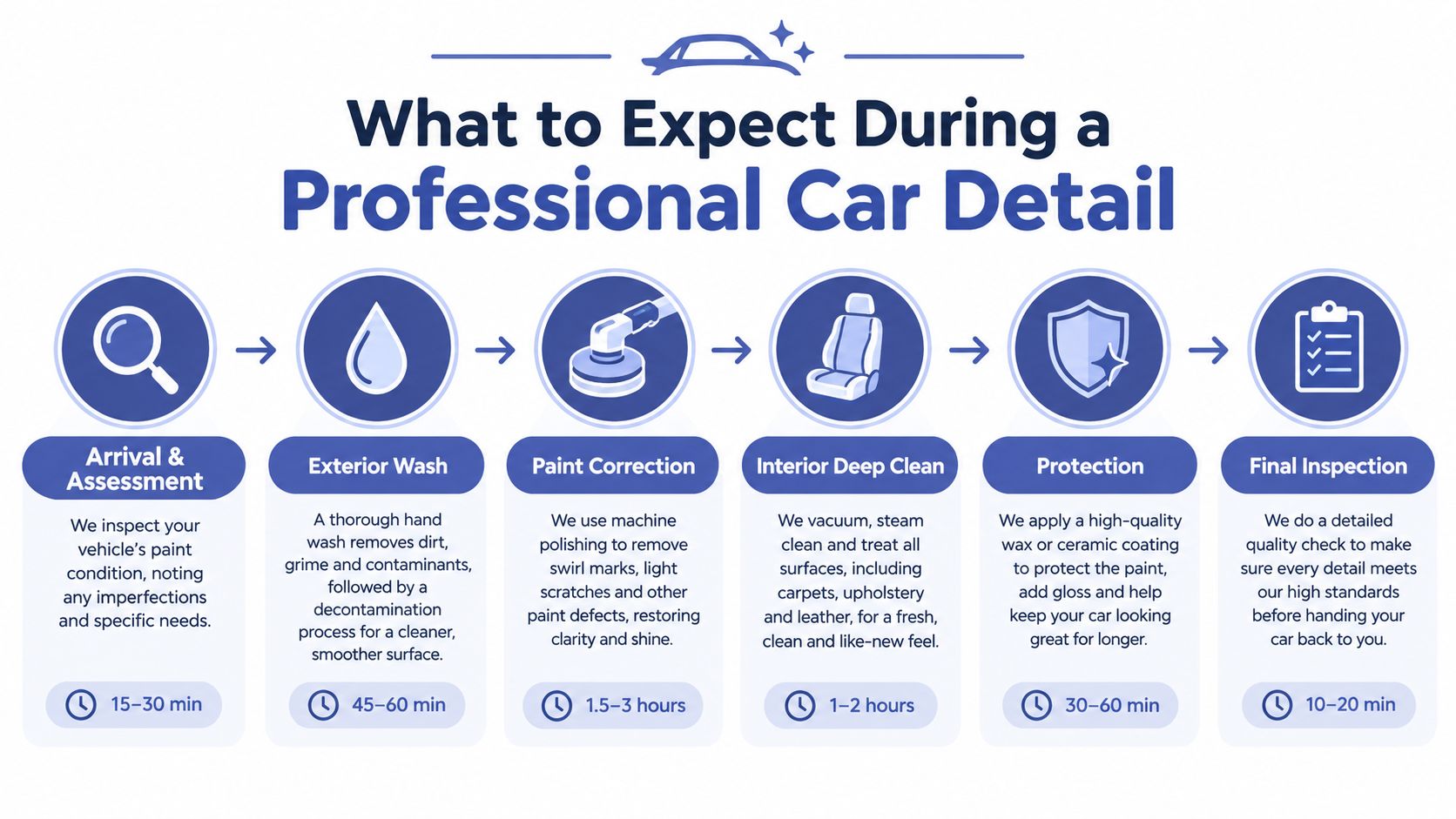
What to Expect During a Professional Car Detail?
A driver may arrive in Perth expecting something close to a quick wash. The vehicle might look clean at first glance, but a proper inspection can reveal bonded grime, dull paint, food residue, sand in the carpet and fine washing marks that only appear under strong lighting. Those problems need different treatments, and each treatment adds a stage to the job.
A professional detail normally begins with an assessment, followed by a careful exterior wash, wheel and tyre cleaning, decontamination, drying and inspection. The interior is then vacuumed and cleaned according to its materials and condition. Jobs that include polishing or paint protection need further preparation because the surface must be clean and defect-free before a product is applied.
Why the stages matter
A quick wash removes loose dirt. A detail addresses the areas that a quick wash leaves behind. Australian occupational guidance describes detailing work as including exterior washing, drying, polishing and waxing, interior vacuuming, carpet and upholstery cleaning, stain treatment, tyre and wheel-arch cleaning, tyre dressing, windows and compartments. That range of tasks explains why a genuine detail takes hours rather than minutes, as outlined by Jobs and Skills Australia’s car detailer profile.
The difference is similar to a routine health check compared with treatment for a specific problem. A maintenance wash keeps a cared-for vehicle presentable. A reset-level detail needs more inspection, more contact time and more controlled handling, especially if the paint has accumulated swirls or the cabin has been exposed to children, pets and daily commuting.
Good work takes the time it needs: Rushing the wash, drying or polishing stage can leave contamination behind or introduce fresh marks into otherwise healthy paint.
For a deeper explanation of the stages and terminology, see this guide to what car detailing involves for Perth drivers. The most useful estimate comes after the vehicle has been assessed, because size, condition and the chosen level of correction all change the workload.
Australian Detailing Timeframes Explained
Australian detailing services generally sit on a clear ladder, from a short maintenance visit to multi-day protection work. A mini or basic detail commonly takes around 90 minutes to 2 hours, while a full detail often sits at about 3 to 4 hours, according to Australian detailing time benchmarks.
That shorter service is suitable when the vehicle is already maintained and needs a refresh. A full detail goes further, combining interior and exterior work and allowing time for vacuuming, surface cleaning, drying, inspection and finishing. Another Australian service guide places a standard full detail at about 3 to 5 hours, with maintenance details often taking 1 to 2 hours, as described in this Australian detailing service guide.
The service ladder
| Service level | Typical Australian timing | What changes the estimate |
|---|---|---|
| Express or basic detail | 1 to 2 hours | Existing maintenance and light contamination |
| Interior detail | 1 to 2 hours | Sand, food residue, stains and pet hair |
| Full detail | 3 to 5 hours | Vehicle size, interior condition and exterior contamination |
| Cut and polish | 2 to 3 hours or more | Swirl severity and the correction required |
| Ceramic coating work | 1 to 3 or more days | Preparation, polishing and curing requirements |
These are service-tier benchmarks, not promises for every vehicle. A neglected family SUV with sand, child-seat buildup and embedded pet hair will take longer than a well-kept hatchback booked for maintenance. Perth’s coastal conditions can also increase the need for decontamination and protection work because salt air, strong UV exposure and water spotting place additional demands on the exterior surface, as explained in this Australian car-care guide.
Correction and coating require a different mindset. A cut and polish adds machine passes, inspection and refinement. Ceramic coating can stretch to 1 to 3 or more days because polishing and curing cannot be compressed safely, while some correction-plus-coating packages are quoted at 5 to 6 hours for lighter work and 2 to 3 days for heavier correction, based on Australian detailing package guidance.
The right question isn’t “What’s the fastest package?” It’s “Which package matches the vehicle’s current condition?”
For a Perth-focused breakdown of package choices, use this full car detailing guide before selecting a time slot. An honest booking should leave room for the condition of the vehicle rather than treating every car as though it needs the same process.
Common Causes of Swirl Marks on Your Paint
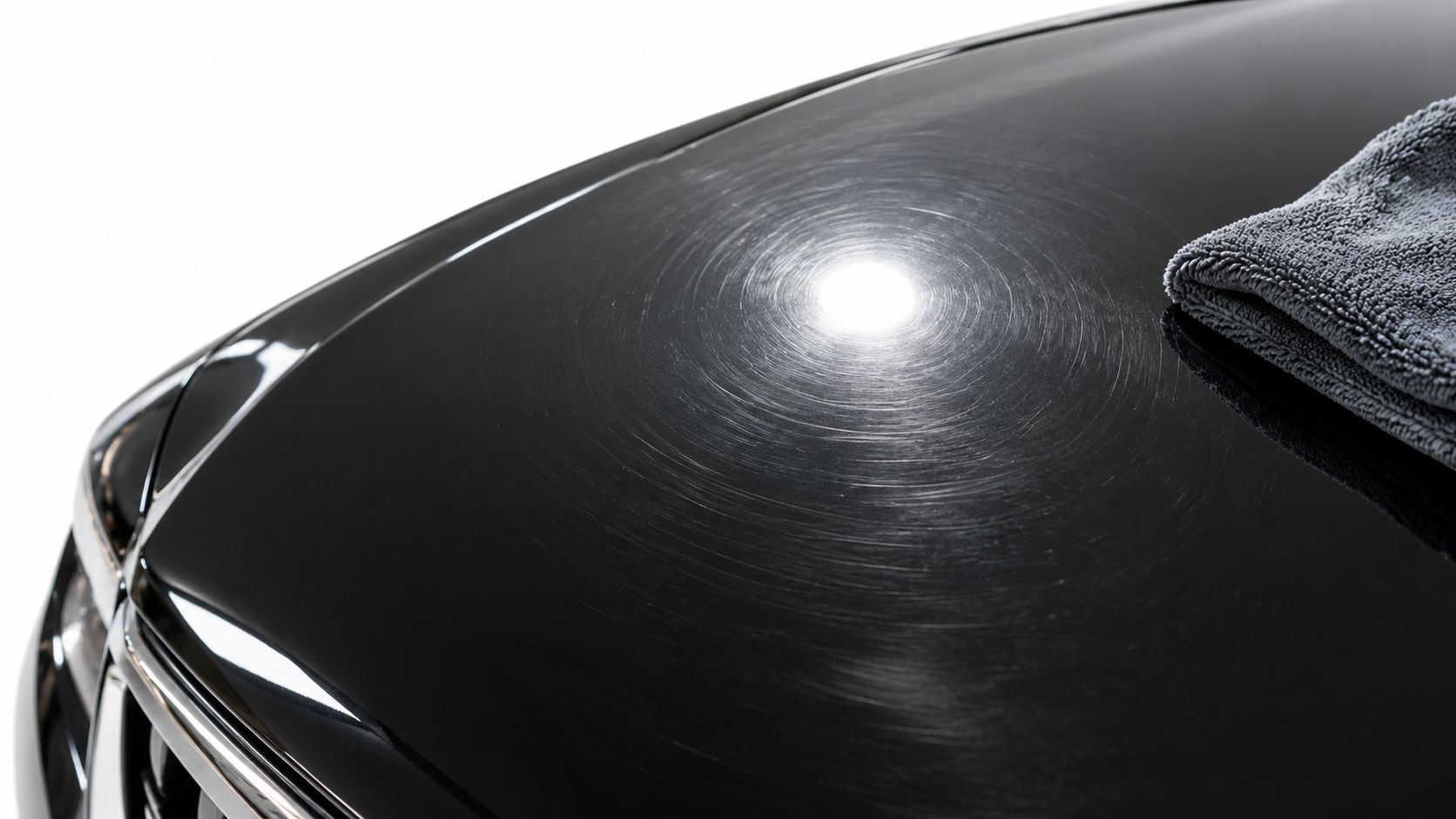
Swirl marks are fine scratches in the clear coat that scatter reflected light. They make dark paint look hazy, especially in direct sunlight or under a workshop light. Most aren’t caused by one dramatic mistake. They build up through repeated contact with dirt, grit and unsuitable washing materials.
The common pattern is simple. A dirty surface is wiped before loose contamination has been rinsed away, the same towel is used on several areas, or a brush drags particles across the paint. Automated brushes can also transfer contamination from one vehicle to another, while household sponges and abrasive cloths can hold grit against the clear coat.
Where the damage starts
A common home-washing mistake is treating the first pass as the cleaning stage. If the bonnet is covered in fine dust and road film, placing a mitt directly on it turns that contamination into an abrasive layer. The pressure may feel light to the person washing the car, but the repeated movement can leave many small marks.
Drying creates another risk. Dragging a towel over a panel that still carries grit can create the same problem as an aggressive wash. Water blades can also be misused if they push debris across the surface instead of removing clean water from a properly rinsed panel.
Watch for these habits:
- Washing in a dusty area: Wind can place fresh grit on a panel while you’re working.
- Using one cloth everywhere: Wheel and lower-body contamination should never be carried onto delicate paint.
- Scrubbing stubborn marks: Tar, bird contamination and stuck-on grime need suitable treatment and dwell time, not extra pressure.
- Allowing products to dry in the sun: Dried shampoo or mineral-rich water can leave spotting that later needs additional correction.
- Reusing dirty equipment: A mitt or towel that has collected grit can mark the next panel.
If the dirt won’t lift easily, stop applying pressure. Rinse, soften the contamination and change to clean equipment.
Professional hand washing reduces the chance of this damage because the operator controls the pressure, separates dirtier areas and checks the surface throughout the process. It doesn’t make paint impossible to mark, but it provides a more controlled alternative to dragging contaminated brushes or cloths across the finish.
Preventing Swirl Marks with Proper Hand-Wash Methods
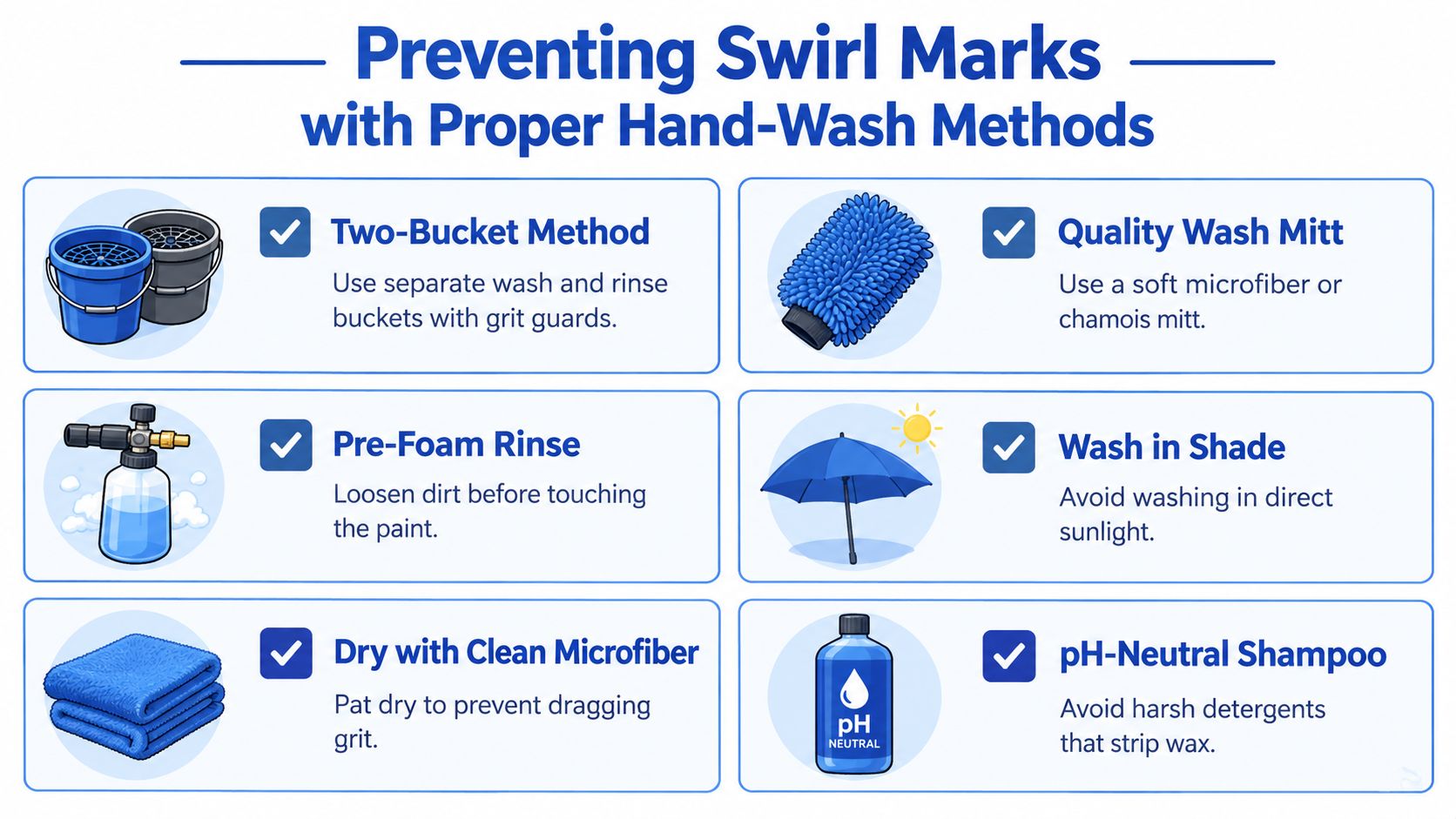
The safest wash is built around reducing contact. Remove as much loose dirt as possible before the mitt touches the paint, keep clean and dirty equipment separate, and use a drying method that doesn’t push grit over the panel. The process takes more care than a casual rinse, but it can prevent the need for correction later.
A safer wash sequence
-
Rinse before touching the paint. Use a thorough pre-rinse to remove loose sand, dust and road film. A foam stage can help loosen contamination before the contact wash.
-
Use two buckets. Keep shampoo solution in one bucket and rinse the mitt in the other. Grit guards add another barrier between the mitt and settled contamination.
-
Choose a soft wash mitt. A quality microfiber or chamois mitt is less likely to trap hard particles against the surface than a rough household sponge.
-
Work from clean to dirty areas. Start at the roof and upper panels, then move towards the lower doors, sills and bumpers. Rinse the mitt frequently, especially after lower panels.
-
Wash in the shade. Direct sunlight can dry shampoo and water before you’ve rinsed them away, making the process harder and increasing the chance of spotting.
-
Dry with clean microfiber. Pat or lightly lay the towel across the surface rather than dragging it with force. Use separate equipment for wheels and paint.
A pH-neutral shampoo is preferable for regular maintenance because harsh detergents can strip existing wax or protection. Clean equipment matters just as much as the liquid in the bucket. A fresh mitt used carelessly can still mark paint if it’s pressed into heavy contamination.
DIY care or professional correction
Home washing is useful for maintaining a sound finish. It won’t remove established swirls, though, and aggressive hand polishing can create uneven gloss or leave residue in defects. Machine correction requires controlled pad movement, suitable polish selection and repeated inspection, not just more pressure.
A professional Cut & Polish service is the more dependable route when the paint is visibly dull or marked. It takes longer than a wash because the operator must prepare the surface, work panel by panel and check whether defects have been reduced without removing unnecessary clear coat. More practical hand-wash guidance is available in this complete hand car detailing guide.
Maintenance protects the result. Correction restores it. Don’t use an aggressive product to solve a washing problem that better technique could have prevented.
Options for Removing Swirl Marks and Restoring Gloss
Once swirls are present, washing technique can stop additional damage but can’t reverse the marks already in the clear coat. The appropriate solution depends on how deep and widespread the defects are, how much gloss has been lost and whether the owner wants improvement or extensive restoration.
A consumer polish may improve the appearance of light haze, particularly when the product contains mild abrasives or fillers. The result can be limited, temporary or uneven if the surface isn’t properly washed and decontaminated first. It also won’t reliably address deeper marks, oxidation or scratches that catch a fingernail.
Matching the remedy to the paint
For light defects, a controlled single polishing pass may be enough to improve clarity. Moderate or widespread swirls need more inspection and potentially multiple stages. Heavy correction requires restraint because removing defects means removing a small amount of clear coat, and unnecessary polishing reduces the margin for future work.
A practical decision looks like this:
- The paint is clean but slightly dull: Start with a maintenance detail and assess the finish under suitable lighting.
- Swirls appear across several panels: Consider a Cut & Polish service rather than repeatedly applying a quick gloss product.
- Scratches remain after polishing: Ask whether the defect is too deep for safe correction. Some marks can only be reduced, not erased.
- Protection is the priority: Complete correction and preparation before applying wax or ceramic protection.
- The car is being sold: Focus on consistent gloss, clean trim, clear glass and an interior that presents well, rather than chasing every defect.
Time and quality are connected
A detailer needs time to wash, decontaminate, inspect and polish without guessing. A quick pass may brighten the paint while leaving swirls behind, or it may hide them temporarily without correcting the surface. Proper preparation also prevents polishing pads from picking up contamination and spreading it across clean sections.
For a closer look at the stages involved, see this guide to paint correction for cars. The strongest investment isn’t always the most intensive package. It’s the service that addresses the actual condition of the paint while preserving the clear coat for future maintenance.
A glossy finish isn’t automatically a corrected finish. Inspect the paint after washing and preparation before deciding how much polishing it needs.
Why You Should Book Prime Shine for Quality Detailing?
A careful hand wash is the foundation of swirl-mark prevention. The operator can control water flow, mitt pressure, towel use and the order in which each area is cleaned. That level of control is particularly useful for dark paint, soft finishes and vehicles that are regularly exposed to Perth dust, road film and coastal conditions.
Prime Shine Hand Car Wash provides hand washing and detailing rather than using automated brushes. Its menu includes exterior and interior wash options, mini and full detailing, Cut & Polish, ceramic coating and add-on work such as leather treatment, carpet steam cleaning, pet hair removal and headlight restoration. Those choices allow the service to match a routine refresh with a more involved paint or interior reset.
What makes the booking practical
Clear package descriptions help customers choose a realistic service level. Online booking with selectable date and time slots also makes it easier to plan around the fact that a full detail can take several hours, while correction and coating work may require substantially longer.
The important question is whether the provider explains what the package includes and accounts for the vehicle’s condition. A well-kept hatchback, a family SUV with sand and pet hair, and a car with widespread swirls shouldn’t receive the same time estimate.

For drivers who care about paint preservation, the value lies in consistent technique rather than speed alone. A hand wash can reduce the risk of adding fresh marks, while a correctly selected detailing or correction service can improve gloss without treating every imperfection as a reason for aggressive polishing.
Choose the service that suits the paint, interior and available time. A realistic appointment produces a better result than forcing a deep detail into a rushed window.
Prime Shine Hand Car Wash offers hand washing, interior and exterior detailing, Cut & Polish and paint protection for Perth drivers who want a service matched to their vehicle’s condition. Book a suitable time window and visit Prime Shine Hand Car Wash to arrange a careful clean that helps prevent new swirl marks and restore the gloss your paint can safely achieve.