







Your car can look freshly washed on Sunday, then by Tuesday it’s wearing a film of dust, a few salty marks, and the kind of dullness that makes the paint seem older than it is. That’s normal in Perth. Strong sun, coastal air, road grime, tree sap and fine dust all work on your paint every day, whether the car lives outside, commutes the freeway, or just does school runs around Westminster.
That’s why so many drivers start looking into car ceramic coating. They want something tougher than wax, easier to live with than constant polishing, and better suited to local conditions. The problem is that a lot of the advice online skips the hard truth. A ceramic coating can be excellent protection, but it isn’t a magic force field and it definitely isn’t set and forget.
What Is Car Ceramic Coating Anyway?
Ceramic coating is a paint protection layer that bonds to your vehicle’s clear coat. The easiest way to think about it is as a very thin layer of liquid glass that sits over the paint as a sacrificial barrier. It doesn’t replace your paint. It helps your paint cope with what Perth throws at it.
A lot of drivers confuse ceramic coating with wax or polish. They’re not the same job. Polish corrects defects and improves the finish. Wax adds temporary shine and some short-term protection. Ceramic coating is the longer-term shield that’s applied after the surface has been properly cleaned and prepared.
What it does for your car
When it’s applied properly, a coating helps the paint stay glossier, slicker, and easier to wash. Water tends to bead and move off the surface instead of hanging around in large sheets. Dirt also has a harder time sticking as stubbornly, which is why coated cars often clean up more easily than unprotected ones.
That benefit matters most when the car has already had the right prep. If the paint is swirled, contaminated, or oxidised underneath, the coating can lock those issues in. That’s why proper prep, often alongside full car detailing before protection is applied, matters so much more than the bottle label.
Simple analogy: Wax is like a light jacket. Ceramic coating is more like a fitted raincoat that stays on longer and handles rougher weather better.
What it doesn’t do
It’s important to set realistic expectations. Ceramic coating doesn’t stop stone chips. It won’t prevent deep scratches from keys, shopping trolleys, or rough contact. It also doesn’t mean your car will never need washing again.
It’s best viewed as a smart protective upgrade, not an invincibility package. If you want easier maintenance, stronger chemical resistance, better gloss retention and support against Perth’s sun and grime, ceramic coating makes sense. If you expect it to stop physical impact damage, you’ll be disappointed.
Ready to protect your paint? Book your ceramic coating with Prime Shine today.
How Ceramic Coatings Create a Protective Shield?
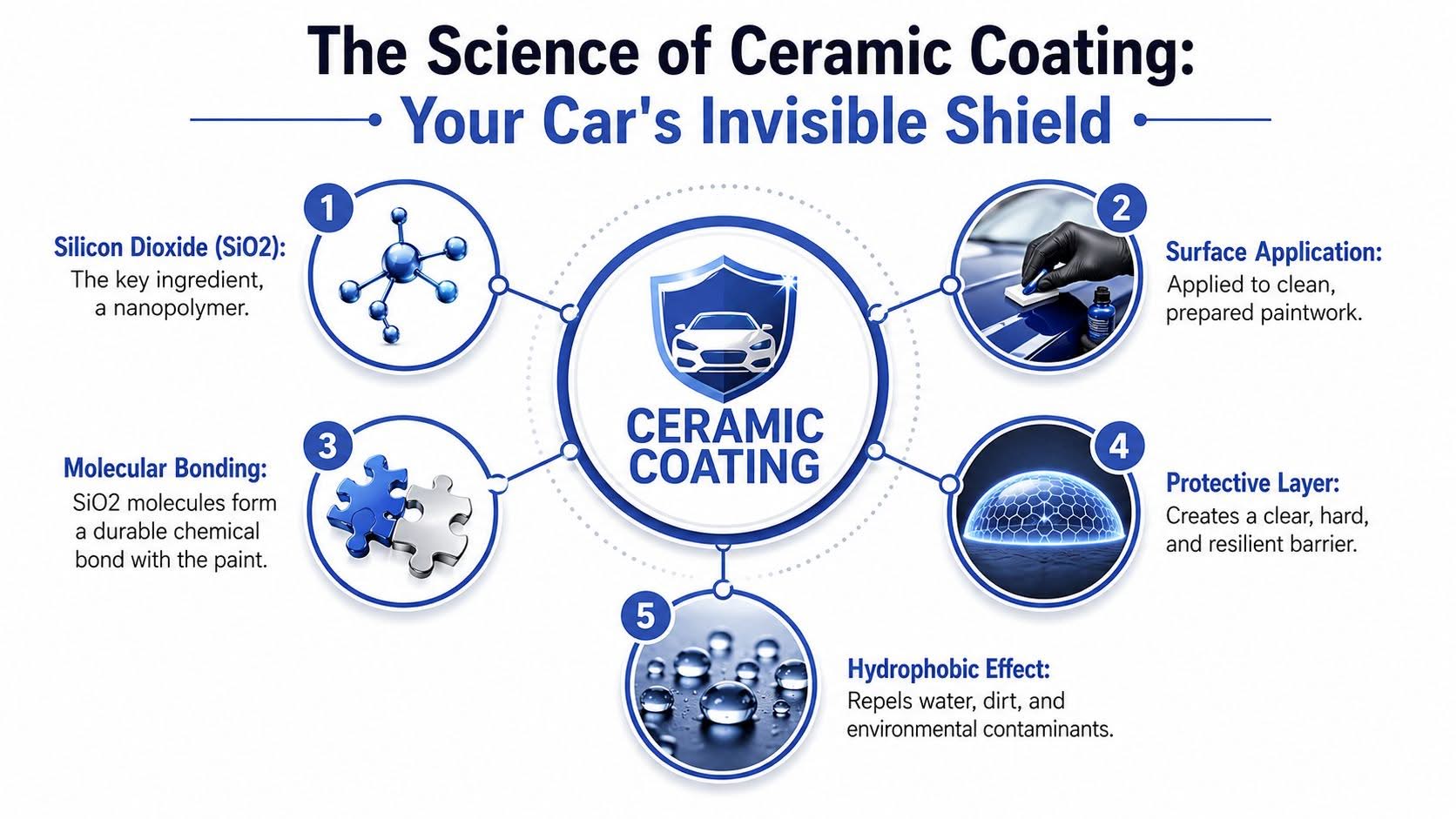
The science sounds complex, but the idea is simple. Professional-grade ceramic coatings use silicon dioxide (SiO2) to form a chemically bonded, glass-like layer over the paint, with hardness rated up to 9H on the pencil scale, and that bonded layer helps resist UV degradation, road salts, and chemical stains such as bird droppings or tree sap, as explained in this technical overview of SiO2 automotive coatings.
That chemical bond is the reason coatings behave differently from waxes. Wax sits on top and gradually wears away. A ceramic coating cross-links into a dense network over the clear coat. In practical terms, that means the surface stays slicker and more durable under normal driving and washing conditions.
What hydrophobic really means
“Hydrophobic” gets used in nearly every coating ad, but what matters is what you see on the car. Water forms tight beads and slides away more readily. As that water moves, it can carry light dust and loose grime with it.
That doesn’t mean the car self-cleans. It means contamination is less likely to cling as aggressively, so washing is usually quicker and safer. For Perth drivers, that’s helpful after sea breeze moisture, overnight dew, or road film that would otherwise sit and bake on the paint.
Why preparation changes the result
A coating can only bond properly to paint that is clean and corrected well enough for the product to sit evenly. If the surface has bonded contamination, old residues, or swirls, the final result won’t look as sharp and the coating won’t perform at its best. Good protection starts before the coating bottle is even opened.
That’s why paint correction matters. If you want to understand the prep stage better, this guide on car cut and polish for Perth drivers gives useful context on how swirls and light defects are removed before protection.
A coating works best on paint that has already been brought back to a clean, level, healthy surface.
Want protection that starts with proper paint prep? Book your ceramic coating with Prime Shine today.
Ceramic Coating vs Paint Protection Film PPF
These two options get lumped together, but they solve different problems. Ceramic coating is a thin chemical layer designed to improve gloss, resist contamination, and make washing easier. Paint protection film, usually called PPF, is a thicker physical film designed to absorb impact and help prevent damage from stones, road debris, and scratches.
One isn’t automatically better than the other. The right choice depends on how you use the car, where you drive it, and what kind of damage worries you most. If your main concern is keeping the car cleaner and glossier with less fuss, ceramic coating is often the better fit. If you spend a lot of time on country roads or behind heavy traffic and worry about chip damage on the front end, PPF addresses a different risk.
The key difference is chemical versus physical protection
Ceramic coating is excellent at resisting environmental contamination. It helps against bird droppings, tree sap, road film and UV-related dulling. But it is still thin. It won’t cushion a stone strike the way a film can.
PPF, on the other hand, is a physical barrier. It can take the hit that would otherwise mark the paint underneath. What it usually doesn’t do on its own is deliver the same easy-clean, water-beading behaviour people chase with ceramic products. That’s why some owners combine both, using film on high-impact zones and coating over exposed painted surfaces.
| Feature | Ceramic Coating | Paint Protection Film (PPF) |
|---|---|---|
| Protection type | Chemical barrier bonded to paint | Physical film over paint |
| Best at | Gloss, water beading, easier cleaning, stain resistance | Stone chip resistance, scratch resistance, impact protection |
| Thickness | Very thin | Noticeably thicker than a coating |
| Visual effect | Crisp gloss and slick finish | Clear protective skin |
| Self-healing | Not a normal expectation | Available on some film systems |
| Main weakness | Doesn’t stop stone chips or deep scratches | Doesn’t replace the easy-clean benefits of a coating on its own |
| Ideal for | Daily drivers wanting easier maintenance | High-impact areas and drivers worried about physical damage |
Which one suits your car
For a family SUV doing metro driving, ceramic coating is often enough if the priority is easier upkeep and protecting the paint from sun, grime and wash wear. For a performance car, a new vehicle, or something that sees plenty of freeway kilometres, front-end film can make more sense where physical impact is the threat.
If your paint already has visible marks, sort those first before choosing either route. This guide on light scratch removal for Perth drivers is useful if you’re trying to work out whether defects need correction before protection.
Choose based on the damage you want to prevent. Coating fights contamination. Film fights impact.
Need help choosing the right paint protection approach? Book your ceramic coating consultation with Prime Shine today.
The Real Cost and Lifespan in Perth
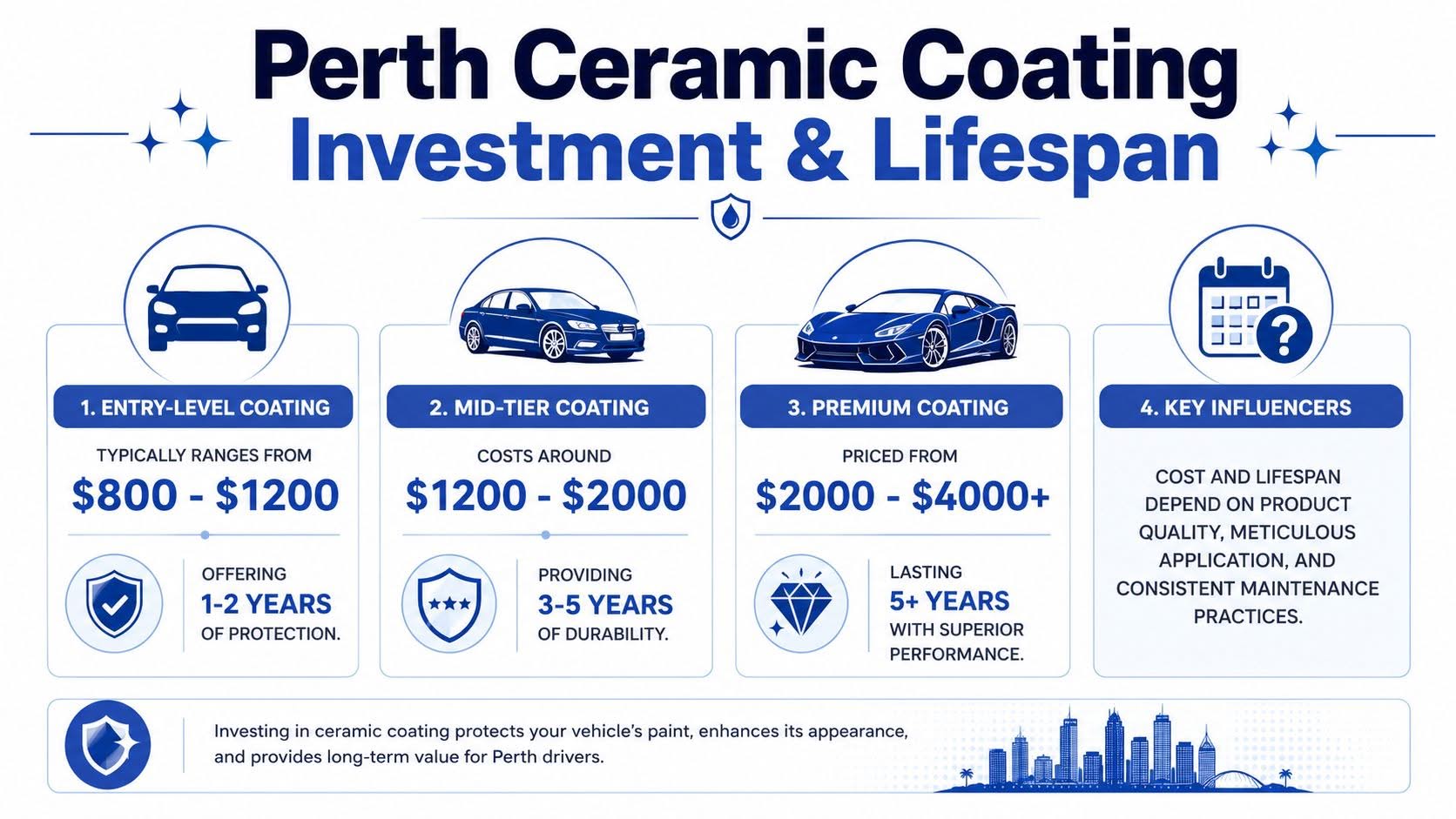
Price matters, but the sticker number only tells part of the story. In Australia, professional-grade car ceramic coating services typically cost between $900 and $2,000 AUD, with hatchbacks at $900 to $1,000, sedans at $900 to $1,200, and larger SUVs or 4WDs at $1,000 to $2,000, according to this Australian ceramic coating pricing guide.
Those figures make more sense when you understand what you’re paying for. You’re not just buying liquid protection. You’re paying for decontamination, paint preparation, correction work where needed, careful application, curing time, and the skill to do it without trapping defects under the coating.
Why cheap ceramic jobs often disappoint
If a coating is applied over neglected paint, the finish won’t magically improve. Swirl marks, water spots and haze can stay visible. Worse, poor prep can reduce bonding quality. That’s why a proper cut and polish is often part of the process on used vehicles, especially darker colours that show every defect under Perth sunlight.
A lower upfront price can mean corners were cut on prep, product quality, or application time. On a car that matters to you, that usually costs more in the long run because the finish won’t look right and the coating may not last the way you expected.
A quick walk-through helps make the cost easier to understand:
What lifespan looks like in real use
In Perth, longevity depends heavily on maintenance and exposure. Sun, dust, and coastal contamination all work against the coating. A well-prepared, professionally applied system can stay effective for years, but only if the owner treats it properly afterwards.
That’s the trade-off many people miss. Ceramic coating can be a strong long-term investment, but only when the prep is thorough and the aftercare is consistent.
Want a coating that’s worth the investment? Book your ceramic coating with Prime Shine today.
Your Essential Maintenance Plan for Lasting Results
The biggest myth in ceramic coating is that once it’s on, you can forget about it. That’s not true in Australian conditions. The common “no more car washes” claim is a misconception, and to extend a coating’s lifespan in climates like Perth’s, owners need to wash the car at least once every two weeks, as noted in this Australian guide on ceramic versus graphene maintenance.
That advice matters here because Perth contamination doesn’t just sit politely on the surface. Dust, salt residue, bird droppings and traffic film can bake into the finish under heat. If you leave them there, the hydrophobic behaviour drops off, water spots become more likely, and the coating loses performance earlier than it should.
A realistic Perth maintenance routine
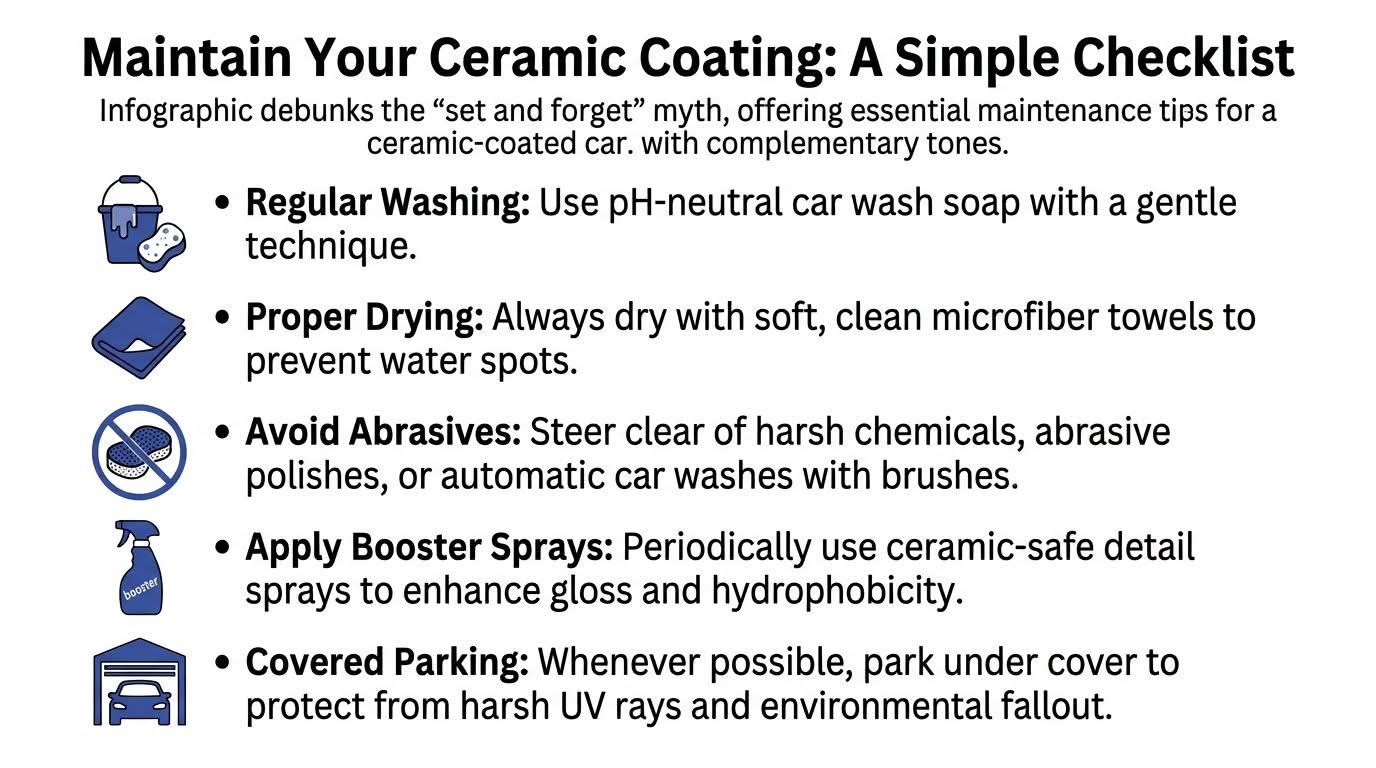
For most daily-driven cars, this routine works well:
- Every one to two weeks wash the car with a pH-neutral shampoo using a gentle hand-wash method.
- Straight after washing dry with clean microfiber towels so mineral deposits don’t sit and mark the surface.
- As soon as possible after contamination remove bird droppings, bug splatter, sap and similar mess before the sun cooks them in.
- Every few months use a ceramic-safe booster or sacrificial top-up product if your installer recommends it.
- Whenever you can park under cover to reduce UV load and airborne fallout.
What to avoid
Brush washes are the obvious one. They can mark the coating and the paint underneath. Harsh degreasers, abrasive polishes, and random household cleaners are another common mistake. They strip behaviour from the surface and can shorten the useful life of the protection.
For coated cars, the washing method matters almost as much as the product itself. If you want a good reference point for safe upkeep, this guide to hand car detailing for ceramic-coated vehicles explains the kind of wash process that protects the finish instead of slowly wearing it down.
Maintenance myth check: Ceramic coating reduces effort. It does not remove the need for regular care.
Why owners lose value from good coatings
It usually happens in a predictable pattern. The car looks great for the first stretch, so washing gets delayed. Then contamination builds up, the beading weakens, and the owner assumes the coating “failed”. In many cases, the coating didn’t fail first. The maintenance did.
If you want the coating to earn its keep, treat it like any other protective system. Inspect it, wash it properly, and don’t let Perth’s climate sit on the surface for weeks at a time.
Ready for protection you can actually maintain properly? Book your ceramic coating with Prime Shine today.
How to Choose a Trusted Ceramic Coating Specialist in Perth?
The quality of a ceramic coating depends on two things. The coating itself and the person applying it. Many professional coatings last 1 to 5 years, while some flagship systems can carry a 9-year manufacturer warranty when applied by certified detailers and maintained properly, as outlined in this Australian article on ceramic coating durability and warranty.
That doesn’t mean you should shop by warranty headline alone. A coating can only perform properly when the workshop handles paint preparation, application conditions, and aftercare guidance properly. If the installer is careless, even a good product won’t save the result.

What to look for before you book
Use this checklist when comparing providers:
- Clear prep process. Ask what happens before the coating goes on. If they don’t mention decontamination and paint correction where needed, that’s a warning sign.
- Transparent pricing. You should be able to see what’s included, what changes with vehicle size, and whether correction is separate.
- Proper wash methods. Hand wash practices and controlled application conditions are far safer than rushed volume work.
- Aftercare instructions. A good specialist doesn’t sell the job and disappear. They explain washing, products to avoid, and how to keep the coating healthy.
- Consistent reputation. Look for detailed local feedback that mentions workmanship, finish quality, and how the car held up after delivery.
Questions worth asking
Ask whether the quoted service includes paint inspection, whether swirl removal is part of the package, and what maintenance they expect from you after pickup. The answers usually tell you very quickly whether the installer understands long-term results or just wants to get the car in and out.
A trustworthy detailer also won’t oversell what ceramic coating can do. If someone claims it makes scratches impossible or eliminates maintenance, keep looking.
Looking for careful hand-applied protection in Perth? Book your ceramic coating with Prime Shine today.
Perth Driver FAQs About Ceramic Coating
Is ceramic coating worth it in Perth’s sun?
Yes, for many drivers it is. Perth sun is hard on paint over time, and a coating adds a sacrificial layer that helps the finish resist UV-related wear and stay easier to clean.
Does it protect against coastal salt?
It helps against salt exposure and general contamination, but it doesn’t mean you can ignore washing. If you drive near the coast often, regular cleaning becomes even more important.
Will it stop bird droppings and tree sap from damaging paint?
It helps resist chemical staining and gives you more margin for cleanup, but you still need to remove those contaminants quickly. Leaving them on the surface in hot weather is asking for trouble.
How long will it last on a Perth daily driver?
For the Perth region, a professionally applied ceramic coating typically lasts 2 to 5 years, and that lifespan depends on rigorous maintenance including weekly washing with pH-neutral shampoo and avoiding abrasive brushes, according to this guidance on ceramic coating lifespan and upkeep in Australian conditions.
Is one wash a month enough?
Usually not for local conditions. Dust, road film and heat build up too quickly. Most coated cars in Perth need a more regular routine if the owner wants the coating to keep performing properly.
Will ceramic coating hide swirl marks?
No. It can enhance gloss, which sometimes makes existing defects more noticeable. If the paint needs correction, handle that before the coating goes on.
If you want careful, practical paint protection from a local team that understands Perth conditions, Prime Shine Hand Car Wash offers hand washing, paint prep, detailing and ceramic coating from its Westminster location. Ready to protect your paint? Book your service online today.