




You can wash a car every weekend and still stand back at the end wondering why the paint looks tired. In Perth, that usually shows up as a finish that feels smooth in places, rough in others, and flat in sunlight even after a fresh wash. The issue usually isn’t the wash itself, it’s what’s still bonded to the clear coat underneath it.
A proper Car Paint Cleaning Treatment goes after the stuff normal washing leaves behind. That’s the difference between a car that’s merely free of loose dirt and one that’s ready for polish, wax, or coating. For owners dealing with road film, brake dust, tree sap, and the kind of contamination that builds up quickly in city driving, that gap matters more than most consumer guides admit.
Why Does My Car Paint Still Look Dull After Washing?
A Perth driver brings in a black sedan that has been washed regularly. The panels are free of dust, the wheels look cleaner, and the car seems fine until it rolls into direct sun. Then the finish shows what is still sitting on it. It looks hazy, the gloss is muted, and the paint feels slightly gritty when touched.
That’s the part many drivers miss. A wash removes loose grime, but bonded contamination stays attached to the clear coat. Industry and detailing guidance describe that layer in practical terms as tar, tree sap, mineral deposits, brake dust, and industrial fallout that cling to the surface instead of rinsing away. Those contaminants change how the paint reflects light, which is why a car can look washed but not clean.
Practical rule: if the paint still feels rough after washing and drying, you are past the wash stage and into contamination.
The internal link below is useful if you want to see how clay work sits inside the broader paint prep process, but the bigger point is simple, soap and water are only the first pass. What clay bar detailing does
What the eye sees isn’t always the problem
Dull paint often comes from two separate issues, contamination and surface defects. Contamination blocks gloss because it sits on top of the clear coat. Defects like light swirls and oxidation sit in the clear coat itself and need correction, not just cleaning.
A car can come out of a basic wash looking clean in the shade, then look flat, tired, or uneven as soon as the sun hits it. Perth drivers notice this especially on darker colours, where any remaining contamination or wipe marks show faster. A proper treatment does not stop at appearance. It removes the obstacle between the eye and the paint.
What Are the Four Stages of a Professional Paint Cleaning Treatment?
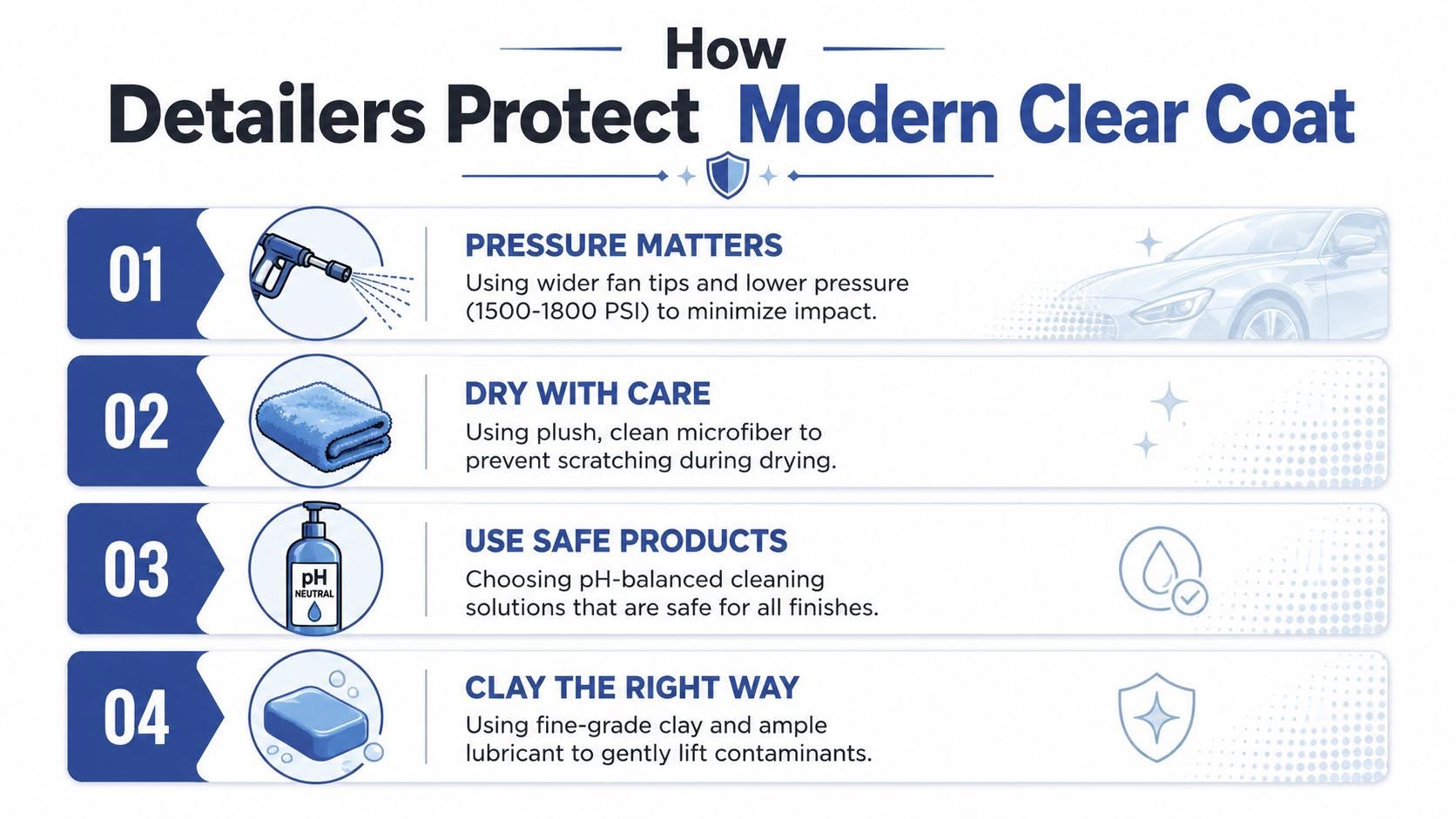
A proper treatment has four stages, wash, decontaminate, correct, and protect. Skip one of them and the next stage works harder for a worse result. That’s why the best outcomes come from process, not from one strong product or one aggressive pass.
Wash first, but wash correctly
The first stage is a lubricated wash that lifts loose dirt without dragging grit across the finish. The best practice is a top-to-bottom approach, with separate tools for wheels and paint, and a two-bucket system so dirt doesn’t keep getting reintroduced to the mitt. Microfiber drying matters here too, because leftover rinse water or soap residue can leave spots and dull the gloss.
Decontaminate before you chase gloss
After washing, the surface still needs decontamination. That’s where clay bar or clay towel work comes in, because it physically removes bonded contamination the wash leaves behind. This is the stage most consumer guides skip, which is exactly why many cars still feel rough after a “deep clean.” The paint can look presentable while still holding contamination that interferes with polishing or protection.
Correct only after the surface is clean
Correction is where swirls, oxidation, and light defects are reduced. A machine or hand polish only makes sense after the paint has been properly cleaned, because polishing dirty or contaminated paint can drag debris around the panel. For readers who want to compare how correction sits beside paint prep, this cut and polish overview shows why the prep stage matters before any refinement work begins.
Protect the finish once it’s ready
Protection is the last stage because it only works properly on prepared paint. Wax, sealant, or coating can then bond to a cleaner surface and do what it’s meant to do, preserve gloss and slow down the next round of contamination. A car that gets cleaned but never protected usually needs heavier intervention sooner.
The biggest mistake is treating these stages as optional extras. They’re linked, and each one sets up the next.
Workshop takeaway: if a service promises shine but never mentions decontamination, correction, or protection, it’s probably selling a wash with a polish-sounding label.
How Do Detailers Avoid Damaging Modern Clear Coat Systems?
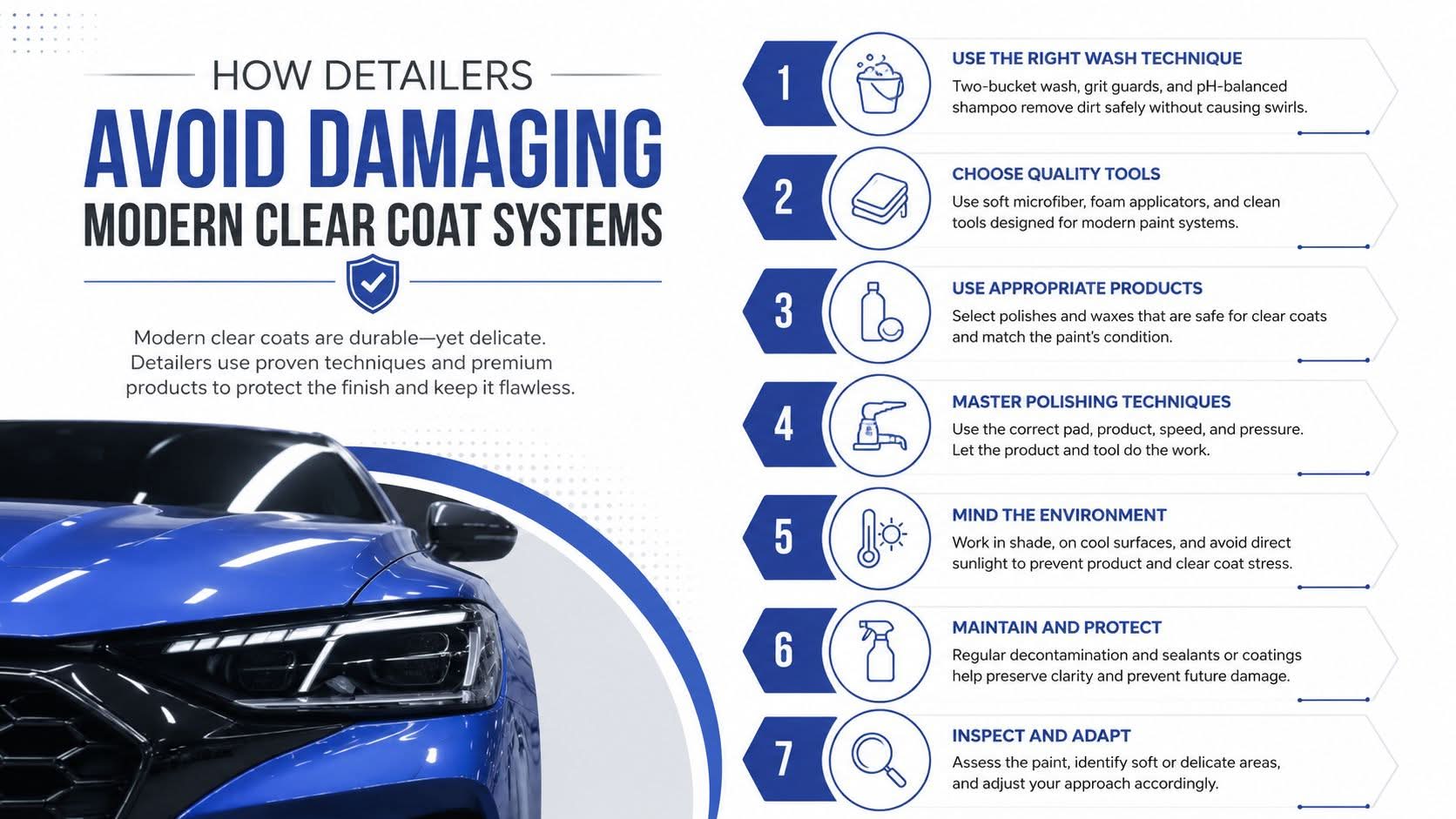
The wrong approach to paint cleaning can make a car look worse, not better. A stronger blast, a harsher chemical, or a more aggressive scrub doesn’t automatically equal a better result. On modern clear coat, the safer method is usually the more controlled one.
Pressure and contact need restraint
Technical guidance on pressure washer tips is blunt, 15-degree yellow and 0-degree red tips are too aggressive for automotive paint, while a 40-degree white tip is the safer default for rinsing paint. The 25-degree green tip belongs more on wheels or undercarriage use than on panels. That matters because too much force can strip wax or sealant, and in the wrong hands it can contribute to clear coat damage.
Chemical handling needs the same discipline. Cleaners should not be left to dry on the panel, because evaporation leaves residue behind and residue leaves marks. PPG’s initial cleaning procedure reinforces this by requiring cleaner to be worked on a small section, about 24″×24″, and wiped off while still wet to avoid imperfections. In Perth heat, that timing matters even more, especially on dark cars where panels warm up fast.
Abrasiveness is part of the decision, not a side note
The IKW paint-care guidance classifies paint cleaners by abrasiveness and separates them into categories like mild cleaners, polish cleaners, and machine polishes. That classification matters because the wrong level of abrasiveness can remove too much finish instead of just cleaning the surface. In practical terms, the product choice has to match the job, not the other way around.
For an Australian owner, that means the safe process is usually panel-by-panel, shaded where possible, with immediate wipe-off and no rushing. The goal isn’t to attack the paint until it looks clean. The goal is to clear away contamination while leaving the clear coat intact.
Heat and timing change the result
Perth conditions make drying control more important than many guides admit. Sun, hot panels, and dark colours shorten working time, which increases the risk of wipe marks and spotting. That’s why a good operator breaks the job into small sections and keeps residue removal immediate.
Never let a cleaner sit until it flashes dry if the surface can be wiped while wet. That’s how you avoid turning a cleaning step into a finishing problem.
Talk to a Perth Car Care Expert
Is Paint Cleaning Treatment the Same as Ceramic Coating?
Paint cleaning treatment and ceramic coating are related, but they’re not the same service. One prepares the surface, the other protects it. If you confuse the two, you can end up paying for protection over contamination or defects that should’ve been dealt with first.
| Feature | Paint Cleaning Treatment | Ceramic Coating |
|---|---|---|
| Main purpose | Remove contamination and prepare paint | Add long-term protection over prepared paint |
| Surface condition needed | Works on dirty, rough, or dull paint as a prep step | Needs properly cleaned and corrected paint first |
| What it targets | Bonded fallout, film, and surface defects | Water behaviour, durability, and easier maintenance |
| Best use case | Before correction, waxing, or coating | After the surface has been fully prepped |
| Result if skipped | Paint can stay rough or hazy | Defects can get locked in under the coating |
For owners comparing the two, the useful question isn’t which one is “better.” It’s what the paint needs right now. A vehicle that feels rough and looks tired needs preparation first. A vehicle that’s already clean and corrected may be ready for a protective layer. This ceramic coating guide is relevant because coating only makes sense when the prep work has already been done properly.
The Australia market context also helps explain why these services are often paired. Detailers in the Asia-Pacific region work inside the world’s largest detailing demand cluster, and exterior-focused services dominate the category globally, which is why paint preparation and protection are sold together so often. The broader market is heavily weighted toward exterior care, not just quick interior cleaning, and that lines up with what owners pay for when resale and appearance matter.
Compare Paint Prep and Coating
What Are the Most Common Myths About Car Paint Cleaning?
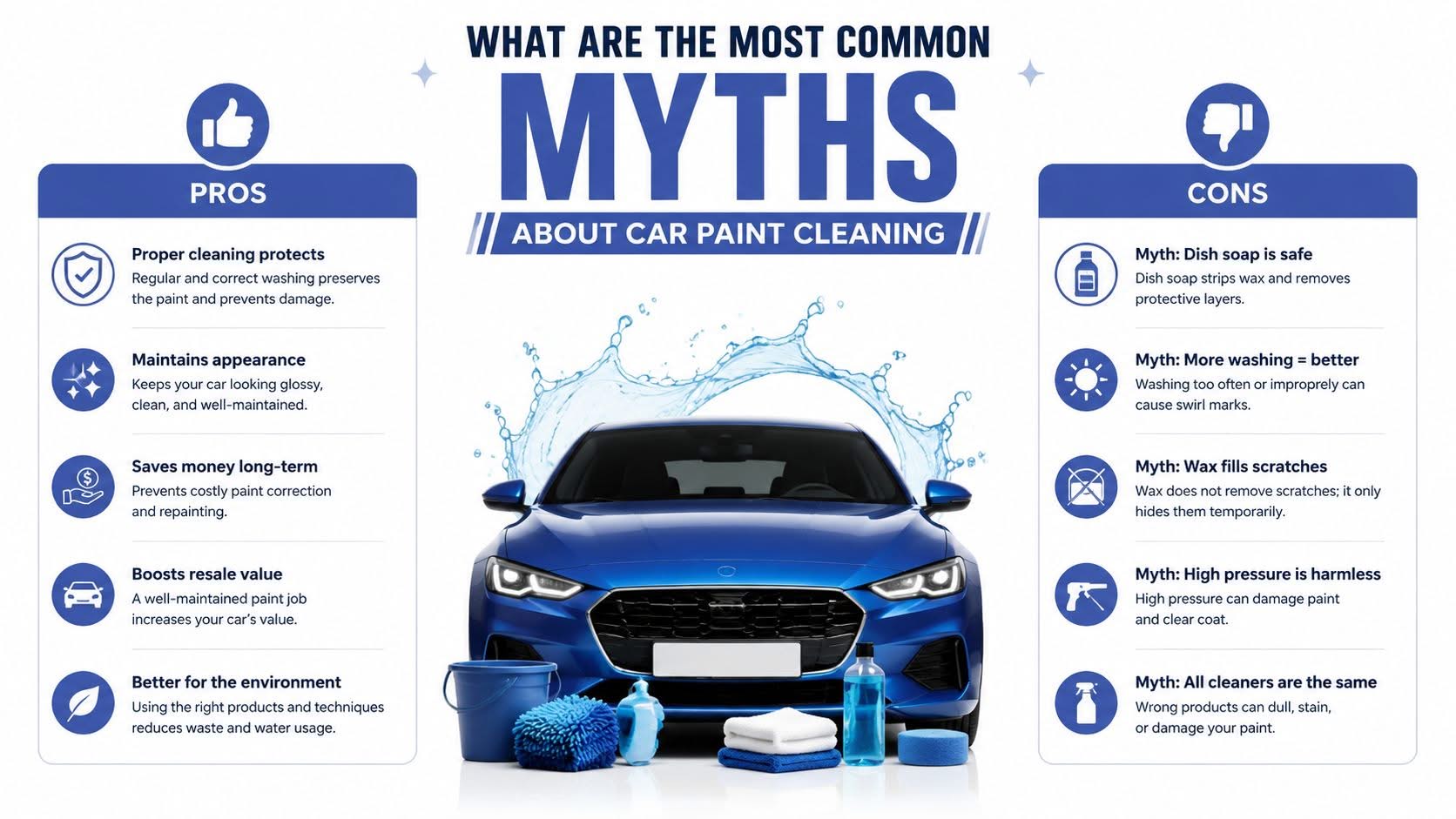
A lot of paint damage starts with advice that sounds practical and turns out to be lazy. The problem isn’t just bad products, it’s bad assumptions about what paint can handle.
Household products aren’t harmless
Dish soap and similar household cleaners are often treated like a shortcut, but automotive guidance says car care products should be automotive-specific because household cleaners can damage the finish. That’s especially relevant when you’re trying to preserve wax, sealant, or any later protection step. A product built for kitchen grease isn’t automatically kind to clear coat.
Swirl marks aren’t a reason to give up
Swirls are common, but they’re not all identical and they’re not all permanent. Some need correction, some need only light refinement, and some are made more obvious by poor washing and drying habits. The bigger mistake is assuming every mark on the paint means the finish is beyond help.
Aggressive pressure isn’t a sign of better cleaning
High-intensity pressure or rough hand technique doesn’t make the job more effective if it starts stripping protection or creating marks. Safer methods use wider fan tips, controlled contact, and enough lubrication to let dirt move off the paint without grinding into it. That’s why the “stronger is better” mindset often backfires.
One wash-and-wax product doesn’t replace a true decontamination
A wash-and-wax product can improve appearance, but it doesn’t replace bonded contaminant removal. If the paint is still rough after washing, the surface still needs decontamination before protection can do its job. That’s also why professional wash frequency matters, with a widely cited vehicle-care handbook recommending washing every one to three weeks and waxing two to four times a year, depending on climate and usage. The handbook’s maintenance guidance also stresses soft materials and automotive-specific products.
The point is simple. If the advice says the car looks clean, therefore it’s protected, that advice is unfinished.
How Do You Choose a Trustworthy Paint Cleaning Service in Perth?
Perth drivers should ask direct questions before booking. What’s included, is there decontamination, does the work stop at washing, and is the pricing itemised before the car arrives? A transparent operator should answer those questions without hedging.
What a serious service should be able to explain
Ask whether the service includes only a wash, or whether it also covers decontamination, correction, and protection. Ask what products are used on paint, wheels, and trim, and whether the process changes for dark colours or heavily contaminated cars. If the answers stay vague, the service is probably built around speed rather than paint preservation.
A trustworthy site should also make it easy to see the menu before you book, and that’s where some operators do better than others. Prime Shine Hand Car Wash in Westminster publishes itemised packages, offers online booking with selectable time slots, and works with hand wash and detailing methods only, with no automated brushes. It also lists a track record of 5+ years in service, 2,500+ vehicles detailed, and 200+ Google reviews, which gives customers a clearer picture of how the business operates.
Why process visibility matters
That level of visibility matters because paint cleaning isn’t just appearance work. The NSW Parliament’s hand-car-wash inquiry highlights why compliance and lawful operating practices matter in this sector, and that’s relevant to any Perth driver who wants traceable, professional service instead of an informal wash setup. A well-run shop doesn’t hide the process or the pricing.
For people comparing deeper paint services, the full detailing menu is a useful reference point because it shows how a proper reset differs from a quick exterior rinse. The right question isn’t just who can wash the car fastest. It’s who can clean it without creating another problem.
Buying signal: clear scope, clear price, clear method. If you can’t get all three, keep looking.
What Should You Do Next to Protect Your Car Paint?
If your car feels rough after washing or keeps looking dull in sun, stop treating it like a surface dirt problem. A proper Car Paint Cleaning Treatment follows the full sequence, wash, decontaminate, correct, and protect. That’s what gets the paint ready for wax, polish, or coating.
The simplest checklist is this. Confirm the service includes decontamination, ask how the paint is corrected if needed, check whether products are automotive-specific, and make sure the shop explains what protection comes after cleaning. Regular washing with soft tools and proper products helps, but a periodic professional treatment is what resets the surface when contamination has already built up.
Prime Shine Hand Car Wash offers hand wash, detailing, cut and polish, and ceramic coating services from its Westminster site, so it fits the kind of paint prep and protection work described here. If your paint feels rough, looks flat, or needs a proper reset before protection, visit Prime Shine Hand Car Wash to compare the paint cleaning treatment and detailing options, then book the service that matches your car’s condition.