



You’ve picked up the drink bottle from the back seat, but there’s still a dark patch underneath it. The dog’s hair is woven into the cushion, and the last attempt at cleaning left a pale ring that looks worse in daylight. Reaching for more cleaner is tempting, but that’s often how a manageable stain becomes a wet, smelly seat.
Cleaning fabric car seats is mainly about controlling moisture and removing residue, not scrubbing harder. You can handle ordinary dirt and fresh spills at home with basic tools. The important decisions are which treatment suits the mark, how you’ll dry the padding, and when the job needs more than DIY.
Which Cleaning Method Suits Your Fabric Seats?
A thorough vacuum and mild detergent spot clean suit everyday dust and fresh marks. Extraction is more useful for embedded grime and stale odours, while steam needs careful temperature control. Steam and extraction aren’t interchangeable: steam applies heat, whereas extraction removes liquid and suspended soil.
Seat cleaning methods compared
| Method | Best for | Typical time | Relative cost | Main risk |
|---|---|---|---|---|
| Vacuum and mild detergent spot clean | Dust, fresh spills, light marks | Until loose soil and surface residue are removed, then drying | Low | Water rings if over-wetted |
| DIY extraction with a portable spot cleaner | Set-in marks, light odours | Controlled cleaning passes followed by complete drying | Medium | Residue left in foam |
| Steam clean | Grime, odour, heat treatment where permitted | Panel-by-panel treatment followed by drying | Medium | Heat can set protein stains |
| Professional steam or shampoo | Heavy stains, pet hair, unidentified fabric | Booked service length | Higher | Results depend on provider |
Spot cleaning is cheap and gives you good control, but it won’t remove contamination deep in the padding. A portable extractor can recover dirty liquid, although an oversized spray dose can overwhelm its recovery capability. Steam can loosen grime, but don’t assume a quick pass sanitises a seat.
Choose the least aggressive method that matches the problem before buying or hiring equipment.
For a fresh spill on otherwise clean upholstery, spot clean promptly. Dull, grey fabric or a stale smell calls for a more systematic clean; unidentified fabric, stubborn pet hair or suspected contamination warrants professional assessment. Our guide to upholstery and carpet steam cleaning explains the equipment choices.
Plan around drying, not just cleaning. A dry Perth day with safe access to ventilation is a better opportunity than a damp evening before the car’s needed again.
Explore upholstery cleaning methods
What Should You Check Before Cleaning Fabric Seats?
Read the care instructions. Check the owner’s manual and upholstery label before choosing chemicals or heat. CHOICE’s child-restraint cleaning guidance recommends manufacturer-specific washing methods, mild detergent, no bleach and air-drying unless tumble-drying is expressly permitted. Don’t assume a removable-looking vehicle seat cover is designed to come off.
Identify the material. Look for a label identifying polyester, cotton, wool or a blend. Feel alone can mislead you, particularly with suede-like synthetics and faux leather. If the material can’t be identified, don’t experiment with strong cleaner.
Check the label first, and set aside any product that isn’t suitable for that upholstery.
Clear the cabin and vacuum. Remove personal items, rubbish and floor mats so you’re not transferring dirt back onto clean fabric. Use an upholstery attachment across the seat and a crevice nozzle along the joins. Our inside-car washing guide helps organise the surrounding cabin work.
Photograph and patch-test. Record existing marks, faded areas and damaged stitching. Apply your diluted cleaner to a concealed area of the same fabric, let it dry, then press with a white cloth. Check for transferred dye, stiffness or an altered texture.
Let the test patch dry completely before committing to the visible seat panels.
- Gather the right tools. Have a soft upholstery brush, clean microfibre cloths, a spray bottle, fabric-compatible mild detergent and a fan ready. For extraction, use a machine approved for liquid recovery, never an ordinary dry vacuum.
Continue only when the test area retains its colour and texture. Dye transfer, tackiness, lifting fabric or a distorted surface means stop.
See how to prepare your car interior
Which First Treatment Matches Each Stain?
First treatment by stain type
| Stain | First treatment | Avoid |
|---|---|---|
| Blood or other protein marks | Blot with cold water and a mild detergent | Heat, hot water and steam |
| Oil, grease or butter | Apply a small amount of dishwashing liquid, then remove with a warm, damp cloth where permitted | Scrubbing while dry |
| Coffee, juice or soft drink | Blot, then use mild detergent in cool water | Leaving the mark to dry |
| Vomit or milk | Lift solids, then cold water with detergent and extraction | Heat and bleach |
| Ink or dye | Test a hidden area first; stop if colour transfers | Solvents and repeated wetting |
Temperature comes before cleaning strength. CHOICE’s stain-treatment advice warns that heat can make stains such as blood harder to remove, while recommending dishwashing liquid followed by hot water for oil on washable textiles. Fixed car upholstery needs a more conservative adaptation: use only fabric-permitted warmth and recover moisture rather than pouring rinse water into the cushion.
For blood or similar protein marks, press with a cold, damp cloth and lift it away repeatedly. For grease, use a very small amount of detergent on the mark, then remove the loosened oil and suds. Stop if the stain spreads or the fabric changes appearance.
Match the treatment to the spill before switching on a steamer.
Why does acting quickly help?
Fresh coffee, juice and soft drink should be blotted from the outside edge towards the centre. CHOICE’s upholstery spot-cleaner guide notes that fresh stains clean more effectively than old, dry or ingrained marks. Don’t replace patient, controlled treatment with a heavy soaking.
For vomit or milk, lift solids with a spoon or blunt plastic edge before introducing liquid. If the spill has reached the foam, surface wiping won’t reach everything. Ink and dye deserve particular restraint: a solvent that dissolves the mark may also dissolve or move the seat’s colour.
Blot fresh spills immediately, but leave spreading ink or dye for specialist assessment.
Older marks may need another controlled treatment after reassessment, not continuous spraying. Photograph the dry result because fibre, dye, stain age and previous treatments all affect the outcome. There’s no guaranteed stain-removal result, and colour transfer, backing separation or a lingering odour is a reason to stop.
Explore fabric seat cleaning options
How Do I Deep Clean Fabric Seats Step by Step?
Work on manageable fabric panels rather than spraying the whole cabin at once. Keep clean cloths separate from dirty ones, wear suitable gloves and maintain ventilation. Australian cleaning-training guidance emphasises safe chemical handling and understanding how different textiles and soils affect treatment.
Remove soil without driving it deeper
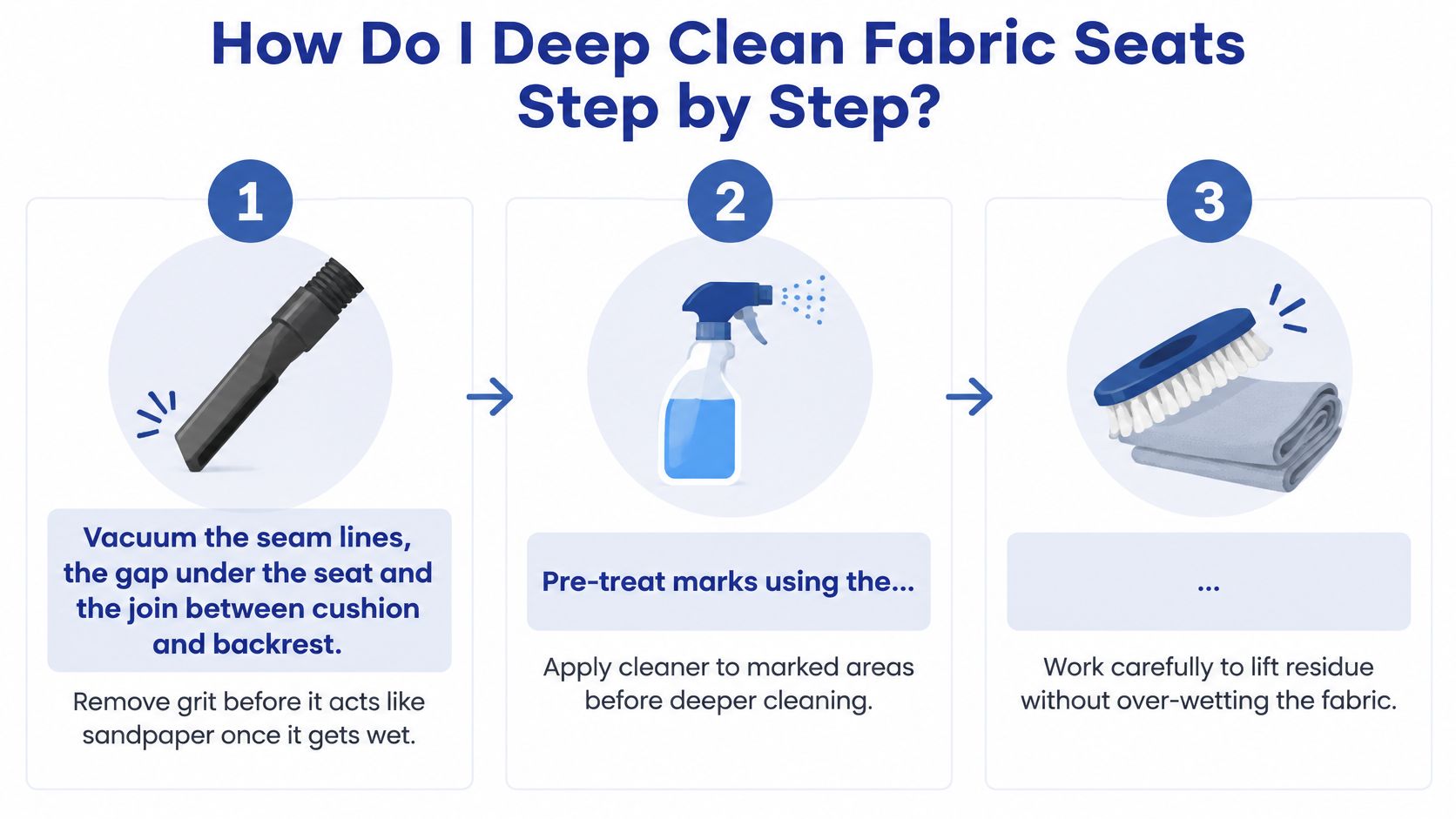
Vacuum the seams and cushion joins. Run a crevice tool along stitching, between the cushion and backrest, and beneath the seat where accessible. Remove grit before moisture turns loose debris into dirty slurry. Don’t disconnect wiring or disturb under-seat electrical fittings.
Pre-treat the identified marks. Use cold treatment for protein residue and a compatible grease-cutting treatment for oily soil. Keep the application local and recover loosened contamination before moving on. A stain shouldn’t be used as a test site for increasingly strong chemicals.
Finish the dry work and targeted stain treatment before wetting a complete panel.
Mix the cleaner at its stated upholstery dilution, then apply light, even passes rather than a concentrated wet patch. Work across the panel from its outside edges inwards. Keep spray away from switches, electrical connectors, seat controls and airbag seams.
Agitate gently in the fabric direction. Use a soft brush with light pressure, not forceful circles. You’re loosening soil so it can be removed, not grinding the brush into the foam. If the fabric pills or its nap changes, stop brushing.
Recover the moisture. Use the extractor’s recovery function, or press clean, dry microfibre cloths into the fabric and lift them away. Turn the cloth frequently so you’re not redistributing residue. If another treatment isn’t improving the mark, stop adding liquid and reassess.
Use recovery passes, not extra spray, when the fabric already feels wet.
Dry to a condition, not a deadline
Create airflow across the seat. Open doors or windows where secure and weather-safe, and position a fan to move air over the upholstery. Don’t leave the vehicle unsecured or run its engine in an enclosed garage. Keep electrical equipment clear of wet areas.
Check the slow-drying points. Press a clean, dry cloth into seams, cushion edges and the cushion-backrest join. A dry-looking centre panel doesn’t prove the padding beneath it is dry. Don’t fit covers or return the seat to use while it remains damp.
Keep the car out of service until the seams and cushion edges are dry, not merely the visible surface.
- Once fully dry, vacuum again and compare with your photographs. Look for remaining soil, tide marks and texture changes in daylight. If the seat stays damp, the backing lifts or colour transfers, arrange professional assessment instead of repeating the wet clean.
Drying rule: Don’t promise yourself a fixed finish time. Fabric construction, recovered moisture, airflow and weather determine when the seat is ready.
Read the upholstery steam-cleaning guide
Can You Remove Pet Hair and Odours Without Soaking the Seat?
Remove pet hair dry. Draw a rubber glove or upholstery-safe rubber squeegee gently across the fabric to gather hair into clumps, then vacuum with a brush attachment. Test the rubber tool first on delicate material because heavy pressure can pull the surface.
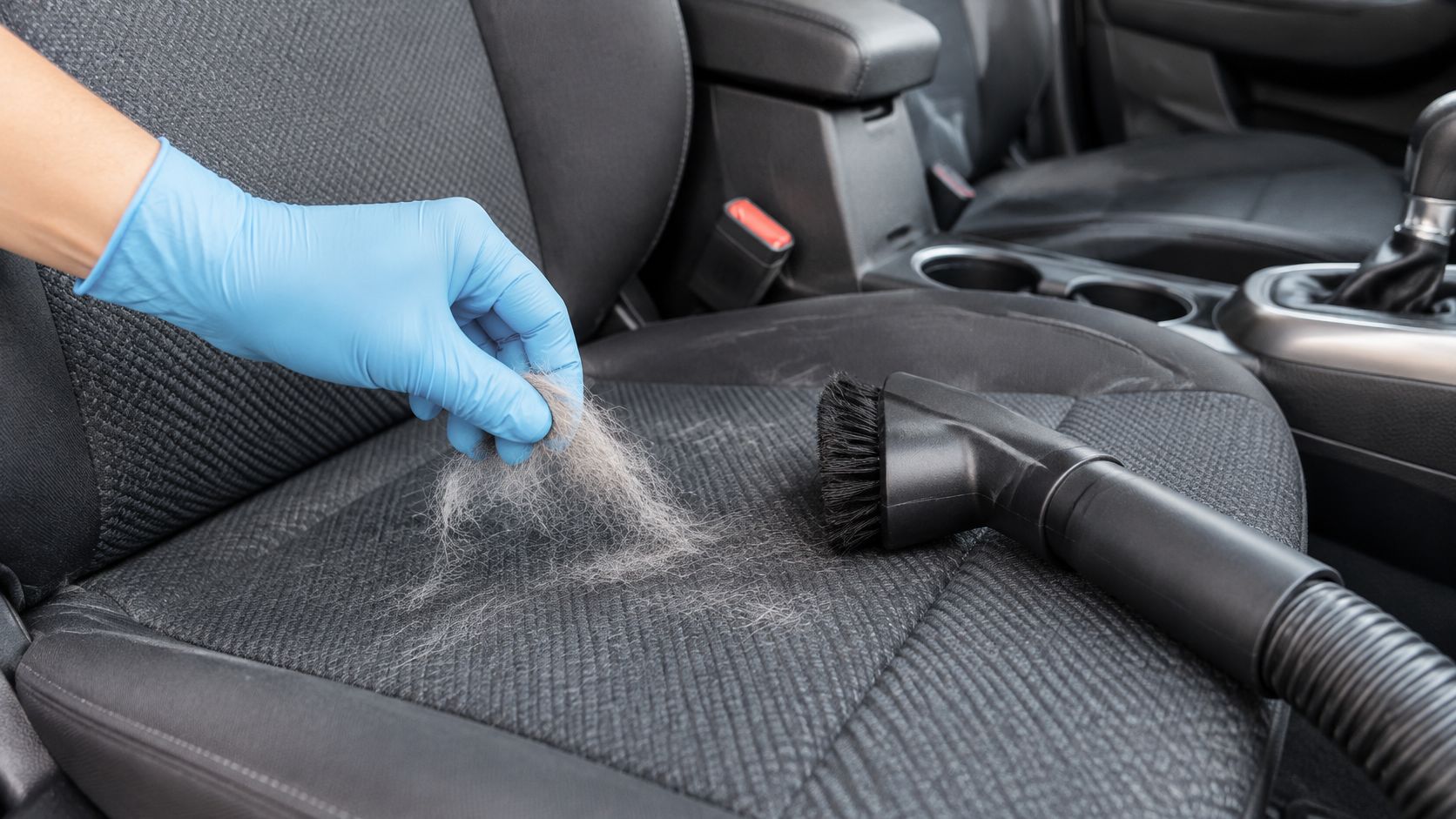
Wetting the seat first makes hair harder to separate and recover. Our practical car pet-hair removal guide gives more detail on lifting embedded strands without aggressive brushing.
Gather and vacuum the hair before choosing any wet treatment.
Odour source and first response
| Odour source | First response | Escalate when |
|---|---|---|
| Food residue or sour milk | Lift solids, use detergent in cool water and extract; consider steam only after protein residue is removed | Smell returns after the seat is fully dry |
| Damp foam or mildew | For ordinary dampness, extract and dry with airflow; suspected mould needs assessment | Musty smell or visible mould persists |
| Pet urine | Cold water with detergent, extract and dry fully | Smell persists or returns after treatment |
| Smoke or unknown chemical | Don't treat suspected chemical contamination at home | Isolate the vehicle and arrange specialist testing |
More liquid doesn’t mean a cleaner seat. Water can carry contamination through the cover into foam, where it’s harder to recover and slower to dry. A fabric-compatible deodoriser may help after ordinary residue has been removed, but fragrance won’t fix contaminated padding.
Flinders University’s vehicle-interior contamination research found that upholstery and underlying foam can retain pollutants, with retention affected by textile type. That finding sets an important boundary: visible cleaning isn’t contamination remediation.
Arrange specialist assessment for suspected contamination rather than trying a stronger household chemical.
Suspected drug, chemical, mould, sewage or other biohazard contamination isn’t a DIY detailing job. Isolate the vehicle, avoid dry brushing or disturbing the material, and arrange suitable assessment and testing. Don’t enter or handle contamination without appropriate protection, and never mix bleach, acids, ammonia, solvents or unknown cleaners.
For ordinary pet hair, use the dry-removal steps in our guide. Suspected contamination needs specialist assessment instead.
See the pet-hair removal guide
Can I Clean Child Seats the Same Way as Ordinary Seats?
Clean the vehicle upholstery around the restraint separately from the restraint itself. A child seat’s cover, padding, harness and buckle aren’t interchangeable cleaning surfaces. Shell Australia’s child-car-seat guidance explains why model-specific care matters, particularly for harnesses and other safety components.
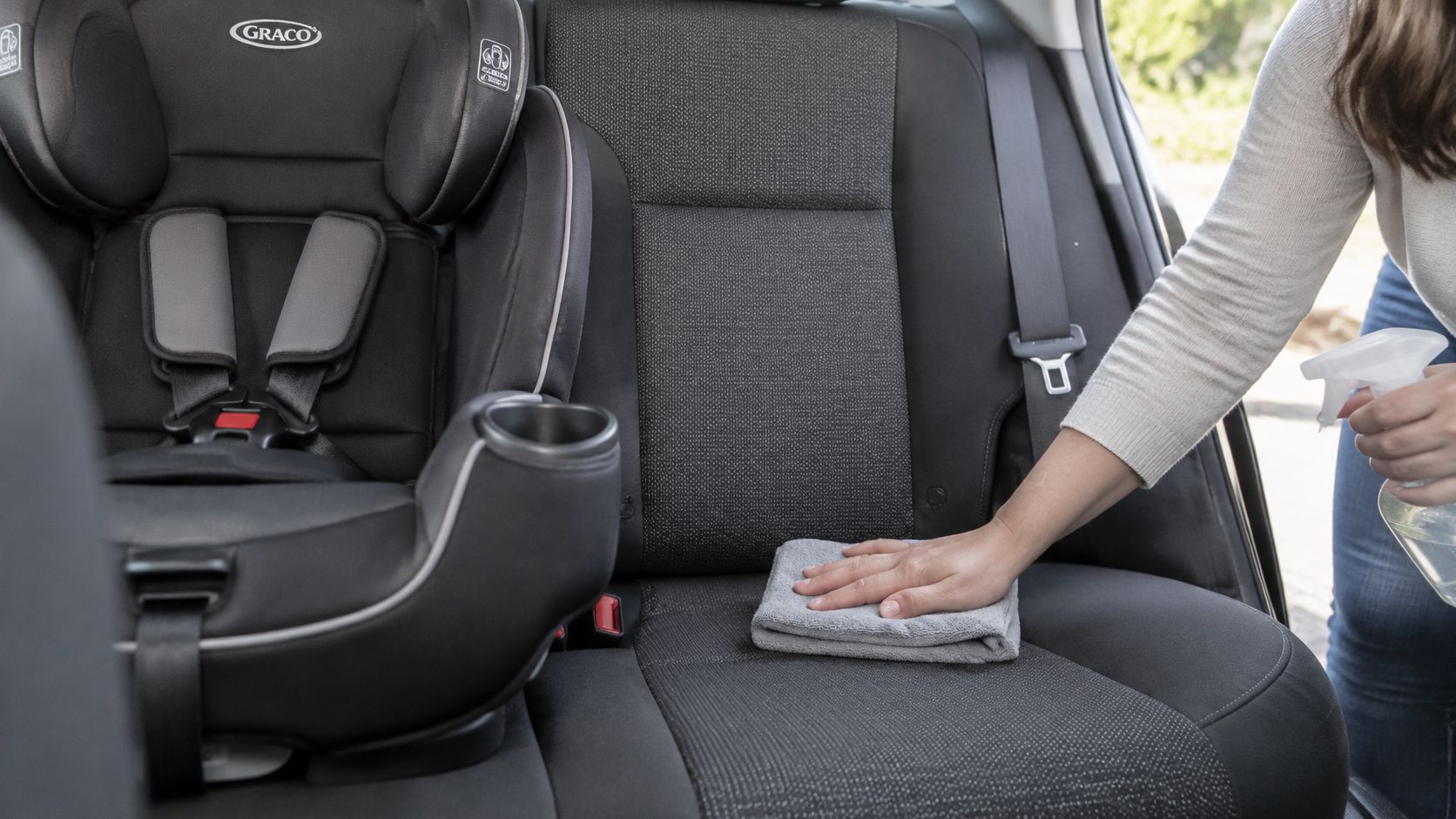
Which part needs cleaning?
Identify the component. Decide whether the spill is on a removable cover, integrated padding, harness webbing or buckle. Don’t pull padding away to investigate unless the manual permits removal.
Find the restraint’s instructions. Check the exact model’s requirements before applying detergent, steam or extraction. If the instructions are missing or unclear, contact the manufacturer rather than borrowing another restraint’s care method.
Keep the restraint out of the upholstery-cleaning process until you’ve checked its manual.
Wash removable covers only as permitted. Use mild detergent, no bleach and the specified temperature. Air-dry unless the manufacturer explicitly permits another method, and don’t refit a damp cover.
Harnesses generally need spot cleaning rather than immersion. Harsh chemicals and unsuitable washing can affect safety materials. Keep upholstery cleaner out of the buckle and follow its separate cleaning instructions.
Don’t dismantle or reinstall by guesswork. Follow the manufacturer’s removal and refitting directions, and seek qualified fitting help if you can’t confirm correct installation.
Treat harnesses and buckles as safety equipment, not as stubborn upholstery stains.
For Perth families, the same food spill can require different methods depending on where it lands. Lift crumbs from the cover, blot milk or vomit promptly, and don’t attack sunscreen on a harness with degreaser. The component determines the permitted method, not the mess.
We can clean vehicle upholstery around a child restraint. Specific child-seat or compartment cleaning is available on request, with extra care or a suggested add-on, so confirm what will be handled before booking rather than assuming the restraint is included.
Should I DIY or Book a Professional Seat Clean?
DIY suits light soil, a fresh spill and fabric you can identify, provided you have somewhere suitable to dry the seat fully. It becomes less attractive when you’re hiring equipment, working against tomorrow’s school run or repeatedly treating a mark that keeps returning. The cheapest clean isn’t a saving if you leave the cushion saturated.
Book professional help for widespread staining, embedded pet hair, a neglected cabin or odour that returns after treatment. Sale preparation and lease return also favour a coordinated interior clean rather than isolated clean patches surrounded by dirty fabric.
Choose professional assessment when the problem has moved beyond a surface mark or you can’t provide adequate drying time.
Prime Shine interior services and starting prices
| Service | Starts from | Best for |
|---|---|---|
| Mini Car Detailing | $199 | Everyday dirt, minor stains and spills, light odours |
| Full Car Detailing | $349 | Heavy staining, neglected interiors, reset-level clean |
| Seats/Carpet Steam Clean add-on | $89.00 | Seat and carpet steam clean added to a booking |
Our Mini Car Detailing also includes a full exterior wash, chamois dry and cleaned door jambs. Extremely dirty, neglected or heavily stained vehicles may be recommended for Full Car Detailing, while persistent or severe smells can require deeper treatment than a mini detail. Prices vary with vehicle condition, so use the table as a starting point rather than a promise that every stain fits the entry-level service.
For the broader pricing picture, use our interior detailing cost guide. Describe the spill, previous cleaning attempts and whether the smell remains after drying so the work can be matched to the problem.
Remove personal items, valuables and rubbish before your appointment, but don't pre-clean the car.
What should you arrange before booking?
Keep your expectations specific: stain reduction, hair removal and odour treatment aren't necessarily the same task. Tell us about any unidentified material, child restraint or suspected contamination before the appointment. A normal detailing booking shouldn't substitute for specialist contamination assessment.
For a small, recent spill, start with careful blotting and a compatible spot treatment. For a cabin-wide problem, arrange the appropriate interior work and check current online availability rather than assuming a particular time slot.
Prime Shine Hand Car Wash offers interior detailing, targeted pet-hair removal and a Seats/Carpet Steam Clean add-on for fabric seats and carpets. Visit Prime Shine Hand Car Wash to choose a service, check current availability and book online, and tell us about persistent odours or child-seat cleaning needs before your visit.