



You expect your vehicle to feel clean the moment you open the door. When the cabin is met instead by stale moisture, food residue, pet odour, or smoke, the entire vehicle feels poorly maintained, regardless of how glossy the paint may appear after a fresh hand wax and polish.
That is why effective detailing must address both the exterior and the interior. Exterior protection helps preserve gloss, reduce contamination build-up, and improve ongoing washability. Interior odour control supports comfort, hygiene, and the overall ownership experience. These are distinct tasks, but they are closely related in practice. Moisture, contamination, and unsuitable product choice can undermine both a freshly detailed cabin and a protected exterior.
Australian motorists already show a clear preference for professional maintenance over constant DIY care. According to the 2018 Australian Car Wash Consumer Study, PRO consumers wash their vehicles 10.6 times per year. This suggests that many drivers value results that last, present well, and resolve the underlying issue rather than adding another cycle of short-term maintenance.
Why Does Car Odour Removal Matter?
A vehicle can appear clean while still feeling unclean. This typically occurs when the exterior has been washed, the tyres dressed, and the paint protected with hand wax and polish, yet the cabin continues to carry a musty, stale, or smoky odour each time the door is opened.
From a professional detailing standpoint, odour is a contamination problem. It settles into upholstery, foam, ventilation systems, rubber seals, and hard-to-reach storage areas. Surface treatment alone rarely resolves it. Source removal does. When the source is properly addressed, the vehicle feels genuinely reset.
Cabin freshness matters for the same reason paint gloss matters. It shapes the ownership experience. Families notice it on daily trips. Rideshare operators notice it immediately. Sellers often discover that prospective buyers react to the smell of a vehicle before they evaluate the paintwork.
Get a Fresh Cabin and Glossy Finish
Professional rule: If the cabin smells unpleasant, the detailing job does not feel complete, regardless of how refined the exterior finish may look.
Hand Car Wax & Polish remains relevant within the same maintenance strategy. Exterior protection reduces road film accumulation, improves washability, and helps the vehicle stay cleaner for longer. However, wax will not resolve a damp or contaminated cabin, and an interior deodoriser will not shield paint from Perth sun. The strongest results come from treating both as part of a coordinated care routine.
What Causes Common Car Odours?
Most persistent vehicle odours can be traced to the same underlying issue. A contaminant has soaked in, remained trapped, or been concealed instead of fully removed.
Where smells usually start
The most common problem areas are consistent across most vehicles:
- Damp carpets and underlay. Floor mats absorb moisture from wet shoes, rain, beach use, and drink spills. The visible surface may dry while the lower layers remain damp.
- Seat fabric and foam. Upholstery absorbs more contamination than most owners realise. Coffee, milk, soft drink, sweat, and food oils often settle beneath the visible surface.
- Air-conditioning vents. Dust and moisture within the system can retain stale odours and recirculate them whenever the fan is in use.
- Boot corners and spare wheel wells. Leaks, wet equipment, and forgotten items often leave hidden moisture in the rear of the vehicle.
- Pet contamination. Hair, dander, dirt, and occasional accidents can create a persistent source of odour. When that is the issue, targeted pet hair removal for vehicle interiors often needs to be completed before deodorising can be effective.
A stale smell after rain typically points to trapped moisture. A sweet or sour smell often indicates old drink residue. Smoke requires a different response because it adheres to plastics, headliners, and vents, not only fabric.
Why masking sprays usually fail
Air fresheners do not remove contamination. They temporarily sit over the top of it.
That is why a vehicle can smell strongly perfumed and still feel unclean underneath. Excessive use creates a secondary issue as well. Product residue can settle into soft trim and leave the cabin feeling heavy rather than genuinely fresh.
The area where the odour is strongest usually identifies the true source. If one section smells worse on close inspection, that is where the work should begin.
Solve the Source, Not Just the Smell
Odours also intensify over time because heat reactivates embedded residue. Perth cabins heat quickly. What seems minor on a cool morning can become significantly more noticeable after several hours in the sun.
For this reason, diagnosis is more important than fragrance selection. The objective is not to make the cabin smell different. It is to remove the cause of the odour.
Which DIY Methods Actually Remove Car Odours?
For light to moderate odours, home treatment can be effective if the process is methodical and the vehicle is dried properly. Random surface wiping is rarely enough. Procedure matters.
Professional services remain in demand for good reason. The Australian car wash and detailing industry is projected to generate $608.4 million in 2026, according to IBISWorld’s Australian car wash and detailing industry data. Before committing to a full service, however, several DIY steps are worth attempting.
Need Help Beyond DIY? Book Today
A practical home process that works
-
Clear the cabin completely
Remove rubbish, bottles, child seats, loose gear, and floor mats. Full access to affected areas is essential. -
Vacuum slowly and thoroughly
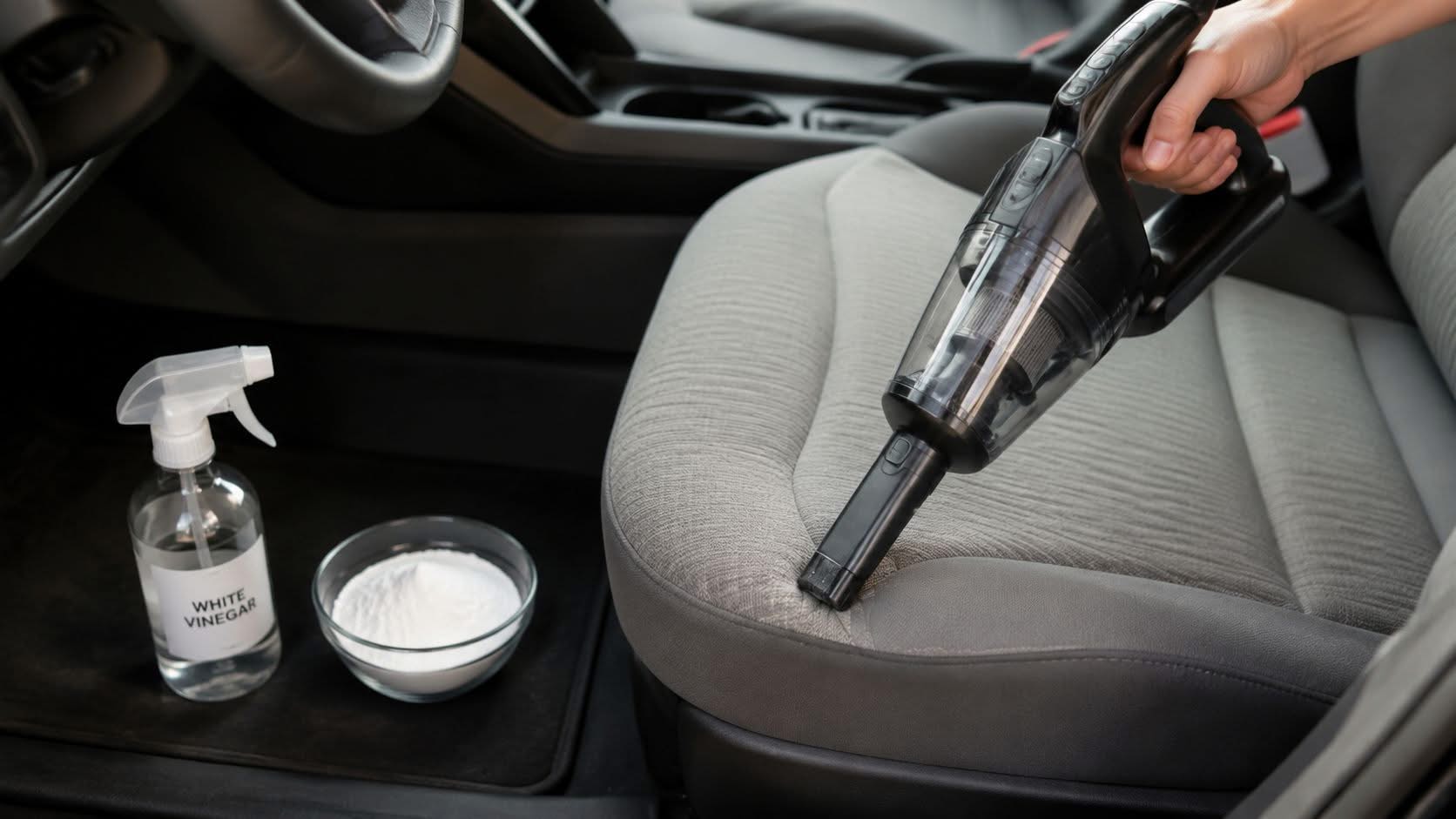
Focus on seat seams, under rails, carpet edges, and the gap between the centre console and seats. Quick vacuuming often misses compacted material that holds odour. -
Treat fabric, not just visible surfaces
Use a mild upholstery cleaner where spills or body oils have accumulated. Work in small sections and avoid saturating the seat foam. -
Use baking soda for dry absorption
This can assist with general stale odours in carpet and fabric. Allow it to sit, then vacuum thoroughly. -
Use white vinegar carefully on washable surfaces
It can neutralise some odours, but it is not suitable for every trim type. Avoid drenching plastics, electronics, leather, or delicate materials. -
Dry the vehicle fully before closing it up
Leave doors open, remove mats, and crack windows in a secure location. If moisture remains in the cabin, mildew can return quickly.
If seats or carpet are holding deeper contamination, a seats and carpet steam clean service is often the point at which DIY stops being time-efficient.
What usually makes the smell worse
These mistakes are common:
- Over-wetting fabric. The surface appears cleaner, but the underlay remains damp.
- Spraying fragrance into vents. This rarely treats the source and often leaves residue.
- Skipping the mats. Wet mats can recontaminate the entire cabin.
- Ignoring the boot. Odours often migrate forward from the rear.
- Closing the car too soon. Trapped humidity can undo the cleaning work.
Clean first. Neutralise second. Fragrance, if used at all, comes last.
Charcoal or coffee grounds can help with very light residual odour after cleaning, particularly as passive absorbers over a day or two. They are maintenance aids, not replacements for proper extraction.
When Should You Use Advanced Odour Treatments?
Some odours are too deeply embedded for home cleaning alone. Smoke, flood-related dampness, mould, and long-standing organic contamination usually require a more advanced treatment.
A common error is choosing the wrong solution because product categories are misunderstood. The same confusion exists in paint care. Guidance on car polishing in Australia points out that people often conflate polish with wax. A similar misunderstanding occurs inside the cabin when deodorising, sanitising, and surface dressing are treated as if they perform the same function. They do not.
Which treatment matches which problem
Here is a practical comparison.
| Treatment | Effectiveness | Cost Range | Convenience | Best Use Case |
|---|---|---|---|---|
| Enzyme cleaner | Strong on organic residue when correctly matched | Lower to moderate | Good for targeted areas | Food spills, pet accidents, biological residue |
| Ozone treatment | Strong for lingering airborne and smoke odours | Moderate to higher | Usually requires controlled use and downtime | Cigarette smoke, persistent stale cabin smell |
| Steam cleaning | Strong for sanitising surfaces and lifting embedded grime | Moderate | Best when applied thoroughly across fabric areas | Seats, carpets, mats, general deep interior reset |
Enzyme products break down organic matter. They are most effective when the odour source is biological rather than simply stale air.
Ozone is more specialised. It can be effective when smoke or long-standing odours have spread through the cabin and ventilation system. It also requires proper handling and should not be approached as a casual spray-and-go option.
Steam cleaning sits between the two. It is practical, effective on heavily soiled interiors, and often the correct first step before moving to a more aggressive treatment.
Match the Right Treatment to Your Car
- Choose enzyme treatment if the odour has a clear spill or pet source.
- Choose steam cleaning if the cabin is dirty, fabric-heavy, and overdue for a proper reset.
- Choose ozone if the smell remains after cleaning and appears embedded throughout the cabin atmosphere.
The correct treatment is the one that matches the contamination. A stronger method is not automatically a better one.
Is Professional Detailing Worth It for Odour Removal?
Professional detailing becomes the better option when the odour continues to return, the source is concealed, or the cabin requires more than routine cleaning. It is also a practical choice when the exterior needs protection at the same time, because daily-use vehicles in Perth are commonly affected by both interior build-up and environmental exposure.
When a package makes more sense than more DIY
A simple package is often sufficient when the odour is light and recent. An inside-and-out wash with vacuuming and surface cleaning suits dust, crumbs, and a mild stale smell.
If the vehicle also needs exterior protection, a premium wash with hand wax and polish is the more efficient option because it addresses two priorities in one visit. For vehicles that feel tired throughout, inside and out, a full car detailing service for deep interior and exterior cleaning is usually the most suitable choice.
That is where Prime Shine Hand Car Wash fits naturally. Its service offering includes interior cleaning, steam cleaning add-ons, hand wax and polish, paint preparation, and full detailing from a single Westminster site. This matters because odour work is easier to complete properly when interior treatment and exterior protection can be managed together.
Choose the Right Detailing Package
How exterior protection fits into odour work
Cabin odour and paint protection are often treated as separate concerns, but the maintenance logic is similar. A vehicle that is easier to clean on the outside is typically maintained more consistently overall, and a consistently maintained vehicle is less likely to show the neglect that often contributes to interior issues.
For protection choice, durability matters. According to Australian exterior detailing guidance on sealants and wax, synthetic sealants provide 3-6 months of hydrophobic and odour-blocking layers, whereas traditional wax needs reapplication sooner. The decision is therefore relatively straightforward:
- Choose wax if you want gloss, warmth, and a shorter-term finish enhancement.
- Choose a sealant if you want longer protection and easier routine washing.
- Choose a full detail if both cabin odour and paint condition require attention.
If you are investing in a proper reset, choose the package that matches the problem, not simply the price list.
How Can You Prevent Odours and Choose Safe Products?
The easiest odour to remove is the one that is never allowed to settle. Prevention is largely about controlling heat, moisture, and residue.
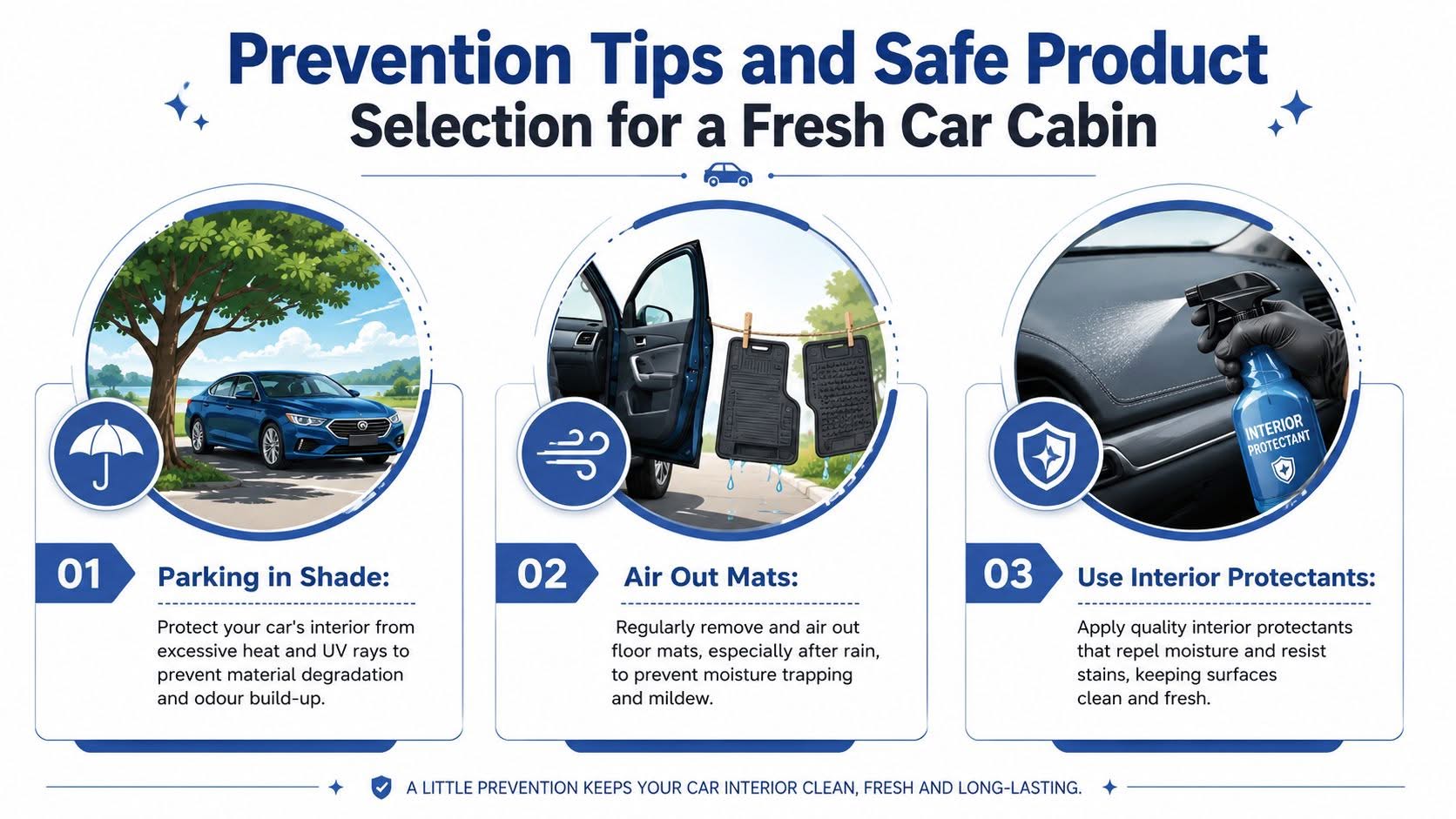
Simple habits that stop odours returning
A few habits account for most preventive maintenance:
- Park in shade when possible. Heat reactivates old residue and pushes it back into the cabin air.
- Remove and air out mats after rain. Wet mats are one of the most common causes of a persistent musty smell.
- Deal with spills immediately. The longer residue remains, the deeper it penetrates.
- Keep the boot dry. Sports gear, prams, towels, and shopping leaks are often overlooked.
- Use surface protection appropriately. Interior protectants can reduce staining and make later cleaning easier. Leather surfaces benefit from dedicated care such as leather clean and condition treatment.
Safe product choices for interior surfaces and hand wax work
Use pH-balanced interior cleaners where possible and avoid harsh solvents on dashboards, screens, trim, leather, and coated surfaces. Strong products may appear effective initially, but they can also cause whitening, streaking, stiffness, or premature wear.
For exterior hand wax work, timing and technique matter more in Perth conditions than many drivers realise. According to Perth hand waxing guidance for high-UV conditions, local conditions call for a 60:40 paste wax-to-finishing polish mix and a 2-3 minute haze time before removal. Buffing too early or too late can reduce finish quality and durability.
Several professional principles are worth following:
- Use a thin, even application rather than overloading the pad.
- Work in small sections so the product behaves consistently.
- Buff in straight lines to avoid reintroducing swirls.
- Stay off grass or dirt while working, because grit transfers quickly onto paint and applicators.
Hand Car Wax & Polish performs best when the paint is already clean and stable. It does not correct neglected surfaces on its own. On vinyl, leather, and interior plastics, exterior wax should never be used as a general shine product. Always choose products formulated for the specific surface.
Protect Your Interior and Exterior Properly
What Should You Do Next?
If your car smells off, begin by identifying the source rather than attempting to cover it. Moisture, spills, pet residue, smoke, and hidden grime each require a different response. Light odours can often be improved at home through careful vacuuming, mild fabric treatment, and complete drying. More serious issues typically require steam cleaning, enzyme treatment, or a professional reset.
Hand Car Wax & Polish remains important because it protects the exterior, improves washability, and helps the whole vehicle feel properly maintained rather than only partially finished. It simply delivers the best result when paired with the same standard of care inside the cabin.
Use this practical next-step process:
- Inspect the likely source
- Clean and dry thoroughly
- Escalate to advanced treatment if the smell returns
- Protect the exterior so maintenance remains easier
- Repeat on a sensible schedule for Perth conditions
For daily drivers in WA, a quarterly review of both cabin freshness and paint protection is a practical baseline, especially if the vehicle lives outdoors or regularly carries children, pets, or beach gear.
If your vehicle needs more than a quick surface clean, book a service with Prime Shine Hand Car Wash. A proper visit can combine interior cleaning, odour-focused add-ons, and hand wax or paint protection so the vehicle feels clean when you open the door and still looks right when you walk away.