





The back seat of a family SUV can collect biscuit crumbs in the stitching, sticky fingerprints on the vinyl and an odour that returns whenever the cabin warms up. A rideshare vehicle can have a different problem, coffee marks, ground-in dust and constant passenger contact. In both cases, a quick vacuum helps, but it rarely reaches the contamination held inside seams and textured upholstery.
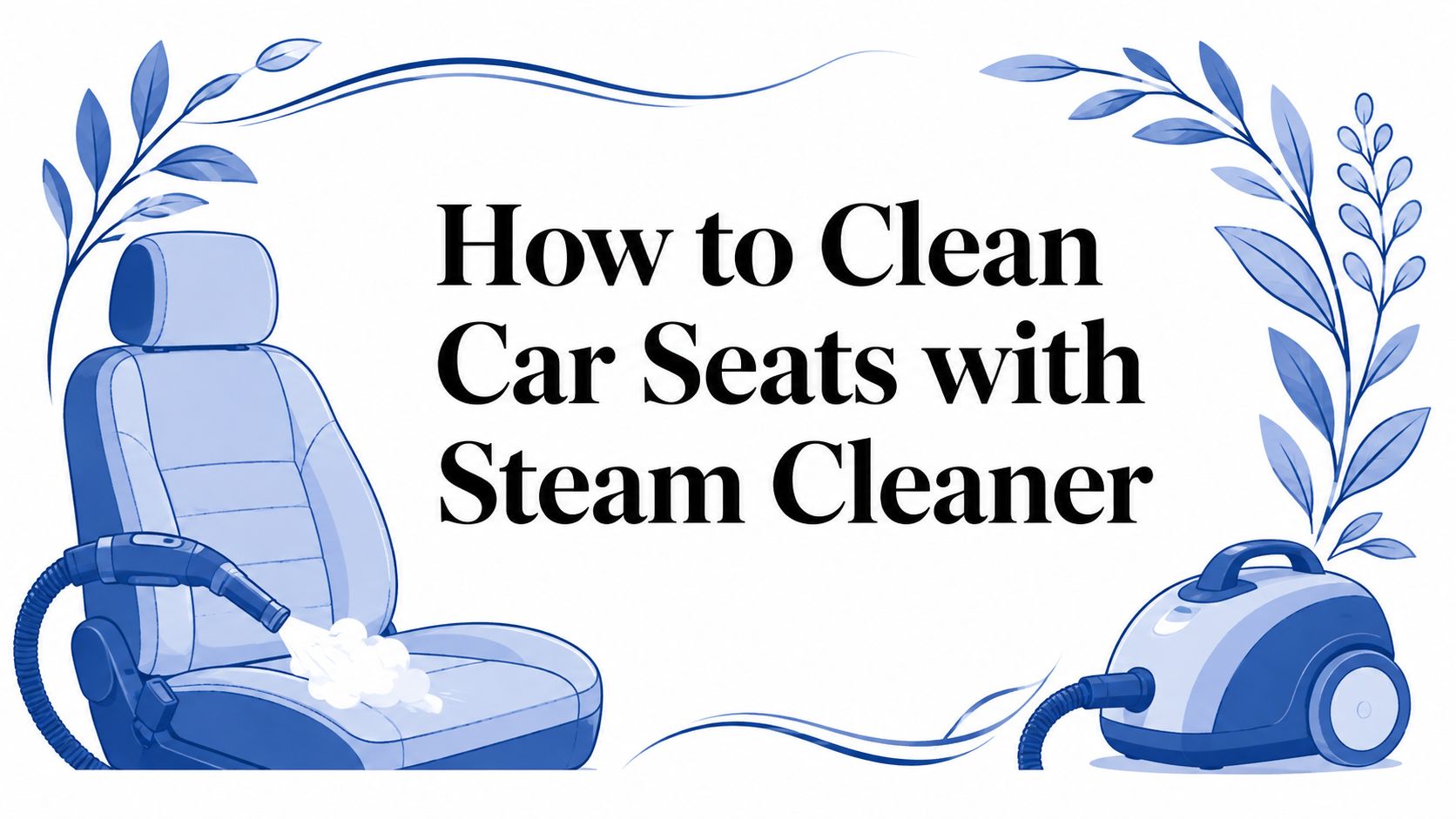
Learning how to clean car seats with a steam cleaner gives you a controlled way to loosen embedded soil while using less moisture than conventional shampooing. The important word is controlled. Steam can refresh fabric, vinyl and some leather surfaces, but poor nozzle technique, excessive heat or incomplete drying can damage finishes, adhesives and seat foam.
Why Steam Cleaning Car Seats Works So Well?
Steam works by combining heat with a relatively low-moisture application. The heat loosens bonded dirt and residue in fibres, seams and textured surfaces, while a cloth or extraction system removes what the steam has released. Used properly, it can also help reduce germs, bacteria, allergens and odours, particularly in areas that a vacuum can’t reach.
That makes steam useful for embedded crumbs, pet hair residue, light food marks, coffee splashes and stale smells. It isn’t a magic stain eraser, though. Oil-based marks, dye transfer, old spills and contamination deep inside seat foam may need a suitable pre-treatment followed by extraction. Steam alone can loosen the mess without removing enough of it.
Practical rule: Steam loosens soil. Vacuuming, wiping or extraction removes it.
Australian drivers clean their interiors regularly. Nearly 45% of surveyed motorists clean inside their car at least monthly, another 15% do it weekly, and only 4% do it annually, according to Australian car ownership and cleaning behaviour data. That pattern supports steam cleaning as recurring maintenance for family cars, rideshare vehicles and interiors that need more than a dry vacuum.
Professional detailers use steam as part of a broader workflow, not as a substitute for every other process. The official Australian occupation profile describes car detailers as cleaning vehicle interiors and exteriors and touching up upholstery when preparing vehicles for sale or rent, as outlined in this Australian steam-cleaning industry reference. That matters for lease returns, used-car presentation and rental preparation, where seat condition affects the cabin’s perceived cleanliness.
Use steam when the upholstery is sound, the problem is mainly surface or fibre contamination, and you can dry the cabin properly. Don’t start with steam if the seats are saturated, mouldy, badly flood-damaged or showing loose leather, sagging trim or damaged stitching. Those conditions need assessment before heat and moisture enter the material.
For broader preparation ideas, this hand car detailing guide can help you think beyond the seat surface and inspect the rest of the cabin as part of the same clean.
See Our Interior Detailing Services
What You Need Before You Start Steaming?
Preparation decides whether steam lifts dirt or turns loose grit into a muddy film. Remove rubbish, child-seat accessories and personal items first, then slide the seats forward and backward so you can reach the rails, rear edges and floor junctions.
Start with a complete dry vacuum. Use the upholstery head over the seat cushion and backrest, then switch to a crevice tool for stitching, belt slots, seat rails and the gap between the cushion and console. Pet hair often needs a soft brush to lift it before suction can collect it. If you skip this stage, steam can drive crumbs and grit further into the fibres.
Check the material before heat reaches it
Identify whether the seat is cloth, leather, vinyl, synthetic leather or a mixed material. Look closely at perforations, stitched panels, seatbelt guides, side bolsters and any powered controls. A seat can have different finishes across one surface, so use the least aggressive method required by the most delicate area.
Test the steamer on a hidden section. Watch for colour transfer, darkening, finish change or surface fuzzing. Keep the nozzle moving during the test and allow the spot to cool before judging it. A material that looks fine while hot can show a watermark or altered texture as it dries.
Your equipment should support restraint, not brute force. Choose a cleaner with adjustable pressure, a low-moisture output and a proper upholstery attachment. A small soft brush can help on durable fabric, but avoid stiff brushes that roughen fibres or scratch vinyl. Keep several light-coloured microfiber cloths ready, because a dirty or saturated cloth spreads the soil.
Prepare products for the actual level of soil
For lightly soiled fabric, water and controlled steam may be enough. Heavier contamination often benefits from a compatible upholstery pre-spray, applied sparingly and allowed to loosen the soil before steaming. Don’t flood the seat with product, and don’t combine unknown chemicals with heat.
- Microfiber cloths: Use one to collect loosened soil and another for the final wipe.
- Soft upholstery brush: Reserve it for durable fabric and gentle agitation.
- Pre-spray: Apply only to heavily soiled cloth, never as an excuse to soak the foam.
- Airflow: Open doors or windows and have fans available before you begin.
- Correct attachment: Use a soft upholstery tool rather than a bare high-pressure nozzle.
A practical car detailing preparation reference is useful when you’re planning the cabin as a complete interior job rather than treating one isolated mark.
Prepare Your Car for a Deep Clean
How to Steam Clean Cloth, Leather and Vinyl Seats?
The repeatable sequence is simple: dry vacuum, optional pre-spray, controlled steam, immediate wipe and complete drying. Work in small sections rather than sweeping randomly across the entire seat. Small sections let you see whether soil is lifting, keep moisture under control and prevent a dirty cloth from redistributing contamination.
Hold the attachment close enough to transfer heat, but don’t park it on the upholstery. Use short passes or bursts and keep the nozzle moving across the surface, especially over seams and perforations. As soon as a section is treated, wipe it with an absorbent microfiber cloth. Replace the cloth when it becomes wet or visibly dirty.
Cloth needs moisture control, not aggressive scrubbing
Fabric generally tolerates more controlled steam than leather, but the foam beneath it can retain moisture. Treat the cushion, side bolsters and backrest separately, then make a dry pass over seams and edges. If a mark doesn’t release after a careful pass, stop increasing heat and consider a suitable pre-treatment or extraction process instead.
Heavy soil needs recovery as well as heat. Australian detailing guidance recommends simultaneous steam-and-vacuum or steam-and-extraction passes for heavily soiled fabric, with cloth replacement when the cloth becomes wet or dirty. This Australian car steam-cleaning workflow also stresses dry vacuuming first, correct soft attachments and a final dry microfiber wipe.
Leather rewards a conservative approach
Leather is where many DIY jobs go wrong. Use lower heat and gentler pressure, keep the exposure brief and wipe immediately. Never concentrate steam on a seam, perforation, coated finish or worn patch, because heat can soften the finish or accelerate damage already present.
On delicate leather, place a microfiber cloth between the nozzle and surface to diffuse the heat. Once the panel is clean and fully dry, use a suitable leather conditioner if the material and existing finish allow it. Steam is for controlled cleaning, not for saturating leather or replacing conditioning.
Vinyl and stitched panels still need restraint
Vinyl is usually more forgiving, but textured grain and stitched joins can hold moisture and residue. Use light passes, focus on the grooves and wipe as you go. Don’t assume a synthetic surface can tolerate unlimited heat, particularly near plastic controls, airbags, wiring or bonded trim.
Keep the nozzle moving. A slow pass is useful, but a stationary nozzle turns controlled cleaning into concentrated heat.
The same approach applies to mixed seats. Follow the most sensitive material, not the toughest one. If a cloth centre sits beside leather bolsters, reduce the heat and moisture when you reach the bolsters, then wipe the transition carefully so residue doesn’t collect along the stitching.
Steam Clean Fabric, Leather or Vinyl Seats
Tackling Stains, Child Seats and Stubborn Odours
Routine maintenance and heavy restoration aren’t the same job. A fresh food mark may respond to a slow steam pass and immediate wiping, while an old coffee spill can contain sugars, oils and residue that require pre-treatment and recovery. Pet hair also needs mechanical removal before steam, otherwise heat and moisture can bind loose hair to the fabric.
For a heavily soiled seat, vacuum first and inspect the mark. Apply a suitable pre-spray to fabric if needed, allow it to loosen the bonded soil, then use a brush lightly where the fabric can tolerate it. Follow with a steam-and-vacuum or steam-and-extraction pass so the loosened material leaves the seat instead of drying back into it.
For stubborn odours: Find the source before treating the smell. Steam can refresh the surface, but damp foam, underlay, a soaked mat or residue beneath the seat can continue producing odour.
Child seats need extra care because buckles, straps, stitching and hardware trap contamination. Remove the child seat from the vehicle and follow its manufacturer’s cleaning and reinstallation requirements. Don’t saturate straps or leave cleaning residue around buckle mechanisms, because a clean-looking surface isn’t enough if hardware remains contaminated or moisture stays trapped.
An Australian guide recommends a two-stage child-seat method. First, use steam only on difficult areas from top to bottom, including buckle and seatbelt zones. Then switch to steam-and-vacuum to collect loosened residue, followed by a vacuum-only pass to recover remaining moisture. Allow at least 15 minutes of additional air drying before reuse, as advised in this Australian child car-seat steam-cleaning guidance.
Light and heavy soiling also need different treatment. A slow steam-vacuum pass may suit light contamination, while ground-in buildup can require brush agitation or injected solution before recovery. Steam alone can loosen a stain, but extraction determines how much soil and moisture leave the seat.
If you’re cleaning a family vehicle, inspect under removable mats and around the child-seat contact points. Those hidden areas often explain why an odour returns after the visible upholstery looks clean. For a broader interior refresh, this hand car wash and cleaning reference shows the wider scope of cabin care beyond one seat.
Remove Seat Stains and Odours Today
When Steam Cleaning Can Actually Cause Damage?
Steam isn’t automatically safe because it uses water rather than a chemical detergent. The primary risk comes from heat, moisture and poor recovery, particularly in a warm Australian climate where a damp seat can look dry on the surface while foam or underlay remains wet underneath.
Flood-damp interiors deserve special caution. Steam may help clean a sound surface after the moisture source is fixed, but it won’t solve water trapped inside foam, underlay, stitching or insulation. Australian guidance on auto detailing and mould stresses fixing the moisture source, using extraction and airflow, and drying thoroughly to prevent regrowth, as explained in this Australian guidance on steam cleaning after damp or mould exposure.
The common damage points
Over-wetting is the most frequent mistake. It can extend drying, create water marks and leave residue behind. Aggressive scrubbing can roughen fabric, while concentrated heat can alter leather finishes, soften plastic or loosen bonded surfaces.
Glued headliners and trim are especially vulnerable. Direct steam can soften adhesive and leave sagging material. Keep steam away from glued roof linings, loose trim, electronic controls, airbag covers and sensors. A seat surface may be washable while the components beside it are not.
Leather requires lower heat and pressure than durable cloth. Vinyl should be treated lightly around seams and textured panels. Don’t steam over existing cracks, peeling coatings or exposed foam, because heat and moisture can enlarge the defect.
Drying is part of the clean
Use absorbent cloths during the work, then create strong airflow with doors or windows open. Check seams, lower edges and the gap between the seat and console by touch. If those areas still feel cool or damp, the job isn’t finished.
A low-moisture steam benchmark says upholstery is intended to feel clean, refreshed and dry within minutes when the correct attachment and technique are used. That isn’t permission to rush. Operators must avoid holding steam in one spot, and heavily soiled seats may need extraction before they can dry properly.
Call a professional if the interior has flood exposure, visible mould, persistent dampness, electrical warnings, a sagging headliner, fragile leather or contamination inside the foam. Steam should be one step in a moisture-managed process, not the entire remedy.
Avoid Upholstery Damage With Expert Help
Should You DIY or Book a Professional Detailer?
DIY steam cleaning suits a sound weekly family car with light marks, crumbs and general fabric freshness. You control the pace, can spot-test first and can stop before the seat becomes wet. It makes less sense when the vehicle has deep odours, pet hair, set-in stains or upholstery that needs extraction.
A rideshare or delivery vehicle often needs a fast, consistent turnaround. A professional can combine vacuuming, pre-treatment, steam, extraction and drying rather than relying on one pass. A luxury car with sensitive leather, glued trims or complex electronics also benefits from someone who can adjust technique material by material.
| Situation | Practical choice |
|---|---|
| Lightly soiled family car | DIY steam with careful vacuuming and airflow |
| Rideshare or fleet vehicle | Professional cleaning for repeatable turnaround |
| Luxury leather interior | Professional assessment and conservative treatment |
| Flood-damp or mould-affected cabin | Moisture investigation, extraction and full drying |
| Sale or lease-return preparation | Full interior detailing where seat presentation matters |
Australian guidance commonly recommends routine seat steam cleaning every 3 to 6 months, while high-use vehicles may need attention every 1 to 3 months, according to this Australian car-seat steam-cleaning maintenance guide. Treat those as practical intervals, not a substitute for cleaning spills promptly or vacuuming between deeper services.
If you’re comparing the wider service scope, this guide to car detailing costs in Perth can help you decide whether a seat-only clean or a complete interior reset suits the vehicle’s condition. Prime Shine Hand Car Wash offers interior detailing, seats and carpet steam cleaning, leather cleaning and conditioning, pet hair removal and full vehicle detailing in Westminster.
Prime Shine Hand Car Wash can assess your upholstery, steam-clean seats where the material allows, and combine the service with leather care, pet hair removal or a full interior detail. Visit Prime Shine Hand Car Wash to choose a suitable service and book a time for your Perth vehicle.