







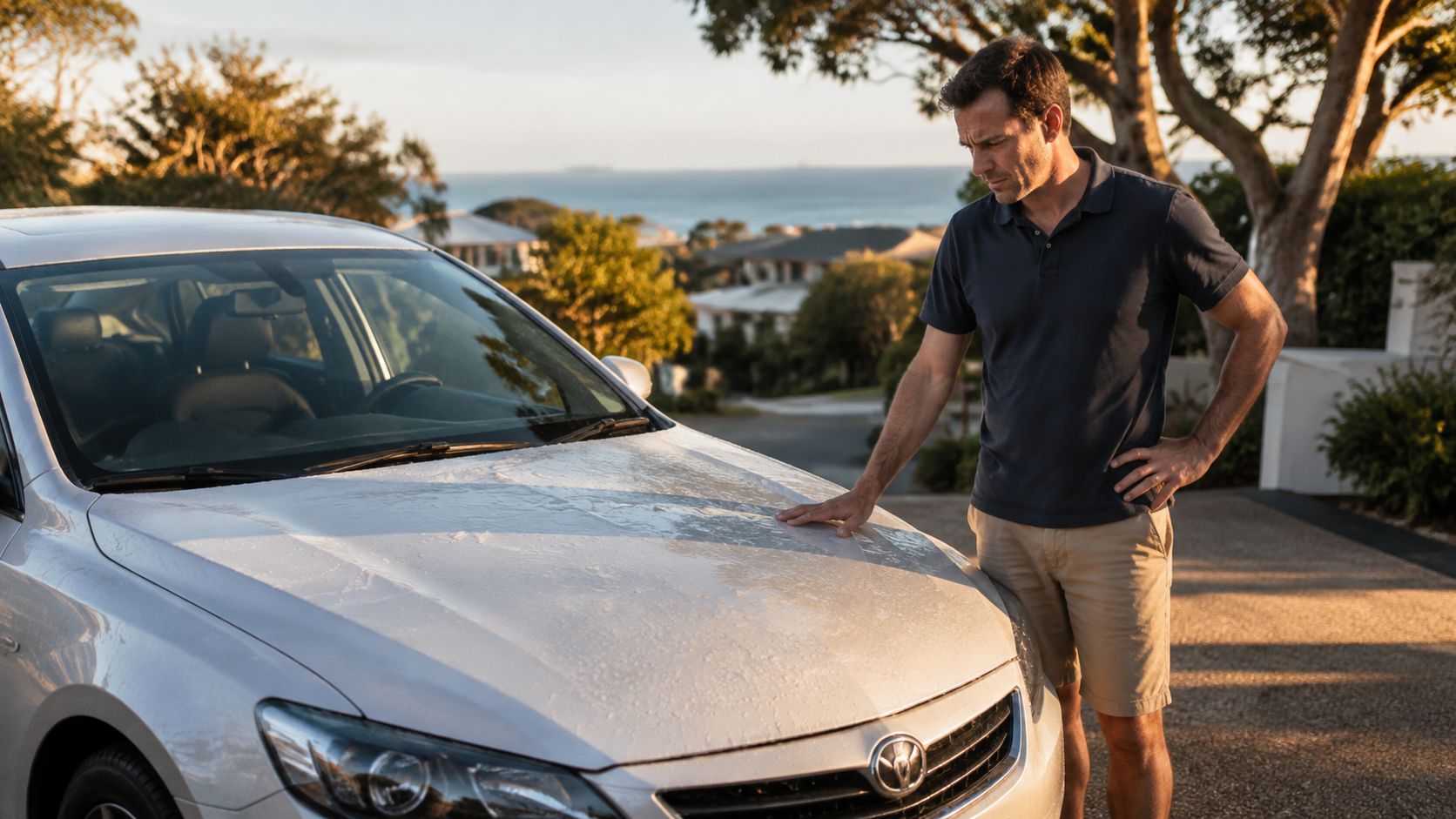
You’ve washed your Perth car, dried it carefully, and still noticed something wrong. The bonnet no longer throws tight beads across the paint. Instead, water sits in broad patches, the surface feels slightly rough, and the gloss looks muted after a week of coastal commuting. That doesn’t automatically mean the ceramic coating has failed.
In many cases, the coating is covered by road film, salt residue, mineral deposits, and heat-baked contamination. Learning how to maintain ceramic coating in WA means accepting that the protection needs a deliberate cycle of washing, drying, inspection, and occasional renewal. It isn’t a set-and-forget product, especially when the car faces sea air, hard water, and strong sunlight.
Why Ceramic Coating Still Needs Regular Maintenance?
A coastal drive can leave a coated car looking clean while salt and road film remain on the bonnet, roof, mirrors, and boot lid. Rainwater and hard water then evaporate, leaving mineral residue that disrupts the tight water behaviour seen after coating application. In Perth, strong UV and heat can bake that residue onto the surface before the next wash.
The coating may still be intact. Its surface can be suffocated by contamination, which reduces slickness and produces weaker, uneven beads even while the paint remains glossy. The longer residue stays bonded, the more force or chemical strength may be needed to remove it safely.
Coated paint still needs a maintenance rhythm
Australian aftercare guidance recommends washing a ceramic-coated vehicle every 7-14 days, particularly after rain or coastal driving. Use a pH-neutral shampoo, a controlled two-bucket method, and microfiber towels for drying according to this Australian ceramic-coating maintenance guide. That interval suits WA conditions. Salt spray, traffic film, mineral-rich water, and intense sunlight can affect the surface well before the car looks visibly dirty.
Plan a decontamination wash every 4-6 months. A fresh clay bar and full degreasing may be appropriate around the six-month mark when a proper wash leaves the paint rough or water behaviour remains poor. Use the least aggressive process that removes the contamination, because unnecessary abrasion can shorten the coating’s useful life.
Practical rule: If the paint still feels rough after a proper wash, check for bonded contamination before assuming the coating has failed or booking correction and reapplication.
Regular hand washing and careful drying preserve gloss and reduce the need for harsh intervention. The wider benefits of consistent care are explained in this guide to regular hand car washes and detailing for vehicle longevity. A coating lowers maintenance effort, but it does not remove the maintenance commitment.
Learn About Hand Wash Benefits
What Does the Ideal Wash Routine Look Like?
A coated car should be washed with less friction, not more force. The aim is to remove loose grit before the mitt touches the paint, then keep contaminated water away from the clean side of the vehicle.
Start in shade, with cool panels. Rinse the vehicle thoroughly from the top down, allowing loose sand, dust, and salt to run off before applying physical pressure. A foam pre-wash can help loosen surface dirt, but it should be followed by a careful rinse rather than treated as a substitute for washing.
A controlled two-bucket process
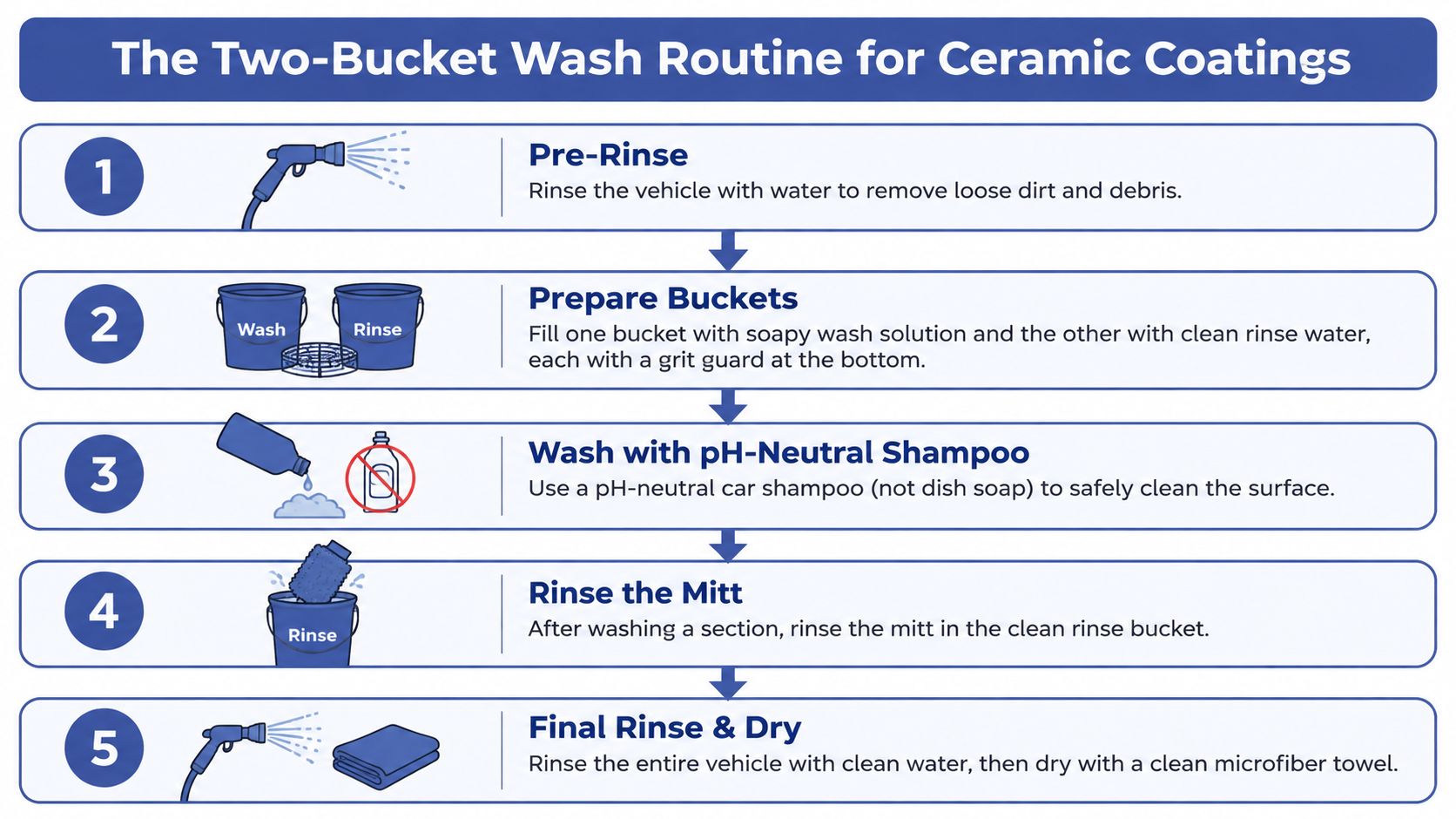
Use a pH-neutral shampoo formulated for coated surfaces. Avoid dishwashing liquid, strong alkaline cleaners, and harsh truck-wash chemicals for routine care. The Australian best-practice workflow recommends rinsing loose grit, washing every 7-14 days, using two buckets with grit guards, working in shade, and drying immediately with microfiber or a blower as described in this Australian ceramic-coating care guidance.
- Prepare the buckets. Keep shampoo solution in one bucket and clean rinse water in the other. Grit guards help separate loosened particles from the mitt.
- Wash from top to bottom. Use a clean microfiber mitt in straight-line passes. Roof, glass, bonnet, and upper doors come first, while lower panels and wheels wait until the mitt has been cleaned or a separate mitt is used.
- Rinse the mitt often. Agitate it in the rinse bucket before returning to the shampoo solution. This reduces the chance of dragging collected grit across the coating.
- Rinse without creating new problems. A gentle sheeting rinse helps carry water from the panel. High-pressure water is useful for wheel arches and stubborn areas, but it shouldn’t replace controlled washing or be directed carelessly into seals and gaps.
- Dry immediately. Use a clean, plush microfiber drying towel with a light dragging or patting motion, or use filtered air to push water from mirrors, badges, trims, and panel gaps.
Match the schedule to the commute
A fortnightly wash is a reasonable minimum for many vehicles, while weekly washing makes more sense for drivers covering coastal roads, parking near the ocean, or accumulating heavy road film. Australian guidance consistently places coated daily drivers on a 1-2 week washing cycle and recommends a pH-neutral shampoo for maintenance in this aftercare reference.
Don’t automatically clay the car every month. Decontamination should respond to bonded contamination, not become an unnecessarily abrasive habit. When the surface remains rough after washing, use an appropriate fallout remover and a coating-safe clay medium with plenty of lubrication, then rinse thoroughly.
For a practical overview of the benefits and considerations of hand washing a ceramic-coated car in Perth, focus on process quality rather than a quick visual rinse. The wrong wash can leave the car looking clean while increasing fine marring and spotting.
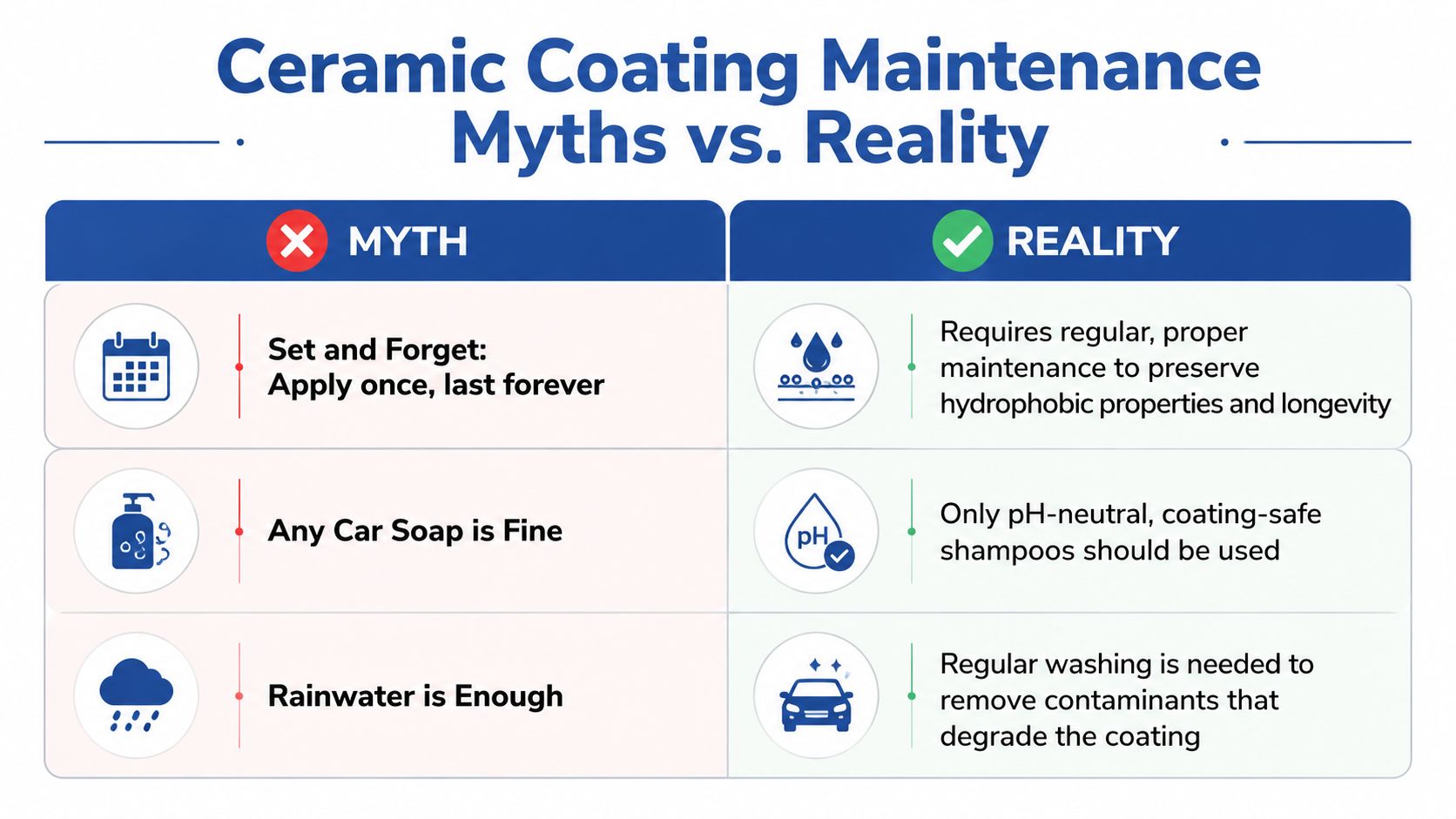
Is Ceramic Coating Really Set and Forget?
No ceramic coating eliminates ongoing care. The product can improve chemical resistance, gloss, and water behaviour, but the exposed surface still collects contamination and experiences repeated washing, weather, and drying cycles.
The set-and-forget promise usually fails because owners judge the coating only by its initial beading. Beading can weaken when the surface is dirty, while the underlying coating may still be present. Conversely, a neglected coating can develop uneven wear, etched spots, and dull areas that a quick spray can’t fully restore.
Three checks separate maintenance from wishful thinking
Decontamination removes bonded fallout and mineral residue that ordinary shampoo won’t lift. Australian aftercare guidance increasingly recommends iron-fallout treatment and light clay work every 3-6 months, depending on exposure, along with a yearly professional health check as explained in this ceramic-coating aftercare resource.
A maintenance booster renews the sacrificial surface layer and can bring back slickness when the base coating remains sound. Australian guidance commonly places booster use every few months, rather than treating the original application as permanently self-sustaining as discussed in this Australian ceramic-coating care article.
A visual inspection catches problems before they spread. Check panels in direct daylight or under a bright inspection light. Look for broad areas where water no longer moves cleanly, dull patches, roughness after washing, and spots that remain after safe decontamination.
Skipping those checks can create a false economy. A coating that has failed unevenly may need paint correction and reapplication, while a healthy coating may only need contamination removal and a suitable top-up treatment. For a deeper look at expected service life and maintenance responsibility, read how long ceramic coating lasts.
See How Long Ceramic Coating Lasts
How Do Perth Conditions Affect Your Coating?
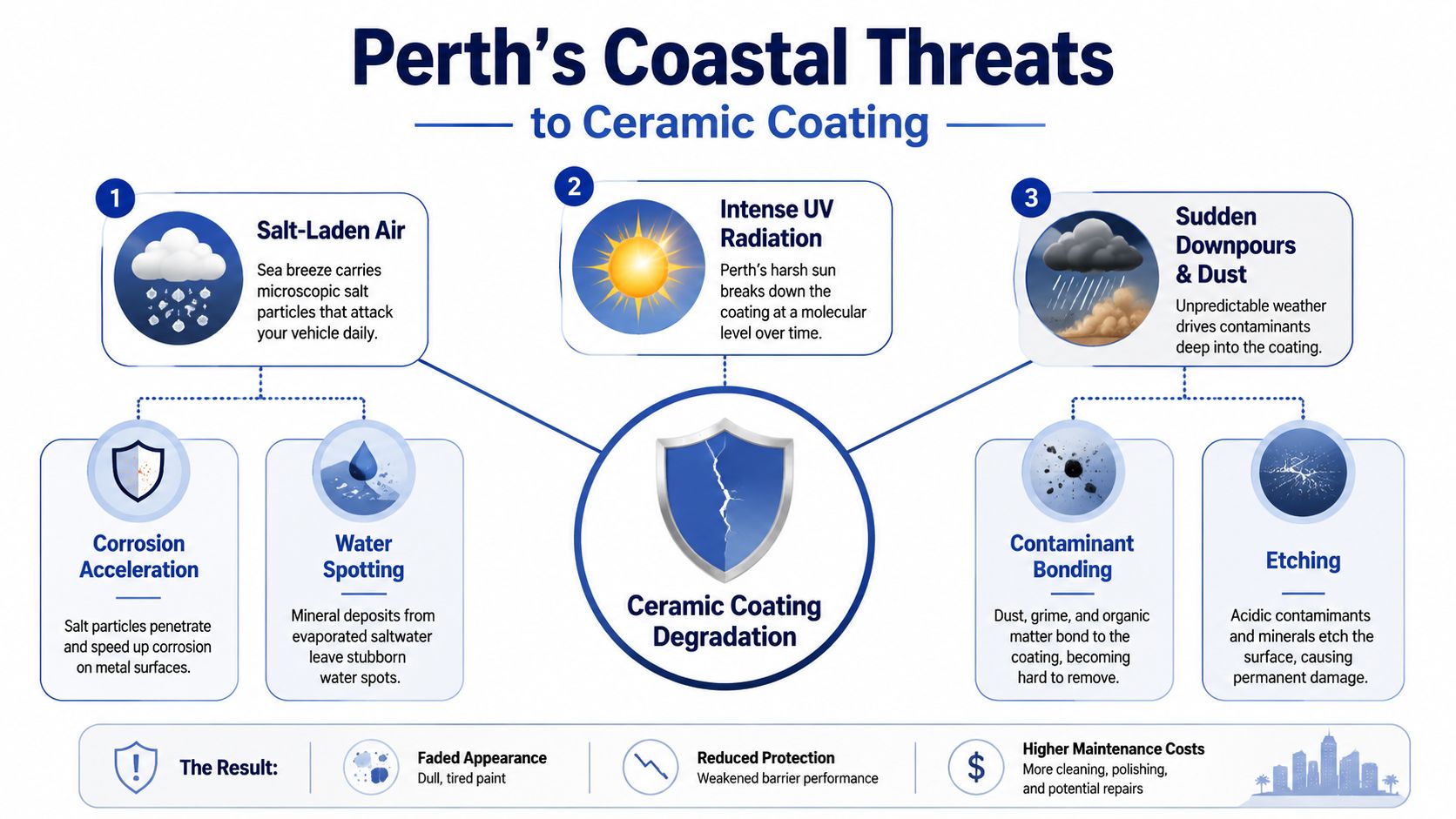
A car parked near Fremantle can look clean in the morning and carry a film of salt by afternoon. Add hard water, dusty roads, rain, and intense sunlight, and delayed washing becomes costly. A garaged vehicle in the Hills usually gets more time between washes, but Perth conditions still require a routine based on exposure rather than guesswork.
Salt becomes difficult when it dries on horizontal panels. Coastal air, road film, and moisture leave residue that bonds more firmly over time. Rinse the car after heavy coastal exposure, then complete a proper wash before the surface dries. Wiping dusty paint only drags grit across the coating.
Three local stress points
Coastal salt requires shorter wash intervals. Cars driven beside the coast or parked outdoors may need attention within the normal 7-14 day range, with an extra rinse after a heavy exposure. The aim is to remove salt early, not compensate later with stronger chemicals.
Hard water leaves mineral spots when droplets evaporate on hot paint. Wash in shade, dry immediately with clean microfiber, and avoid allowing rinse water to bake onto the panels. If spots remain after a safe wash, repeated cleaning may not remove them. A detailer should assess whether chemical treatment, decontamination, or polishing is suitable.
UV exposure gradually wears the coating’s sacrificial surface and weakens the sharp water behaviour associated with fresh protection. A suitable maintenance spray every few months can restore some slickness when the base coating is healthy. It cannot remove etched water spots or repair coating failure.
Adjust care to where the car lives
Inspect exposed vehicles more often, especially after rain or dusty trips. Rain may rinse loose dirt, but it can also leave salt, minerals, and road residue behind as the water evaporates.
Local aftercare guidance supports 7-14 day washing, shade washing, prompt drying, and periodic decontamination for coated vehicles in this maintenance reference. For Perth and wider WA, that cadence is a starting point. Shorten it when coastal salt or hard-water spotting is building, and seek professional assessment when marks remain after safe cleaning.
Which Habits Protect and Which Ones Destroy Your Coating?
The safest routine is usually the least dramatic one. Use clean media, reduce contact, remove contamination early, and don’t try to force a neglected panel clean with pressure or aggressive chemicals.
| Protective Habits, Do | Destructive Habits, Don't |
|---|---|
| Use pH-neutral shampoo: Choose a coating-safe formula for routine washing. | Use dish soap or harsh cleaners: Strong chemistry can weaken the maintenance layer and compromise surface behaviour. |
| Use two buckets with grit guards: Rinse the mitt before loading it with shampoo again. | Use automated brush washes: Mechanical brushes can create swirl marks across coated panels, as Australian guidance warns in this coating-care reference. |
| Dry with clean microfiber or filtered air: Pat or lightly drag water away without circular rubbing. | Wipe dry without lubrication: Dry dust and grit can create avoidable marring. |
| Remove bird droppings and sap promptly: Soften the deposit before lifting it from the surface. | Leave acidic contamination sitting: Bird waste and sap can etch when neglected. |
| Inspect and boost periodically: Renew surface slickness when the coating remains healthy. | Assume rain has cleaned the car: Rain can leave salt, dust, and minerals behind. |
The timing matters as much as the product. A booster can support a sound coating, but it can’t replace decontamination, correct water-spot etching, or compensate for poor washing technique.
The habit that protects the most is consistency. A gentle wash performed before contamination hardens is safer than a harsh recovery wash after weeks of neglect.
When Should You Call a Professional for Coating Care?
Professional help makes sense when careful washing and suitable decontamination do not restore the finish. Watch for water flattening across large panels, spots that remain etched, haziness on dark paint, or gloss that stays muted after a compatible maintenance product.
A professional inspection should distinguish surface contamination from coating failure. Under strong light, a detailer can assess roughness, check for bonded residue, and see whether reduced performance is concentrated on high-exposure areas such as the bonnet and roof. This prevents unnecessary polishing and clarifies whether the coating needs cleaning, a booster treatment, partial resealing, or complete removal and reapplication.
Know which intervention fits
A maintenance visit may include chemical decontamination, controlled clay treatment, paint-safe spot removal, and a compatible topper. Annual professional checks are also recommended in Australian aftercare guidance, particularly for Perth and WA vehicles exposed to coastal salt, hard water, and intense UV in this Australian ceramic-coating aftercare guide.
Partial resealing suits a vehicle where high-wear sections have lost performance while the remaining coating is healthy. Full strip-and-reapply work is reserved for widespread failure, severe etching, or a surface that no longer responds to safe maintenance. Perth pricing varies with vehicle size, condition, coating history, and preparation, so an inspection gives a more useful answer than a generic cost range.
Do not compound or polish casually. Removing paint or coating material without checking the remaining film can leave uneven protection and create extra preparation before reapplication. A careful assessment, such as the process discussed in this guide to professional hand detailing for ceramic coats, is safer when washing no longer restores the finish.
Prime Shine Hand Car Wash provides hand washing, exterior and interior detailing, paint correction, and ceramic-coating care for Perth drivers. Visit Prime Shine Hand Car Wash to book an inspection or maintenance service in Westminster.