







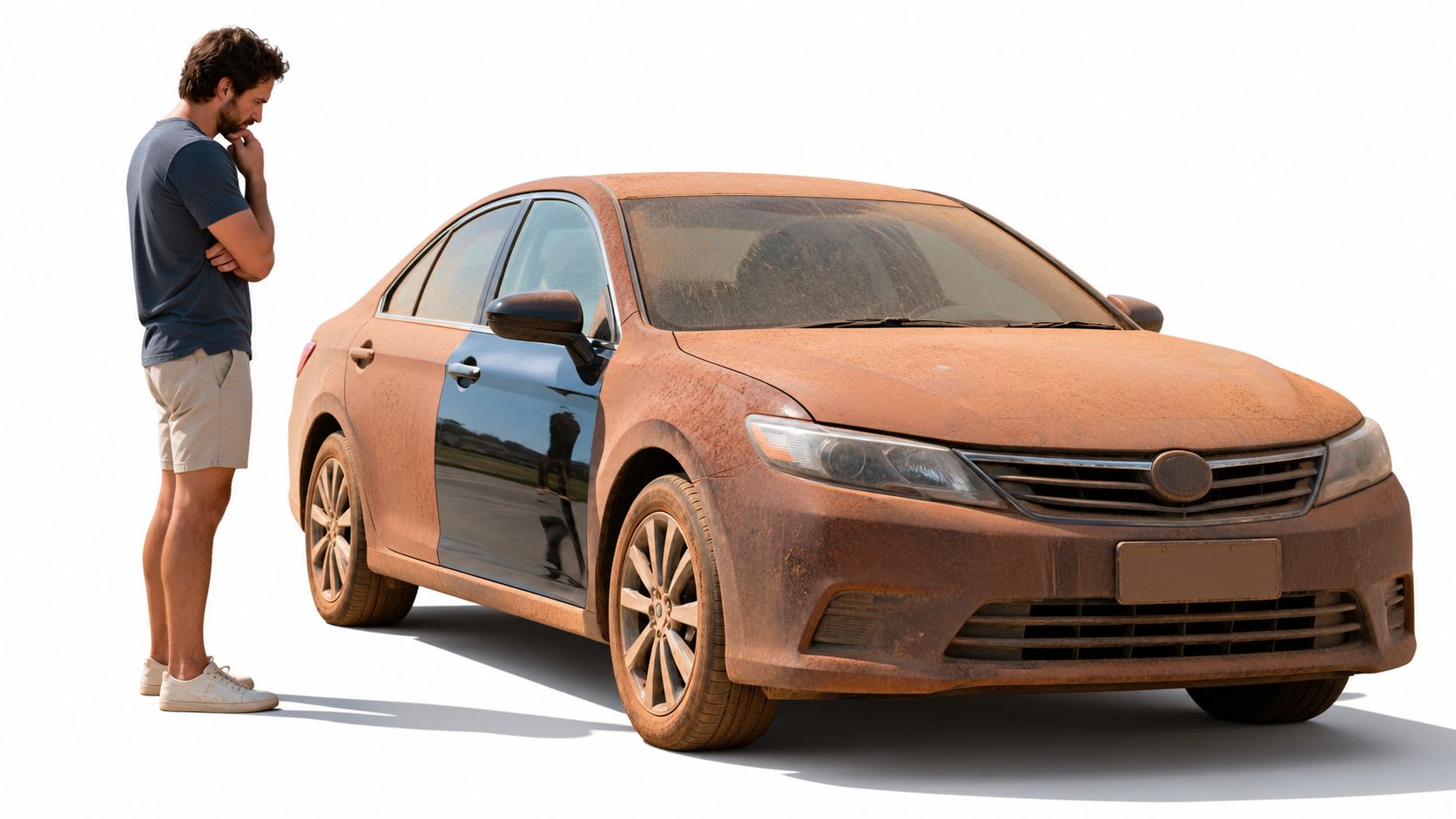
You’re standing in the driveway in Westminster, looking at a sedan that was washed yesterday but already looks dull under the Perth dust. The wheels still carry brake dust, the lower doors have road film, and the dashboard is marked with fingerprints that a quick vacuum won’t remove. That’s the moment many owners ask, is car detailing worth it, or would a basic wash do the job?
The honest answer depends on what you’re trying to achieve. A routine wash removes loose dirt. Detailing tackles the condition of the paint, cabin, glass, wheels, and trim, so the right choice depends on whether you’re maintaining a daily driver, preparing a vehicle for sale, returning a lease, or protecting a car you intend to keep.
A useful explanation of the process is available in this guide to what car detailing involves for Perth drivers. The key distinction is simple: detailing earns its price when it solves a condition problem that a standard wash can’t solve.
Is Car Detailing Worth It in 2026?
Car detailing is worth considering when the vehicle has accumulated more than surface dirt. A hand wash can remove dust and loose grime, but it won’t necessarily deal with bonded road film, embedded contamination, stains, pet hair, dull paint, or neglected door jambs. Detailing takes more time because it addresses those areas individually rather than treating the car as a quick pass-through job.
For a Westminster family car, the value may sit inside the cabin. Crumbs collect under child seats, fabric holds odours, and pet hair works into carpet fibres. For a seller, the priority shifts to clean glass, fresh upholstery, tidy trim, and paint that presents consistently in photographs and inspections. For an enthusiast, the concern may be swirl marks and a loss of gloss.
Practical rule: Don’t pay for the deepest package automatically. Pay for the specific problem you need fixed.
The Australian car wash and detailing services industry generated about A$608.4 million in revenue in 2026, compared with A$613.7 million in 2025 and about A$671.3 million five years earlier, according to IBISWorld’s Australian industry estimate. The same source estimates 1,683 businesses operating in 2026 and an annualised revenue decline of 3.4% over the five years through 2025–26. That suggests a substantial, established service category, but also a market where buyers should compare outcomes rather than assume every package delivers the same value.
If your vehicle only needs loose dirt removed, detailing may be unnecessary. If it needs restoration, hygiene work, sale preparation, or paint protection, a professional service can be a sensible maintenance expense rather than a cosmetic indulgence.
See What Car Detailing Includes
What You Actually Get From Professional Detailing?
A professional detail delivers more than shine. Its value comes from the combination of appearance restoration, protection, interior hygiene, and presentation.
Appearance restoration
The exterior process can include a careful hand wash, wheel cleaning, tyre treatment, drying, paint decontamination, and polishing. Clay bar treatment can help remove bonded contaminants that remain after washing. Where paint has light swirls or a tired finish, machine cutting and polishing can improve clarity and gloss, although it won’t remove deep damage that has reached beyond the clear coat.
The interior requires a different approach. Vacuuming removes loose debris, while steam cleaning or extraction addresses fabric, carpet, mats, and other areas holding embedded dirt. Leather can be cleaned and conditioned, and targeted pet hair removal can deal with material that ordinary vacuuming leaves behind.
Protection against local conditions
Perth vehicles face strong sun, airborne dust, road grime, and contamination from everyday driving. A wax or sealant adds a sacrificial layer that can make routine cleaning easier. Ceramic coating goes further by forming a durable protective layer over properly prepared paint. It can improve water beading, reduce the effort required for maintenance, and help preserve the finish, but it isn’t a substitute for washing and it won’t prevent every scratch or stone chip.
Cabin hygiene and comfort
A clean cabin affects how the vehicle feels every day. Removing old food residue, dust, stains, and pet hair can make a family car more pleasant without changing the vehicle itself. This benefit is practical, not just visual, particularly when several people use the car regularly.
Sale and lease presentation
The ABS defines a vehicle detailer as someone who cleans vehicle exteriors and interiors and touches up paintwork, glass, and upholstery to prepare vehicles for private or commercial use, sale, or rent, as described in the Australian occupation standard for vehicle detailers. A deeper breakdown of the work appears in this full car detailing and paint correction guide.
The result isn’t a guaranteed increase in selling price. It is a better-presented vehicle with fewer visible condition penalties, which matters most when buyers compare similar cars.
Explore Full Detailing Options
The Real Costs and Frequency of Car Detailing
Australian detailing prices commonly range from about $70 to $500 or more, depending on service depth, vehicle size, condition, and add-ons, as outlined in this Perth detailing cost guide. That range is broad because an exterior refresh and a multi-stage paint correction are different jobs, even though both may be described casually as “detailing”.
A neglected SUV may need more preparation than a well-maintained hatchback. Heavy pet hair, stained upholstery, tar, iron contamination, faded trim, and paint defects all add labour. Ceramic coating also requires proper preparation, and the protection choice affects the total price.
Match the service to how you use the car
A daily commuter parked outdoors needs a different plan from a weekend enthusiast’s vehicle. The commuter may benefit from regular exterior maintenance and occasional interior resets. The enthusiast may place more value on paint correction and coating preparation. A rideshare or delivery vehicle experiences constant passenger contact and may need frequent interior attention to remain presentable.
Don’t use a calendar alone to decide. Look at the condition and the purpose:
- Daily family vehicle: Prioritise cabin cleaning, mats, seats, trim, and a manageable exterior maintenance routine.
- Sale or lease return: Focus on presentation, odour removal, glass, paint clarity, wheels, and visible defects.
- Enthusiast vehicle: Consider decontamination, correction, and paint protection where the finish matters.
- Older low-value vehicle: A basic hand wash and interior vacuum may offer better value than extensive correction.
The broader Australian market remains significant. One outlook estimated the country’s car detailing services market at US$1,173.6 million in 2022, projecting US$2,192.9 million by 2030, with an 8.1% CAGR from 2023 to 2030. A separate car-care products report valued that market at about US$330 million in 2022 and forecast US$390 million by 2027, a 3.4% CAGR. These figures appear in the Australian car wash and detailing industry report, and they support the view that detailing-related spending is established, while still leaving the individual owner to judge whether the work solves a real problem.
Check Car Detailing Costs in Perth
Car Detailing Packages Explained for Every Need
The right package should reflect the vehicle’s condition, not the most impressive-sounding name. A basic wash is appropriate for maintenance. A full detail suits a car that needs a reset. Correction and coating make sense when paint condition and longer-term upkeep justify the extra work.
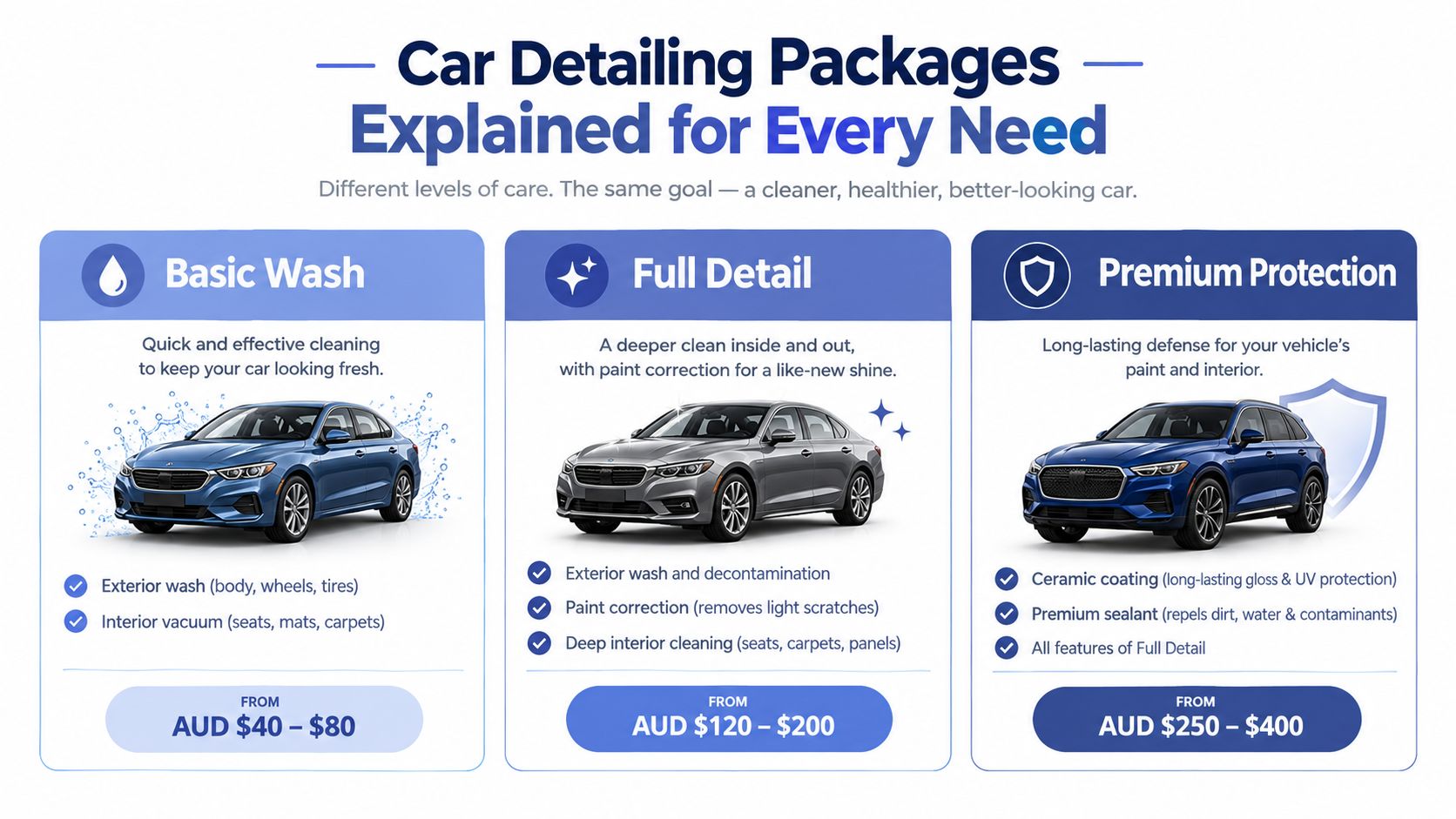
| Service Tier | Key Tasks | Ideal For |
|---|---|---|
| Basic wash | Hand wash, rinse, wheel clean, tyre shine, quick dry, with interior vacuum where included | Vehicles that are regularly maintained |
| Full detail | Deep interior and exterior cleaning, windows, trim attention, and condition-specific treatments | Family cars, neglected vehicles, and sale preparation |
| Paint correction | Wash, paint preparation or clay bar treatment, machine cutting and polishing | Vehicles with light swirls, dullness, or minor surface defects |
| Premium protection | Paint preparation followed by ceramic coating or another durable protection system | Owners keeping the vehicle long term and committed to proper maintenance |
Prime Shine Hand Car Wash’s menu illustrates how the tiers can work in practice. An Outside Car Wash covers the hand wash, wheels, tyre shine, and drying. An Inside & Outside Car Wash adds interior and boot vacuuming plus dusting of the dash, console, and trims. A Premium Car Wash adds hand wax and polish for extra gloss, while a Mini Car Detailing service includes the exterior refresh and door jamb cleaning.
Full Car Detailing is the reset option, with a deeper clean inside and out and attention to the windows. Cut & Polish adds paint preparation and machine polishing to reduce swirls and light scratches. Ceramic Coating is aimed at longer-term paint protection, improved water beading, and easier maintenance.
Choose the middle ground carefully: For many family vehicles, a thorough full detail offers more useful value than paying for correction or coating when the paint only needs cleaning.
Add-ons can solve specific problems without upgrading the whole vehicle. Leather cleaning and conditioning, seat and carpet steam cleaning, pet hair removal, headlight restoration, interior protectant, and spray wax each have a clear use. Ask which tasks are included, what condition the provider expects, and whether the quoted price changes after inspection.
Who Benefits Most From Regular Car Detailing?
Regular detailing is most valuable when the vehicle’s use creates a recurring problem. The question isn’t whether every car needs the same treatment. It is whether professional labour solves something that keeps costing you time, presentation, or comfort.

Families with active daily routines
Families often gain the clearest interior benefit. Food spills, sunscreen marks, dust, wet footwear, and pet hair are difficult to remove with a quick vacuum. A deep cabin clean can reset seats, carpets, mats, plastics, and touch points, while an exterior wash removes the grime that collects around doors and lower panels.
The service becomes easier to justify when the car is used constantly and several people depend on it. It isn’t necessarily worth paying for heavy paint correction on a practical family vehicle, but interior detailing and sensible exterior maintenance can make a noticeable difference to daily use.
Enthusiasts who care about finish
For an enthusiast, appearance is part of ownership. Swirl marks, haze, water spotting, and bonded contamination stand out more clearly on a carefully maintained vehicle. Clay bar preparation and machine polishing can improve paint clarity, while ceramic coating may suit an owner who wants easier washing and a more consistent finish.
Correction has limits. A professional should explain whether a defect can be reduced safely or whether it requires paint repair. Paying for a promise that exceeds the condition of the paint isn’t good value.
Rideshare, delivery, and fleet operators
Commercial vehicles function as moving customer spaces. Passenger marks, food residue, dust, and odours can accumulate quickly, so interior presentation has a direct operational relevance. Fleet managers may value consistent processes and predictable turnaround more than a one-off cosmetic transformation.
Australian occupation data provides useful context for the labour behind this work. The Jobs and Skills Australia profile for car detailers reports 17,200 employed workers, median weekly earnings of $1,240, and Western Australia accounting for 10.7% of employment. Those figures help explain why labour quality and regional availability affect the price of a proper service.
For each group, the break-even question is different. Families value a cleaner cabin, enthusiasts value finish quality, and operators value reliable presentation. Detailing is worth it when one of those outcomes matters enough to justify the labour.
Find the Right Detail for Your Car
Why Local Hand-Wash Specialists Outperform Automated Options?
The provider affects the result as much as the package. An automated wash can be convenient for loose dirt, but it follows a fixed process. A hand-wash specialist can inspect the paint, identify delicate areas, work around trim and badges, and adjust the service to the vehicle’s condition.
Start with four checks:
- Ask what the package includes. Confirm whether wheels, door jambs, glass, boot areas, mats, and drying are included.
- Ask how defects are handled. Paint correction should involve preparation and inspection, not aggressive polishing.
- Check pricing conditions. A transparent starting price is useful, but vehicle size and condition may change the final quote.
- Look for a repeatable process. A single site with direct quality control can make it easier to raise concerns and maintain consistent service.
Prime Shine Hand Car Wash operates from one Westminster site, uses hand-wash and detailing methods rather than automated brushes, and provides online booking with itemised packages and add-ons. Its service menu includes exterior washing, interior cleaning, paint correction, and ceramic coating, making it one local option for owners comparing service depth.
A hand-wash approach also has a practical water consideration in Western Australia. Guidance recommends using a bucket rather than a running hose, and one WA water-saving resource states that a running hose can waste up to 20 litres per minute, as explained in this Western Australian water-saving resource. Good providers should be able to explain their washing method and how they manage water responsibly.
For a plain explanation of the difference, read this guide to why hand washing can outperform an automated wash. The lowest quote isn’t automatically the cheapest outcome if it leaves marks, missed areas, or a second job to fix the first.
Final Verdict on Is Car Detailing Worth It
So, is car detailing worth it? Usually, yes, when the vehicle is a long-term asset, a family workspace, a commercial tool, or something you plan to sell soon. It is less compelling when the car is temporary transport, already clean, and unlikely to benefit from deeper work.
Use this practical test:
- Are you selling or returning the vehicle? Prioritise presentation, odour removal, glass, wheels, and obvious condition issues.
- Do you carry children, pets, or passengers regularly? Interior detailing may provide the strongest return.
- Do you care about paint quality? Consider correction or protection only after a proper condition assessment.
- Is the vehicle older or lower value? Choose a basic wash and vacuum unless a specific problem justifies more.
- Would doing it yourself take an entire weekend? Include your time, supplies, equipment, and the risk of damaging paint or trim.
DIY isn’t automatically cheaper. It can be sensible for routine washing, but deep cleaning requires suitable products, tools, space, water, and patience. An inexperienced attempt at machine polishing can create more visible defects, while incomplete interior cleaning can leave stains or odours behind.
Australian market commentary places detailing within the wider process of inspection, reconditioning, and merchandising for used-car transactions, as discussed in this Australian used-car market analysis. That doesn’t guarantee a higher sale price, but it supports a clear conclusion: presentation matters most when another person is judging the vehicle.
If your goal is a cleaner cabin, better sale readiness, or easier maintenance, choose the smallest service that solves the problem. That is the practical answer, and it is more useful than treating detailing as an automatic yes or no.
For a Perth vehicle that needs a careful reset or ongoing maintenance, Prime Shine Hand Car Wash offers hand washing, interior and exterior detailing, cut and polish, and ceramic coating at its Westminster site. Review the service options, match the package to your vehicle’s condition, and book the level of care that supports how you use the car.