








You’ve just parked under a gum tree, or rolled home from the coast with a fine salt film on the glass and a bit of brake dust on the wheels. The car still looks fine from ten paces, but the paint doesn’t stay healthy because it looks fine from ten paces. A Premium Car Wash schedule should match how you use the car, where it sleeps, and what protection is already on the paint, not some neat rule that sounds tidy but ignores Perth life.
Why Your Wash Schedule Should Match Your Car?
A Perth weekday morning tells the story pretty quickly. One car has crossed Stirling Highway with a light salt haze settling in from the coast, another has spent the night under a gum tree, and a third has done the school run, the work commute, and a late supermarket dash before sunrise. Those cars don’t need the same wash timing, because they haven’t collected the same contamination.
A cookie-cutter fortnightly rule ignores the difference between coastal salt, inland dust, bird droppings, and the grime that builds up on cars that sit outdoors all week. A vehicle parked in a garage and driven sparingly won’t need the same cadence as one that lives on the street and cops the lot. The right schedule protects clear coat, trim, and glass before the surface starts to dull.
The car tells you more than the calendar does
I’d rather read a car than a reminder app. If the bonnet is collecting a film after a few days, or the windows are going streaky in the rain, the paint is already asking for attention. If you wait until the car looks properly dirty, you’re usually washing late, not early.
That’s why a personalised wash rhythm makes more sense than a fixed date on the fridge. You don’t need more washes because someone else’s car does. You need the right interval for your environment, your use, and your protection level.
Practical rule: if the car lives hard, wash it hard enough to keep the finish from carrying the damage.
The Four Factors That Decide How Often You Wash
Environment first, because Perth isn’t one clean box
Coastal drivers deal with salt air and more surface grime. Inland drivers often get dust, construction fallout, and dry road film that settles into badges, seams, and window rubbers. If you park near busy roads or worksites, the car usually needs more frequent attention than a suburban garage queen.
Usage changes the pace fast
A daily commuter racks up contamination differently from a weekend car. Long freeway runs, off-road use, towing, school runs, and rideshare mileage all load the vehicle with different kinds of dirt. A car that carries passengers for work needs a cleaner cabin and a fresher exterior more often than a car that only comes out on Sundays.
Storage either slows the mess or lets it sit
A carport helps. A garage helps more. Open-air parking lets bird droppings, tree sap, dew, and dust sit on the surface longer, and that extra dwell time is what causes trouble. If the car sleeps outside, shorten the gap between washes.
Protection level decides how forgiving the paint is
Bare paint needs more care than waxed paint, and waxed paint needs more care than sealed or coated paint. A ceramic-coated car doesn’t stop getting dirty, but it usually gives you a bit more breathing room because contaminants don’t cling as quickly. Stack two or three harsh factors together, and a monthly wash becomes a fortnightly one very quickly.
Prime Shine’s regular hand wash and detailing guide lines up with that logic, because the right interval is always tied to how the vehicle is used.
Useful shortcut: if the car faces coast, street parking, and heavy daily use, don’t stretch the schedule just because the paint still has shine.
Home Upkeep vs a Professional Hand Wash
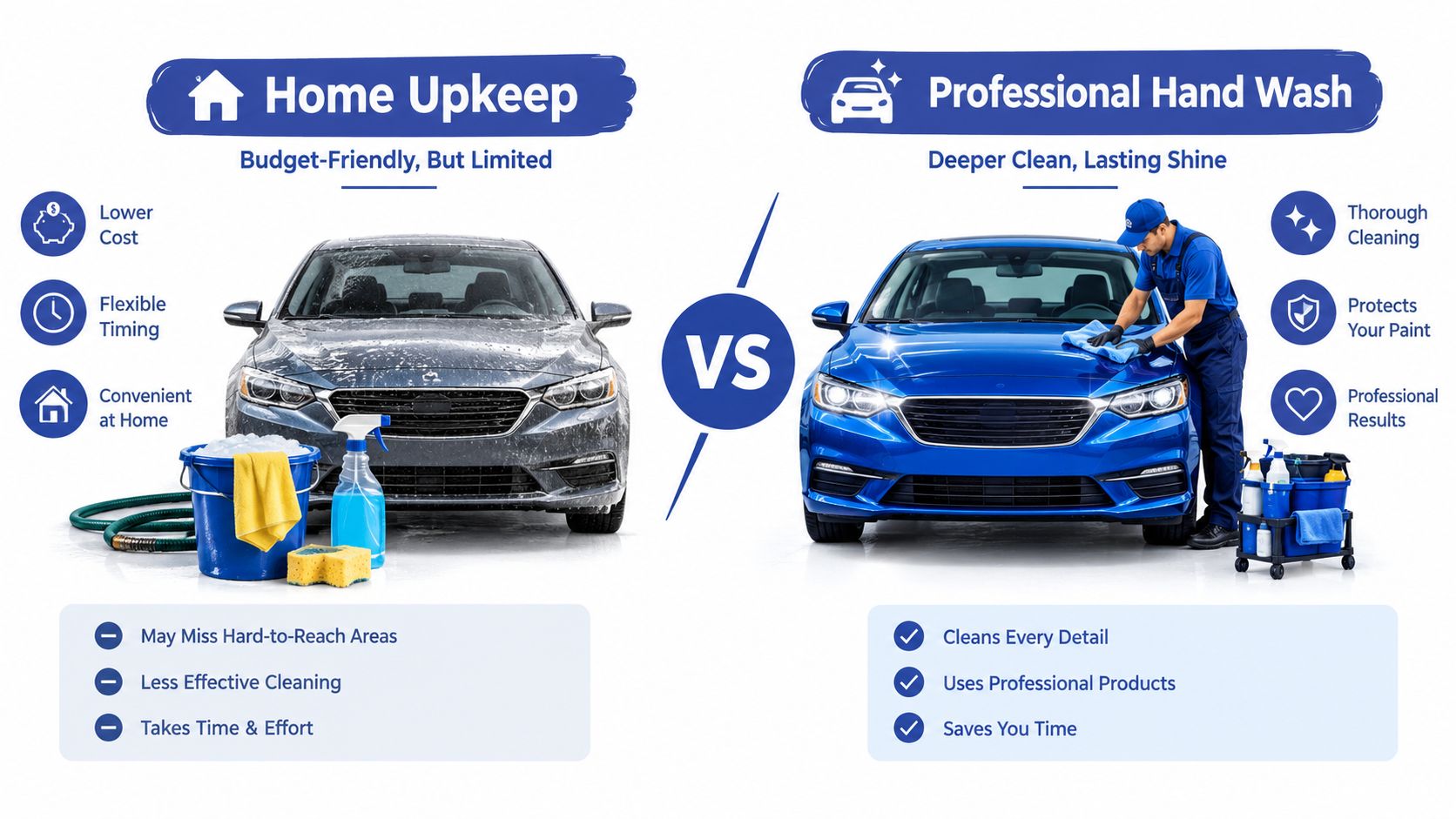
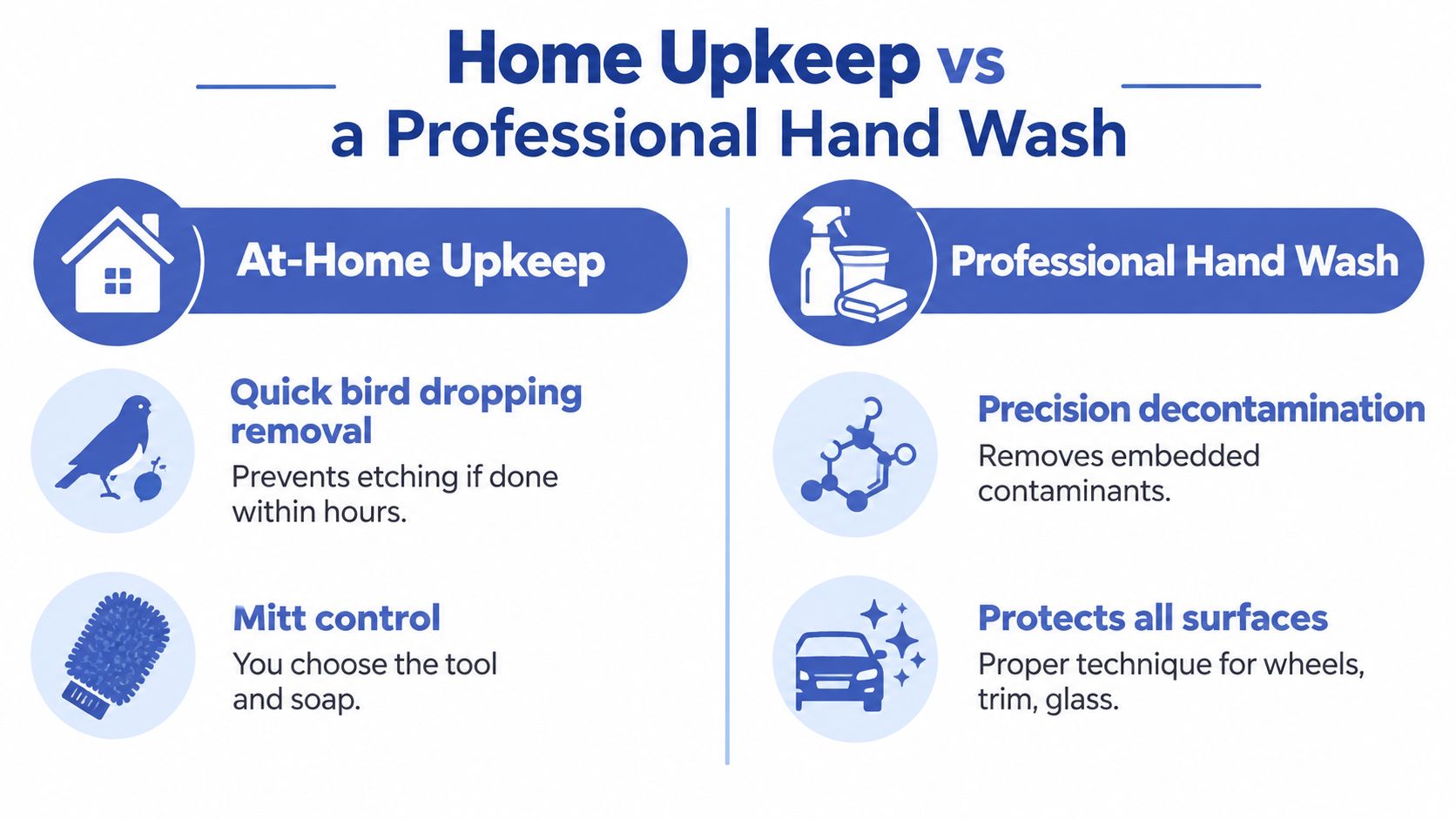
A quick rinse at home has a place. If you catch bird droppings early, use a decent mitt, and keep the soap clean, you can stop the car from going downhill between proper washes. Home upkeep is good for maintenance, not for rescue.
What it can’t do well is the deeper work. Bonded contaminants, wheel grime, stubborn road film, and the buildup around emblems, door handles, arches, and glass edges need a steadier process and better technique. That’s where a professional hand wash earns its keep, because the surface gets cleaned in a sequence that’s designed to remove contamination instead of shifting it around.
Use home care as a bridge, not a replacement
I tell drivers to use at-home rinses for the in-between days and book a proper hand wash when the car starts feeling sticky rather than smooth. If the paint is losing its slick feel, the wheels are caked, or the glass is hazing up in the rain, it’s time to stop improvising. That’s when a Premium Car Wash pays off, because the car leaves with a cleaner finish and a light protective layer instead of just looking wet for an hour.
A good split is simple, home care for touch-ups, professional hand washing for a complete reset. This hand wash overview is worth reading if you want to understand why the process matters as much as the result.
Wash Schedules for Perth Drivers, Families, Fleet and Enthusiasts
The best schedule depends on what the car does every week. A commuter’s car, a family SUV, a rideshare cabin, and a weekend coupe all age differently, so they shouldn’t be washed on the same rhythm. Here’s the schedule I’d put my name to.
| Driver Type | Recommended Frequency | Recommended Service | Notes |
|---|---|---|---|
| Daily Perth commuter | Weekly, or more often in harsher summer conditions | Express Exterior Hand Wash | Best when the car faces coastal air, traffic film, and open-air parking |
| Family vehicle | Fortnightly, then weekly when dust or pollen builds | Premium Hand Wash with interior vacuum | Good for school runs, sports gear, and beach weekends |
| Rideshare or fleet vehicle | Several times a week, plus a monthly reset | Premium Hand Wash and Mini Detail | Keeps the cabin presentable for passengers and resets high-touch areas |
| Weekend or luxury vehicle | About every ten days, with deeper seasonal attention | Signature Hand Wash and a regular Full Detail | Suits cars that need presentation and long-term finish care |
Pick the service that fits the car’s job
A commuter doesn’t need the same treatment as a car used for passenger work. If your car is a daily tool, keep the exterior schedule tight and don’t let brake dust sit on the wheels. If it’s a family vehicle, the interior starts to matter just as much as the paint, because crumbs, sand, and spill marks make the cabin feel older fast.
My view: the right wash schedule should make the car easier to live with, not just shinier on the day.
Luxury and enthusiast cars need a cleaner baseline and gentler handling. That’s where a careful hand wash with paint-safe drying matters most. Prime Shine’s Perth premium wash guide fits that kind of driver because it ties appearance to routine, not luck.
Match Your Car to the Right Wash
When a Ceramic Coating Changes the Rules?
A ceramic coating does not remove washing from the routine. It changes the pace and makes each wash easier to do properly. Water beads better, grime sticks less, and regular contamination comes off before it has time to settle into the paint.
Australian guidance on ceramic paint protection puts typical durability at 2 to 5 years when it is maintained properly, and that still means hand washing with a soft mitt, sensible soap, and the two-bucket method. I would not send a coated car through a brush wash or hit it with a harsh degreaser, because that works against the protection you paid for.
Coated paint still needs a rhythm
A coated car can usually go a little longer between washes, but I would still keep it on a two to three week hand-wash rhythm if it sees normal road use. Add a yearly decontamination wash and refresh the silica top-up when the water behaviour starts fading. That keeps the coating doing its job instead of letting grime sit on top of it.
For the durability side of the story, this ceramic coating guide gives the practical breakdown. Coated paint stays easier to clean, but only if you keep washing it the right way.
Reading the Signs Your Car Needs a Wash
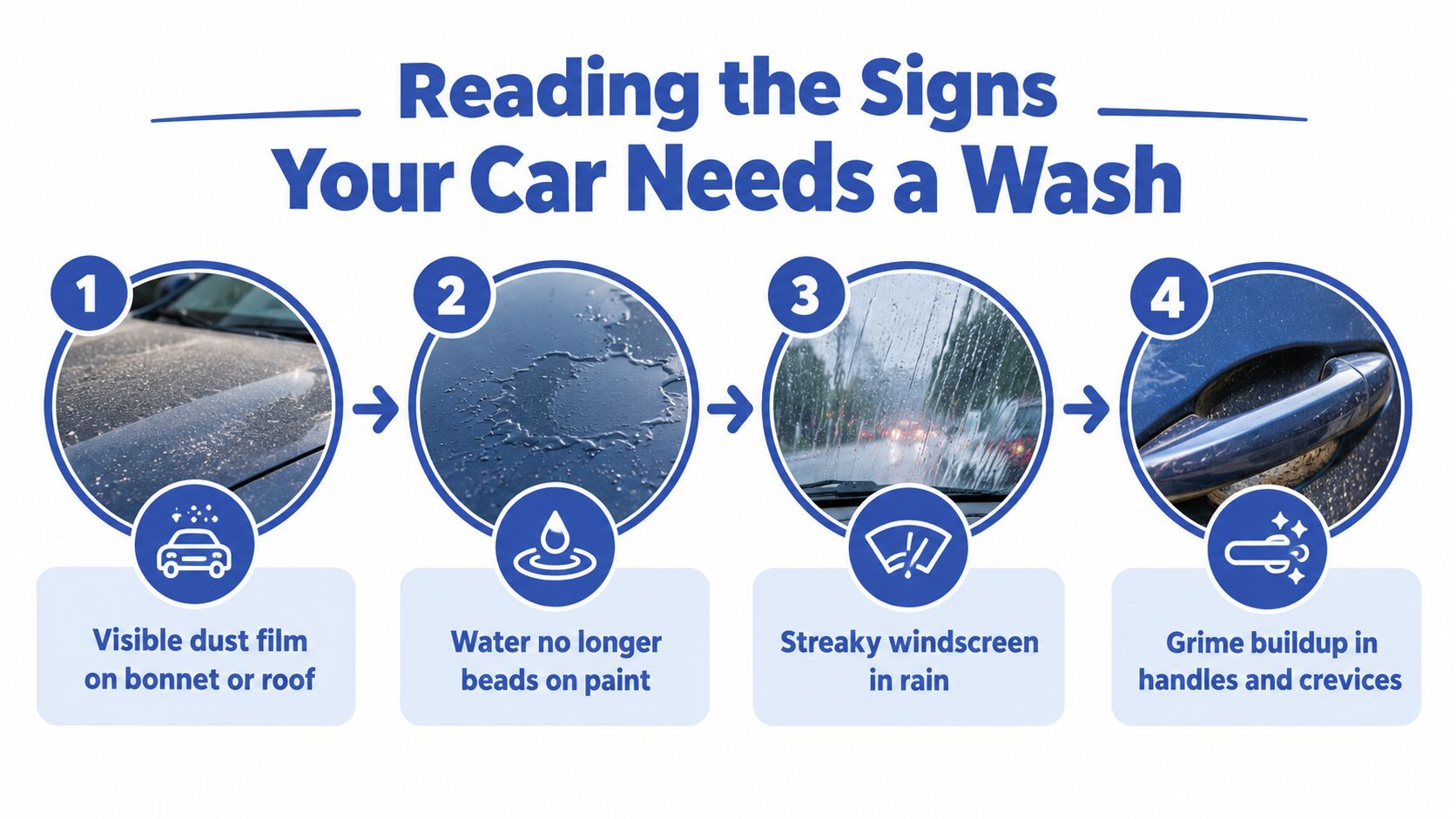
The calendar is useful, but the car is better. If there’s a visible dust film on the bonnet or roof, contaminants are already sitting on the clear coat. If water no longer beads and starts sheeting flat, the protection isn’t behaving the way it should.
Bird droppings, insect splatter, and tree sap should be dealt with quickly, because once they sit, they start working into the finish. On a Perth car, strong UV makes that worse. Wheels that won’t release brake dust with a normal rinse, dirty door handles, smudged glass, or a sticky steering wheel all tell the same story, the car is overdue for proper attention.
Use signs as triggers, not excuses
If one sign shows up, watch it. If two or three show up together, book the wash. That’s the point where the car has moved from looking used to carrying contamination that can damage finish and visibility.
A hand wash with interior vacuum is usually the right response when the cabin is sending signals too. Food crumbs, dusty vents, and greasy touch points don’t fix themselves, they just make the car feel neglected. Watch the panels, the glass, and the cabin, and you’ll know when the car needs action.
Common Wash Myths Worth Letting Go
The first myth is that a quick drive-through wash is harmless. It isn’t. Old-style bristles and dirty contact points can drag grit across the clear coat, and that leaves fine swirl marks that become more obvious under strong sun.
The second myth is that washing in direct midday heat is fine if the car has cooled first. It still causes problems, because water flashes off too quickly and leaves spots behind before you’ve finished the panel. Darker paint shows it more clearly, but every colour suffers when the rinse dries too fast.
Cheap habits often cost more paint than they save money
The third myth is that one detailed clean a year can make up for rough home washing in between. It can’t. If the mitt is dirty, the soap is weak, or the technique is sloppy, the same grime gets dragged back across the surface and the paint slowly loses clarity.
A better habit is simple, wash gently, dry properly, and book professional hand washing on the rhythm your car needs. That keeps the finish cleaner for longer and stops tiny mistakes from becoming permanent dullness. If you’ve been treating every wash the same, that’s the habit worth breaking.
Prime Shine Hand Car Wash handles the wash, vacuum, detailing, paint protection, and the small finishing jobs that keep Perth cars looking right between drives. If your car lives near the coast, carries family mess, or works for a living, book a schedule that suits the way you use it and see the difference at Prime Shine Hand Car Wash.