





Your car’s dusty again, the sun’s out, and you’re weighing up whether to drag out the hose, try a quick wipe, or book a proper clean. That’s the normal outside-car-wash decision most drivers face, especially when the paint looks dull but the thought of wasting water, time, and effort feels worse than leaving the dust for another day. The question isn’t just what gets the car looking tidy, it’s what gets it clean without grinding grit into the clear coat.
The Dilemma of Keeping Your Car Clean
A dirty car usually starts small, a film of dust after a commute, a bit of road grime after weather changes, brake dust settling on the wheels. That is when the choice shows up, grab a quick DIY wipe, or go to a controlled bay and let the wash be handled properly.
The shortcut can be more expensive than the wash. Car wash and detailing work is a mature repeat-service market, so operators survive on consistent process, clear pricing, and methods that protect paint while still moving vehicles through efficiently.
That matters because paint safety is not just about getting the car to look clean. A rushed wipe on a gritty panel can leave swirl marks that only show when the sun hits the bonnet, and those marks are hard to ignore once they are there.
A practical rule helps. If the car only needs maintenance, a gentle exterior wipe can be enough. If it needs a proper reset, a controlled hand wash is the safer path.
For Perth drivers, that trade-off is familiar. You want the car looking fresh, but you do not want to trade a little dust for marks you will see every time the light catches the paint.
What Is a Rinseless Outside Car Wash?
A rinseless wash is a contact-cleaning method that uses a lubricated solution to loosen dirt so it can be lifted away with microfiber towels, without a full hose-down first. The chemistry matters because the solution is supposed to surround light grime, reducing the chance that the dirt is dragged across the paint surface while you wipe.
That’s different from a waterless spray-and-wipe product, which is better suited to tiny spot jobs and very light contamination. It’s also different from a traditional bucket-and-hose wash, where water is used to flush away more contamination before the contact stage. In practice, rinseless sits between those two, it’s more involved than a quick detail spray, but far less forgiving than a full wash bay.
The key idea is simple. You’re trying to lift dirt into the towel’s fibres, not scrape it across the clear coat. If the panel is only lightly dusty, that can work well. If the paint is carrying road grit, tyre residue, or baked-on contamination, the same towel can become a carrier for micro-abrasion.
Here’s the part people miss. The method isn’t only about the bottle you buy, it’s about whether the surface is clean enough for that bottle to do its job.
If you’re looking for a controlled hand-wash option instead of trying to manage the whole process at home, the service details at hand car wash near me show how a professional setup is structured around exterior cleaning, wheel care, and drying.
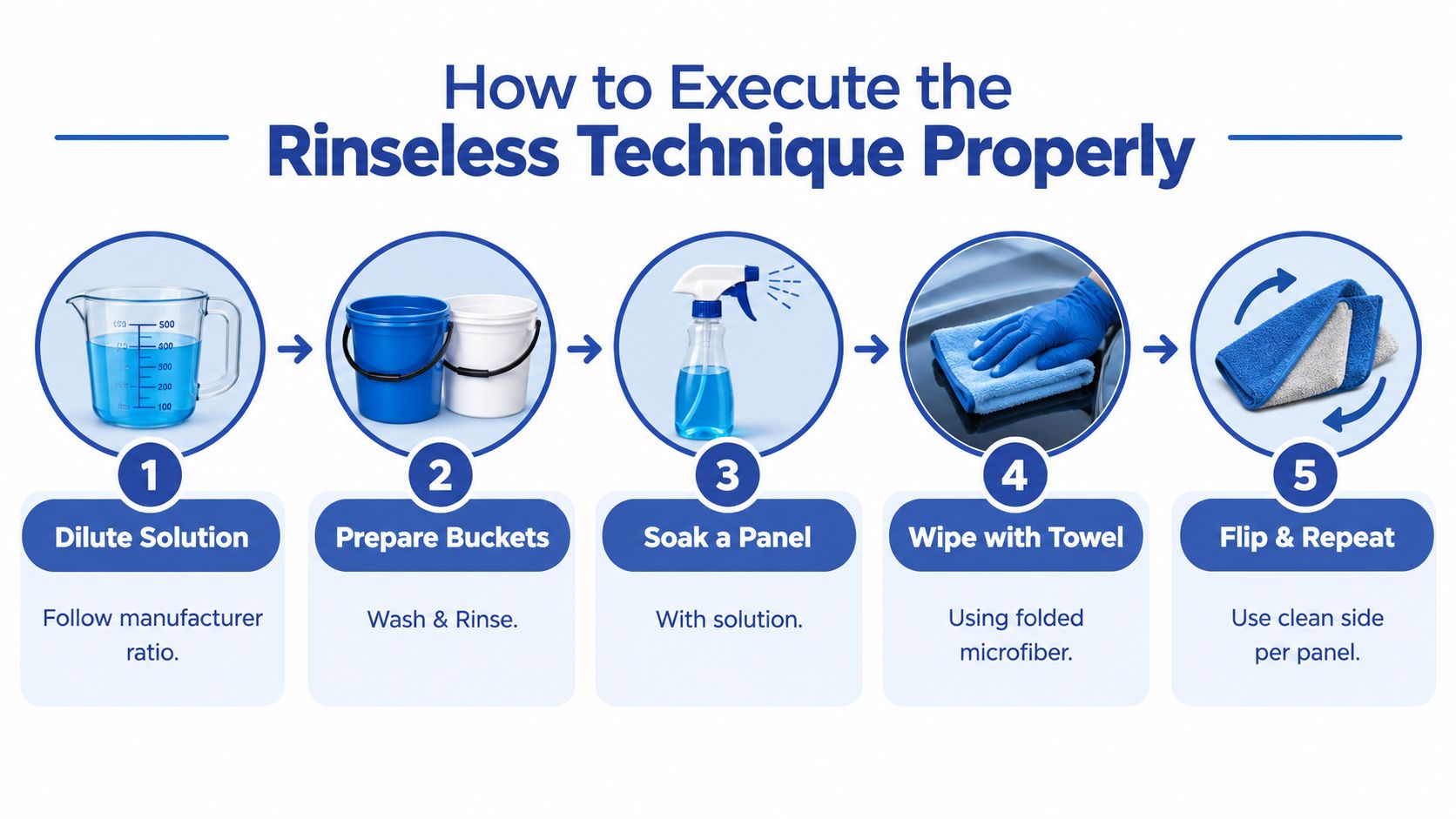
How to Execute the Rinseless Technique Properly?
A rinseless wash only works when the process stays disciplined from the first panel to the last. The solution needs enough lubrication to let grime release, and the towels need to stay clean enough that you’re not reintroducing dirt with every pass.
The towel handling is the real control point
A clean microfiber towel folded into multiple faces gives you fresh contact surfaces as you move across the car. Wipe one straight section, then turn the towel to a clean side before that side becomes loaded with contamination. If a panel feels gritty, stop. Don’t keep rubbing harder and hope the problem disappears.
Dirty towel management is the difference between a neat maintenance wipe and a paint-correction problem.
That’s why the multiple-towel habit matters more than most DIY videos admit. A single towel used across the whole car quickly becomes a dirt carrier. Once that happens, the process stops being rinseless care and starts becoming controlled marring.
The car’s condition decides whether the method is worth using
A lightly dusty bonnet is one thing. A lower door covered in road film is another. The lower on the body you go, the more likely you are to pick up contamination, so those panels need more caution or a different wash altogether.
The mistake is treating rinseless like a universal cleaning method. It isn’t. It’s a maintenance system for cars that are already in decent shape and just need a safe refresh between proper washes.
For drivers comparing maintenance approaches, the practical guide at eco-friendly guide for Perth drivers fits this same logic, because water control only helps if the surface is being cleaned without unnecessary abrasion.
Weighing the Pros and Cons of Rinseless Washing
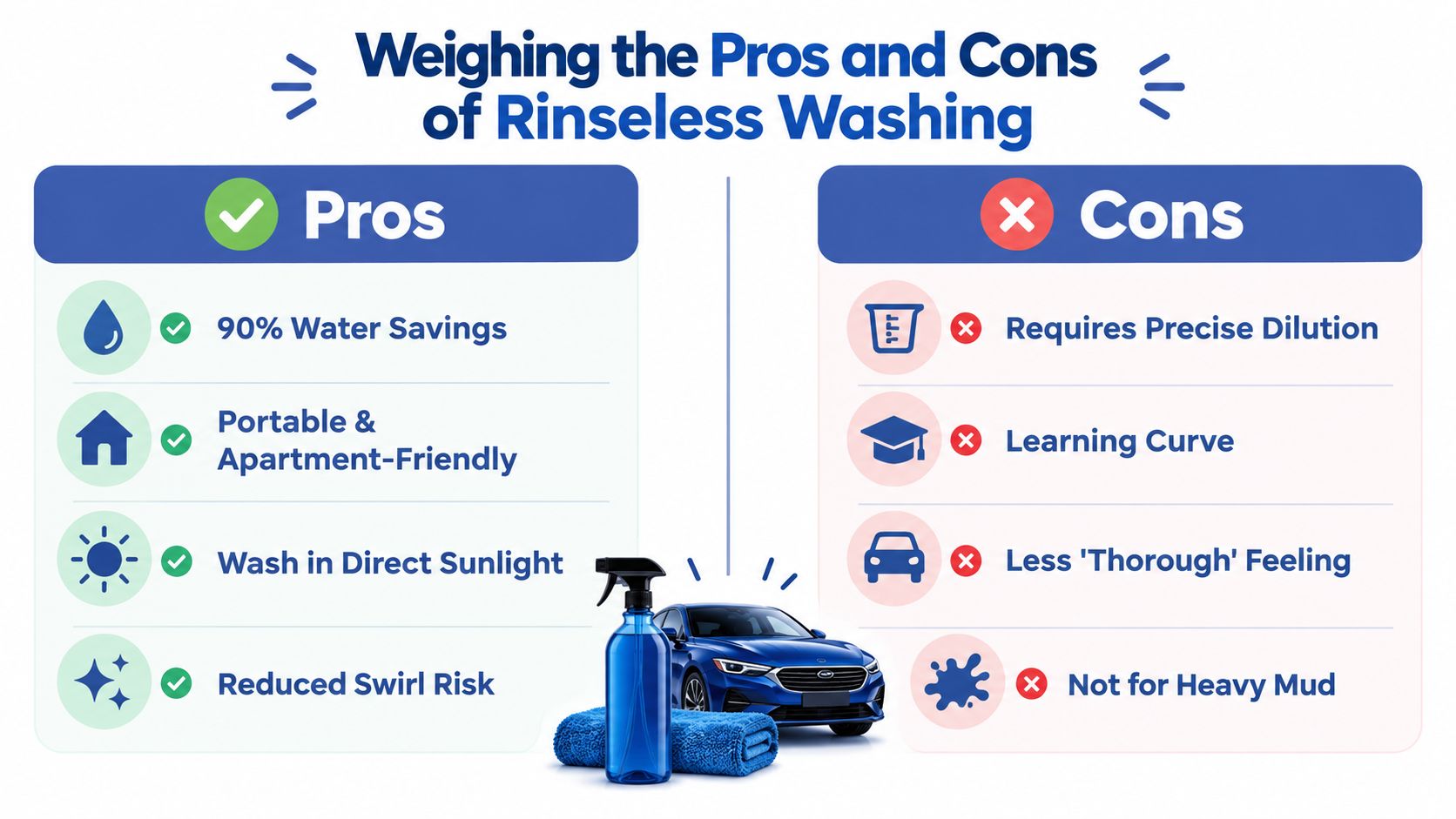
The main appeal of rinseless washing is simple, it can use far less water than a traditional hose setup. Australian water guidance supports lower-water methods such as bucket washing, trigger-nozzle use, biodegradable detergent, and low-flow high-pressure cleaning for more controlled exterior care. A well-run rinseless routine follows that same idea, especially for apartment residents or anyone without easy access to a wash bay.
It also saves time in the right conditions. If the car is only lightly dusty, you can work in a small space, avoid overspray, and finish a quick maintenance clean without much setup. That practical speed is why many drivers use it between proper washes.
The trade-off is paint safety. Rinseless washing depends on careful technique, and that is where mistakes show up. Heavy grime gives the towel more chance to pull abrasive particles across the paint, which is how swirl marks and micro-scratches appear. Dark paint shows those defects quickly in direct light.
A hose flushes loose grit away before you touch the panel. A rinseless towel does not. It relies on your judgment, your towel load, and your discipline to stop when a panel starts to feel risky.
Practical rule: the dirtier the lower panels, the less forgiving rinseless washing becomes.
A rinseless wash can be smart on a clean, maintained car. On a heavily contaminated exterior, the hidden cost is often paint correction later.
Ideal Use Cases for a Quick Rinseless Wipe Down
Rinseless washing earns its place when the car is only lightly dusty and the goal is cosmetic maintenance, not restoration. That includes a garage-kept vehicle that just needs a fresh look before the weekend, or a car that’s been parked long enough to collect a film of dust but not enough road grime to need serious rinsing.
It also makes sense for targeted spots. A bird dropping, a fingerprint on a clean door, or a patch of pollen on a bonnet can often be handled without a full wash, provided the surface isn’t packed with grit. The trick is to keep the contact area small and the towel clean.
For fleet or rideshare use, the appeal is different. A driver doesn’t always need a full deep clean between shifts, just a quick exterior reset that keeps the car looking cared for. That’s where a rinseless wipe can be useful as long as the vehicle has already been properly washed recently.
The line is easy to remember. If the dirt is light and the paint is smooth, a rinseless wipe-down can be efficient. If you can feel grit, see heavy road film, or notice dirty buildup around the lower panels, you’re past maintenance territory.
A rinseless wash should save time on a clean car, not rescue a neglected one.
If you’re working through this choice often, the easier habit is to judge the surface before you start. That single check prevents a lot of unnecessary paint damage.
When to Choose a Professional Hand Wash Instead?
A professional outside car wash makes more sense when the car needs a proper exterior reset. Road film, brake dust, and heavy grime on the lower panels are hard to lift safely with a towel alone. In that situation, a controlled bay gives you better cleaning order and less chance of dragging dirt back across the paint.
The advantage is paint safety. A technician can start with the dirtiest areas, rinse in a controlled way, and work panel by panel so contamination is removed instead of smeared around. That matters when the surface already carries grit, because DIY rinseless washing on a dirty car can leave fine swirl marks even if the wash seems gentle.
Water use also depends on how the wash is set up. Industry guidance notes that professional bays commonly use a measured amount of water per vehicle, and efficient systems can reduce that further through better control and recycling. The practical point is simple. A good bay does not waste water just to move more dirt. It uses enough rinse and agitation to clean the car properly.
The controlled environment is what most DIY setups miss. Clear procedures, proper rinse pressure, and the right cleaning sequence help avoid grinding stubborn particles into the finish. That is why a hand wash is the better call once the car is beyond light maintenance and the goal is a clean result without adding defects.
Professional washing is about removing dirt without adding defects.
For a Perth driver, the choice usually comes down to condition, not convenience. If the car has road film, dirty wheels, or lower-panel buildup, a professional hand wash is the safer option. A service outline like hand car wash in Perth shows the kind of controlled workflow that suits a vehicle needing more than a quick wipe.
Making the Right Choice for Your Vehicle
A clean finish starts with reading the surface. Light dust and fresh road film can suit a rinseless wipe-down, but gritty lower panels, dirty wheels, or a car that has gone too long without an exterior clean call for a controlled wash bay. When the surface feels rough, book an outside car wash at Prime Shine instead of dragging that contamination across the paint.
The reason is simple. Clear coat wear builds over time, and each extra pass with trapped grit increases the risk of fine marks that dull the finish. Owners who plan to keep the car looking sharp, or protect resale value, usually get better results by choosing the method that matches the car’s condition rather than the quickest option.
Prime Shine Hand Car Wash offers hand cleaning, wheel clean, tyre shine, and quick dry, with other detailing services if the vehicle needs more than a surface refresh. It is a practical choice when you want the exterior cleaned in a controlled environment and the paint kept safer from unnecessary swirl marks.