
















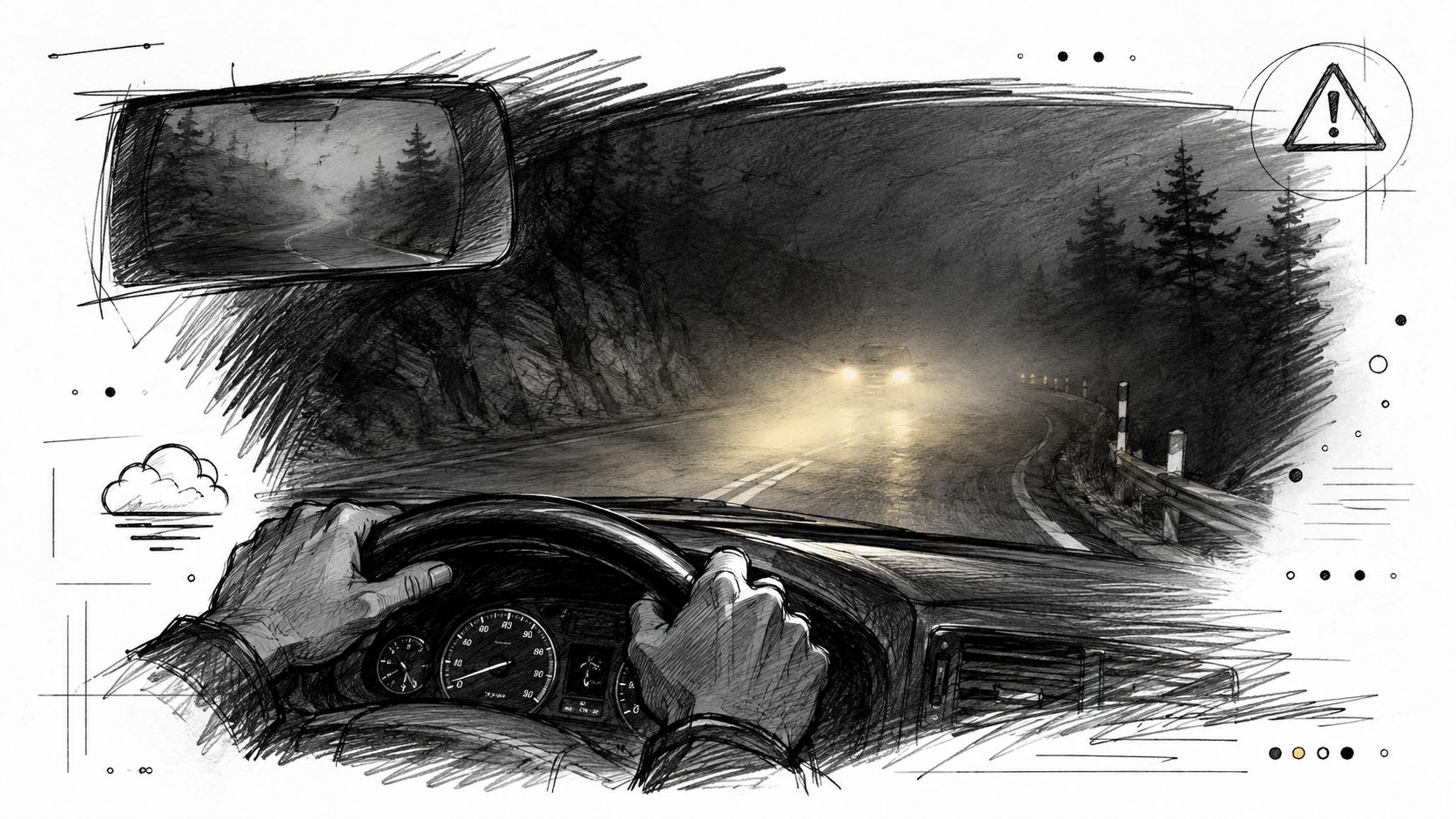
You notice it on an evening drive home. The road ahead looks darker than it should, oncoming lights flare harder than usual, and your headlights seem to throw a weak, muddy beam instead of a clean spread. In Perth, where bright sun, heat, dust and daily driving all work against plastic lenses, cloudy headlights aren’t just an appearance problem. They change how well you can see and how well other drivers can see you.
A proper headlight restoration service fixes that by removing the failed outer layer and replacing it with protection that lasts. Done well, it improves clarity, sharpens the look of the car, and costs far less than replacing the whole assemblies. Done poorly, it can leave you with temporary shine and the same problem again a few months later.
Why Your Cloudy Headlights Are a Major Safety Risk?
If your headlights look yellow, chalky or hazy in daylight, they’re usually performing worse at night. The lens is the final surface that shapes and projects the beam. Once that surface goes dull, light output becomes less clean and less effective where you need it most, on the road ahead.
That matters most on dark suburban streets, wet winter roads, early morning commutes and country drives outside Perth. You’re not only dealing with less useful light from your own car. You’re also fighting glare, reflections and reduced contrast, which makes it harder to pick out lane markings, kerbs, pedestrians and debris quickly.
What drivers usually notice first
Drivers often don’t book a headlight restoration service because they’ve inspected the lens under workshop lighting. They book it because driving starts to feel harder.
- Night visibility drops: The beam looks dimmer even after fitting fresh globes.
- The car looks older than it is: Oxidised lenses drag down the whole front end.
- Rain makes things worse: Wet roads throw light back at you, and cloudy lenses reduce usable contrast.
- Cleaning doesn’t help: Washing removes surface dirt, but not the damaged outer layer.
Cloudy headlights don’t fail all at once. They fade gradually, which is why many drivers adapt to the problem without realising how much clarity they’ve lost.
Why restoration usually makes more sense than waiting
Once the lens has oxidised, the problem won’t reverse on its own. Left alone, the damage usually keeps building. A proper restoration removes the failed surface and reinstates protection, which is why it’s often the most practical fix before damage becomes severe enough to push you toward replacement.
There’s value in the cosmetic side too, but safety comes first. A clear lens gives the headlight the best chance to project light the way it was designed to.
The Science Behind Restoring Headlight Clarity
Headlight restoration is a surface correction job, not a cleaning job.
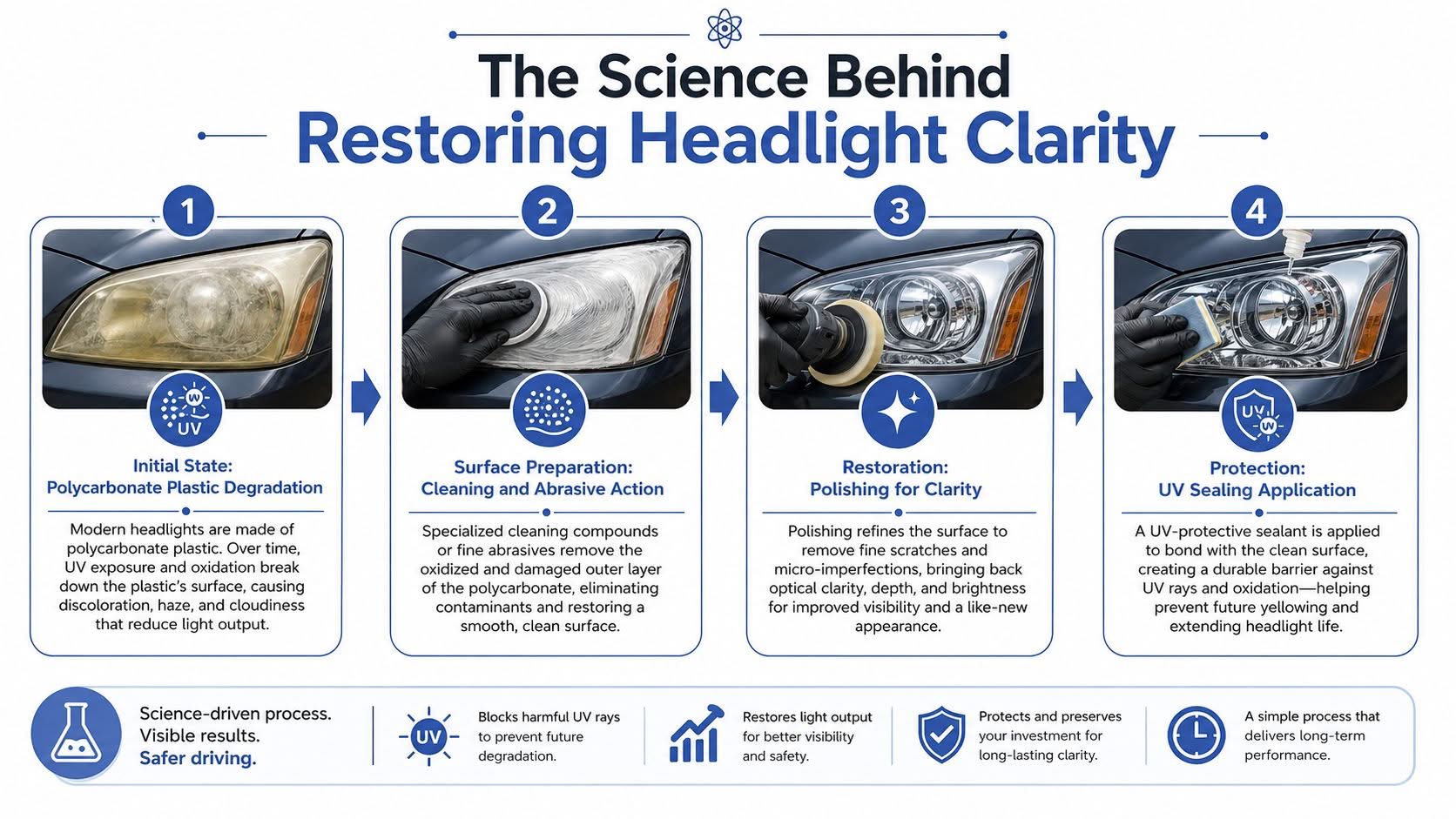
Modern headlight lenses are usually made from polycarbonate plastic. It is strong, light, and well suited to current vehicle design, but the outer layer wears down over time. UV exposure, road film, detergents, grit, and regular washing all work against it. Once that surface starts to oxidise, the lens turns cloudy and light begins to scatter instead of passing through cleanly.
That is why a lens can look yellow or milky even though the inside of the headlight housing is still in good condition.
It works much like refinishing weathered timber
Outdoor timber exposed to sun and rain does not come back with polish alone. The worn top layer has to be removed, the surface has to be smoothed evenly, and then it needs protection again. Headlight lenses follow the same basic logic.
A proper restoration removes the failed outer layer of plastic, refines the surface back to optical clarity, and then applies UV protection. Skip that last stage and the result usually looks good for a short period, then fades again.
In practice, many DIY kits fall short. They can improve appearance, sometimes quite quickly, but the finish often does not last if the damaged layer is only partly removed or the lens is left with weak protection. For Perth drivers, strong sun exposes that shortcut fast.
Why polishing on its own gives a short-term result
Polishing has a role, but it is only one part of the job. If oxidation is still sitting in the surface, a quick buff can make the lens look clearer without fixing the underlying problem. In the trade, that usually means the haze comes back sooner than the customer expects.
The process breaks down like this:
- Cleaning removes surface grime and road film.
- Sanding or compounding removes the degraded plastic.
- Polishing restores clarity and improves light transmission.
- UV sealing protects the corrected surface from breaking down again too quickly.
Practical rule: If a service cannot tell you how the lens is protected after correction, you are usually paying for a short-lived cosmetic improvement.
Why Perth conditions shorten the life of poor restorations
Perth is hard on exterior plastics. Cars that sit outside in full sun, deal with heat, and get regular exposure to dust and road grime usually show lens failure earlier than garaged vehicles. Repeated washing also matters. Even careful washing adds wear over time, especially once the factory protection has already thinned out.
That is why process quality matters so much. The separator between a result that lasts and one that disappoints in a few months is usually not the shine on the day. It is how evenly the damaged layer was removed, and how well the fresh surface was sealed afterwards.
A Step-by-Step Look at the Professional Process
A professional headlight restoration service is closer to paint correction than a quick polish. The job is to remove the failed surface evenly, restore clarity, and apply protection that can handle daily driving in Perth conditions. If any one of those stages is rushed, the result usually looks decent for a short time and then drops off fast.
Inspection and masking set the standard
The first part of the job is inspection. The technician checks how far the oxidation has gone, whether there is internal haze inside the lens, and how much material can be corrected safely. That matters because not every cloudy headlight can be brought back to the same level. Some lenses respond well. Some are too far gone or have damage on the inside that no exterior service will fix.
The area around the light is then cleaned and masked properly. Paint, rubber trims, washer caps and textured plastics need protection before any sanding starts. Good masking also helps the technician work right to the edges without leaving a rough border around the lens.
Sanding removes the damaged plastic
This is the stage that decides whether the finish will be even or patchy.
A proper process uses graded abrasives to remove the oxidised layer in a controlled way. Grit choice depends on the condition of the lens. Heavy yellowing needs a more aggressive starting point than light surface haze, but the goal stays the same. Remove only the failed material, then refine the surface step by step so the lens is ready for polishing.
In practical terms, the sequence usually looks like this:
- Wash and decontaminate the lens so dirt is not dragged across the surface.
- Wet sand or machine-correct the damaged outer layer using the right abrasive level for the condition.
- Refine through finer stages until the sanding marks are consistent and shallow.
- Machine polish the lens to bring back optical clarity.
Customers often notice the polishing. The true skill is in the sanding before it. If the surface is uneven at that stage, the final finish will show it.
Polishing restores clarity, but it is not the finish line
Once the damaged layer has been removed and refined, polishing clears the lens and improves light output. This step needs control as well. Too little refinement leaves haze behind. Too much heat or pressure can distort softer plastics, especially on older headlights.
This is also where trade-offs show up. A fast, low-cost service may stop after polishing because the lens looks clear on the day. A proper service keeps going and protects that fresh surface.
If sanding marks, yellow patches or dull areas are still visible before coating, they stay there after coating.
Protective coating is what gives the job value
Freshly corrected plastic needs UV protection. Without it, the lens starts breaking down again much sooner, especially on cars that live outside.
Professional services usually apply a dedicated UV-resistant coating or hard coat designed for exterior plastics. The exact product and curing method can vary, but the principle is the same. The coating needs to bond to a properly prepared surface and cure cleanly. That final layer is what separates a restoration that holds up from one that fades after a few washes and a few weeks of sun.
For Perth drivers, this stage matters more than many realise. Strong sun, heat and regular washing expose weak protection quickly. A lens can look great after correction, then lose clarity early if the coating stage was treated as an afterthought.
Curing and final checks matter
The job is not finished the second the coating goes on. Coatings need time to settle and cure. During that period, the lens should be kept clean and dry as directed. Rushing that part can shorten the life of the restoration.
A good technician also checks the result from different angles and under proper lighting before handing the car back. That is how missed edge haze, leftover pigtails, and uneven clarity get caught before the customer sees them later in the sun.
Done properly, the process takes more care than many drivers expect. That extra care is usually where the longer-term value sits.
DIY Kits vs Professional Headlight Restoration Service
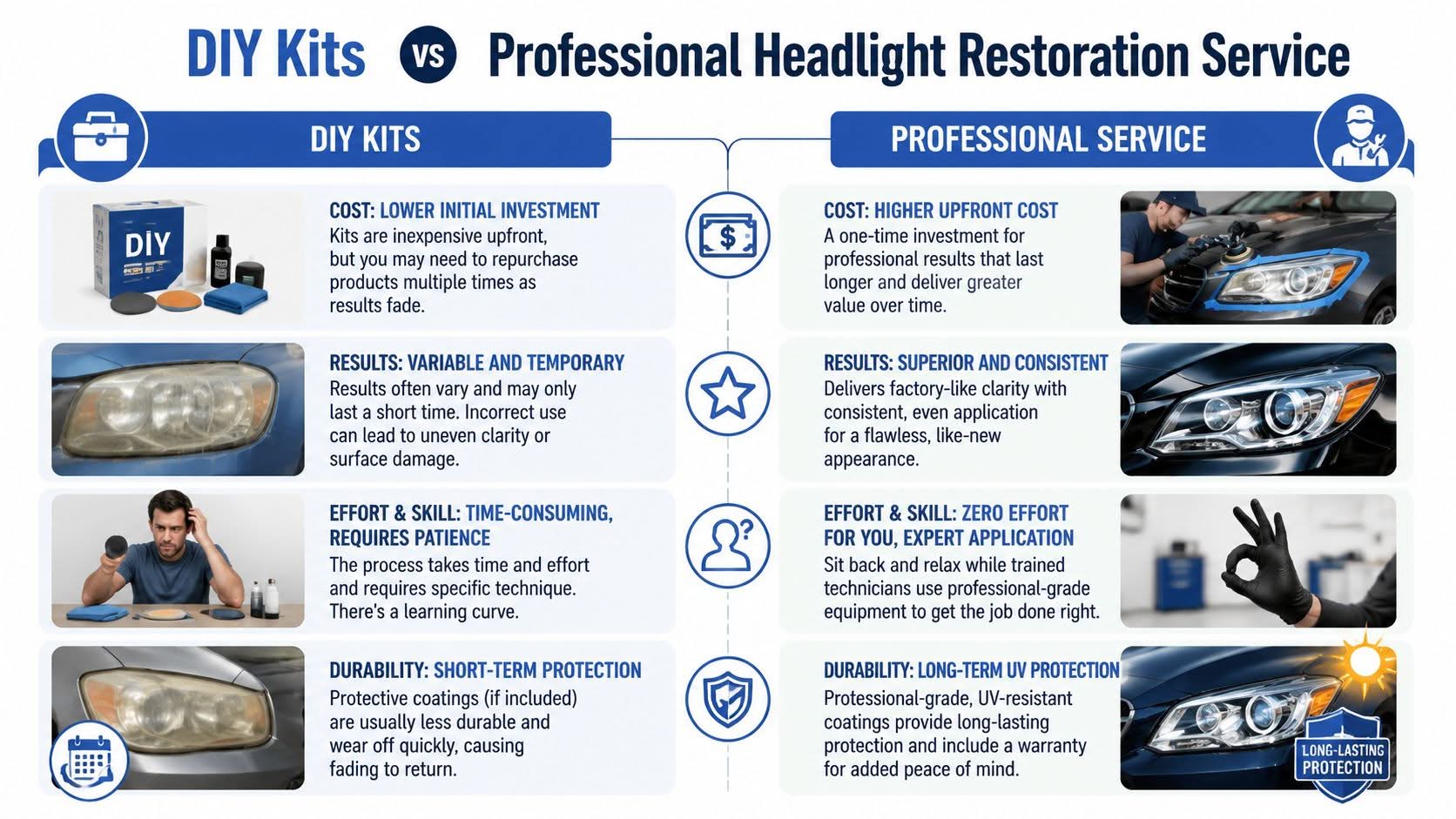
DIY kits appeal for a simple reason. They’re cheap at the counter, easy to carry home, and promise fast improvement. Sometimes they do improve the look of the lens for a while. But there’s a big gap between a temporary cosmetic clean-up and a restoration that holds up through Perth sun, washing and daily driving.
The most honest way to compare the two is by looking at cost, longevity, risk and finish quality.
Where DIY can work
If the haze is very light and you’re comfortable following abrasive steps carefully, a kit can be a reasonable short-term tidy-up. It may suit an older car you’re not planning to keep long, or a situation where appearance matters more than durability.
The trade-off is that you’re taking on the technique yourself. Uneven sanding, missed oxidation, poor edge work or weak sealing can leave the lens streaky, patchy or quick to fail again.
Where professional work pulls ahead
Professional restoration costs more up front, but the value usually sits in the finish and lifespan. According to discussion and cost references summarised for Australian drivers, replacing cloudy headlights can cost over $1,150 for a pair in Australia. The same source notes that a common DIY option at $99 offers 12 months of protection, while professional services can save drivers over $800 compared to replacement and provide protection guaranteed for 3+ years.
That difference changes the decision. DIY is often the lowest entry cost. It isn’t always the lowest cost over time if the lens fades again and you repeat the job or eventually replace the unit anyway.
DIY vs. Professional Headlight Restoration
| Factor | DIY Restoration Kit | Professional Service |
|---|---|---|
| Initial cost | Lower purchase price | Higher upfront spend |
| Durability | Often short-term | Usually built for longer-term protection |
| Finish quality | Depends heavily on user technique | More consistent when the process is done correctly |
| Risk | Possible sanding marks, uneven finish, weak sealing | Lower risk in experienced hands |
| Protection stage | Often a simpler wipe-on sealant | Commonly includes a stronger cured coating |
| Warranty | Usually limited or none | Often backed by a service warranty |
The decision most drivers are actually making
Most customers aren’t choosing between “cheap” and “expensive”. They’re choosing between doing the job twice or doing it properly once.
- Choose DIY if: you’re comfortable with paint-safe masking, abrasive correction and accepting a shorter result.
- Choose professional service if: you want durability, a cleaner optical finish and accountability if the result doesn’t hold.
- Choose replacement if: the headlight is cracked, broken internally, or too damaged for restoration to make sense.
A good headlight restoration service sits in the practical middle. It restores the existing unit without the cost of full replacement and without the short life that often comes with a home kit.
How Much Does Headlight Restoration Cost in Perth
A Perth driver usually notices the cost question at the same time the problem becomes hard to ignore. Night visibility drops, the lenses look tired in daylight, and a quick polish no longer cuts it. At that point, price matters, but so does how long the result will last in Perth sun.
For a professional service, the final quote usually reflects the condition of the lenses, the amount of correction needed, and the type of protection applied after the surface is restored. In practice, the cheaper end of the market often covers lighter correction or a simpler sealant. Higher-priced work usually includes more time on sanding and refinement, plus a stronger protective coating designed to hold up longer.
The coating stage affects value more than many drivers expect. A headlight can look clear straight after polishing and still fade back early if the protective layer is weak or rushed. That is often the difference between a short-term cosmetic improvement and a restoration that keeps its clarity.
What affects the final price
A realistic quote usually comes down to the work involved:
- Severity of oxidation: Heavy yellowing, pitting, and surface roughness take longer to correct cleanly.
- Lens design and access: Large flat lenses are usually simpler than tight shapes with sharp edges or awkward mounting points.
- Protection used at the end: A better coating process generally costs more, but it usually gives better staying power.
- Whether it is booked alone or with other detailing work: Some Perth operators offer it as an add-on service, which can change the total price.
Time on the job also tells you something about the process. A proper restoration for a pair of headlights is often completed within a standard service appointment, but badly weathered lenses can take longer. If a quote sounds unusually cheap and unusually fast, it is worth asking what steps are being skipped.
For Perth drivers, the practical question is not just what the service costs today. It is whether the result lasts through heat, UV exposure, and regular washing without hazing over again a few months later.
If you want to compare local package options, Prime Shine’s services and pricing packages list headlight restoration as an add-on. That can make sense if the car is already booked for a wash or detail and you want the headlights sorted in the same visit.
How to Choose a Quality Service in Perth and Aftercare
You pick the car up, the lenses look clear, and for a week or two it feels sorted. Then the haze starts creeping back. That usually comes down to one of two things. The lens was polished without enough correction, or the protection on top was too weak for Perth sun.
That is why I tell customers not to judge the job by gloss alone. A quality headlight restoration service should be explained like a refinishing job. The provider should be able to tell you how they remove oxidation, how they protect the lens afterward, and what happens if the finish fails early.

What to ask before you book
Start with a simple question. “What is your full process?”
A good operator should answer clearly, without talking around it. These points matter:
- How do they correct the lens? Proper restoration usually involves sanding through the damaged layer, then refining and polishing. A quick buff can improve appearance for a short time, but it often leaves the underlying damage in place.
- What protection do they apply at the end? This is the part that decides whether the result lasts. If the answer is vague, be careful.
- What do they say about durability? Honest providers give a realistic range based on condition, exposure, and maintenance. They should not promise a permanent fix on a badly weathered lens.
- Do they offer follow-up support? Clear warranty terms and a willingness to inspect the result later are good signs.
The work area tells you a lot too. Clean masking, tidy tools, and careful handling around paint and trim usually reflect the standard of the restoration itself.
What good service looks like in Perth
Perth conditions are hard on plastic headlights. UV exposure, heat, road grime, and regular washing all work against the coating. That makes process more important than a cheap headline price.
Look for clear pricing, a consistent method, and evidence the business handles exterior surfaces carefully across the whole car. If you want to check how a local operator performs over time, read through Prime Shine customer reviews and look for comments about workmanship, communication, and whether the finish held up.
A proper provider should also be willing to say when restoration is the wrong job. If the lens is cracked, badly pitted, or failing from the inside, replacement may be the better option. That kind of honesty saves money and avoids disappointment.
Aftercare that helps the result last
Aftercare is simple, but it makes a difference.
- Wash with normal car wash methods. Use a soft mitt or cloth. Avoid abrasive pads.
- Keep harsh chemicals off the lens. Strong solvents and aggressive cleaners can shorten the life of the protective layer.
- Clean bug marks and road film early. Letting grime bake onto the front of the car in summer is hard on restored headlights.
- Check the lenses every so often. If slight dulling shows up, early attention is easier than waiting for heavy oxidation to return.
DIY kits can be useful for a short-term improvement, especially on mild haze. Professional work usually gives better staying power because the correction is more controlled and the final protection is stronger. That trade-off matters more in Perth than in milder conditions.
If your headlights have gone dull and night driving has started to feel harder, Prime Shine Hand Car Wash offers headlight restoration in Westminster as part of its detailing services. It is a practical option if you want the lenses assessed and restored during the same visit as a wash or detail.