














You wash the car, step back, and for a moment it looks better. Then the Perth sun hits the bonnet and the truth shows up. Fine swirl marks. A dull patch on the roof. Water spot etching on the boot. The paint isn’t dirty anymore, but it still doesn’t look healthy.
That’s usually the moment people start asking about a cut and polish. Not because they want a fancy detailer term, but because they want their paint to look clean, sharp, and glossy again. If your regular wash helps but never quite restores that smooth, reflective finish, you’re looking at a paint condition issue, not a washing issue. A proper outside car wash can improve presentation, but it won’t level out swirls or correct oxidised clear coat.
A professional cut and polish sits in that middle ground between a basic clean and full paint restoration. It can make a tired daily driver look noticeably fresher. It can also disappoint people who expect it to erase every scratch forever. Both things are true, and that’s why this service needs a clear explanation.
That Shine Is Gone Hasn’t It
Most owners notice the problem gradually. The paint starts looking flat in the driveway. Dark colours lose that crisp reflection first. Lighter colours can hide defects for longer, but under bright sun they still show that grey, hazy look.
Perth conditions don’t help. Salt air near the coast, sand, road film, brake dust, and hard sunlight all make clear coat defects easier to see. A car can be mechanically fine and still look tired because the uppermost paint surface has been marked, etched, or oxidised.
You’ll often hear someone say, “It just needs a polish.” Sometimes that’s close, but not always accurate. If the finish has light swirls, water spots, or oxidation, the surface usually needs correction before it needs gloss. That’s where a cut and polish comes in.
The signs most owners notice
- Swirl marks in sunlight: Fine circular marks that appear after poor washing or wiping.
- A chalky or faded look: Common on neglected paint or cars parked outside.
- Water spot staining: Marks that remain even after a wash.
- Poor reflection: The paint looks clean but doesn’t look sharp.
A shiny car and a corrected car aren’t always the same thing. Shine can be added briefly. Paint correction changes the surface itself.
A proper cut and polish is strategic because it targets why the paint looks dull, not just the symptom. Instead of covering the problem with a temporary gloss product, it works on the clear coat so light reflects more evenly again.
That’s why the service matters to cautious owners. You’re not paying for a cosmetic trick. You’re paying for controlled paint correction, followed by refinement, with the aim of restoring the finish as safely as possible.
What Exactly Is a Car Cut and Polish
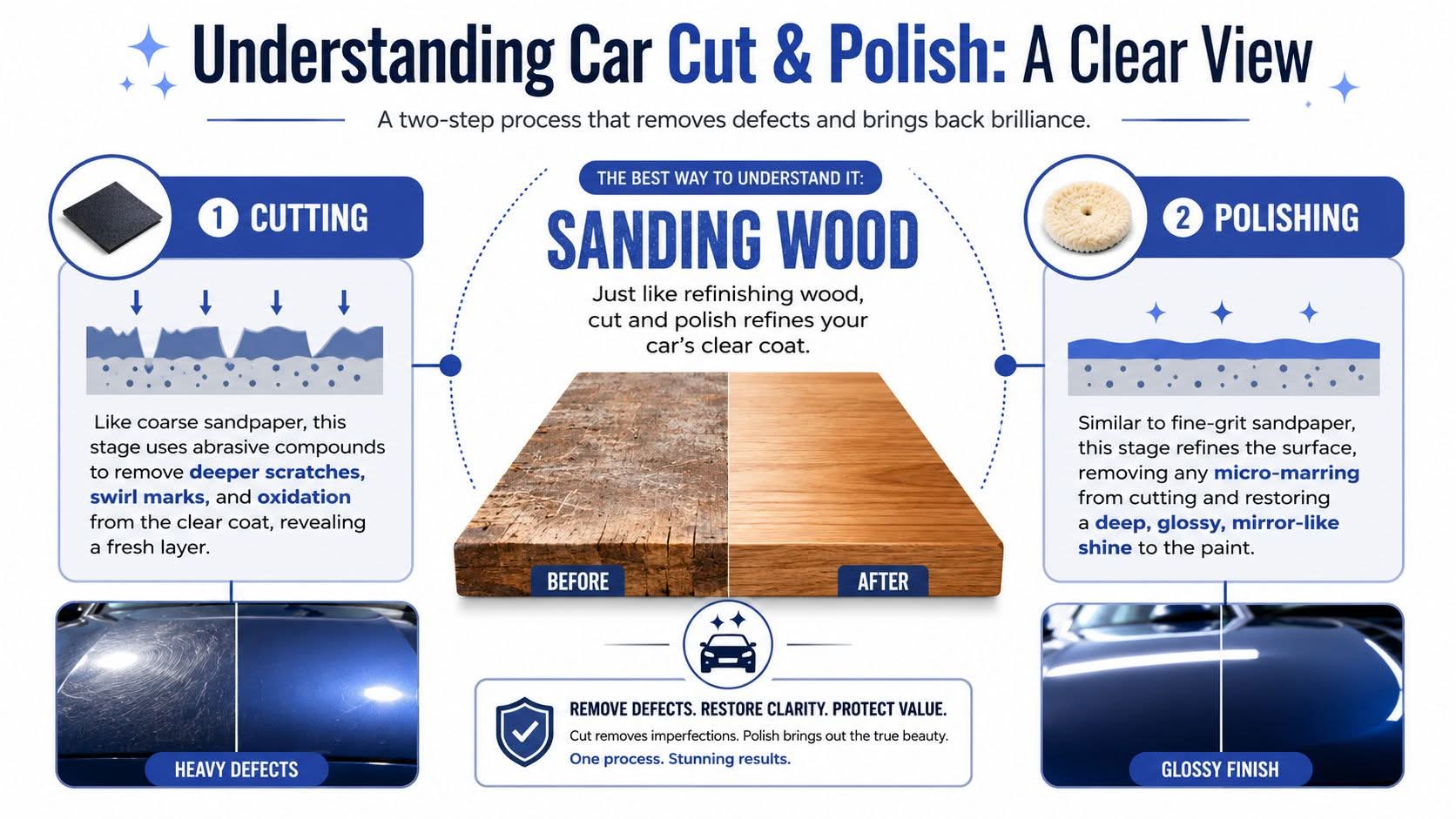
A car cut and polish is a two-stage paint correction process. The first stage removes or reduces surface defects. The second stage refines the finish so the paint looks smooth, deep, and glossy again.
The easiest way to understand it is to think about timber. If a piece of wood has marks and roughness, you don’t just rub on a shiny coating and hope for the best. You sand the surface to level it, then refine it to bring out a clean finish. Car paint works on a much finer scale, but the idea is similar.
The cut part removes defects
The “cut” stage uses an abrasive compound and machine polishing action to level defects in the clear coat. According to technical guidance on machine cut and polish, this process mechanically abrades a fine layer of clear coat, typically 1 to 3 microns, to flatten the surface and eliminate swirl marks, oxidation, and water spot etching.
That same guidance explains why machine choice matters. A rotating polisher used at 1,500 to 2,500 RPM with a high-grit cutting compound can remove deeper defects quickly, while a dual-action polisher at 4,000 to 6,000 OPM with a finer compound is safer when preserving clear coat matters more on newer vehicles. It also notes that technicians need to respect a 1.5 to 2.0 micron safety margin for long-term durability in local conditions.
What that means in plain language is simple. The cut stage doesn’t wash defects away. It carefully lowers the surrounding surface so the defect becomes less visible or disappears if it’s shallow enough.
The polish part restores clarity
After cutting, the paint often needs refining. That’s the polishing stage. A finer polish smooths the micro-marring left behind by the more aggressive correction step and brings the gloss back.
Many people get confused. “Cut” sounds harsh, and “polish” sounds cosmetic. In practice, they work together. The cut handles the defect. The polish restores the finish.
A helpful way to think about the difference:
- Cutting corrects: It reduces swirls, oxidation, and surface-level defects.
- Polishing refines: It improves clarity, depth, and gloss after correction.
- Protection comes after: The corrected surface still needs something to shield it.
If your paint looks clean but still lacks sharpness, that’s usually because the clear coat surface is uneven. A paint cleaning treatment for car paint can help with contamination and presentation, but true defect reduction comes from correction, not just cleaning products.
Practical rule: If a service changes the paint surface, it’s correction. If it mainly adds slickness or gloss on top, it’s protection or finishing.
The Professional Cut and Polish Process Step-by-Step
A proper cut and polish isn’t a quick pass with a machine. The result depends heavily on prep, inspection, pad and compound choice, and knowing when to stop. Good work often looks calm and methodical because that’s exactly what it is.
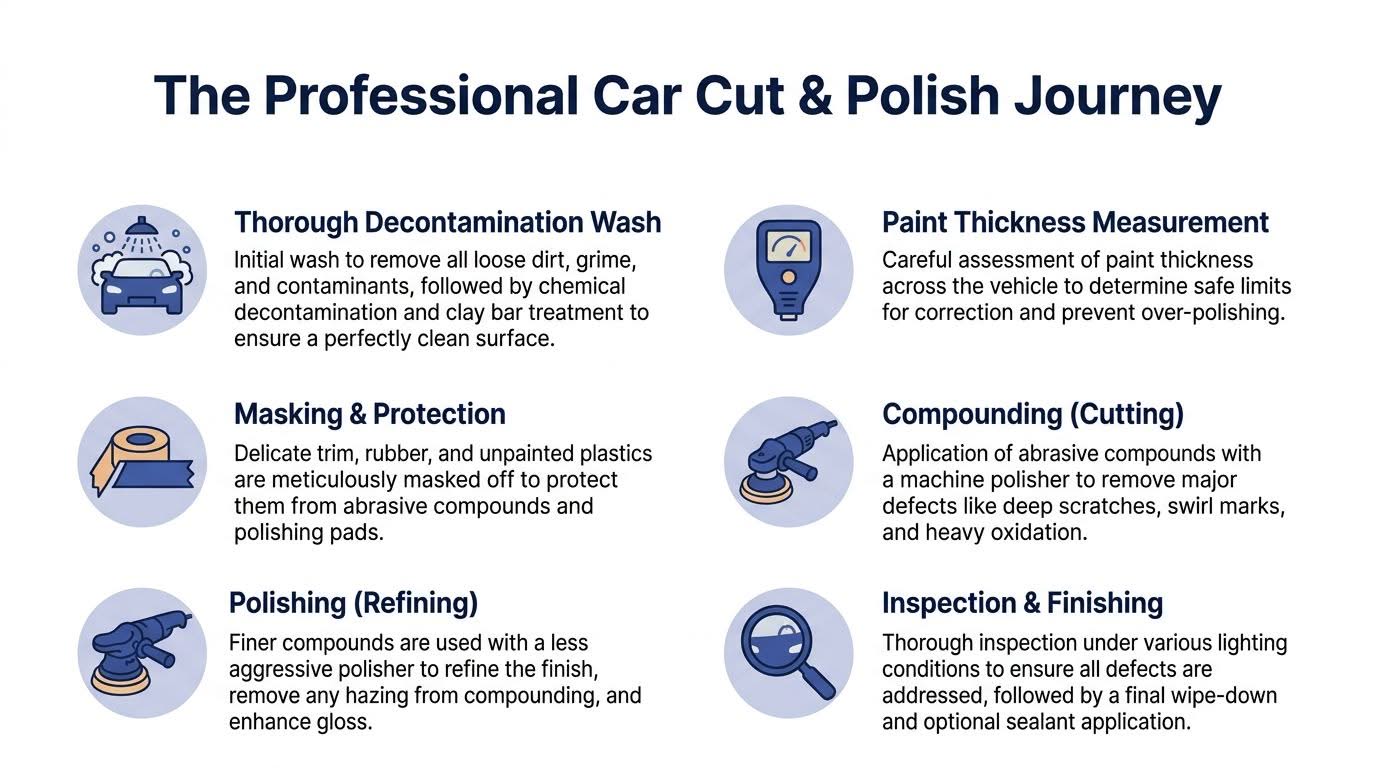
To make the workflow easier to picture, here’s the sequence most professional services follow.
Preparation matters more than most people think
The first stage is a thorough wash and decontamination. Dirt on the surface is one problem. Embedded grit is another. If that contamination stays on the paint during machine work, it can create fresh scratches while you’re trying to remove old ones.
For Perth vehicles, especially around built-up roads and shopping strips, that prep step is critical. As noted in Perth detailing guidance covering clay bar preparation and machine cutting, clay bar treatment removes embedded contamination so the abrasive stage targets paint defects instead of grinding outside grit into the surface. The same guidance notes that in Westminster conditions, where road film and brake dust build up, this helps prevent new scratching during correction. It also states that professional cut and polish work can increase paint gloss by 20 to 30%, with pricing around $140 in beachside areas such as Scarborough and about $287 in the CBD due to demand and broader paint correction needs.
After decontamination, a technician inspects the paint under strong lighting. Some defects only show from one angle. Others look deep but are mostly transfer or staining. Then vulnerable trims, badges, and edges are masked to keep compound residue off delicate materials.
Correction happens in controlled stages
The actual machine work usually starts with a test spot. One small area is corrected first so the technician can judge what combination of pad, polish, and machine movement gives the best result with the least paint removal.
From there, the process typically follows this order:
- Decontaminate fully: Wash, remove bonded contamination, and dry carefully.
- Assess the paint: Check defect types and the general condition of the clear coat.
- Mask sensitive areas: Protect trims, rubbers, and edges.
- Cut where needed: Correct the more visible defects with the appropriate level of aggression.
- Polish to refine: Restore gloss and reduce haze from the cut stage.
- Inspect and protect: Wipe down, recheck under lighting, then apply initial protection.
Not every car needs the same level of cut. Some daily drivers need only a mild one-step correction. Others need a more involved process because the defects are heavier or the owner wants a more refined finish. That’s also why light scratch removal guidance for Perth drivers matters. It helps owners understand why not every visible mark should be attacked aggressively.
The best professional work isn’t the most aggressive work. It’s the safest approach that achieves a meaningful improvement.
Cut and Polish vs Waxing vs Ceramic Coating
These services get grouped together all the time, but they do different jobs. One corrects paint. One adds a short-term finishing layer. One protects for longer.
They solve different problems
If the paint is dull because of swirls and oxidation, wax won’t fix the underlying issue. If the paint has just been corrected and you want to keep that finish from fading quickly, a protective layer becomes the priority.
Here’s the simplest way to compare them:
| Service | Primary Purpose | Defect Removal | Durability (Typical) | Best For |
|---|---|---|---|---|
| Hand wax and polish | Add gloss and short-term surface protection | Minimal | Short-term | Cars in decent condition that need a tidy-up |
| Cut and polish | Correct paint defects and restore clarity | Good for light defects and surface oxidation | Depends heavily on aftercare | Cars with swirl marks, haze, and dull paint |
| Ceramic coating | Long-term paint protection | None by itself | Longer-lasting than traditional finishing products | Owners who want to protect corrected paint and simplify maintenance |
Many owners make an expensive mistake, choosing based on the name that sounds nicest rather than the condition of the car.
- Choose wax-style finishing if the paint already looks healthy and you mostly want added gloss.
- Choose cut and polish if the surface has visible light defects that washing can’t solve.
- Choose ceramic coating if you want to preserve the corrected finish for longer.
A lot of the best outcomes come from pairing services, not treating them as substitutes. Correction first, protection second. If you’re comparing protection options after correction, ceramic coating for long-term paint protection is the option built for durability rather than quick visual lift.
Managing Expectations Benefits Limitations and Durability
A cut and polish can transform how a car looks. It can take paint from tired and hazy to crisp and reflective. But it only works well when the owner understands both the gain and the trade-off.
What this service does well
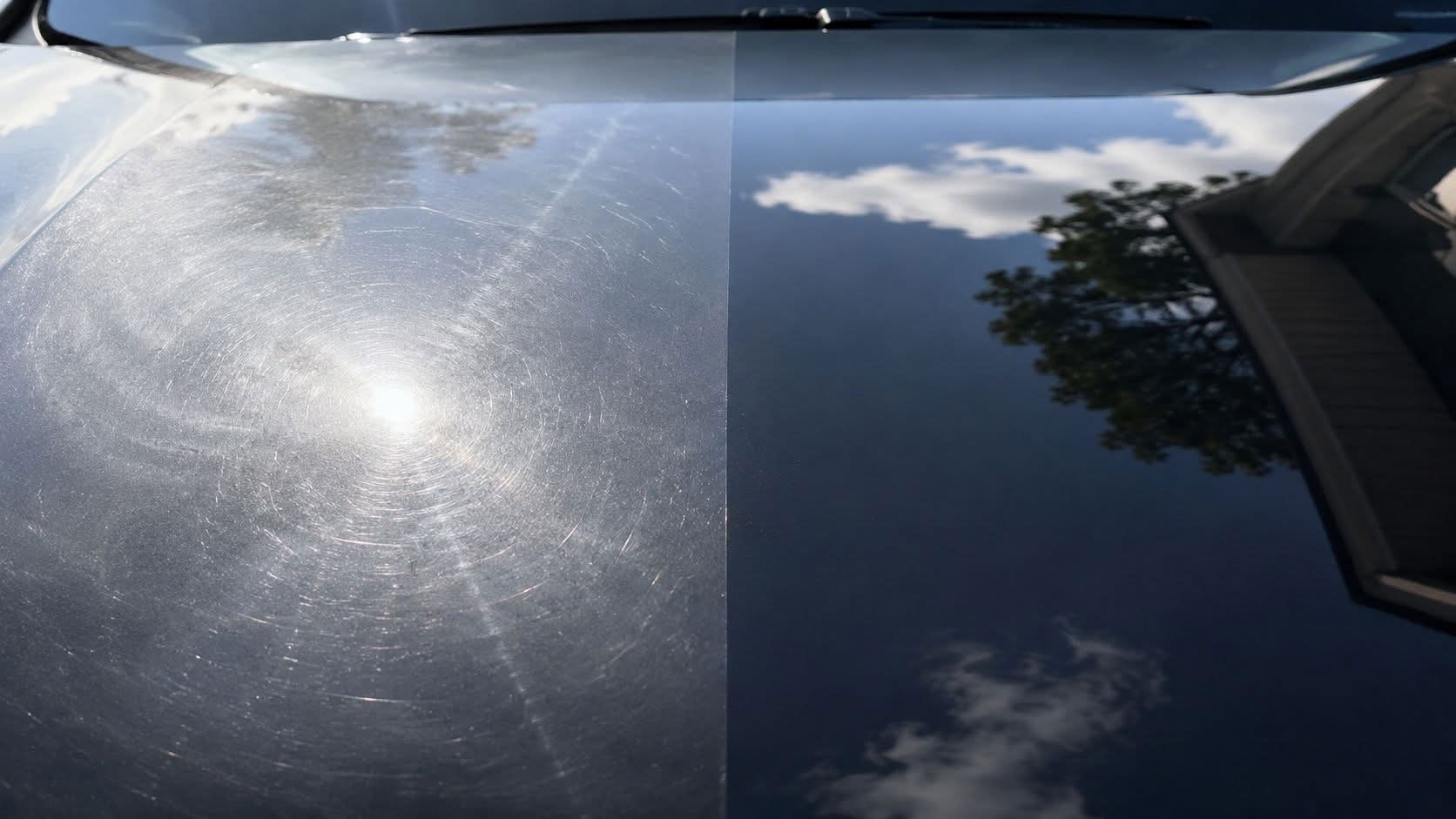
Done properly, a cut and polish improves how light reflects off the paint. That’s why the car looks glossier, deeper in colour, and less hazy. On a dark vehicle, the difference can be especially obvious because swirls scatter light so visibly.
It’s also one of the most effective ways to improve presentation before sale, refresh an older vehicle, or correct years of poor wash technique. Owners often notice the biggest improvement on bonnets, boots, and door panels that catch direct light.
What it can’t do forever
A cut and polish is not a magic eraser. According to Australian guidance on cut and polish expectations and durability, it removes only 60 to 70% of light swirls, and it does so by thinning the clear coat. The same source notes that 68% of car owners in Perth were unaware that the process reduces clear coat thickness, which can increase UV vulnerability without follow-up protection. It also states that in Western Australia, without ceramic coating, the effect can fade within 3 to 6 months because of intense sunlight.
That’s the part many beginner guides skip. If the paint has been corrected and left exposed, the finish can start slipping backwards sooner than people expect.
Freshly corrected paint should be treated like exposed work, not finished work. It needs protection if you want the result to last.
If a scratch is deep enough to catch your fingernail, correction may reduce how visible it is, but it may not remove it cleanly. If the clear coat is already thin, the safest choice may be to accept some defects rather than chase perfection.
The strategic way to view car cut and polish is this:
- It restores: It improves the condition and appearance of the clear coat.
- It costs clear coat: Every correction step removes a small amount of material.
- It needs protection afterward: That’s what helps lock in the result.
How to Choose the Right Car Detailer in Perth?
The safest detailer isn’t the one who promises the most dramatic result. It’s the one who explains what’s realistic, what’s risky, and what your paint can handle.
Start with process, not marketing. A quality operator should be clear that correction begins with proper washing and decontamination, not a rushed buff over dirty paint. Hand-detailing methods matter because automated brushes and hurried prep often create the very defects owners are paying to remove.
A practical checklist helps:
- Look for clear package descriptions: You should know whether the service includes wash, prep, clay treatment, machine correction, and protection.
- Ask how they assess the paint: Good detailers inspect first instead of quoting a one-size-fits-all result.
- Check before-and-after work: You want examples that show correction under honest lighting.
- Read independent customer feedback: Consistent reviews usually reveal whether workmanship and communication hold up.
- Watch for expectation-setting: If someone claims every scratch will vanish, be careful.
Good detailing advice usually sounds measured, not flashy.
Local owners also benefit from choosing a workshop with transparent pricing, consistent processes, and straightforward booking. That tells you the business is organised enough to deliver repeatable work, not just occasional good results.
Frequently Asked Questions About Cut and Polish
How often can a car be cut and polished safely?
Not on a fixed calendar. It depends on paint condition and clear coat health. Because correction removes a fine layer of clear coat, it should be done when needed, not as a routine shine service.
Will it remove deep scratches?
Sometimes it reduces them, but not always completely. If you can feel the scratch clearly with your fingernail, it’s often too deep for safe full removal.
Is it worth doing on an older car?
Often yes, especially if the paint is dull but still structurally sound. A well-judged correction can make an older car look much better without repainting.
Should I protect the car after a cut and polish?
Yes. That’s one of the smartest parts of the whole job. Correction improves the surface. Protection helps preserve it.
If your paint has lost its clarity and you want honest advice on what can be improved safely, Prime Shine Hand Car Wash offers hand car washing, detailing, cut and polish, and paint protection from its Westminster location. You can review the service options, see transparent package pricing, and book online for a time that suits you.