



Full Car Detailing is a thorough inside-and-out deep clean, while Paint Correction is a separate machine-polishing process used to reduce dullness, swirl marks and light scratches. In Australia, the car wash and detailing services industry generated about A$608.4 million in revenue in 2026, with 1,683 businesses counted that year, so the service sits inside a mature market where the key differentiator is in quality, consistency and depth of finish rather than a quick rinse (IBISWorld industry profile).
You’ve probably had the same moment many Perth drivers do. The car looks fine after a basic wash, yet the cabin still feels dusty, the paint still looks flat in the sun, and you’re not sure whether you need a clean, a detail, a correction, or all three. The clearest way to choose is to separate interior decontamination, exterior decontamination, paint correction and protection, because each one solves a different problem.
What Full Car Detailing Actually Includes?
A proper Full Car Detailing service starts with a reset mindset, not a quick appearance boost. The goal is to remove built-up grime from the places people touch most, the places that trap dust, and the exterior surfaces where road film has started to cling. On a Perth daily driver, that often means the cabin feels tidy after a normal wash, but the vents, seams, cup holders, pedals, wheel barrels and lower panels still need a more careful approach.
Full detail is broader than a wash, but narrower than every possible correction
A wash removes loose dirt. A mini detail gives the vehicle a quicker refresh. A full detail goes further, with deeper interior and exterior cleaning, and it’s the right choice when the car needs a genuine reset rather than a maintenance top-up. Paint Correction is different again, because it targets surface defects in the paint finish rather than general dirt.
Prime Shine’s menu separates these jobs clearly, with services such as Full Car Detailing, Mini Car Detailing, Cut & Polish, Ceramic Coating and add-ons like leather cleaning, seat steam cleaning, pet hair removal and headlight restoration. That structure helps owners match the job to the problem instead of hoping one package fixes everything.
Practical rule: if the issue is dirt, choose cleaning. If the issue is surface defect, choose correction. If the issue is long-term surface defence, choose protection.
| Vehicle need | Most relevant service | Primary outcome |
|---|---|---|
| Routine dirt and dust | Outside Car Wash or Inside & Outside Car Wash | Basic cleanliness and maintenance |
| Cabin reset, family use, pre-sale refresh | Full Car Detailing | Deeper interior and exterior clean |
| Swirls, dullness, light scratches | Cut & Polish | Improved clarity and gloss |
| Longer-term paint defence | Ceramic Coating | Easier upkeep and added protection |
If you want a clearer breakdown of how those service choices fit together, Prime Shine’s own guide to what to book and why is a useful place to compare the scope before you book.
Understanding Paint Correction and Clear Coat
Paint correction begins with the assumption that the paint is already clean enough to inspect properly, because you can’t judge a finish through dust and bonded grime. The process works on the clear coat, the transparent top layer that gives the paint its gloss and depth. A polished panel looks better because the surface is more even, so reflections appear sharper and certain defects become less visible.
What polishing actually changes?
Carefully levelling a surface rather than repainting it. Machine polishing uses controlled abrasion to refine microscopic unevenness in the clear coat. It doesn’t add new paint, and it doesn’t promise to erase every mark, but it can improve how the surface reflects light. That’s why a corrected panel can look cleaner and deeper even when the vehicle’s colour hasn’t changed at all.
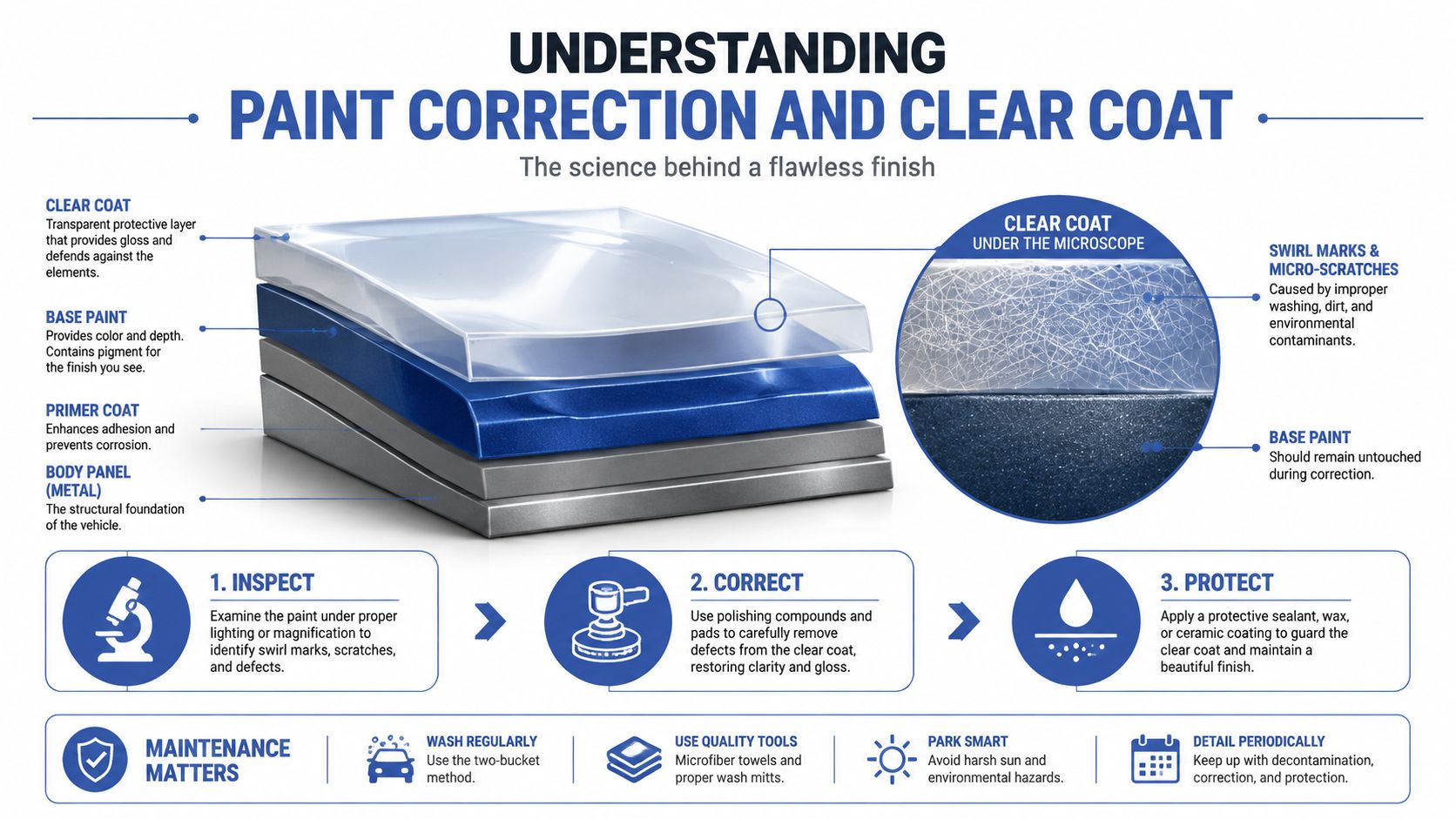
Correction removes a tiny amount of the surface to improve it, so honest inspection matters more than optimistic promises.
Why lighting and paint history matter?
A dark car parked outside all week can look fine in shade and still show a web of fine marks in direct sun. A lighter car might hide the same defects better, which is why technicians inspect under suitable lighting before they start. Paint type, prior repairs and unknown refinishing history can all change the method, because not every panel has the same amount of usable clear coat.
The safest approach is to treat correction as a precision finish rather than an automatic fix. Prime Shine’s cut and polish guide is a helpful companion if you want to understand how polishing is used to refine a real-world finish without overstating what it can safely remove.
Get a Paint Correction Assessment
How Paint Correction Is Performed?
The best correction jobs start with a decision, not a machine. A technician first inspects the paint, checks the obvious problem areas and documents what’s present, because the aim is to match the method to the vehicle’s actual condition. A small test area is useful here, since one panel often tells the truth about the rest of the car better than a guess does.
The work follows a careful sequence
After inspection, the car is washed so loose dirt doesn’t interfere with the polishing step. Then the surface is decontaminated, because bonded residue has to be loosened before machine correction can safely begin. Chemical preparation, and where needed clay-style paint prep, helps remove the film that sits on top of the finish and can otherwise get dragged around by a pad.
Polishing comes next. Dual-action and rotary machines are both used in professional work, but the important part for owners is the principle, not the badge on the tool. A pad, compound and polish combination is selected for the specific defect level, then the panel is worked section by section under strong lighting so the technician can check what changed and what still needs refinement.
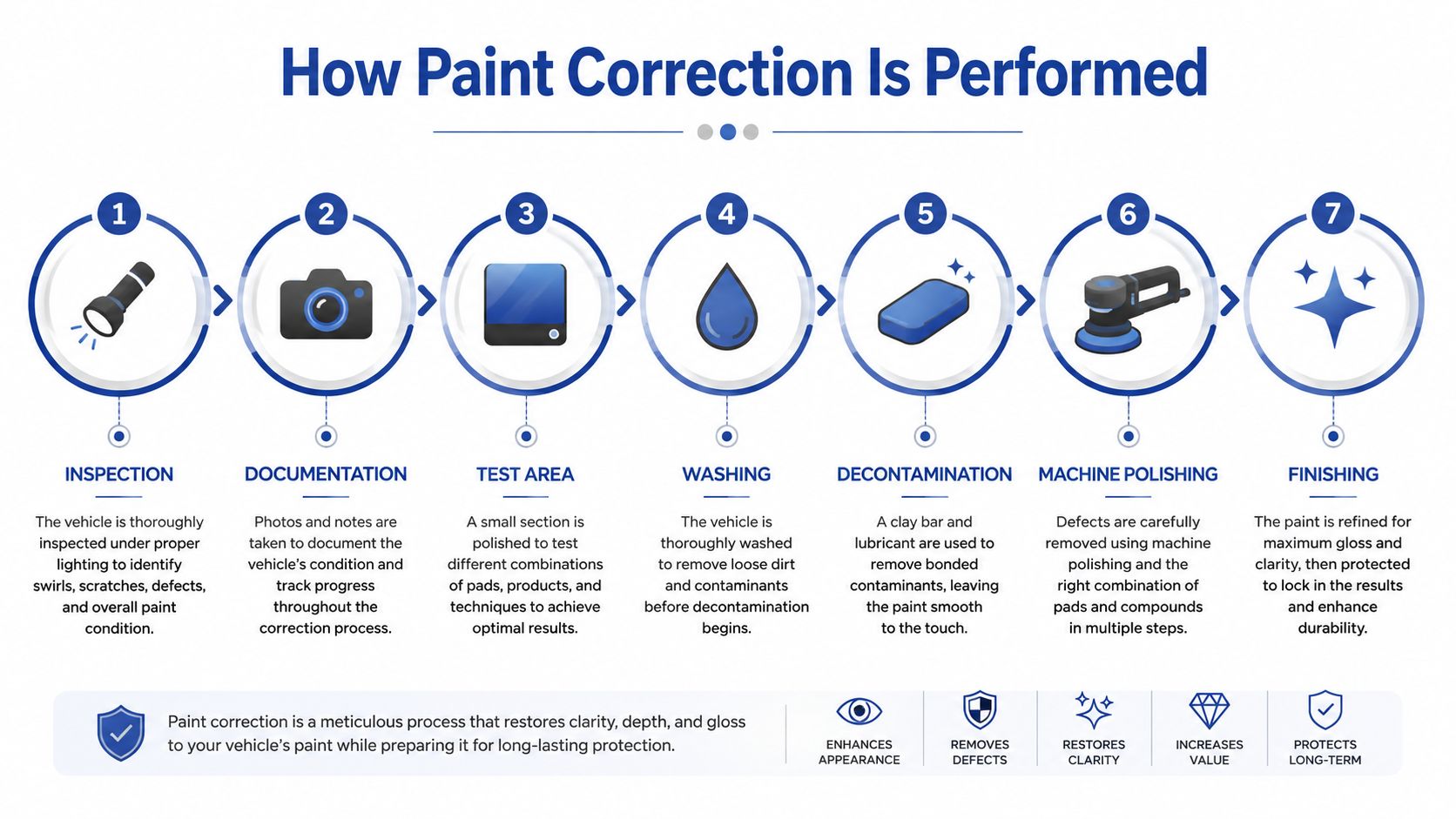
Good correction is controlled work. The technician removes as little material as needed, checks progress often and stops when the paint has reached a safe, useful improvement.
Why protection follows correction?
A corrected panel looks sharper, but it still needs finishing care. That’s where protection comes in, because a refined surface can be easier to keep clean and less likely to pick up fresh contamination if it’s protected properly. Microfibre materials matter too, since they reduce the risk of creating new marks during wiping, inspection and final finishing.
For drivers comparing correction options locally, Prime Shine’s professional cut and polish page is the right place to look at how the process is framed around real paint condition rather than a one-size-fits-all promise.
See the Cut and Polish Service
Which Paint Defects Correction Can Improve?
The simplest way to judge correction is to ask whether the defect sits in the refinable top layer. If it does, the finish can often improve. If it doesn’t, the answer is different, because some marks are too deep, some are structural and some sit beyond what polishing should touch.
Marks that may become less visible
Swirl marks often show up as circular marks under sunlight or strong LEDs. Fine wash marks, light surface scratches, mild dullness, haze and some oxidation can also sit in the range where correction helps, because these problems usually affect the top appearance of the surface rather than the shape of the panel itself.
A dark daily driver is a good example. It can look acceptable at a glance, then reveal a spiderweb of wash marks as soon as the sun hits it. In that case, correction can make the car look much more coherent, even if a few marks remain when you inspect up close.
Marks that need a different expectation
Deep scratches that catch a fingernail, chips, peeling coating, severe oxidation, paint mismatch, contamination beneath the finish and damage caused by impact or corrosion sit outside normal correction work. Those are not the kinds of defects a polish should be asked to erase, because doing so would push the process beyond safe limits or the wrong service altogether.
That’s why an older vehicle with a handful of isolated chips needs a different conversation from a newer car with light wash marks across the bonnet. Correction improves appearance, not original factory condition, and each vehicle needs inspection before anyone promises more than the paint can safely give.
If you want a plain-language guide for judging small scratches before booking, Prime Shine’s light scratch removal guide helps set expectations in a practical way.
Check If Your Paint Can Be Corrected
Setting Realistic Time and Cost Expectations
A full reset, a correction job and a protection service all ask for different amounts of labour. That’s why time and cost depend on the vehicle’s size, current condition, paint hardness, defect severity, access to panels, chosen add-ons and the finish you’re chasing. A tidy sedan with light wear is a very different job from an SUV that hasn’t had a proper interior and exterior reset in a long time.
What changes the quote?
Vehicle condition matters first, because heavy contamination, pet hair, stains and layered dust all add work before the visible finish even starts. Paint hardness changes how quickly correction can move across a panel. Defect severity changes whether a single refining step is enough or whether the finish needs multiple stages. Add-ons such as leather conditioning, seat steam cleaning or headlight restoration also change the scope.
Prime Shine publishes clear starting prices and notes that final pricing varies by vehicle condition, so the best approach is to check the live menu and booking flow rather than compare one package’s starting figure with another service’s fully specified scope. For current amounts, use the online booking path, because the quote should reflect the vehicle sitting in front of you, not a generic average.
Matching the job to the use case
A family vehicle often needs the broad reset first, then maintenance after that. A car being prepared for sale may need the cabin refreshed and the exterior improved enough to present well. An enthusiast vehicle may prioritise paint refinement first, then a protection step to preserve the finish. The more clearly you explain the goal, the easier it is to avoid overbuying or underbuying the service.
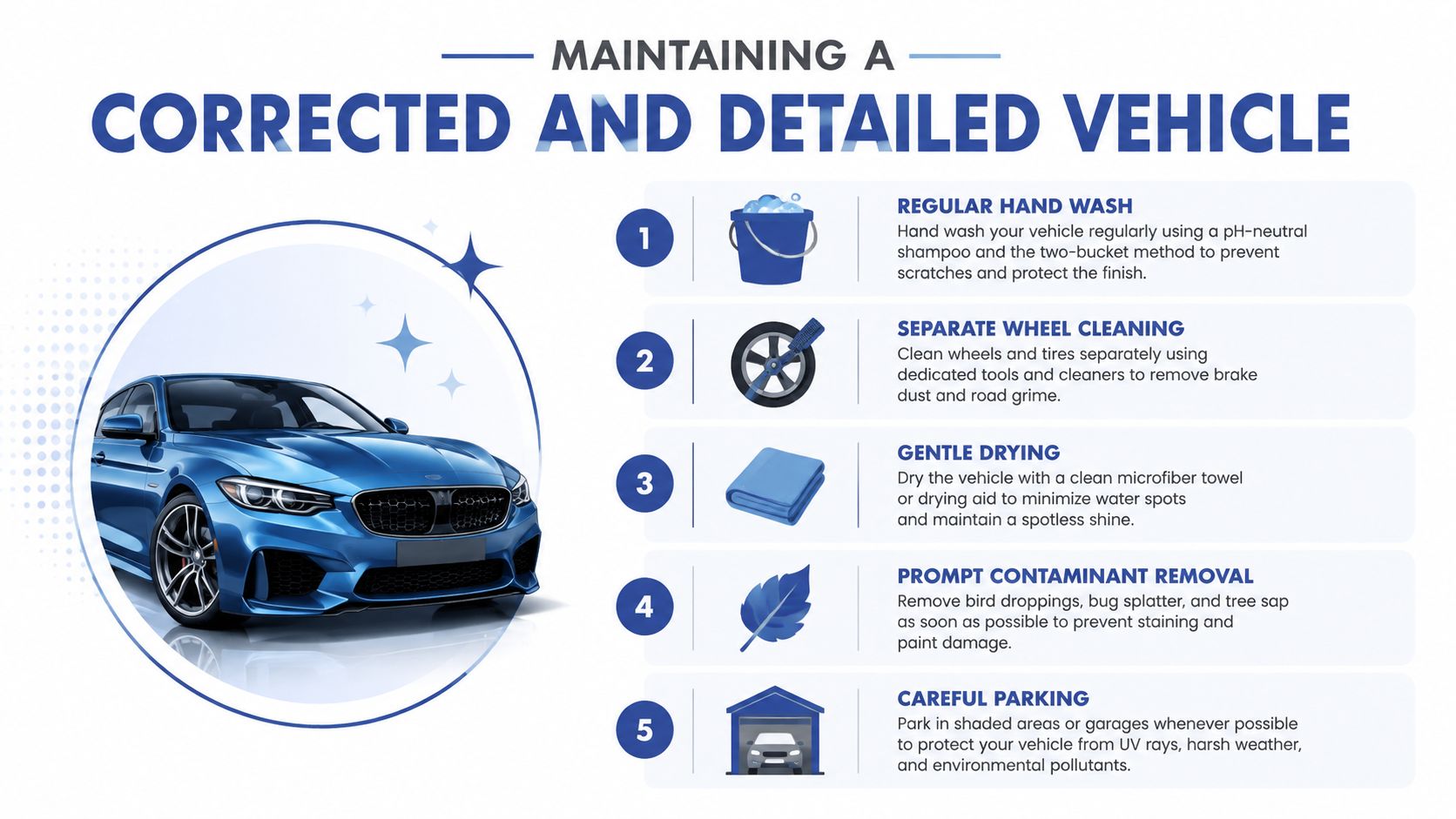
Maintaining a Corrected and Detailed Vehicle
A corrected finish lasts better when washing habits stop introducing fresh marks. The biggest mistake is treating a dusty panel like a clean one, because dragging grit across the paint is how new swirls start. Hand washing helps reduce that risk, especially when wheels and tyres are cleaned separately and the drying step is gentle.
Habits that protect the finish
Fresh contaminants should come off quickly. Tree sap, bird droppings and similar residue can stick hard enough to leave a mark if they’re left sitting, so the safer habit is to deal with them promptly rather than waiting for the next wash. Careful parking matters too, because tight spaces, low branches and hard-to-see shopping centre hazards all increase the chance of new wear.
Ceramic coating can make maintenance easier by helping water bead and by supporting a lower-effort wash routine, but it doesn’t replace proper care. Wax or polish still has a place in shorter-term maintenance when the goal is to refresh gloss rather than build long-term surface defence.
Do: use clean wash media, gentle drying and separate wheel cleaning.
Don’t: wipe dust off a dry panel, reuse dirty towels, or assume a protected car can’t be marred.
Quick maintenance checklist
- Regular hand wash: keeps light dirt from turning into stubborn film.
- Separate wheel cleaning: stops brake dust and road grime from moving onto the paint.
- Gentle drying: reduces towel marks and water spotting.
- Prompt contaminant removal: limits the time harsh residue sits on the surface.
- Careful parking: lowers the chance of new chips, scuffs and casual contact.
For routine upkeep between bigger visits, Prime Shine’s outside wash and wash-and-wax options are practical ways to keep a corrected finish from sliding backwards.
Choosing a Service for Your Vehicle
A good booking starts with the problem, not the package name. If the car mainly needs routine upkeep, a wash service is enough. If the cabin and exterior both need a proper reset, Full Car Detailing fits better. If the paint shows swirls, light scratches or a flat look, Cut & Polish is the service to ask about. If your goal is longer-term surface defence, Ceramic Coating usually comes after the paint has been prepared correctly.
Different drivers, different priorities
A family car often needs a practical reset for crumbs, dust and everyday buildup. Pet owners usually need focused hair removal and fabric cleaning. Sellers and lease-return drivers benefit from a tidy finish that improves presentation inside and out. Rideshare and fleet vehicles usually need consistent turnaround and dependable appearance, not a show-style finish. Luxury and enthusiast owners often pay closer attention to hand-wash method, inspection detail and paint finish control.
Prime Shine Hand Car Wash is a Westminster-based operation at 9/436 Wanneroo Rd, Westminster, WA 6061, and it works from a single site, which helps keep the process consistent and quality control direct. The business reports more than 200 Google reviews, over five years in service and more than 2,500 vehicles detailed (Prime Shine Hand Car Wash). It also offers online booking with date, time and staff assignment, so the service can be matched to the job before the car arrives.
Choosing the smallest service that solves the problem usually gives the clearest result. A wash handles maintenance. A detail resets the vehicle. A correction improves the paint you already have. Protection then helps hold that finish for longer.
Find the Right Service for Your Car
Questions to Ask Before Booking
The best booking conversations are short and specific. Ask whether the car needs cleaning, correction or both, and whether the technician can inspect the worst areas before work begins. If photographs or a test area are available, use them, because they help set expectations before anyone starts on the whole vehicle.
The questions that clarify scope
Tell the business about pets, heavy debris, stains, paint damage, sale timing and any known coatings already on the car. Those details change what can be safely cleaned, what can be corrected and what protection makes sense afterwards. They also stop you from expecting a result that the paint or interior condition can’t realistically deliver.
A clear booking note is better than a vague request for “the full works”.
| Question to ask | Why it matters | What to provide |
|---|---|---|
| Does the car need cleaning, correction, or both? | Sets the service path | Main problem areas |
| Can you inspect the paint before work starts? | Helps manage expectations | Photos or in-person notes |
| Is a test area useful? | Shows likely finish safely | Worst panel or defect zone |
| What's included in the package? | Prevents scope confusion | Interior, exterior, add-ons |
| What does the protection product do? | Matches aftercare to the finish | Current coatings or waxes |
| What aftercare should I follow? | Protects the result | Driving and parking habits |
If you’re comparing Full Car Detailing with Cut & Polish, the key question is simple. Do you want the vehicle cleaned, or do you want the paint refined as well? Once that’s clear, the rest of the booking becomes much easier.
Prime Shine Hand Car Wash offers hand washing, interior and exterior detailing, paint correction and paint protection from its Westminster site, with clear starting prices and online booking. If your car needs a reset, a correction assessment, or a maintenance wash between deeper visits, visit Prime Shine Hand Car Wash and book a time that matches the condition of your vehicle.