





A more expensive detail isn’t automatically better for your paint. Polishing is a corrective process, not a stronger wash, and the NRMA’s paint-repair guidance recommends starting with the least aggressive compound necessary. Paying for correction your car doesn’t need adds cost without necessarily improving its condition.
The useful question in car wash vs detailing is what’s wrong with the vehicle. Loose grime, stained upholstery and scratched clearcoat need different treatments. Choose the service that fixes the problem, rather than assuming the largest package is the safest or best value.
What Separates a Car Wash From Detailing?
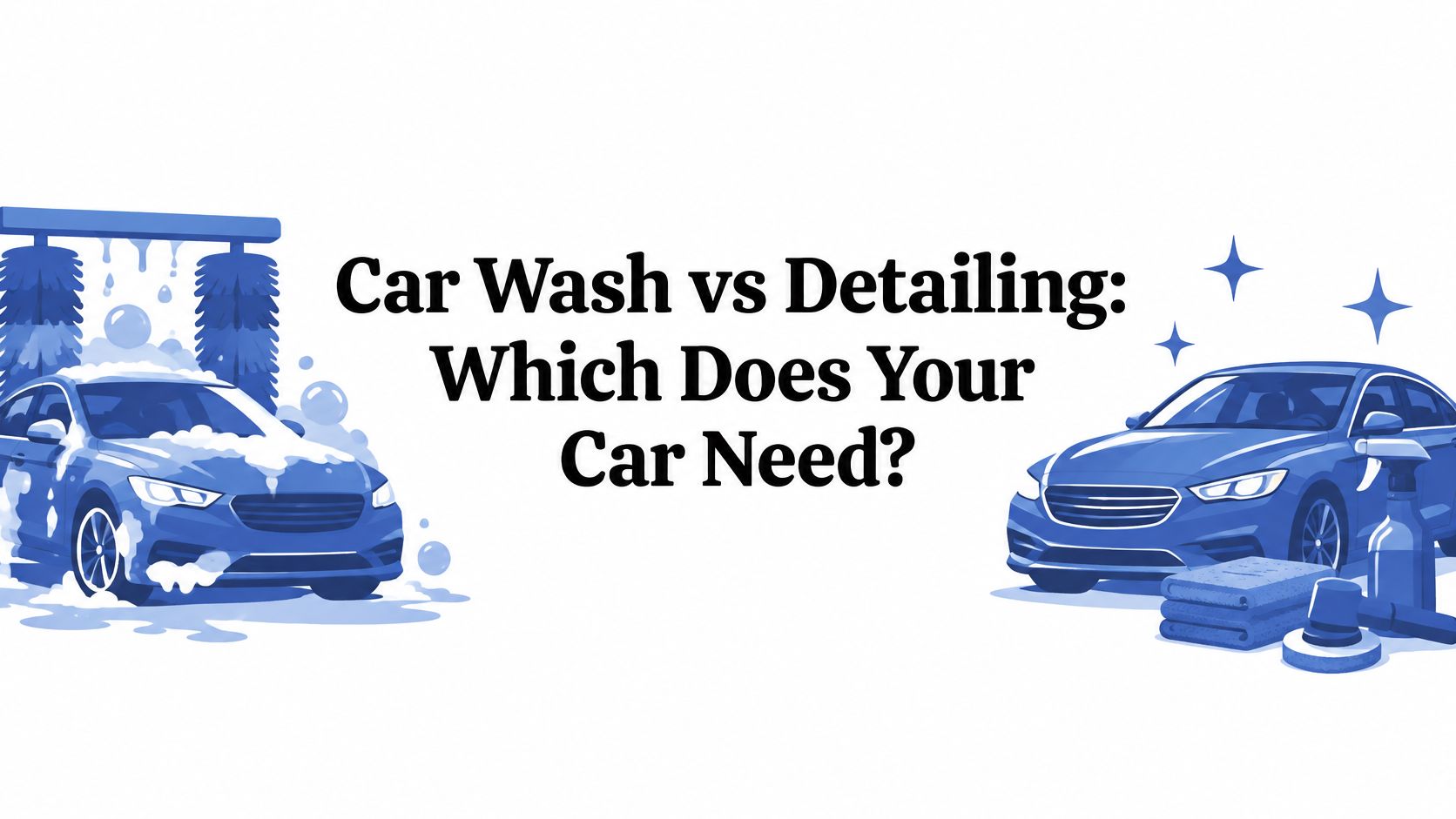
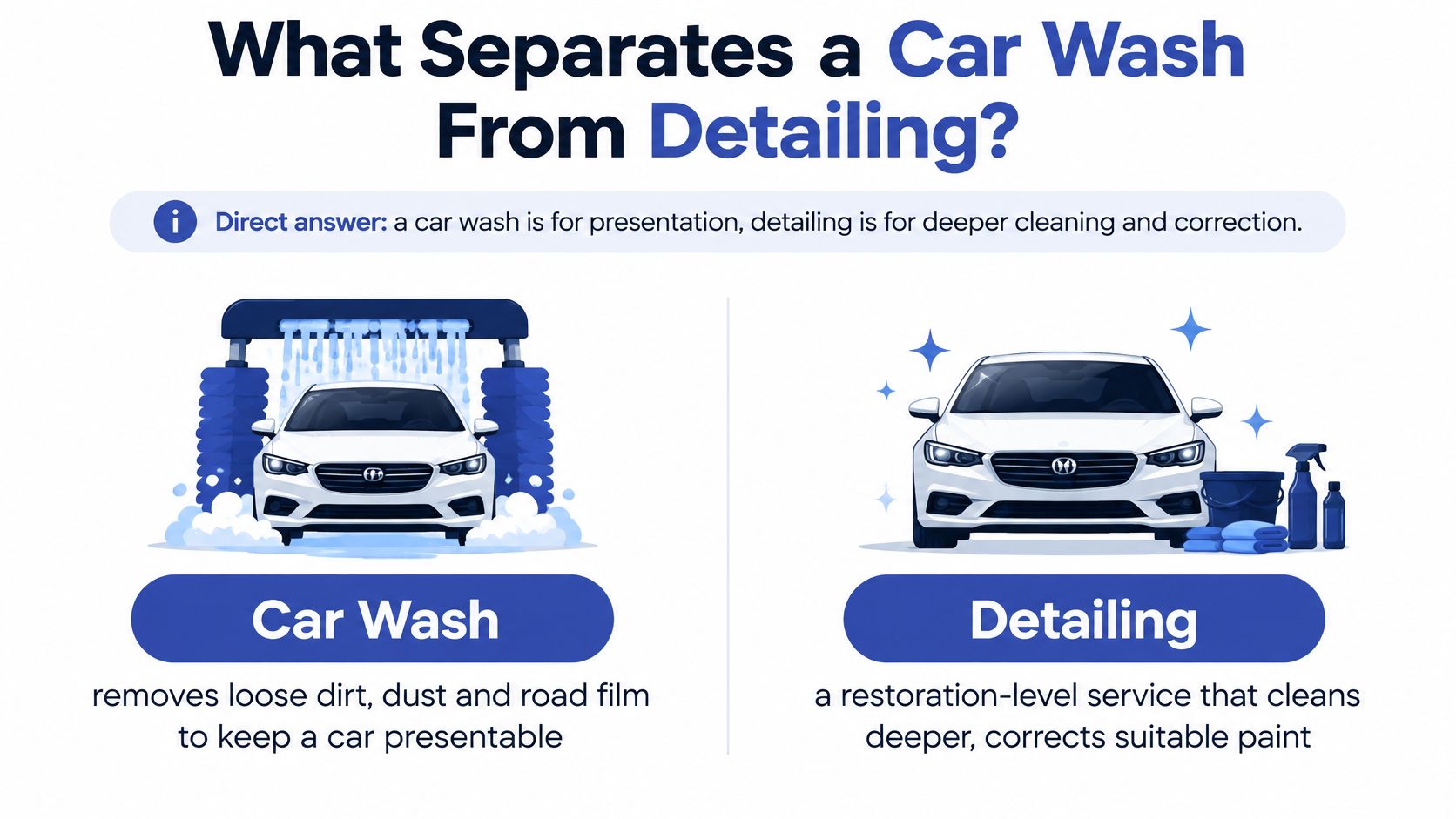
A car wash removes loose dirt, dust and road film to keep a car presentable. Detailing is a restoration-level service that cleans deeper, corrects suitable paint defects when included, and protects the finish.
That distinction matches Australian practice. Jobs and Skills Australia describes car detailers as workers who clean vehicle exteriors and interiors, polish and wax paint, clean tyres and wheel arches, polish windows, and touch up paint, glass and upholstery for private or commercial use, sale or rental.
Start with the contamination you can identify. Choose a maintenance wash unless there’s a specific interior or paint problem to address.
Car wash vs detailing at a glance
| Criterion | Car Wash | Detailing |
|---|---|---|
| Main purpose | Removes loose dirt, dust and road film | Restores appearance and protects the vehicle |
| Exterior work | Hand wash, rinse, wheel clean and dry | Decontamination, clay treatment, polish, wax or sealant |
| Paint correction | None, does not remove swirls or scratches | Light swirls and clearcoat scratches can be reduced by polishing |
| Interior work | Vacuum and dust surfaces when included | Deep clean, steam or shampoo, pet hair removal |
| How long the result lasts | Until the next dirt build-up | Gloss and protection persist longer, depending on products used |
| Best for | Routine maintenance and quick refresh | Sale preparation, neglect, stains and paint defects |
The table describes service categories, not a guarantee that every package includes every treatment. A detail might focus on upholstery without machine polishing, while a premium wash might include hand-applied wax. The written scope matters more than the package name.
A wash should be judged on cleanliness, careful handling and drying. A detail should be judged against an agreed improvement, such as reduced staining, smoother paint or less visible swirling. Our guide to what’s included in an outside car wash helps separate routine exterior cleaning from additional work.
Match the package to an outcome you can recognise, such as clean wheels, stain removal or improved paint gloss.
The visual distinction is straightforward.
Why washing usually comes first
Dirt can hide the condition underneath it. Once the vehicle is clean and dry, it’s easier to distinguish stubborn contamination from staining, oxidation or scratches. Booking correction before that assessment risks buying the wrong solution.
These services sit on a spectrum rather than competing with each other. Detailing establishes a better starting condition; careful maintenance washing helps preserve it.
Practical rule: Wash for routine maintenance. Detail for measurable restoration and protection.
See what’s included in an outside wash
How Deep Does Each Service Clean and Correct?
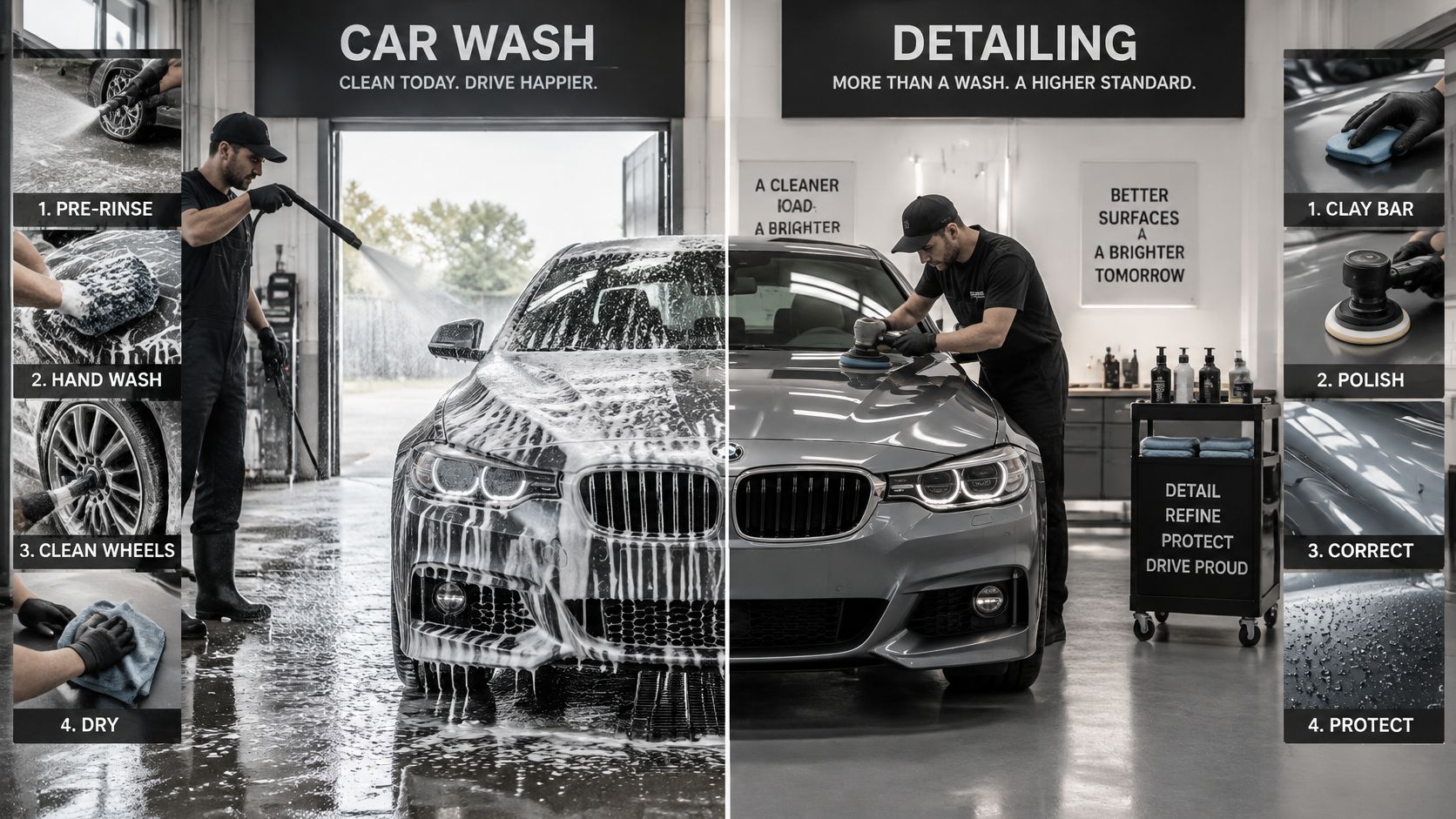
A hand wash cannot level scratches, remove established swirl marks or extract contamination buried in seat fabric. It removes material sitting on accessible surfaces, using a pre-rinse, lubricated contact wash, wheel cleaning, rinsing and drying.
Detailing adds targeted stages rather than more scrubbing. Tar or bug residue may need a suitable chemical treatment, bonded contamination may need lubricated clay, and dirty upholstery may need shampooing or steam cleaning. Each treatment should solve an identified problem.
Describe what remains after washing before choosing extra work. Rough paint, fabric stains and scratches need different treatments.
The difference becomes clearer when you compare maintenance cleaning with surface-specific work.
What happens beyond the wash stage?
Clay removes bonded contamination, but it isn’t a scratch-removal tool. On suitable paint, it can improve smoothness before polishing or protection. Using it unnecessarily, without enough lubricant or on dirty paint can introduce marring.
Machine correction is different again. A polishing or cutting compound abrades the finish to reduce imperfections in the clearcoat. Damage extending through that clearcoat into deeper paint layers cannot be polished away.
Before booking Cut & Polish, identify whether the mark is removable contamination, a suitable clearcoat defect or damage needing paint repair.
Every abrasive polishing cycle removes a small amount of clearcoat. That makes inspection important, particularly around panel edges, previous repairs and areas that may already have been corrected. The sensible target is an agreed improvement, not an unconditional promise to erase every mark.
A hand-applied gloss treatment also shouldn’t be confused with dedicated machine correction. It can improve presentation and add protection without delivering the same defect reduction. Our explanation of what a full detailing reset covers helps clarify the scope before booking.
Choose the least intensive process capable of achieving the finish you want, and agree on the limitations before work starts.
How does interior cleaning differ?
A maintenance vacuum lifts accessible crumbs and loose debris. Detail-level interior work addresses seams, embedded pet hair, fabric contamination, door jambs and surfaces that need more than dusting. Steam and shampoo should suit the material, with controlled moisture and adequate drying.
For paint, inspect the clean vehicle in direct light before requesting correction:
- Swirls in sunlight: Circular-looking fine marks may justify a correction assessment.
- Light scratches: A mark that doesn’t catch a fingernail may be treatable, but that test alone isn’t a diagnosis.
- Persistent dullness: Paint that stays dull after washing needs assessment rather than harder scrubbing.
- Roughness after cleaning: Bonded contamination may require decontamination before any polishing decision.
Explore what a full detail covers
What Does Each Service Cost in Perth?
Starting prices by service and vehicle class
Every figure below is a starting price in AUD. A larger vehicle, heavier soiling and selected add-ons push the final total above it.
| Service | Starting price |
|---|---|
| Outside Car Wash | from $29 for a sedan, up to $40 for a 4WD/7 Seater |
| Inside & Outside Car Wash | from $55 |
| Premium Car Wash | from $85 for a sedan, up to $105 for a 4WD/7 Seater |
| Mini Car Detailing | from $199 |
| Full Car Detailing | from $349 for a sedan, up to $399 for a 4WD/7 Seater |
| Cut & Polish | from $249 for a sedan, up to $299 for a 4WD/7 Seater |
At Prime Shine Hand Car Wash in Westminster, vehicle condition sets the actual scope of a job. Heavy soiling, embedded pet hair, widespread stains or paint defects can require additional work, so describe those issues and confirm your vehicle class before booking.
Labour and process time drive the price gap. A maintenance wash is priced for a repeatable clean. Detailing adds inspection, preparation and targeted treatment, which is why the visit costs more and shouldn’t be needed on the same schedule.
Use the starting price to shortlist a service, then confirm the total against your vehicle’s size, condition and selected add-ons.
What are you paying extra for?
Premium Car Wash covers cleaning, hand waxing and interior vacuuming. Mini Car Detailing goes deeper with seat shampooing and more intensive treatment, which matters when the cabin holds minor spills and stains rather than loose crumbs.
Run the numbers on a sedan maintenance budget. Fortnightly Outside Car Washes at the starting rate come to roughly $754 a year; a single Full Car Detailing service starts from $349. The two buys do different jobs: the washes manage recurring dirt, while the detail addresses a deeper condition problem.
Spend where the problem sits. A vehicle with tidy paint and a hard-working cabin gets more from targeted interior work than from machine polishing it doesn’t need, and unnecessary correction also removes clear coat you can’t get back. Flip that reasoning for a clean interior over visibly swirled paint.
Ceramic coating sits outside this ladder entirely. It is a longer-term protection decision that follows clean, prepared paint, so weigh it separately from any wash or detail booking.
Compare the work included before comparing the annual spend.
Our Perth car detailing cost guide breaks down what each level includes. A useful quote names the package, the add-ons and the intended finish rather than relying on the word “detailing” alone.
When Is Detailing Worth the Extra Spend?
A full detail is for a condition problem, not a routine visit. A regularly maintained car with smooth, presentable paint and a tidy cabin needs a careful wash and an occasional interior vacuum, and spending more buys it very little.
Pay the extra when ordinary cleaning leaves a clear problem unresolved. Ingrained fabric staining, pet hair woven into carpet, stubborn contamination on the paint or a finish that needs assessed corrective work all justify the step up. Age alone is no reason to polish a car.
Choose detailing for an unresolved condition issue, not because the vehicle has reached an arbitrary age or booking interval.
Sale preparation is one situation where presentation deserves closer attention.

Where does a deeper clean earn its cost?
- Sale or lease-return preparation: A thorough interior and exterior clean improves presentation, though it cannot guarantee a higher sale price or remove contractual damage charges.
- Neglected interiors: Accumulated debris, odours and staining need attention beyond surface dusting.
- Embedded pet hair: Hair woven into carpet or upholstery calls for targeted removal, and heavy cases may need a dedicated pet hair removal or steam cleaning add-on rather than a standard package.
- Confirmed paint defects: Suitable swirls and light scratches may justify correction after inspection.
Our Mini Car Detailing, from $199, suits everyday dirt, minor stains and spills. Extremely dirty, neglected or stained vehicles may be better suited to Full Car Detailing, from $349, which adds paint cleansing, a protective wax finish and hand polish to the deep interior and exterior clean.
A full detail cleans thoroughly; it does not have to cut. Interior restoration and protective finishing earn their cost on cars whose paint needs no abrasion, while cut and polish work, priced separately from $249 for a sedan, belongs to its own decision about measurable paint condition. Book the cleaning for the cabin’s sake and the correction for the paint’s sake.
Describe the stains, odours and paint concerns when booking so we can match the service level to the work needed.
When can more treatment become the wrong treatment?
Every machine pass removes a small amount of clearcoat, and paint does not grow back. Thin clearcoat, sharp body edges and previously repainted panels call for particular caution, so an inspection should establish whether the desired improvement is sensible before correction is booked.
Grit and corrosive deposits need a different response: remove them promptly with an appropriate method rather than waiting for a full-detail appointment. For home maintenance between visits, check the applicable requirements through the Bureau of Meteorology’s water-restrictions directory, since permitted equipment and washing conditions differ by jurisdiction.
Request a paint inspection and a recommended service level before authorising correction. Pay for the defect removal the paint actually needs.
A wagon returns from a two-year lease with a coffee stain set into the rear bench and dog hair pressed into the carpet. Seat shampooing and pet hair removal fix what the inspection will flag; polishing healthy paint adds nothing to that outcome.
See when a full detail makes sense
Is a Professional Wash Kinder to the Environment?
Professional washing is only environmentally preferable when the operator controls the wastewater. The Australian Car Wash Association’s environmental guidance explains that an uncontrolled home wash can produce more than 100 litres of wastewater containing contaminants such as dirt, detergents and oil.
On a hard driveway, that dirty water can run towards the street and enter stormwater. A commercial sign doesn’t change that pathway. Containment, collection and appropriate disposal are what matter, whether the job is a quick wash or a chemical-intensive detail.
Make wastewater handling part of your service decision. Ask where the runoff goes, not just how little water the wash uses.
Where should the dirty water go?
The NSW Environment Protection Authority states that washing runoff must not enter stormwater drains. Its guidance specifies a designated, contained wash bay, with wastewater collected and directed to sewer under a council-approved Trade Waste Agreement, or treated and recycled. That is NSW guidance, not a statement of Perth’s local approval requirements.
Victoria’s EPA guidance for the automotive industry identifies roofed, bunded wash bays connected to sewer through a water or oil separator, alongside sediment controls, biodegradable detergents and spill equipment. Where an appropriate bay isn’t available, it recommends a commercial wash bay or a mobile wash mat that collects wastewater.
Look for contained drainage and a collection system. A biodegradable product alone doesn’t establish responsible wastewater management.
What should you check before choosing a wash?
- Containment: Wash water should stay within a designated collection area.
- Drainage: Confirm that contaminated runoff doesn’t discharge into stormwater.
- Treatment: Look for appropriate collection, separation or recycling arrangements.
- Product choice: Ask about detergent chemistry, including low-phosphorus options.
- Transparency: The operator should explain its water use and wastewater pathway.
Detergents matter as well as drainage. Sunshine Coast Council warns that nitrogen and phosphorus in vehicle-washing detergents can contribute to excessive nutrient loads and algal blooms. Its guidance recommends removing loose dust first, using low-nitrogen and low-phosphorus detergent, limiting runoff with a bucket and avoiding washing during wet weather.
For home washing, use a bucket and trigger-controlled hose where permitted, rather than leaving water running. Washing on a permeable surface is materially different from sending driveway runoff towards a street drain, but you should still check your local council’s Perth requirements. Our guide to eco hand washing, products and runoff explains the practical questions to consider.
Check the runoff route before starting a home wash, and choose controlled collection when you can’t prevent contaminated water reaching the street.
Learn about wash water and runoff
Which Service Should You Book for Your Car?
Families and commuters usually need dependable maintenance rather than repeated restoration. An Outside Car Wash handles dust and road film between visits. When crumbs, boot debris and cabin dust become the issue, our Inside & Outside Car Wash adds interior and boot vacuuming, plus dusting of the dash, console and trims.
Owners dealing with light stains or minor pet hair can usually start with Premium Car Wash, which combines the clean with hand wax and polish for added gloss. Heavy pet hair calls for targeted add-ons, such as pet hair removal or steam cleaning. A routine vacuum will not lift embedded hair on its own.
Ask which area of the car is dirtiest before choosing a package, then add targeted treatment only where a standard clean falls short.
What works for a frequently used vehicle?
For rideshare and delivery drivers, a repeatable cleaning schedule is usually more useful than frequent deep work. Keep passenger areas, mats and windows presentable, and deal with spills before they become a larger fabric-cleaning job. Distance covered alone is no reason to book intensive paint work.
Our outside washes accommodate sedans, SUVs, 4WDs and everything in between. Vehicle class sets the starting category, and condition still matters. A tidy family SUV and a heavily soiled work vehicle can need very different amounts of attention despite similar exterior dimensions.
Describe heavy soiling when you book, especially where the cabin or load area needs more than routine cleaning.
Which condition best matches your car?
| Your car's condition | Sensible starting point |
|---|---|
| Exterior needs dust and road film removed, cabin already tidy | Outside Car Wash |
| Exterior dirt plus cabin crumbs and dusty trim | Inside & Outside Car Wash |
| Light stains or minor pet hair, added gloss wanted | Premium Car Wash |
| Visible swirls or suitable light scratches | Paint inspection before Cut & Polish |
| Prepared paint requiring longer-term protection | Separately assessed Ceramic Coating |
Say your family car has clean, glossy paint but a spilled drink on the rear seat. Spend on the upholstery treatment that addresses the spill rather than machine correction for the bonnet. If the interior is already tidy but the exterior has stubborn marks, there is no reason to pay for intensive cabin work just to reach the paint service.
A sale-preparation booking needs a different balance. Clean door jambs, glass, seats and the boot help present a consistently cared-for vehicle. Correcting every minor exterior defect may not be a sensible expense, particularly when the remaining damage requires repainting rather than detailing.
A booking aimed at one outcome, whether daily cleanliness, stain treatment, sale presentation or paint improvement, gives a clearer result than a package chosen on price alone.
Where does ceramic coating fit?
Ceramic coating preserves a finish you are already happy with. The paint needs to be prepared to an acceptable standard first, and the coated surface still needs regular washing afterwards. Decide what condition you want locked in before adding protection to a booking.
The same restraint applies to add-ons. Leather cleaning and conditioning belongs on leather that needs it; steam cleaning belongs on contaminated fabrics. An otherwise tidy vehicle gains little from every available treatment stacked onto the booking.
Protection earns its place when the paint underneath it, and the maintenance routine after it, can support the result.
What schedule is a sensible starting point?
We recommend a fortnightly outside wash plus a monthly inside and outside clean as a practical starting point for most daily drivers. Treat the monthly combined clean as the cabin-focused visit in that routine, rather than purchasing duplicate exterior washes. Adjust the schedule to parking conditions, passenger use and how quickly the vehicle gets dirty.
That routine does not mean waiting when something damaging lands on the paint or a drink spills inside. Deal with those incidents promptly and safely. Schedule deeper work when inspection identifies a condition that maintenance cleaning cannot resolve.
A routine you can repeat beats a bigger clean you keep postponing.
How should you complete the booking?
For an Inside & Outside Car Wash at our Westminster, Perth location, choose your vehicle and add-ons online, enter the registration, then select a date and time. Review the total before completing checkout.
Include the relevant condition details in the booking. That way the service you select matches the work the car needs, and the agreed result is clear before we start.
Prime Shine Hand Car Wash offers maintenance hand washing, interior and exterior detailing, Cut & Polish and ceramic coating in Westminster, Perth. Visit Prime Shine Hand Car Wash to select your vehicle and service, choose any necessary add-ons and book a suitable date and time. Choose the clean your car needs now, and reserve deeper treatment for a problem it can solve.