







You've just picked up a new car in Perth, and the first real scratch usually isn't from some dramatic accident. It's the small stuff, stone flicks on the freeway, grit near the coast, harsh sun, a quick brush with a dirty wash mitt, and suddenly that factory finish doesn't look as fresh as it did on delivery day. That's why paint protection needs to happen early, not after the paint is already marked.
Perth makes the decision sharper. UV, road grime, coastal air, and highway chips all work on the finish from week one, and NRMA reported in April 2026 that new-car paints are thinner and weaker, which makes them more vulnerable to chips and scratches in everyday driving. NRMA also said complaints about paint chipping have increased online over the past five years, which lines up with what drivers see in real life, a car that looks spotless until the first proper commute. If you're deciding whether to protect a brand-new car, this Perth guide is a useful starting point.
Here's the blunt version. If you want short-term shine, wax can do the job. If you want a better balance of cost and durability, sealant is the middle ground. If you want serious long-term protection and easier washing, ceramic coating is the sensible choice for most new-car owners. If you want impact resistance, only paint protection film changes the game, but it costs more.
| Protection Type | Typical Durability in Australia | Protection Level | Best For |
|---|---|---|---|
| Wax | About 4 to 8 weeks in hot, UV-heavy conditions | Light | Owners chasing quick gloss and frequent upkeep |
| Sealant | About 4 to 6 months | Moderate | Drivers wanting better value than wax |
| Ceramic coating | About 2 to 7 years depending on product tier and maintenance | Strong against UV, grime, and staining | New-car owners who want durable, easy-care protection |
| Paint protection film | Long-term, with the highest physical protection | Highest, including impact resistance and self-healing | High-risk front-end areas and owners who want chip defence |
This guide gives you the practical answer, not the sales pitch. You’ll see what each option really does, what it costs, what lasts in Perth conditions, and which route makes sense for your kind of driving.
Why Does Your New Car Need Paint Protection So Soon?
A new car looks sorted on delivery day, then Perth starts working on it. UV bakes the finish, coastal salt sticks to every surface, and road grit keeps hitting the front end on the drive home. Once the paint gets marked or contaminated, you are already paying to fix damage instead of preventing it.
Fresh paint also needs time in the world, not just in the showroom. Factory clearcoat thickness gives you the first clue, because thinner clearcoat has less material to absorb minor impact before the mark shows through.
New paint is not the same as protected paint
A car can be brand new and still exposed. Delivery means the paint is fresh, not that it has any proper defence against Perth conditions.
Australia’s coating standards history backs that up. The country’s AS 2312 guide first appeared in 1980, was updated in 1984 and 1994, then became AS/NZS 2312:2002 before splitting again in AS/NZS 2312:2014. Australia’s protective coating standards history shows how long local durability has mattered, even though the principles were developed for different surfaces. The lesson still applies to cars, a painted surface needs a barrier against UV, moisture, and contamination if you want it to stay presentable.
A new-car owner should treat the first weeks as the best time to protect the finish. Wait until the paint looks tired, and the easy window is gone. At that point, you are dealing with correction, not preservation.
If you’re deciding whether to protect a brand-new car, this Perth guide is a useful starting point.
Practical rule: protect early if you plan to keep the car. That gives the paint the longest chance to hold up against daily use.
The four choices worth comparing
The decision is not whether to protect the car. It is which route fits your budget, your driving, and how much upkeep you will do.
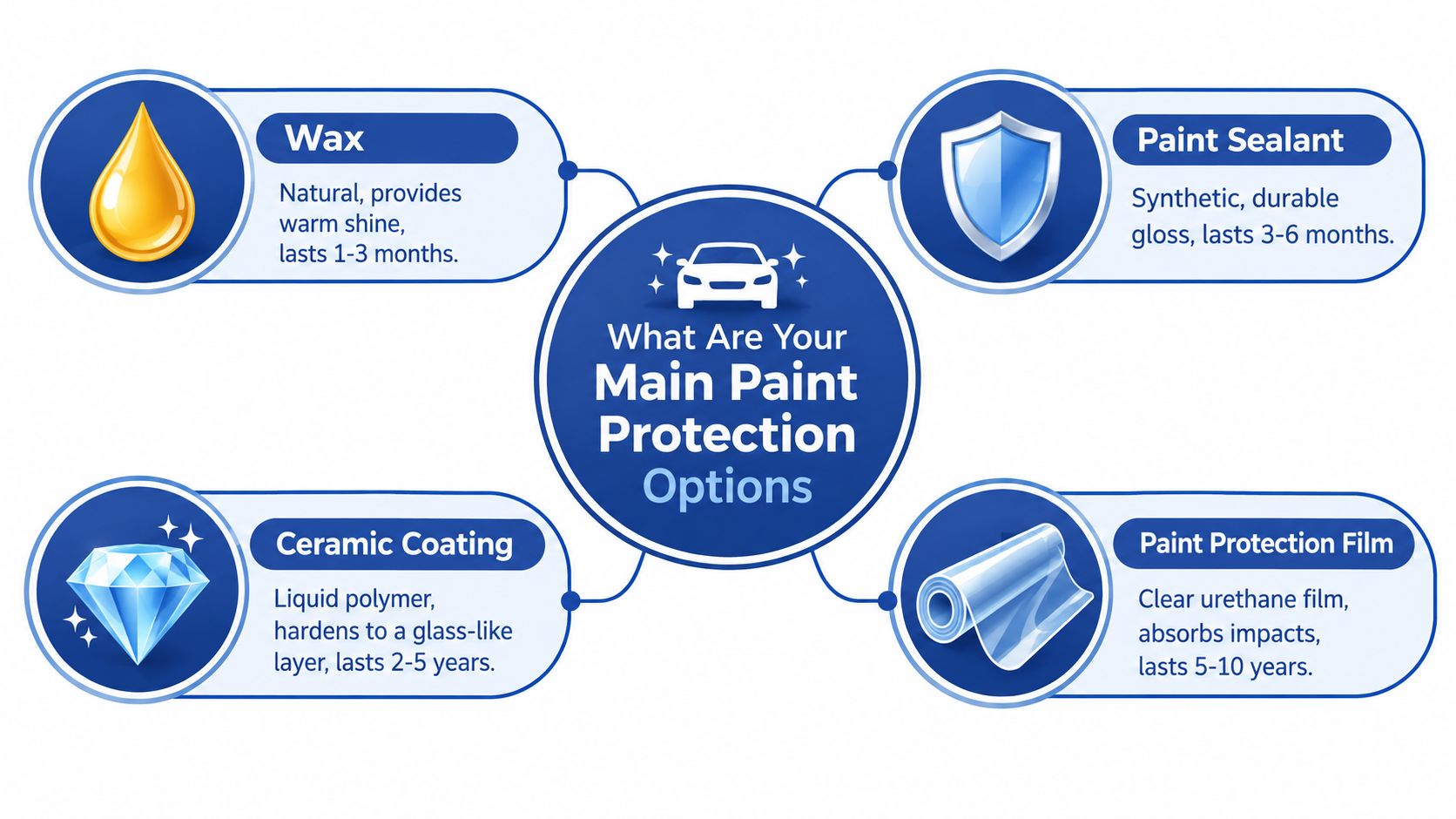
The main options are wax, paint sealant, ceramic coating, and paint protection film. Wax gives quick gloss. Sealant gives more staying power. Ceramic coating gives a harder, slicker barrier that suits Perth’s UV and grime. Paint protection film adds physical defence where chips and scuffs are most likely.
For new-car owners in Perth, the right answer depends on how the car is used. A daily driver that sees freeway miles and coastal exposure needs a different plan from a garage-kept weekend car. Prime Shine can steer you toward the option that matches the vehicle, not the upsell.
What Are Your Main Paint Protection Options?
Perth punishes paint fast. UV, salt in coastal air, road grit, and constant dust all hit a new car early, so the right protection depends on what kind of damage you want to stop. Some options mainly help the finish look good. Others give you real defence against the environment.
Wax and sealant are surface layers
Wax is the quickest, simplest option. It adds gloss and a slick feel, but it wears off fast in hot, harsh conditions. Use it if you want short-term shine and you are happy to keep reapplying it.
Paint sealant is the next step up. It sits on the paint more firmly than wax, holds up better to washing and sun, and gives cleaner, more consistent gloss. It still needs regular renewal, so treat it as upkeep, not lasting protection.
Ceramic coating is a bonded barrier
Ceramic coating chemically bonds to the paint and leaves a hydrophobic, glossy surface that sheds dirt more easily. A bonded ceramic layer resists UV rays, oxidation, bird droppings, and chemical stains, and it makes washing easier because grime is less likely to stick. For a clearer look at how ceramic coating fits new-car protection in Australia, see this guide on ceramic coating for cars in Australia.
Preparation is the part people skip, then regret. A new car still needs careful prep before coating, because once the coating goes on, it locks in whatever is already on the paint. Prime Shine treats that prep as part of the job, not an optional extra.
Film is the only physical chip defence
Paint protection film is different again. It is a clear urethane layer that absorbs impacts, which makes it the right call for front bumpers, bonnets, mirrors, and other high-hit panels. If your car spends time on Perth freeways, this is the only option here that directly deals with stone chips.
Layering matters if you want serious protection. Paint protection film can go on first, then ceramic coating can be applied over the film, giving you chip defence plus easier cleaning on the covered panels. That layering approach suits owners who want to protect the car properly instead of relying on one product for every threat.
Book a Paint Protection Inspection
Which Paint Protection Lasts Longest in Perth Conditions?
Perth heat changes the result fast. A product that holds up in a mild climate can wear down sooner here once the sun, dust, salt air, and regular washing start doing their work. The right question is simple. What still makes sense after months of Perth driving?
| Protection Type | Perth Exposure Reality | Protection Level | Best For |
|---|---|---|---|
| Wax | Short-lived in high UV and heat, especially with frequent washing | Low | Quick gloss and regular refreshes |
| Sealant | Better than wax, but still a repeat service | Moderate | Everyday value and easier upkeep |
| Ceramic coating | Strong resistance to UV, grime, and staining, with durable gloss retention | Strong | Owners who want longer-lasting finish protection and easier cleaning |
| Paint protection film | Handles the physical hits that other products cannot | Highest physical protection | Front-end chip defence and high-impact panels |
Wax is the shortest-lived option in Perth. It looks good first, then fades quickly. Sealant gives you more time, but it still belongs in the maintenance lane, not the set-and-forget lane.
Ceramic coating is the sensible choice for most new cars here. It gives the paint a slick, hydrophobic finish, helps slow down environmental contamination, and makes washing easier. It does not stop stone chips, but it does hold its own against the daily Perth mix of UV, grit, bird mess, and coastal fallout far better than wax or sealant. For a closer look at realistic coating lifespan, see See the ceramic lifespan discussion here for a more detailed breakdown.
Timing matters with a brand-new car. Fresh factory paint needs proper prep before any coating goes on, and the paint should be allowed to settle before it is sealed in. Prime Shine treats that as part of the job, not an optional extra. If you coat too early, you risk locking in problems instead of protecting the finish.
A ceramic layer also suits owners who want a cleaner car without constant effort. It cuts down the amount of grime that sticks, so regular washing becomes easier and less aggressive on the paint. That matters in Perth, where dust and salt exposure can make paint look tired faster than expected.
Paint protection film is the strongest answer for impact damage. It is the right call for front bumpers, bonnets, mirrors, and any other panel that cops the most road debris. If your commute includes Perth freeways or regular country trips, film does something ceramic cannot. It takes the hit.
The best setup is often selective. Put film on the high-impact areas, then add ceramic over the rest of the vehicle for easier cleaning and better day-to-day care. That same guide backs that layered approach for owners who want proper coverage rather than relying on one product to do every job.
The practical order is clear. Wax for short-term shine. Sealant for a modest step up. Ceramic coating for the best all-round balance on a new car. PPF for chip-prone panels where physical protection matters most.
Compare Coating Lifespan Options
How Much Should You Budget for Each Option?
Price is where new-car owners get caught out. A cheap package can become expensive if it needs constant reapplication, and a higher-priced package can still be poor value if the car does not need that level of defence. Budget around how the car will live in Perth, not around the sales pitch.
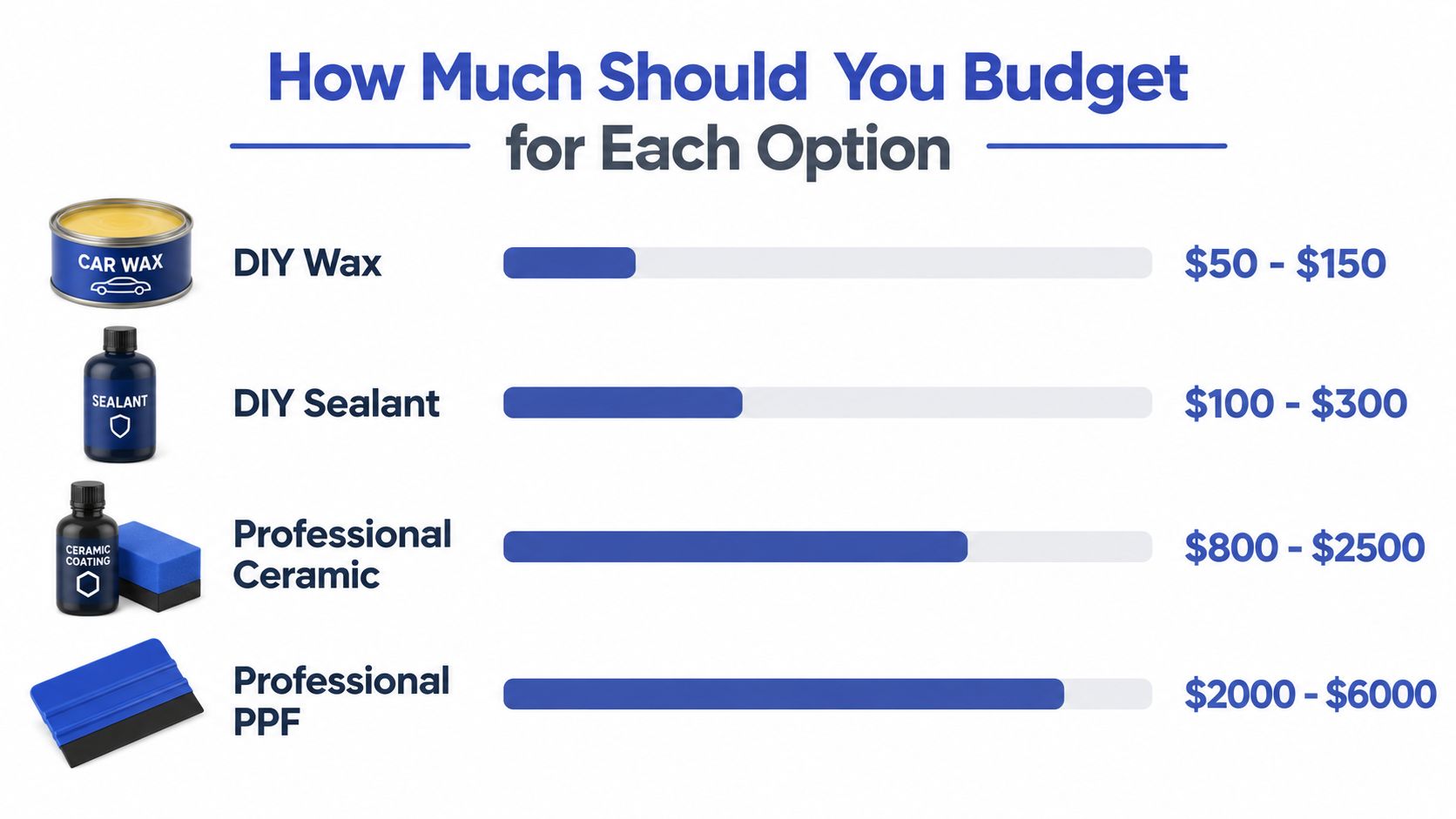
For the Australian market, professional ceramic coating usually sits at about A$900 to A$2,000, while DIY kits start around A$100 to A$350. Size drives the quote. Smaller cars often land lower, while SUVs, utes, and 4WDs sit higher because they take more labour, more product, and more prep. For a local benchmark, use the Perth ceramic coating pricing guide from Prime Shine before you book.
Cost test: lifespan, not sticker price
Wax looks cheap at the start, but it asks for frequent attention. Sealant costs more than wax and gives you a longer gap between applications. Ceramic coating costs more again, but it cuts down reapplication and makes day-to-day care easier.
For a new car, professional ceramic coating is usually the strongest value play. It sits in the practical middle, cost-wise, while giving better durability and easier upkeep. DIY ceramic kits usually last around 1 to 2 years, while professional work lasts much longer. If you want the car easier to wash through Perth dust, salt, and sun, that difference matters.
PPF is the premium option, and you should budget for it as impact protection, not as a shine upgrade. A full install is a serious spend, so it only makes sense when chip risk and long-term ownership justify it.
What to ask before you pay for anything
- What surface prep is included: Ask whether the car gets decontamination, correction, or only a wash before application.
- What durability is realistic: Get a straight answer on how long the product should hold up.
- What maintenance is required: Some products need more careful washing to keep working properly.
- What size-based pricing applies: Larger vehicles take more labour, so the quote should reflect that.
If a package sounds too neat, it usually is. Good paint protection depends on prep, application quality, and maintenance, not a glossy brochure.
Prime Shine Hand Car Wash publishes transparent starting prices and adjusts for vehicle condition, which is the right way to price this job. Use the pricing guide here if you want a local benchmark before booking.
See Local Ceramic Coating Prices
Which Protection Suits Your Driving and Lifestyle Best?
The right answer depends on how the car lives, not how much you want to spend. A family wagon doing school runs has different needs from a weekend sports car, and neither should be sold the same package as a hard-driven commuter that sits outside all day.
Family daily driver
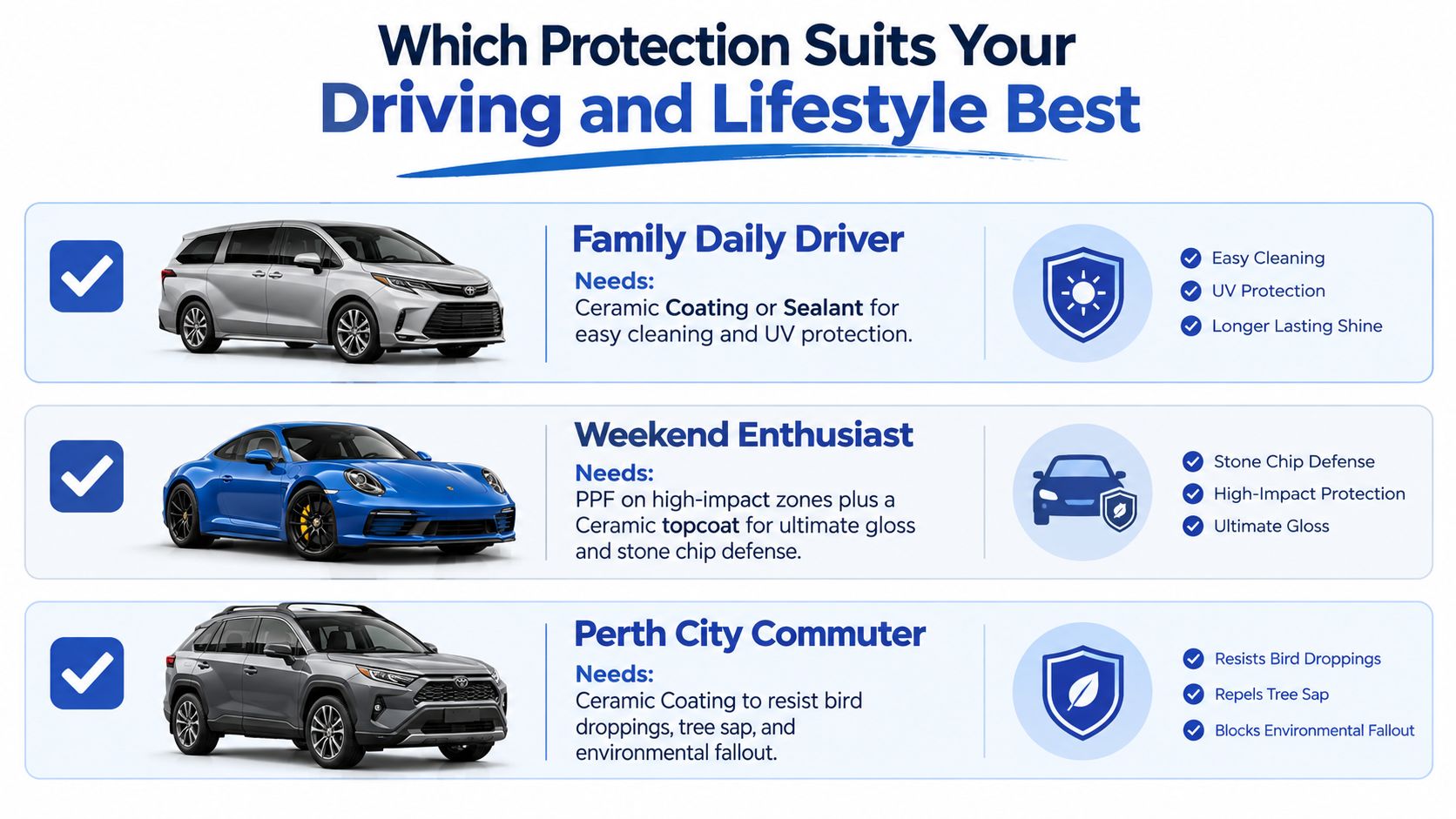
For a family car, choose ceramic coating if you want easy cleaning and better UV resistance. If the budget is tighter, sealant is the sensible fallback because it still makes washing easier and gives decent short-term protection. The point is to reduce maintenance friction, because family cars get dirty quickly and often.
Weekend enthusiast
For an enthusiast car, use PPF on high-impact zones plus ceramic coating over the rest. That gives you the chip defence where it matters and the gloss and washability you want everywhere else. If you garage the car and drive it less often, that layered approach makes more sense than spending big on full-body film without a clear reason.
Perth city commuter
For a city car that lives in traffic, gets parked outside, and picks up environmental fallout, ceramic coating is the practical answer. It keeps washing easier and helps the finish cope with daily grime better than wax or a basic sealant. That’s the route I’d pick for most new commuters who want a car that still looks fresh after the first year.
Good rule of thumb: high-impact driving points toward film, regular urban use points toward ceramic, and light ownership points toward sealant.
You can mix the options without overbuying. A sensible plan is film on the front end, ceramic on the rest, and regular hand washing to keep it all working. That’s usually smarter than paying for a product you don’t need across every panel.
Get Help Choosing the Right Protection
How Do You Maintain Protection After Application?
Protection only works if you look after it properly. In Perth, that means routine hand care, clean drying habits, and a bit of discipline after the install. Let the car live under dirty brushes or sloppy towel work, and you chew through the benefit fast.
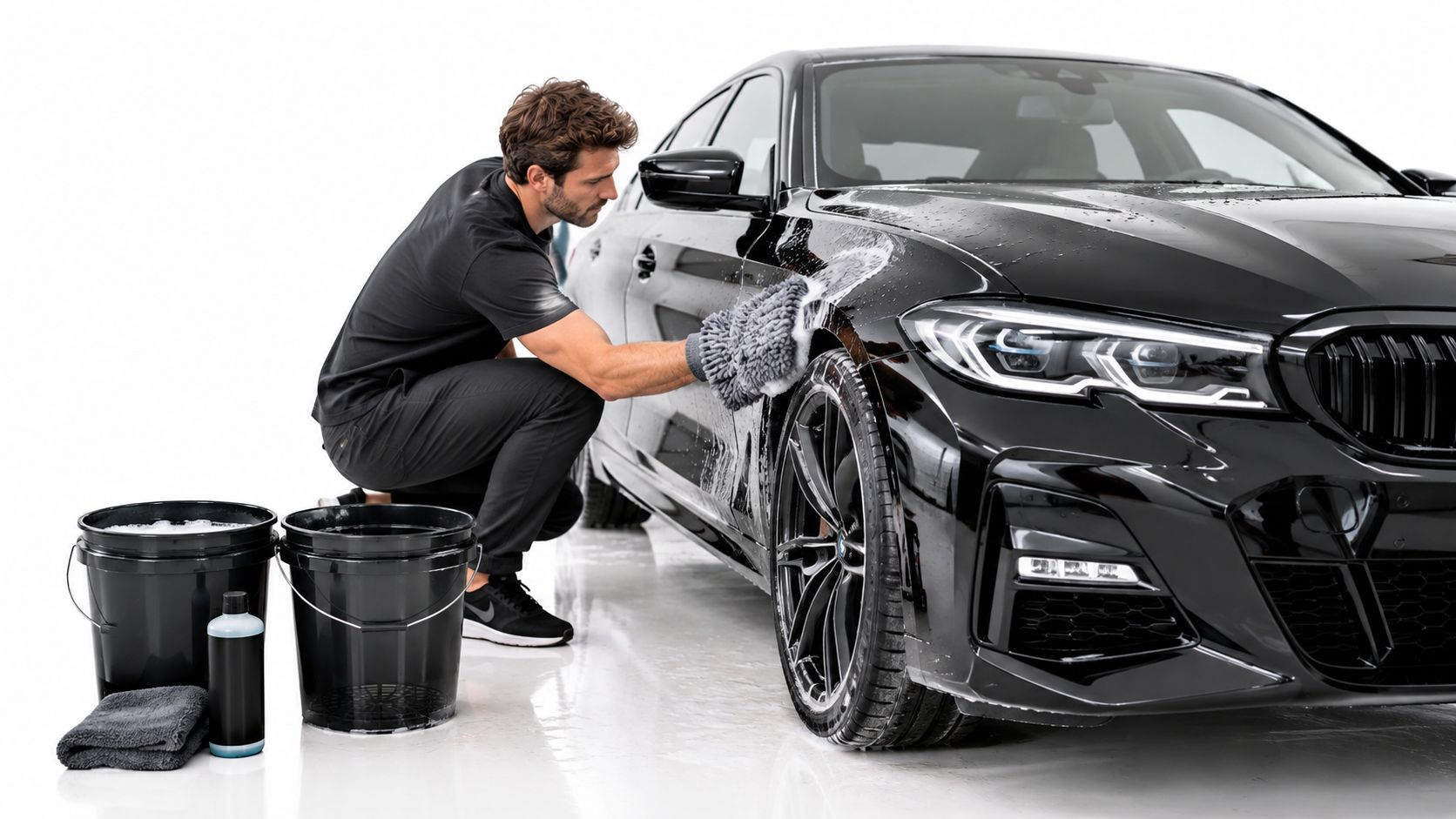
Start with the washing method
Use hand washing only. Automated brushes drag grit across the paint, which adds swirls and weakens the finish you just paid to protect. Prime Shine’s hand wash and detailing process suits protected paint and new cars that need careful handling.
Drying is just as important. Use clean microfibre drying towels, keep them separate from wheel work, and never drag dirty tools across coated panels. That is how you keep the surface easier to clean and stop grime from sticking as quickly between washes.
Keep the paint ready before you seal it
On a brand-new vehicle, don’t rush straight into protection. The paint needs time to settle, and proper prep matters just as much as the product itself. If the finish already has light swirls or contamination, a cut and polish before coating can make sense. That is preparation, not overkill. A coating only performs as well as the surface underneath it.
Check the car, not just the calendar
The real maintenance job is inspection. Every few washes, run your hand over the panels after rinsing. Look for rough spots, tar, brake dust fallout, water that stops beading cleanly, and any dull patches that weren’t there before. Perth roads throw up grit, salt, and road film, so protected cars still need eyes on them.
A simple routine works best:
- Wash by hand and dry with clean microfibre.
- Check lower panels, rear sections, and the front end for contamination.
- Remove tar or fallout before it settles in.
- Watch for changes in gloss or water behaviour.
- Book correction if the paint starts feeling rough or looking flat.
The fastest way to shorten protection life is to treat it like ordinary paint.
Keep the process calm and consistent, and the protection will keep doing its job. Ignore the basics, and even a good finish starts to look tired sooner than it should.
Book a Hand Wash and Paint Check
How Do You Choose the Right Protection With Prime Shine?
Pick the product based on the car’s job. If you want quick gloss and low commitment, choose wax. If you want better value and don’t mind periodic reapplication, choose sealant. If you want the strongest all-round answer for a new Perth car, choose ceramic coating. If your priority is stopping chips on vulnerable panels, choose PPF where impact is highest.
That’s the decision path I’d give you face to face in Westminster. Prime Shine Hand Car Wash offers a Premium Car Wash with hand wax and polish, cut and polish for paint preparation, and ceramic coating for longer-term protection, all backed by hand-wash-only methods and transparent starting prices. If your new car needs a proper look over before you commit, that’s the right kind of service sequence.
Book an inspection before the paint gets marked up by daily driving. You’ll get a clearer answer on what the surface needs, and you won’t be pushed into the wrong package just because the car is new.
Bring your new car to Prime Shine Hand Car Wash if you want straight advice, hand-wash care, and a protection plan that fits Perth driving instead of a generic dealership upsell. Book a visit, get the paint inspected, and choose the route that matches how long you plan to keep the car.