







The most popular advice about car ceramic polish is also the most misleading: if a product says “ceramic”, it must offer maximum paint protection. It doesn’t. Ceramic polish is still a polishing product, not a scratch-proof shield and not automatically a professionally cured coating.
That distinction matters in Perth. Strong sun, dust, road film and coastal air make poor preparation obvious, especially on dark paint. Australia also has a substantial vehicle base, with more than 12 million registered passenger vehicles recorded in March 2009, compared with approximately 9.7 million in 1999. Passenger vehicles represented 77% of the national fleet at that time, according to the Australian Bureau of Statistics vehicle data. That creates plenty of demand for paint maintenance, but it doesn’t make every ceramic-labelled service the right one.
Why the Term ‘Car Ceramic Polish’ Is Already Misleading?
A standard polish uses mild abrasives, oils and finishing agents to improve the appearance of paint. A ceramic-infused polish adds ceramic-related ingredients or protection claims to that polishing process, but it still works mainly by cleaning, refining and brightening the surface. It doesn’t create the same bonded protective layer as a professionally applied ceramic coating.
The word “ceramic” gets attached to sprays, shampoos, waxes, sealants and polishes because it signals gloss, slickness and protection. Those products can be useful, but the label doesn’t tell you how much correction they perform, how much film they leave behind or how they behave after repeated washing.
What the product actually changes
Think of ceramic polish as a finishing choice, not a new category of paint correction. It may reduce light haze, oxidation and fine swirls while leaving the surface glossier and easier to maintain. Deeper scratches, stone chips and serious clear-coat failure require a different assessment.
A traditional polish focuses on refining the paint. A ceramic polish usually adds a short-term protective element to that finish. A ceramic spray sealant places more emphasis on protection than correction. A professional coating is applied after preparation and curing, and its success depends heavily on the condition of the paint underneath.
| Product type | What it actually does | Typical durability on a daily driver | Best fit |
|---|---|---|---|
| Traditional polish | Refines dullness, haze and light defects | Short-term finish improvement | Paint needing brightness |
| Ceramic-infused polish | Polishes while adding a light protective finish | Short-term to moderate protection | Daily drivers needing gloss and easier cleaning |
| Ceramic spray sealant | Adds slickness, water behaviour and surface protection | Maintenance protection that declines with use | Owners maintaining an already tidy finish |
| Professional ceramic coating | Bonds as a thin protective layer after preparation | Depends on system, preparation, exposure and care | Fresh or corrected paint requiring longer-term protection |
Perth drivers should judge the paint, not the bottle. If you’re unsure whether the problem is dullness, swirls or contamination, this Perth driver’s guide to cut and polish gives the more useful starting point.
Workshop rule: Ceramic polish can improve the finish. It can’t turn neglected paint into corrected paint or make a vehicle immune to damage.
I recommend ceramic polish when the vehicle needs a visible refresh and the owner wants some added slickness without committing to a full coating process. I don’t recommend it as a substitute for paint correction where the defects are obvious, or as a substitute for impact film on high-risk areas.
Polish vs Ceramic Coating vs Ceramic Spray
Which product does your paint need? Start with the defect rather than the word ceramic.
Paint correction uses a compound or polish with a machine, pad and controlled pressure to reduce defects in the clear coat. Cutting removes more material and tackles heavier haze or scratches. Finishing polish removes finer marks and improves clarity. Because modern clear coats can be less than 35 to 50 micrometres thick, repeated aggressive correction needs restraint, as explained in this Australian polishing guide for summer conditions.
A traditional polish is suitable when the paint is generally sound but looks flat. It can clean and refine the surface without pretending to provide a substantial protective layer.
A ceramic-infused polish combines that refinement with a light protective finish. It suits a customer who wants a brighter car and easier routine washing, but it won’t replace a separate coating if the brief is longer-term surface protection.
Where does ceramic spray fit?
A ceramic spray sealant is mostly a maintenance product. It can improve water behaviour and slickness on clean paint, making routine dirt easier to remove. It isn’t a correction service, and it shouldn’t be used to hide oxidation or heavy swirls.
A professionally cured ceramic coating is different again. It bonds to prepared exterior paint and forms a thin chemical protection layer. Australian automotive guidance describes these layers as harder than conventional clear coat and capable of improving resistance to marring, chemical exposure and wear, but not as protection against every scratch or impact. The Australian machine polishing guidance also stresses that the surface must be decontaminated and polished before coating.
Use this decision model:
- Paint looks dull but has few defects: choose a polish or ceramic-infused polish.
- Light swirls and haze are visible: choose correction first, then decide whether protection is worthwhile.
- Fresh, corrected paint needs easier maintenance: consider a ceramic coating.
- Bonnet and bumper face regular stone impact: consider impact protection, not ceramic polish.
- The car is already glossy and rarely exposed: a maintenance spray may be enough.
For a broader explanation of the distinction, see this Perth guide to paint protection versus ceramic coating. It’s the condition and use of the vehicle that should determine the service, not the most impressive term on the menu.
Compare ceramic coating options
When to Polish Before a Ceramic Coating?
A ceramic coating doesn’t correct paint. It preserves the finish you give it. If the panel has swirls, oxidation or holograms before application, those marks can remain visible beneath the coating and become harder to remove later.
The preparation sequence should be deliberate:
- Wash the vehicle: remove loose dirt, road film and surface grime.
- Decontaminate the paint: use chemical decontamination where appropriate, then clay bonded contamination from the surface.
- Compound only where needed: reduce heavier defects with the least aggressive method that works.
- Finish polish: refine the surface, increase clarity and remove remaining haze.
- Panel wipe: remove polishing oils and residue so the coating can bond to clean paint.
- Apply the coating: work within the product’s temperature, humidity and flash-time limits.
- Protect the curing period: keep the vehicle dry for the period specified by the installer.
Why Perth heat changes the process
Dark vehicle panels can exceed 70°C under direct January sunlight in Australian summer conditions, according to this technical guide to polishing in Australian summer conditions. On a hot panel, solvents and lubricants in the compound evaporate faster. That can increase the risk of buffer trails, uneven cutting and clear-coat burning.
Work indoors, in shade or during cooler morning and evening periods. Use the least-aggressive pad and compound combination that achieves the required defect reduction. Don’t chase every mark on an older daily driver if doing so removes valuable clear coat for a cosmetic gain.
| Stage | Purpose | Where ceramic polish fits |
|---|---|---|
| Wash | Removes loose contamination | Not a substitute for washing |
| Decontamination | Removes bonded dirt and embedded particles | May follow this stage, not replace it |
| Cutting | Reduces heavier defects | Only where required |
| Finishing polish | Improves clarity and gloss | Ceramic polish may serve this role if defects are light |
| Panel wipe | Removes oils and residue | Essential before coating |
| Coating | Adds the protective layer | Applied after correction and preparation |
A useful guide to paint correction stages and real results can help you decide whether your vehicle needs a light polish or a more involved correction. If the goal is a coating, don’t skip the preparation because the paint looks glossy under workshop lighting.
When Ceramic Polish Is Worth the Money?
Ceramic polish earns its place when it solves a visible problem. An older daily driver with dull, lightly oxidised paint can look substantially fresher after careful cleaning and polishing. A dark SUV parked outside may also benefit because gloss, haze and light wash marks show more readily on darker panels.
The service makes less sense when the paint is already clean and bright, or when the defects are too deep for polishing to improve. A product can’t polish away a stone chip, deep scratch or failing clear coat. It can also add cost without much customer-facing benefit on a garage-kept weekend car that sees little sun, dust or road contamination.
Match the service to the defect
- Light dullness: choose a polish, ceramic polish or premium wash with a suitable protective finish.
- Swirls and light scratches: choose a cut and polish, then add protection if the result justifies it.
- Post-summer haze or oxidation: correct the affected areas before adding ceramic protection.
- Pre-sale presentation: use the least expensive process that produces a clean, honest improvement.
- New paint in good condition: focus on protection and maintenance rather than unnecessary cutting.
- Heavy scratches or chips: inspect the damage first. Ceramic polish won’t repair impact damage.
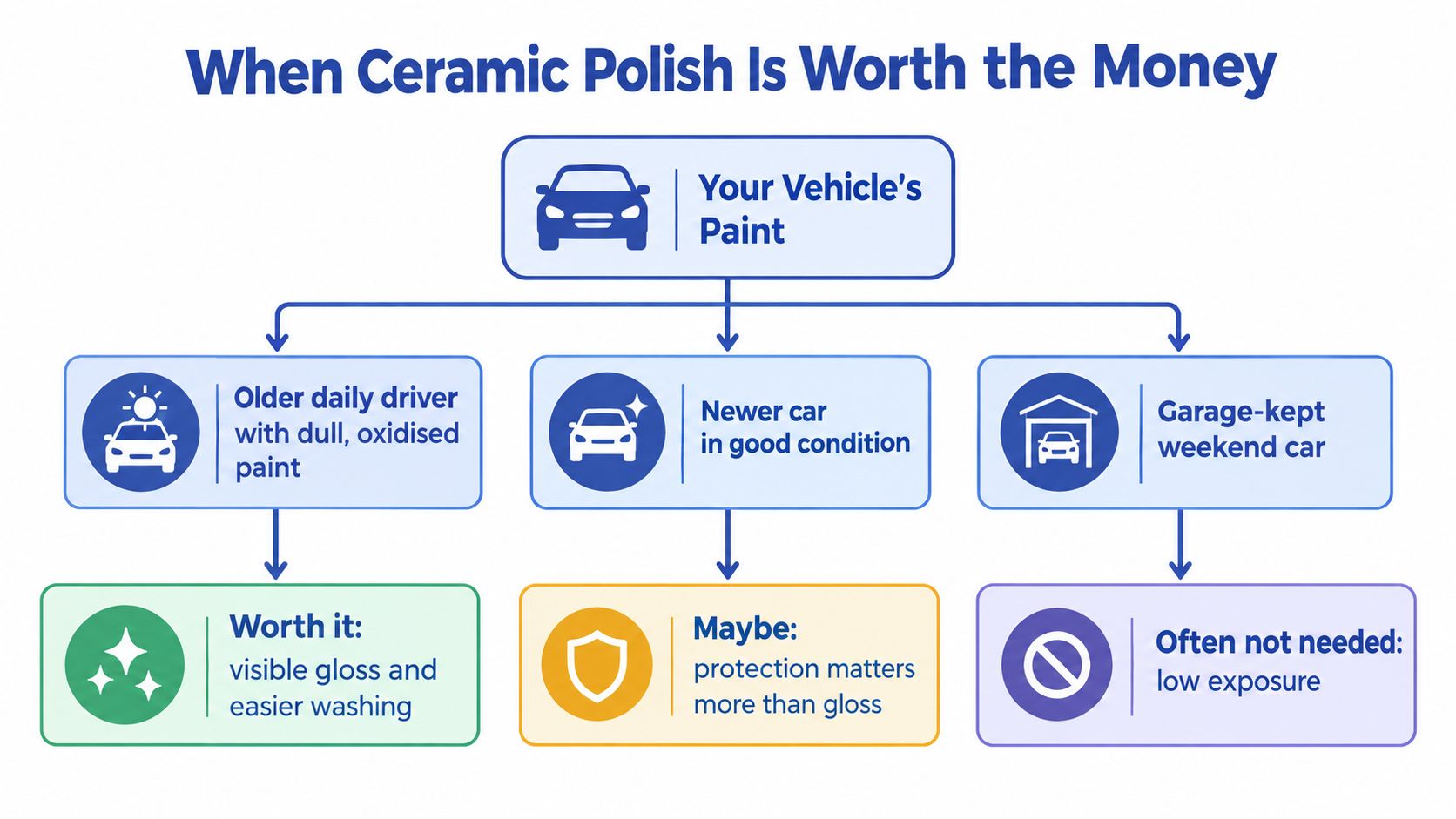
For a family SUV used for school runs and shopping, a ceramic polish may be a sensible middle ground. It can refresh the appearance without committing to a full coating. For a rideshare or delivery vehicle, regular hand washing and sensible maintenance may matter more than chasing maximum gloss. For an enthusiast car, preparation quality matters more than adding a ceramic label to a basic polish.
Spend on correction when you can see the defect. Spend on protection when you want to preserve a finish that’s already worth preserving.
The Perth cut and polish cost guide is useful when you want to compare the correction requirement with the vehicle’s age, condition and ownership plans. My view is simple. Don’t pay for a coating to cover paint that should have been corrected first, and don’t pay for correction that the vehicle’s condition doesn’t justify.
Professional Service vs At-Home Ceramic Polish Products
At-home ceramic polish products can work when expectations are modest and the paint is already in reasonable condition. You can wash, decontaminate, apply the product carefully and achieve more gloss and slickness. You won’t, however, replicate the controlled correction, residue removal, application environment and curing discipline of a professional coating service without the right space, equipment and experience.
A professional hand-wash and ceramic polish package generally focuses on cleaning, surface preparation and visual refinement. A cut and polish adds machine correction for swirls, haze and light scratches. A ceramic coating requires a cleaner starting surface, more precise application and protection from moisture during the initial cure.
What you’re paying for
The cost difference should reflect the work, not just the product name. At-home products appear cheaper because you supply the labour, wash bay, lighting, machine or hand applicators, towels and correction judgement. That can be good value for a careful owner, but mistakes can create uneven residue, missed contamination or visible application marks.
A professional service offers process control. The operator can inspect the paint under proper lighting, adjust pad and compound aggressiveness, wipe the surface residue-free and apply the coating in suitable conditions. Realistic durability still depends on the coating system, preparation, exposure and maintenance. No responsible detailer should promise a fixed result regardless of use.
| Option | Indicative cost band | Realistic durability | Best fit |
|---|---|---|---|
| At-home ceramic polish | Lower relative cost | Short-term to moderate protection | Tidy daily drivers and capable owners |
| Professional ceramic polish | Moderate relative cost | Moderate, dependent on care | Vehicles needing a controlled refresh |
| Professional cut and polish | Higher relative cost | Correction lasts until new defects appear | Paint with visible swirls or haze |
| Professionally cured coating | Highest relative commitment | Varies with system, prep, exposure and upkeep | Corrected paint needing easier maintenance |
Prime Shine Hand Car Wash provides hand car washing, detailing, cut and polish, and ceramic coating services at its Westminster site, so a Perth owner can select the process according to the paint rather than treating every vehicle as a coating job. Ask what preparation is included, how long the car must stay dry, what maintenance is expected and what the service can’t fix.
Looking After a Car After Ceramic Polish or Coating
Take a charcoal grey SUV parked outdoors at a Westminster home. It handles school runs, beach trips and the occasional highway drive. The owner has paid for a cleaner, glossier finish, but the coating won’t compensate for unsafe washing or bird droppings left on the bonnet.
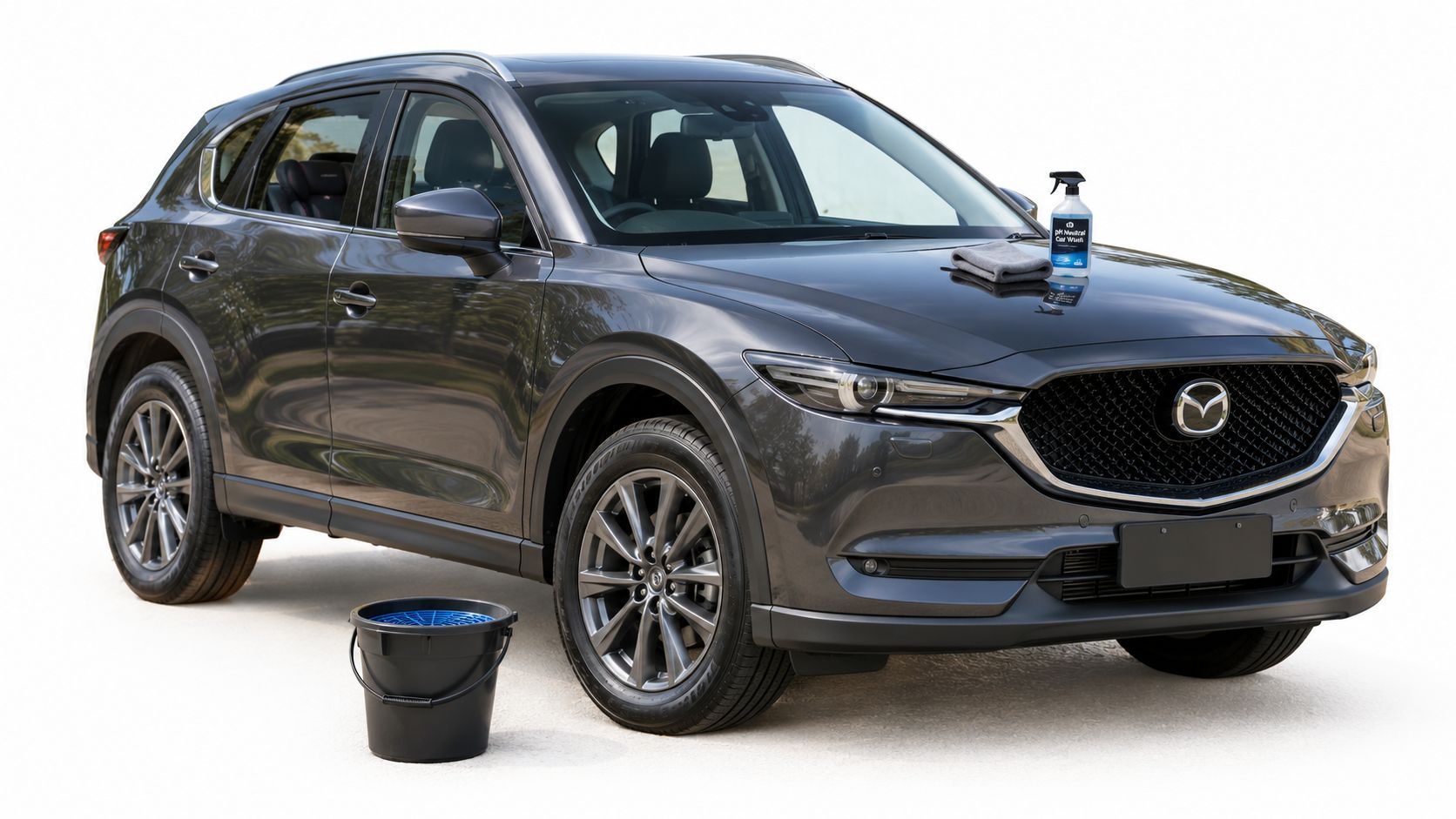
That SUV needs a routine, not a promise of maintenance-free paint. Wash it by hand in shade where practical, use clean microfibre equipment, clean the wheels separately and dry the bodywork without grinding dirt across the surface. A two-bucket method, with one bucket for washing and one for rinsing, reduces the chance of carrying grit back onto the paint.
A routine that survives real Perth use
- After contamination: remove bird droppings, sap and other acidic material promptly. Don’t wait for the next scheduled wash.
- During washing: avoid abrasive automatic brushes and household detergents. Use a suitable car-care wash product.
- After rinsing: dry with clean microfibre towels rather than allowing mineral-rich water to evaporate on the panels.
- For outdoor parking: choose shade when possible, but don’t assume shade eliminates dust, moisture or contamination.
- For heavy use: inspect the bonnet, roof and sides more often than a lightly used garage-kept vehicle.
Australian guidance makes the central point clearly. Ceramic protection reduces cleaning effort, but it doesn’t eliminate safe washing or contamination removal. Performance depends on sunlight, parking, driving frequency, washing method, products and the quality of the original preparation. Maintenance protectants may be used approximately every couple of months to restore slickness, as outlined in this ceramic maintenance guidance.
Inspect the vehicle after major exposure, then adjust the routine. An outdoor family SUV may need more attention than a weekend car kept inside. The coating is an aid to maintenance, not permission to postpone it.
Common Misconceptions About Ceramic Polish
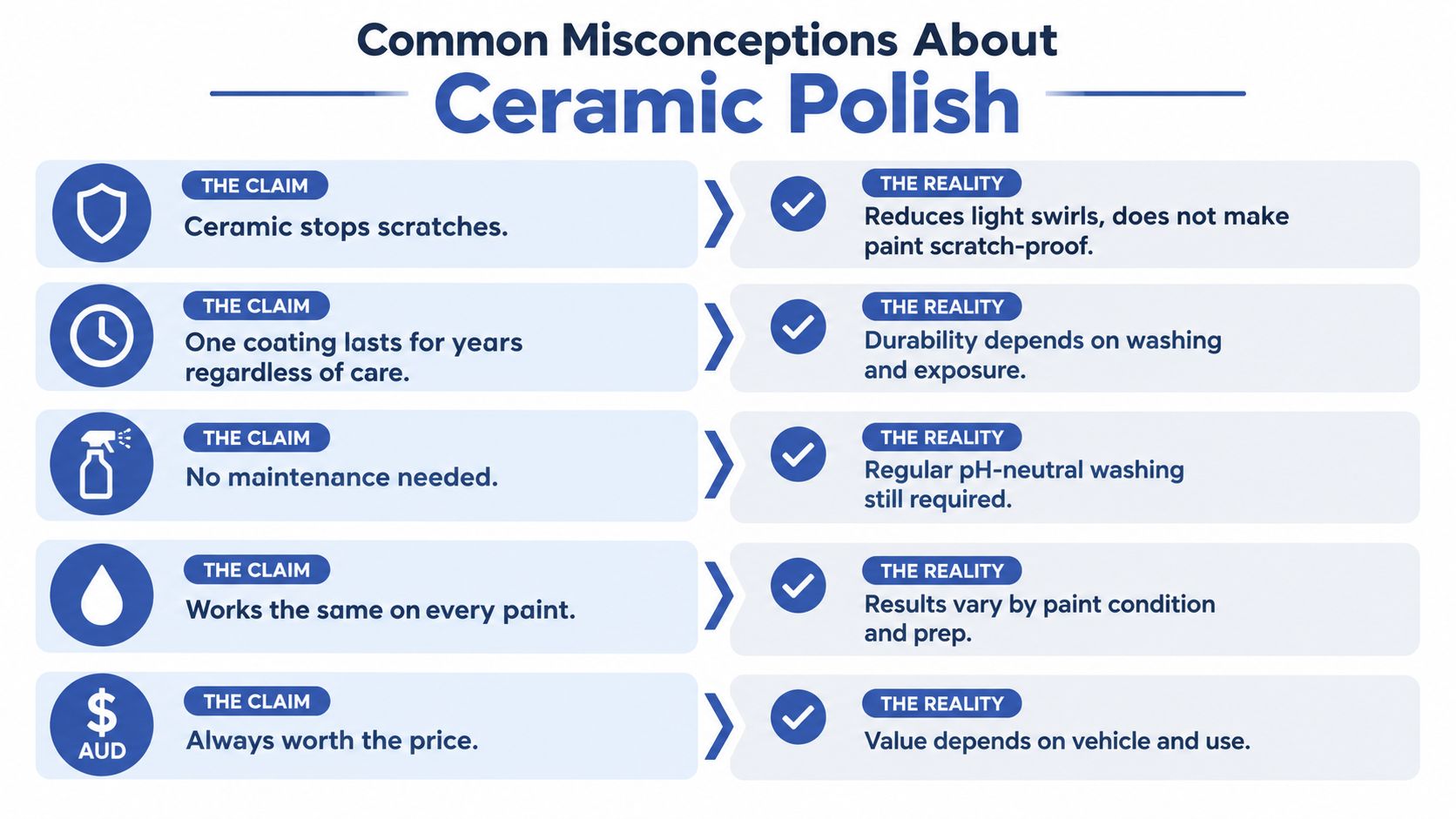
Ceramic marketing often makes the product sound stronger than the process. The first misconception is that ceramic stops scratches. It may offer some resistance to light marring and minor surface wear, but it won’t stop deep scratches, stone chips or every physical impact.
The second is that one coating lasts regardless of care. Durability changes with exposure, preparation, application quality, washing method and maintenance. Australian conditions combine ultraviolet radiation, heat and moisture, and CSIRO materials durability work indicates that these stresses can accelerate polymer degradation together, as discussed in this Australian paint protection overview.
Five claims that need correcting
- “Ceramic is the same as ceramic coating.” A polish, spray sealant and cured coating perform different jobs.
- “More layers always mean more protection.” Application quality and surface preparation matter more than stacking products without a clear system.
- “Any soap is fine.” Harsh or unsuitable detergents can weaken performance or leave residue.
- “Coated paint needs no maintenance.” Safe hand washing and prompt contamination removal remain necessary.
- “Ceramic is the best answer for every vehicle.” Value depends on paint condition, exposure and how long you plan to keep the car.
Use a cut and polish for visible light defects, ceramic polish for a gloss-focused refresh with light protection, and a full coating for properly prepared paint where easier maintenance and environmental resistance justify the commitment. A coating won’t make paint permanently immune to Perth’s sun, dust, road grime or coastal exposure.
Get honest advice on ceramic services
Choosing the Right Ceramic Service in Perth
Start with what you can see. Light swirls usually call for paint correction with optional ceramic protection. Faded or chalky paint needs polishing and a realistic assessment of the clear coat. Fresh paint in good condition may justify a coating, while heavy scratches need inspection before anyone promises a result.
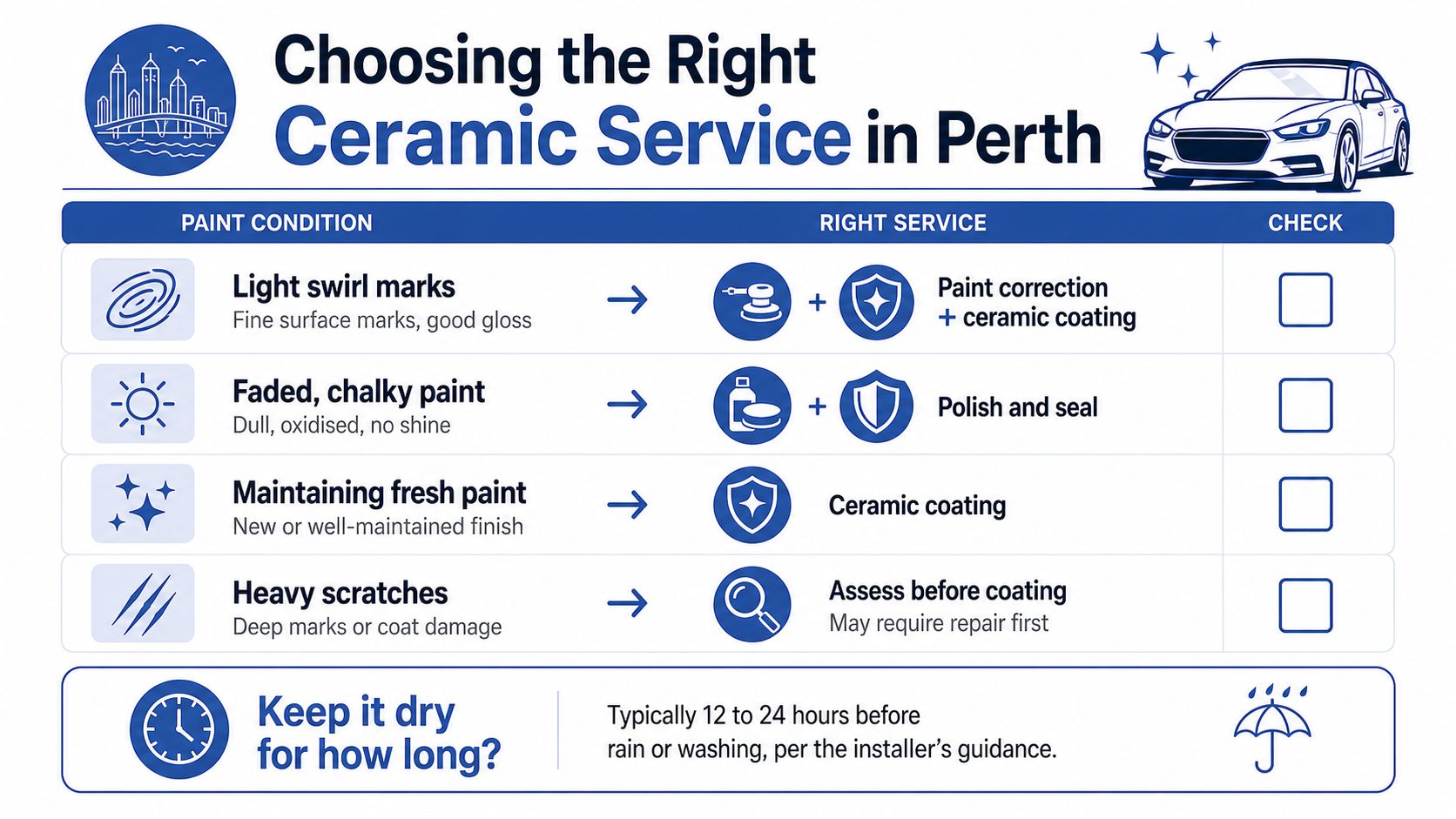
| What you see on the paint | Best first step | When to add ceramic polish or coating |
|---|---|---|
| Light swirl marks | Paint correction or cut and polish | Add protection after the finish is refined |
| Faded, chalky paint | Assess clear coat, then polish if sound | Add ceramic polish or coating only after correction |
| Clean, fresh-looking paint | Thorough wash and inspection | Add a coating when long-term maintenance benefits matter |
| Heavy scratches or chips | Professional damage assessment | Coat only after deciding what can realistically be corrected |
| Minor dullness on a daily driver | Premium wash and polish | Ceramic polish is optional, not essential |
Practical questions to ask
How long must the vehicle stay dry? Follow the installer’s product instructions. The initial curing period depends on the system and conditions, and the car should be protected from water exposure during that time.
When is the first wash safe? Ask the installer for the exact timing before leaving the workshop. Don’t assume the coating is ready just because the surface feels dry.
Which soaps weaken performance? Avoid household detergents and abrasive cleaning methods. Use a suitable car-wash product and clean microfibre equipment.
How often should the car be inspected? Base inspections on exposure. Outdoor parking, beach trips, heavy commuting and rideshare use justify closer checks than occasional weekend driving.
Is ceramic polish worthwhile on a leased car? It can be, if improving presentation and reducing cleaning effort matters before return. Keep the service proportionate to the lease period and avoid unnecessary correction.
For a light refresh, choose a premium hand wash and wax. For visible swirls, choose cut and polish. For corrected paint that needs longer-term protection and easier upkeep, discuss ceramic coating with the operator and ask exactly what preparation is included.
Prime Shine Hand Car Wash offers hand washing, paint correction, cut and polish, and ceramic coating at its Westminster location. If you’re unsure whether your vehicle needs car ceramic polish, correction or full protection, visit Prime Shine Hand Car Wash and book an assessment based on the actual condition of your paint.