






Most advice about ceramic protection for a car sells it as a permanent shield. That’s the wrong expectation for Perth drivers: a coating can make paint easier to wash and slow some chemical damage, but it won’t stop stone chips, deep scratches or neglected paint from showing through.
I recommend ceramic coating when you want a more durable surface treatment and you’re prepared to wash the car properly. If you’re expecting to apply it once and forget about maintenance, save your money. The payoff depends on the paint’s condition, the preparation and the care that follows.
What Ceramic Protection for Car Actually Does?
A ceramic coating isn’t a force field, and it doesn’t make paint maintenance-free. It’s a bonded protective layer applied to the clear coat. Perth drivers sometimes expect it to prevent every scratch, shrug off bird droppings indefinitely and keep a car spotless through winter. It can’t do that.
A well-prepared coating has three useful jobs. It encourages water to bead and shed, makes dirt easier to remove during a wash, and provides a surface layer that helps reduce direct environmental exposure of the clear coat. That can help preserve gloss, but it doesn’t stop UV ageing altogether or replace washing, paint correction or covered parking.
The honest test: A coating should make routine care easier, not give you permission to stop caring for the paint.
Think of it as a durable maintenance treatment rather than a permanent finish. Its practical value is that contaminants are generally easier to clean away from a correctly coated surface, and the paint has an added layer between it and everyday exposure. Results still depend on how the surface was prepared and how the car is treated afterwards.
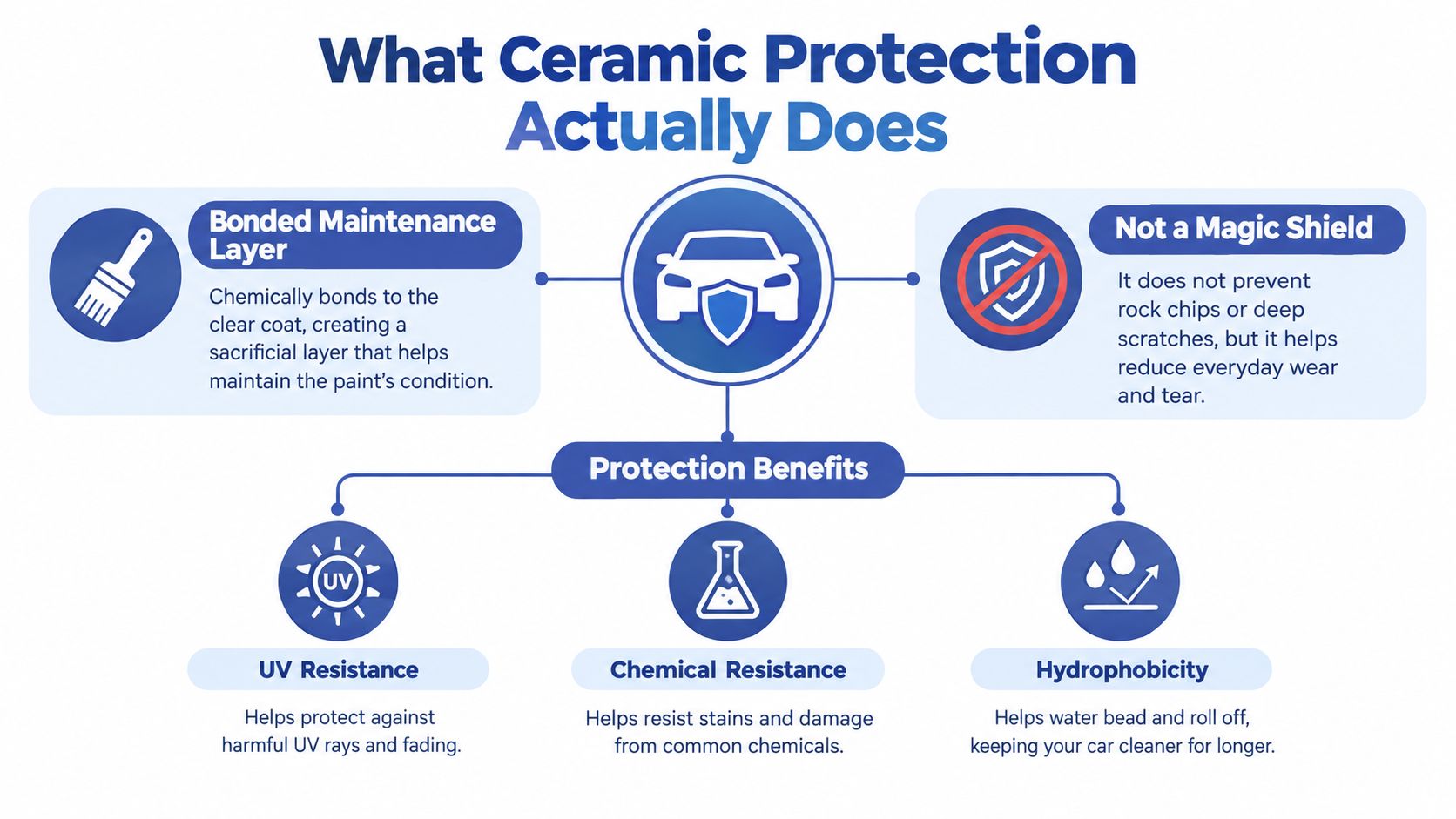
If your main goal is simpler washing and a lasting gloss, ceramic protection may suit you. If your main concern is impact damage from gravel or careless parking, you need a different solution.
Book a Ceramic Coating Assessment
How a Ceramic Layer Bonds to Your Paint?
Think of a ceramic coating as a thin second skin that grips a clean clear coat, rather than a soft layer sitting loosely on top like traditional wax. That bond is why preparation matters so much. Dirt, old product residue, oils and bonded contamination can interfere with the surface, so coating a poorly cleaned car is a shortcut to a disappointing result.
A professional process starts by inspecting the paint and washing away loose grime. The detailer then removes contamination that a normal wash won’t shift, using appropriate decontamination methods. If the paint has swirls or dullness, correction may be needed before coating. A coating won’t hide those defects. It can make the finish look glossier, which may also make existing flaws easier to see.
Next, the paint is wiped clean so residue from washing or polishing doesn’t get between the clear coat and the coating. The product is applied evenly, then allowed to cure as directed. If the surface is dirty or correction is rushed, the coating can lock in a finish the owner didn’t want.
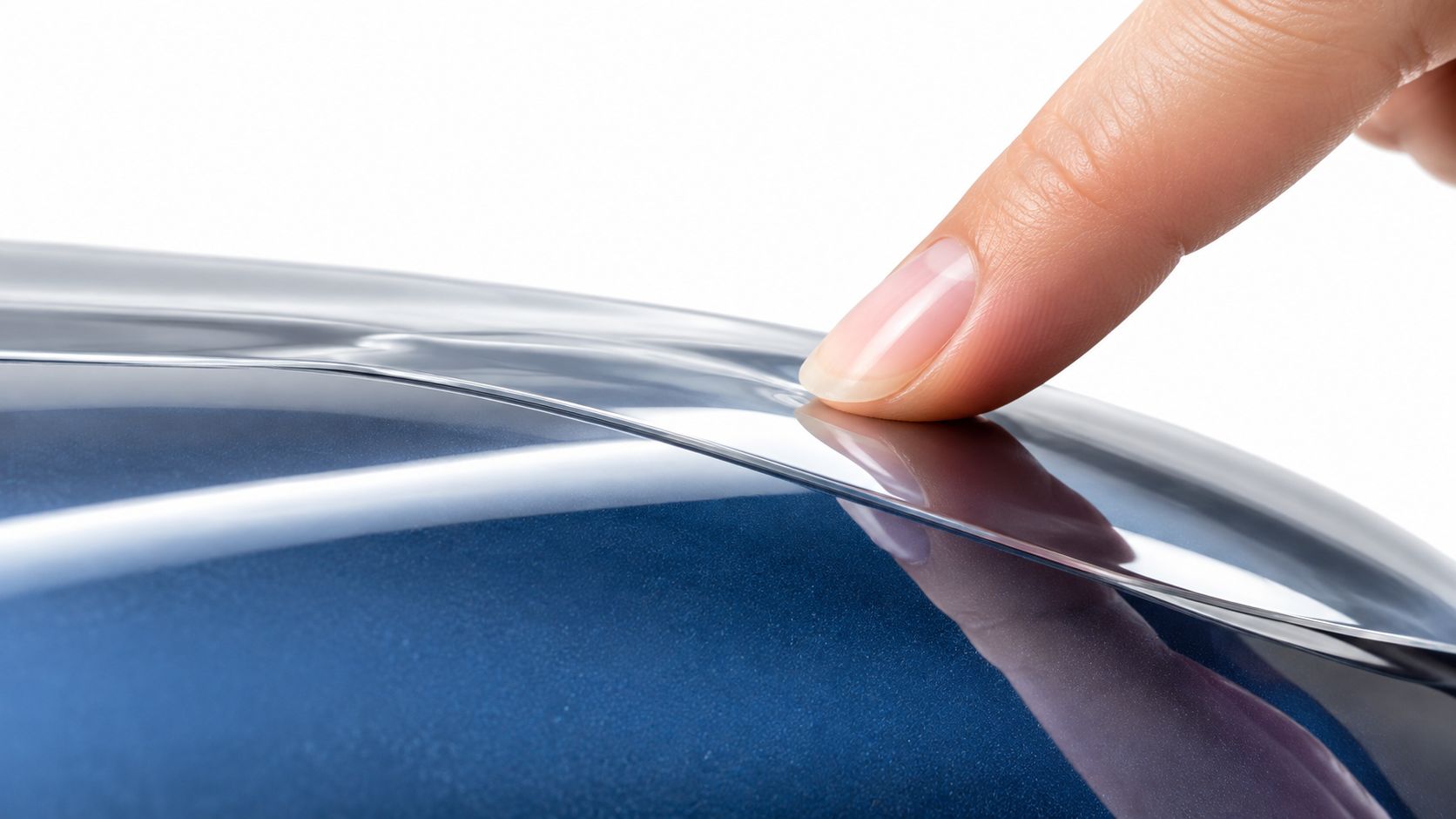
A coating is commonly described as about 1-2 microns thick, which is far too thin to absorb a stone strike or stop a deep scratch. NRMA’s guide to protecting a car from the sun notes that coatings at this thickness don’t directly block 99% of UV radiation. Their role is to help protect the clear coat and its existing UV inhibitors from oxidation, not to replace the paint system.
That thin layer can still be useful. But when a business promises a “lifetime” coating without explaining preparation, care and inspection, ask what that promise covers.
See How Paint Correction Prepares the Surface
Ceramic Coating Compared to Wax and Sealant
Wax, polymer sealant and ceramic coating all add a layer to the paint, but they don’t suit the same owner. Wax is a straightforward choice for someone who enjoys frequent detailing. Sealant is a practical middle ground. Ceramic coating suits drivers who want a more durable surface treatment and are willing to maintain it properly.
| Property | Carnauba Wax | Polymer Sealant | Ceramic Coating |
|---|---|---|---|
| Durability | Typically short-term, with regular reapplication | Usually lasts longer than traditional wax | Designed for longer-term protection, with durability dependent on preparation and care |
| Gloss | Warm, softer-looking finish | Clear, crisp gloss | Strong gloss on properly prepared paint |
| Application | Simple to apply and remove | Straightforward, but preparation helps | Requires careful preparation and controlled application |
| Upkeep | Frequent renewal | Periodic renewal | Routine washing and maintenance still required |
| Best fit | Weekend or show car owner who likes hands-on care | Driver wanting an uncomplicated step up from wax | Daily driver or valued vehicle needing easier ongoing care |
The table is a guide, not a promise of a set lifespan. Weather, parking, washing and paint condition all affect how each treatment performs. For a closer look at where wax fits into a routine, see this guide to liquid car wax and when to use it.
For a weekend car that gets driven sparingly, wax can be perfectly sensible. For a daily driver, sealant may offer a useful balance between effort and protection. Ceramic coating makes more sense if you want easier cleaning over the longer term, especially when the paint is in good condition or has been corrected first.
Don’t choose by gloss claims alone. Choose by how often you’ll wash the car, where it’s parked and whether you’re willing to keep up with maintenance.
Compare Your Best Paint Protection Option
What Ceramic Can and Cannot Protect Against?
The most important distinction is chemical protection versus physical protection. A coating can help reduce the paint’s exposure to contaminants such as bird droppings, bug splatter and water deposits. It can also make grime easier to wash away. That gives you a better chance of cleaning contamination off before it marks the clear coat, but it doesn’t make the paint invulnerable.
Physical impacts are different. A layer around 1-2 microns thick isn’t thick enough to absorb a stone chip, resist a key or prevent damage from a trolley. Ceramic coating isn’t a substitute for paint protection film where the priority is guarding vulnerable panels against chips and abrasion.
Existing paint condition matters just as much as the product. If your bonnet has oxidation, swirl marks or light scratches, coating over them won’t make them disappear. The final appearance depends on the finish underneath, which is why an inspection and suitable correction should come before the coating decision.
| Paint concern | Better starting point |
|---|---|
| Water beading and easier cleaning | Ceramic coating, with regular gentle washing |
| Swirls and dull paint | Cut and polish, followed by protection if appropriate |
| Stone chips and impact damage | Consider paint protection film for exposed areas |
| Deep scratches or clear-coat failure | Get the damage assessed before choosing a coating |
I’d rather tell a customer that ceramic coating isn’t the right answer than apply it over defects and let them down. If the paint needs attention, correct the surface first. If the main problem is chips, discuss physical protection instead.
How Long It Lasts in Perth Conditions?
Perth’s sun makes paint care more demanding. Safe Work Australia classifies UV Index levels of 8-10 as extreme and says UV exposure can cause damage at 3 or higher, the threshold at which the Bureau of Meteorology issues a SunSmart UV Alert. That guidance is designed primarily for human health and workplace safety, not vehicle testing, but it helps explain why outdoor paint protection matters here. See the Safe Work Australia guide to solar ultraviolet radiation.
Sun isn’t the only factor. Heat, moisture and mechanical stress can work together to degrade polymer materials, as CSIRO explains in its guidance on testing coatings and materials. For a car, that’s a reason to think of ceramic protection as a weathering-management layer, not an impenetrable shield. Coastal exposure, outdoor parking and regular use add to the conditions the surface has to face.
Wash chemistry also matters. In an automotive clear-coat weathering study, household detergent produced about 30.3 nm of surface-roughness change in the first 24 hours of testing, compared with about 4.6 nm for car-wash detergent. The reported hardness changes were about 1.358 HV and 1.133 HV, respectively. The study examined topcoat systems, not the service life of every ceramic product, but it supports a simple rule: use a purpose-designed automotive shampoo, not household detergent. Read the automotive topcoat weathering study.
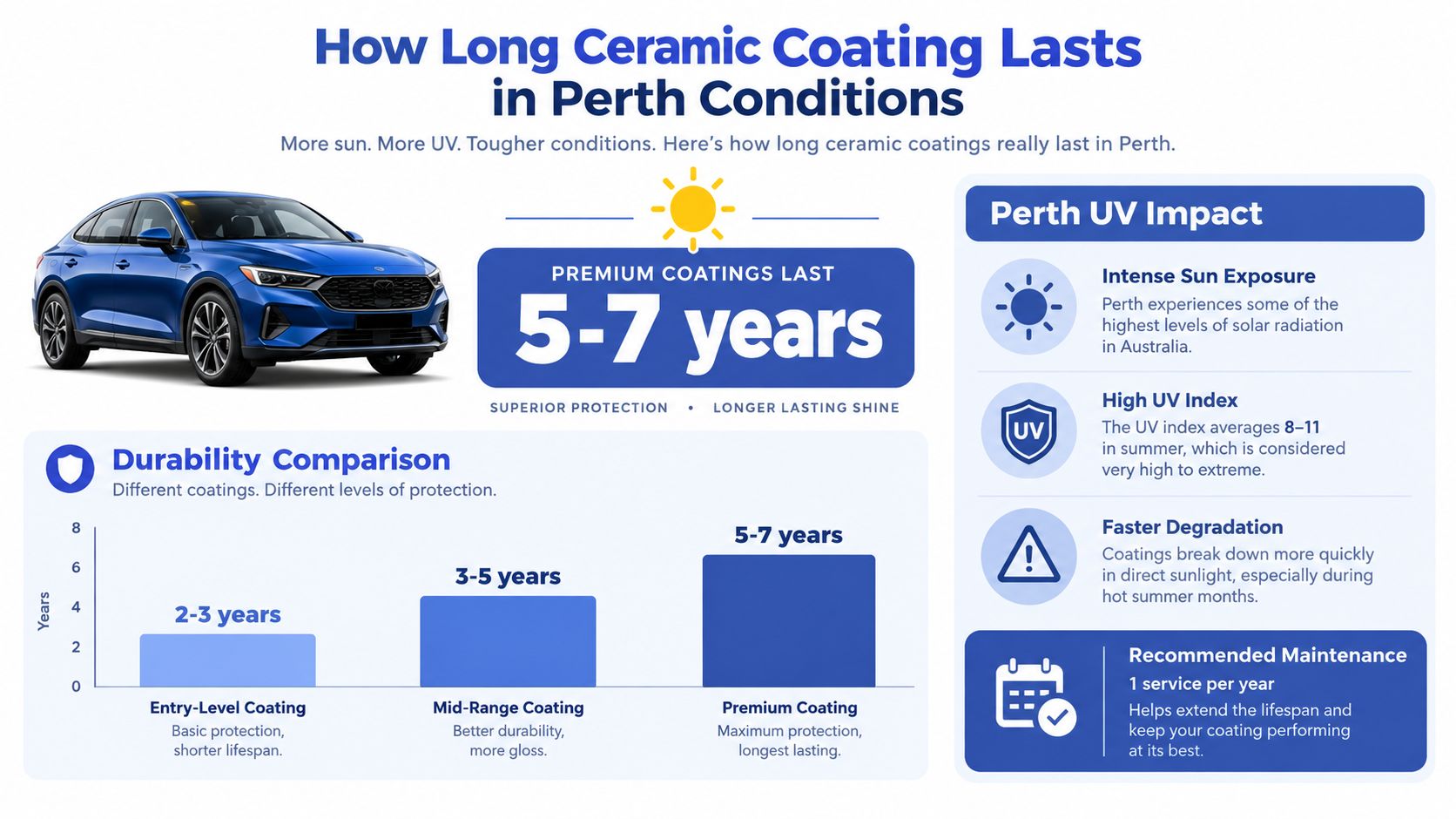
Don’t treat a marketed year rating as a guaranteed expiry date. Durability claims only mean much when you know the test method, preparation, coating conditions and maintenance requirements. For a realistic estimate based on your vehicle and routine, use this guide to how long ceramic coating lasts as a starting point, then ask for an inspection and a clear maintenance plan.
Find Out How Long Ceramic Coating Lasts
What Professional Application Looks Like and What It Costs?
A professional coating job is mostly preparation. The product application matters, but it can’t compensate for dirty paint, untreated defects or a rushed surface inspection. Ask what the package includes before comparing quotes.
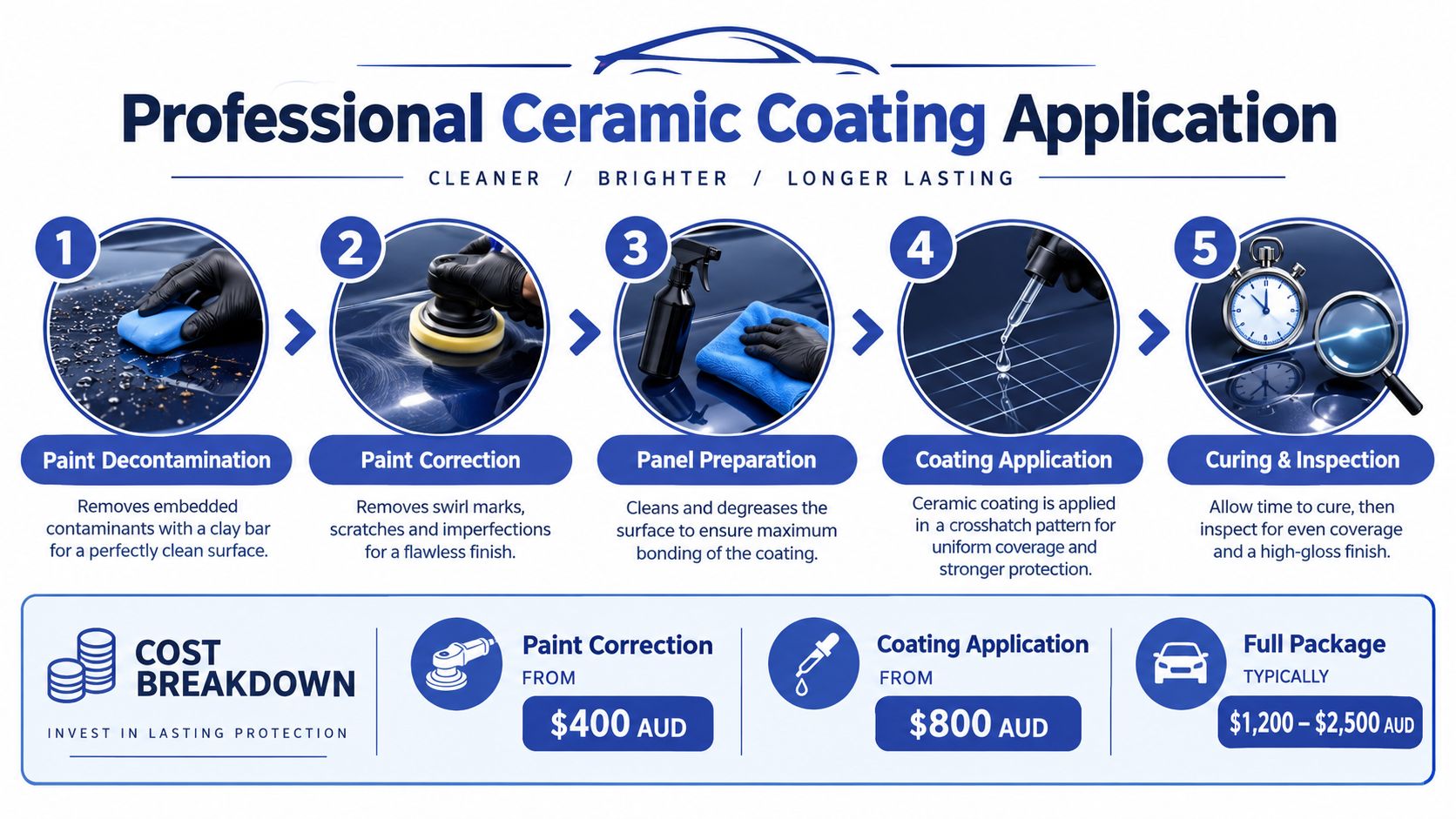
A careful process usually follows this sequence:
- Inspect the paint. The detailer checks for swirls, scratches, oxidation and previous damage. This determines whether correction is needed and helps set realistic expectations.
- Wash and decontaminate. Loose grime is removed, then bonded contamination is treated so the surface is clean enough for correction and coating.
- Correct the paint if required. Machine polishing can reduce swirls and light defects. Skipping this step may leave visible marks beneath the coating.
- Prepare each panel. A clean wipe removes polishing residue and other material that could interfere with bonding.
- Apply, cure and inspect. The coating is spread evenly, allowed to cure under suitable conditions and checked for uneven patches.
The quote should reflect the vehicle’s size and condition, the preparation required and the coating package selected. A car that needs substantial paint correction takes more work than paint in tidy condition. Get an itemised quote so you know what’s included and whether paint correction is separate from coating application.
Add-ons such as leather cleaning, interior protection or carpet treatment address different parts of the vehicle. They can be useful, but they shouldn’t be confused with paint protection. If the paint needs correction before coating, this guide to paint correction stages and costs explains what the work involves.
I wouldn’t choose a coating by its advertised rating alone. Ask how the paint will be assessed, what preparation is included and what care the detailer expects after application. A transparent quote should make those answers easy to understand.
Get a Quote for Paint Correction and Coating
Living With a Coated Car Day to Day
A coated car still needs regular washing. The difference is that dirt should be easier to remove, so you can clean the surface with less effort instead of scrubbing at it. Use a pH-balanced automotive shampoo, a soft wash mitt and clean microfibre towels for drying.
Keep wheel tools separate from paint tools. Brake dust and grit picked up around the wheels shouldn’t end up on the bonnet or doors. Brush-style automatic washes are a poor match for a carefully maintained finish because their contact and cleaning methods can be rough on paint.
A coating reduces the need to fight stubborn grime. It doesn’t make rough washing safe.
Give the paint a quick visual check every so often, especially after bird droppings or other contamination sits on a panel. Deal with marks promptly and don’t leave dirty water to dry in direct sun. If you’re unsure about your routine, follow these safe steps for washing a ceramic-coated car.
Simple routine
- Wash gently: Use automotive shampoo and soft wash media.
- Separate tools: Keep wheel brushes and cloths away from painted panels.
- Dry carefully: Use clean microfibre rather than letting water dry on the paint.
- Inspect often: Look for stuck contamination or areas that need attention.
- Avoid household detergent: It can be harsher on clear coat than car-wash shampoo.
Learn the Safe Way to Wash a Coated Car
Choosing the Right Service at Prime Shine
Start with the paint, not the product. If the car is dusty or has road film, book a hand wash. If swirl marks or light scratches are spoiling the finish, ask for an assessment for cut and polish. Consider ceramic coating when the paint is in suitable condition and you want longer-term surface protection with easier upkeep.
That decision works for everyday drivers as well as enthusiasts. A family car or commuter often needs reliable cleaning first. A rideshare or delivery vehicle benefits from a routine that keeps the exterior presentable without promising it won’t collect grime. An enthusiast car may justify correction before coating, while a seller preparing a vehicle for sale should choose the service that addresses its actual visible condition.
For a pre-sale car with dull paint, a correction may improve presentation more directly than coating alone. For a well-kept vehicle that spends much of its time outdoors, coating may be a sensible next step, provided the owner understands the limits and maintenance involved.
Prime Shine Hand Car Wash provides hand washing, detailing, paint correction and ceramic coating from its Westminster location, with itemised starting prices and online booking. The practical move is to book an inspection, describe how the car is used and ask which treatment fits the paint. Don’t pay for a coating before you know whether the surface needs correction first.
If you’re in Perth and weighing up ceramic protection, book a paint assessment with Prime Shine Hand Car Wash before choosing a package. The team can help you decide whether your car needs a hand wash, cut and polish or ceramic coating, with the preparation and upkeep explained plainly.