







Your car looks clean on Saturday morning. By Sunday afternoon, it’s been parked in full sun at the shops, picked up road film on the freeway, and copped salty air on the coast. The shine drops fast in Perth, and not because you did anything wrong. Our conditions are hard on paint.
That’s why so many first-time owners start looking at paint protection services. Usually, they’re not chasing a show car. They want the paint to stay glossier, the car to wash easier, and the finish to age more slowly under harsh sun and everyday grime. That’s a sensible goal.
What confuses people is that “protection” can mean different things. One option helps with UV, water beading, and easier cleaning. Another helps more with chip-prone areas. Another gives a short-lived boost in gloss but needs frequent redoing. If you don’t separate those jobs, it’s easy to buy the wrong service and expect the wrong result.
In Perth, that matters more than it does in milder places. Local guidance notes that Perth gets more than 3,200 hours of direct sunshine a year, with summer UV regularly reaching the extreme category, which is why unprotected paint fades and oxidises sooner in the world than many owners expect.
If you’re weighing up whether to coat, correct, film, wax, or keep things simple, this guide will help you make that call with clear expectations and less guesswork.
Introduction
A common Perth story goes like this. You buy a car that still looks sharp under dealership lights, or maybe your current car still has decent gloss when it’s freshly washed. A few months later, the bonnet feels rough, the black trims look chalkier, and the paint doesn’t pop the same way in midday sun.
That change usually isn’t one big event. It’s lots of little hits. UV, bird droppings, salty air, bug splatter, road grime, washing marks, and heat all work away at the top surface. Paint protection services sit over that vulnerable finish like a working layer you maintain, rather than asking the factory clear coat to absorb everything on its own.
The easiest way to think about it is this. Your car already has paint and a clear coat from the factory. Protection adds something sacrificial on top, so cleaning is easier and contamination is less likely to cling and stain.
Paint protection helps preserve paint. It doesn’t make a car invincible.
That point matters because plenty of drivers hear “coating” and imagine a hard shell that stops every kind of damage. It doesn’t work that way. Some services are designed to help against UV, chemical fallout, and wash-related grime. Some improve gloss and make maintenance easier. Some are better suited to impact-prone areas. None of them replace careful washing, and none of them remove damage that’s already there.
What most owners actually want
Most first-time buyers aren’t asking technical questions. They’re asking practical ones.
- Will it stay cleaner longer if I park outside most days?
- Will washing be easier after beach trips or freeway driving?
- Will the gloss last through Perth summer?
- Do I need correction first if I already have swirl marks?
- Am I paying for chip protection or cleaning protection
Those are the right questions. Once you know what each option is meant to do, the choices become much simpler.
Compare Your Protection Choices
What Are Paint Protection Services and How Do They Work
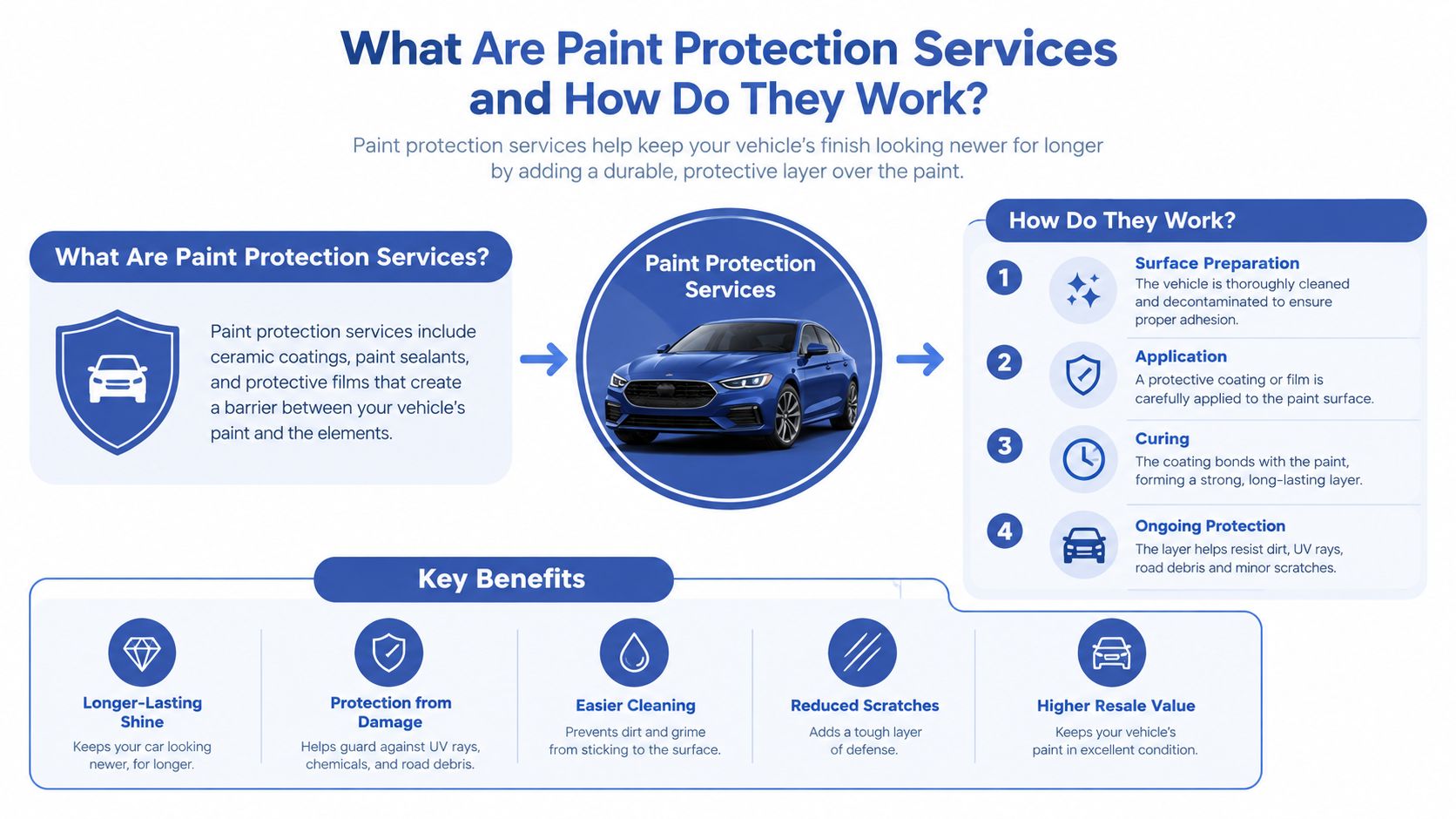
Paint protection services add a layer over the factory clear coat so everyday fallout hits that layer first. In Perth, that matters more than many first-time owners expect, because strong UV, hot panels, salty coastal air, bird droppings, and regular washing all wear on paint in different ways.
The factory clear coat is the painted surface’s built-in top skin. Protection sits above it as the sacrificial layer. The job is simple. Reduce how tightly grime bonds, slow down staining and weathering, and make washing less of a chore.
What actually sits on the car
Different services do that job in different ways.
Ceramic coatings form a cured layer that bonds to the clear coat and creates a slick, water-repelling surface. That is why owners often notice easier washing, less dirt hanging on after freeway driving, and better resistance to staining from things like bird droppings or coastal fallout. Perth conditions make those benefits more noticeable because heat and sun speed up the damage left behind when contamination sits too long.
Hydrophobic is the term you will hear a lot. It means water pulls into beads instead of spreading flat across the panel. Picture rain on a freshly waxed table. The water gathers, rolls, and carries loose dust with it instead of lingering in a film.
Some protection options focus less on cleaning ease and more on physical impact. Paint protection film is the thicker option used where stone strikes and abrasion are the concern. Ceramic coatings and sealants are much thinner, so their strength is surface behaviour and maintenance help, not impact absorption. If you want a clearer side-by-side explanation, this Perth drivers guide to paint protection vs ceramic coating breaks down where each option fits.
Core concept: Protection changes what touches your paint first. It does not replace the clear coat, and it does not repair defects already in it.
How the protection works day to day
A practical way to understand it is to look at wash day.
On unprotected paint, dust, mineral residue, bug marks, and salty grime tend to cling more stubbornly. You usually need more contact to remove them, and more contact means more chance of adding fine wash marks over time. On protected paint, contamination still lands on the car, but it usually releases with less effort if the surface has been applied properly and looked after.
That link between protection and maintenance gets missed a lot. The coating itself helps, but so does curing discipline. If a car gets wet too early, washed too soon, or exposed to contamination before the product has settled properly, the finish may not perform the way the owner expected.
What protection does not do
People often get sold the wrong idea. Paint protection is not the same as chip protection.
A ceramic coating can help with UV exposure, chemical fallout, and easier cleaning, but it does not stop rock chips. It is too thin for that job. Guidance from an Australian car-care manufacturer makes that point clearly in its ceramic coating maintenance guide. If chip resistance is the main goal, the conversation usually needs to include film on high-hit areas.
Protection also does not hide swirl marks, water spotting, or faded paint. If those defects are already there, the layer goes over the top of them. That is why proper prep matters so much before any coating goes on.
Learn Which Protection Fits Best
Which Paint Protection Option Is Right For Your Car?
The right choice depends less on hype and more on how your car lives. A garaged weekend car has different needs from a daily commuter parked outdoors near the coast. A family SUV that sees school runs, beach gear, and quick driveway washes needs a different setup again.
Perth conditions make this simple question more important. Are you trying to reduce cleaning effort, improve gloss, and slow UV wear? Or are you mainly worried about impact-prone areas at the front of the car? Those are not the same problem, so they shouldn’t get the same solution.
Four common options
Ceramic coating suits owners who want a long-term protective layer that boosts gloss, helps with UV and chemical exposure, and makes washing easier. It’s a strong fit for cars that spend time outdoors and for people who want less day-to-day effort once the coating is properly maintained.
Paint protection film is the more impact-focused option. It’s usually considered where stone strikes and physical abrasion are the main worry, especially on high-hit areas such as the front end. It still needs maintenance, but its job is different from a coating’s job.
Wax is the traditional gloss booster. It can look great, but it’s the short-term choice. In harsh heat, coastal air, and frequent washing, it suits owners who enjoy regular upkeep and don’t mind reapplying often.
Sealants sit between wax and ceramic in most real-world conversations. They’re a practical option for people who want more staying power than wax without stepping straight into a premium long-term service.
Paint Protection Options Compared For Perth Drivers
| Protection Type | Durability | Key Protection | Maintenance Effort |
|---|---|---|---|
| Ceramic coating | Multi-year protection when professionally applied | UV, chemical fallout, easier cleaning, gloss and beading | Low to moderate, but wash method matters |
| Paint protection film | Longer-term physical barrier on selected areas or full panels | Better suited to impact-prone zones and surface abrasion | Moderate, with careful washing still needed |
| Wax | Short-lived | Basic gloss and light sacrificial shielding | Higher, with frequent reapplication |
| Sealants | Longer than wax but shorter than ceramic | Everyday environmental protection and shine support | Moderate |
Match the option to your routine
Choose based on the life your car has, not the life you wish it had.
- Outdoor parking most days usually points owners toward a more durable option with better UV and chemical resistance.
- Country or freeway driving often pushes the decision toward extra protection on front-facing areas.
- Low-maintenance ownership usually favours coatings over wax.
- Enthusiast owners who enjoy regular hands-on care may still like wax or a sealant routine.
If you’re buying protection for a new vehicle, this guide to the best paint protection for a new car in Perth helps narrow the choice by ownership style rather than sales talk.
The best protection is the one that matches how often you wash, where you park, and what kind of damage you’re actually trying to reduce.
Why Does Paint Correction Come Before Protection?
Protection locks in the condition of the surface underneath. If the paint is clear and refined, the result looks crisp and glossy. If the paint is swirled, hazy, or oxidised, the protection will preserve that too.
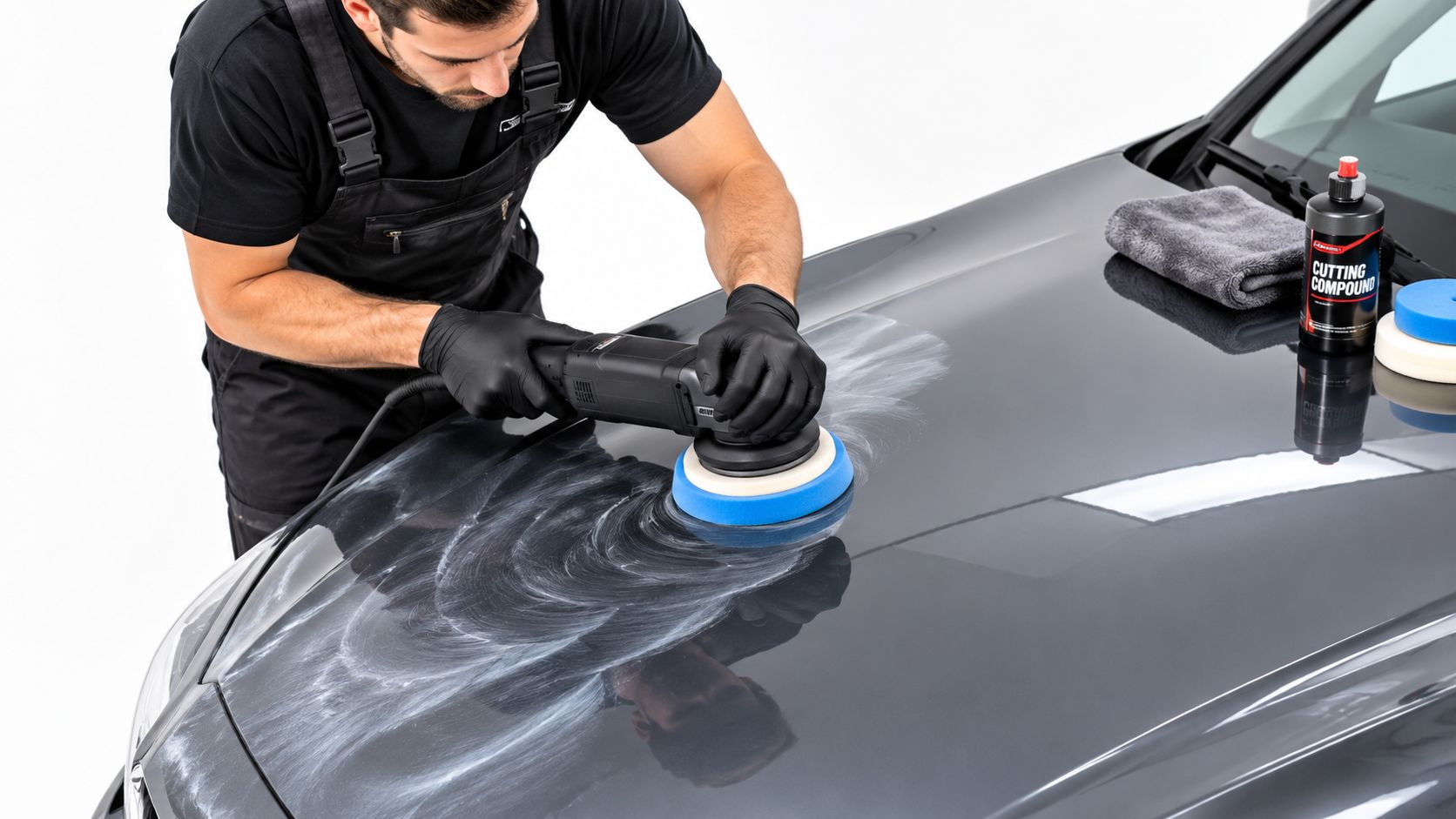
That’s why correction comes first when the finish already has defects. Paint correction is a machine-polishing process that removes defects in the clear coat by levelling the surface rather than filling imperfections, and Australian detailing guidance describes it as a way to remove swirl marks, oxidation, water spots, and light scratches to restore depth, clarity, and gloss.
What correction is really doing
A lot of people imagine polish as a shiny filler. Proper correction isn’t that. It trims down the high points around fine defects so the surface reflects light more evenly.
Think of a scratched timber table that gets sanded smooth before sealing. If you seal first, you trap the scratches under the finish. Paint works the same way.
How much clear coat gets removed
This is another area where owners get nervous. Correction sounds aggressive, but standard correction is usually a controlled process. One Australian source notes that standard correction can remove about 1 to 2 microns from paint that is typically 120 to 180 microns thick (paint thickness and correction guidance).
That doesn’t mean every car needs heavy polishing. Some near-new cars only need minor refining. Others with deeper wash marks need more involved work. A detailer should inspect the surface before deciding how much correction, if any, makes sense.
When correction may or may not be needed
You’ll usually want correction if:
- The paint has visible swirls in sun or under workshop lighting
- Water spots or oxidation have dulled the finish
- You want maximum gloss before applying long-term protection
You may not need much correction if the vehicle is very fresh, carefully washed, and free of noticeable defects.
If you want a practical breakdown of what happens during this stage, this paint correction guide covering stages, costs, and real-world results is worth reviewing before you book.
Review Paint Correction Stages
How Much Do Paint Protection Services Cost and How Long Do They Last?
A Perth owner usually asks the same practical questions after hearing about coatings. What will I pay, how long will it hold up, and how much work will it save me later?
Those are the right questions, especially here. Perth sun is harsh, coastal air carries salt, and a car parked outside wears that exposure every day. Protection is not just a purchase. It is a trade-off between upfront cost, maintenance effort, and how disciplined you are during curing and aftercare.
What you are really paying for
The coating product is only one part of the bill. The bigger cost is labour and preparation.
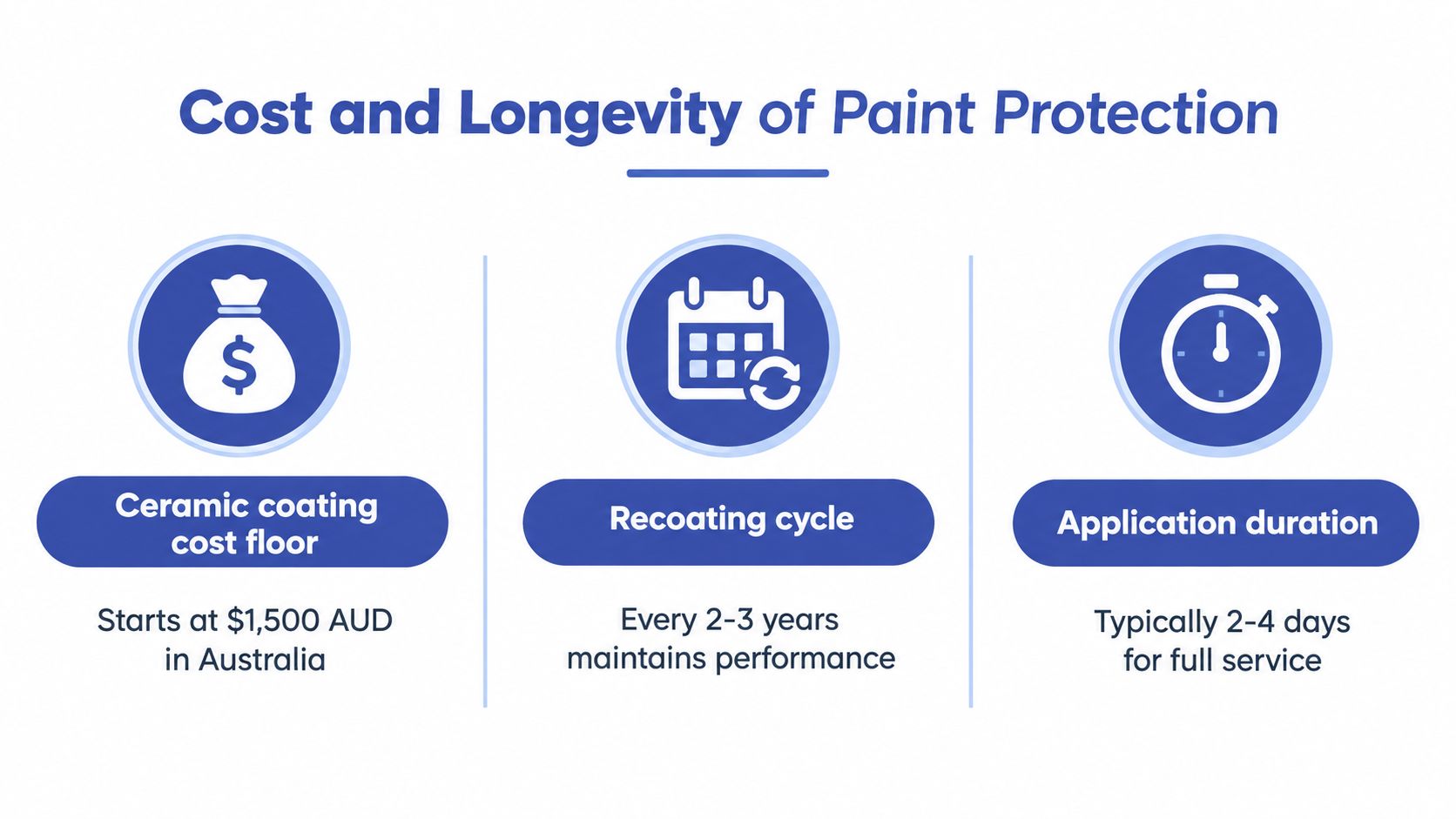
A proper job usually includes washing, decontamination, paint inspection, polishing if needed, careful application, and controlled curing. That is why prices can vary so much from one car to the next. A near-new vehicle with tidy paint takes less work than a daily driver with wash marks, water spotting, or faded panels.
If you want a local benchmark, this Perth ceramic paint protection pricing guide gives a useful starting point.
Why lifespan varies so much
Longevity is not just about what is written on a package. It depends on the paint condition underneath, how the coating is applied, where the car lives, and how the owner washes it after.
In Perth, UV and salt can shorten real-world performance if the car sits outside, goes to the beach often, or is cleaned with strong chemicals. A coating on a garaged weekend car may stay glossy and water-repellent longer than the same coating on a work ute parked in full sun near the coast.
Curing discipline matters too. A coating needs time to settle and harden properly. If that early period is rushed with bad weather exposure, harsh washing, or road grime, you can lose performance well before the coating should be due for a refresh.
The budget mistake that catches first-time owners
The expensive mistake is choosing a protection package for the wrong reason.
If someone expects coating alone to stop stone damage on a freeway-driven car, the budget goes in the wrong direction from day one. The problem is not the coating price. The problem is matching the product to the job. In that case, the owner often spends premium money, still gets chip marks on the nose and mirrors, then feels like the service failed when the issue was expectation.
A better approach is simpler. Choose based on what you want to reduce most: fading from Perth UV, stubborn contamination, wash effort, or surface marring from poor maintenance. Then budget for the prep and aftercare that make that choice last.
A sensible way to judge value
Good value is not the cheapest package or the longest claim on paper.
Good value means the finish suits your car’s use, your parking situation, and the amount of maintenance you will keep up with. For one owner, that may mean a shorter-term option with lower upfront cost. For another, it may mean investing more once to make regular washing easier for years.
Ask how long the protection is expected to perform in Perth conditions, what preparation is included, what curing instructions you must follow, and what maintenance is needed to keep the result on track.
How Should You Maintain Paint Protection After Application?
A good protection job can underperform if the aftercare is rough. Many owners accidentally shorten the life of the finish. They get the coating, then wash it too soon, use harsh chemicals, or run it through brush washes that grind contamination across the surface.
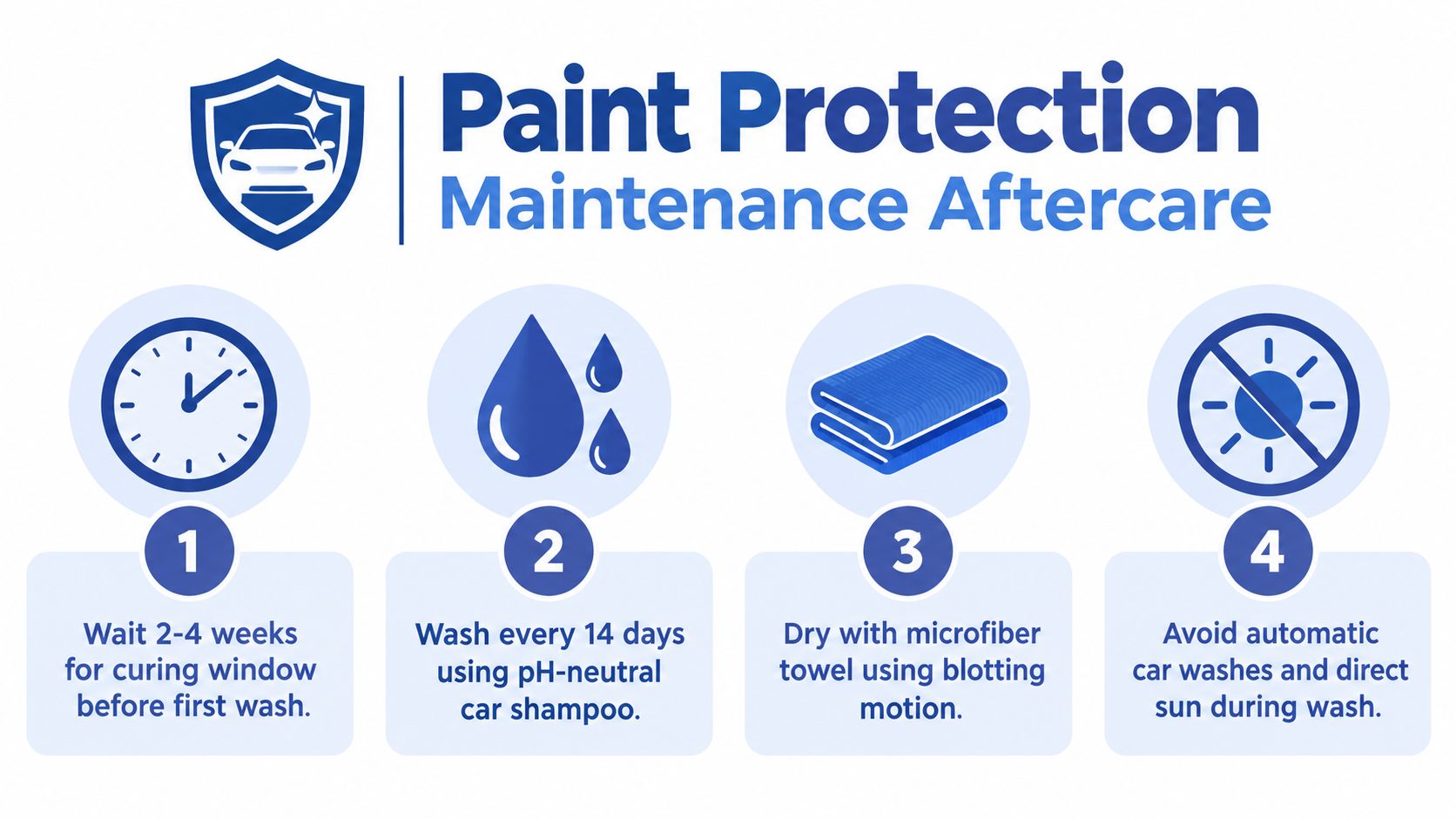
Australian coating guidance says coatings need a curing window of about 2 to 4 weeks before exposure to extreme conditions, and maintenance should use pH-neutral shampoo on a roughly fortnightly schedule to avoid stripping the coating’s hydrophobic top layer (ceramic coating care guidance).
The simple routine that works
A protected car doesn’t need complicated rituals. It needs consistency and gentle methods.
- Wait for the curing window: Don’t rush the first wash if your installer has given a post-application wait period.
- Use pH-neutral shampoo: Strong cleaners can flatten beading and wear down the top performance layer.
- Dry with a soft microfibre towel: Blot or glide gently rather than grinding dust across the panel.
- Skip automated brush washes: They can leave the same sort of fine marks owners often pay correction to remove.
A practical checklist for busy owners
If you want the easiest routine, keep it simple:
- Every week: Check for bird droppings, bug remains, or salty residue and remove them promptly.
- About every fortnight: Wash properly with pH-neutral shampoo.
- After coastal or country driving: Rinse contamination off sooner rather than later.
- As beading changes: Don’t assume the coating has failed. Often, the surface just needs proper maintenance.
A coating performs best when the owner treats it like a finish that needs care, not a shield that removes responsibility.
How Do You Choose the Right Paint Protection Provider in Perth?
Start with process, not branding. Ask how the car is washed, how contamination is removed, whether paint condition is assessed before protection, and whether the provider explains what the service won’t do. If they skip expectation-setting, that’s a warning sign.
Then look at transparency. Clear packages, visible starting prices, practical add-ons, and straightforward booking matter because they tell you how organised the operation is before your car even arrives. Hand-wash methods matter too, especially if you’re trying to avoid adding fresh wash marks before protection goes on.
One local option that fits that framework is Prime Shine Hand Car Wash in Westminster. It offers hand-wash-only services, paint correction, Cut & Polish, and Ceramic Coating, with online booking, selectable date and time slots, and published packages. For Perth drivers, a single-site setup can also make quality control simpler than a loosely run multi-operator model.
Ready To Protect Your Paint With Confidence
Paint protection gets much easier to understand once you stop treating it like one magic product. You’re really choosing between different jobs. Easier cleaning, better UV and chemical resistance, impact protection in key areas, or short-term gloss with more frequent upkeep.
For Perth drivers, the smart choice usually comes down to three things. Where the car lives, how much maintenance you’re willing to do, and whether the paint needs correction before anything goes on top. When those three line up, the result feels worth it.
If you’d rather make one informed decision than fix a disappointing one later, a proper inspection and honest recommendation will save you time and frustration.
Prime Shine Hand Car Wash offers hand washing, paint correction, Cut & Polish, and ceramic coating from its Westminster location, so Perth drivers can sort cleaning, surface prep, and long-term protection in one place. If you want paint protection services that match Perth conditions and realistic maintenance habits, visit Prime Shine Hand Car Wash and book a time that suits you.