







Ceramic coating is a liquid, silica-based polymer that chemically bonds to a vehicle’s clear coat and leaves a durable, hydrophobic barrier that makes cleaning easier. It’s not a scratch-proof shield, and that’s where a lot of car owners get misled.
Many hear “ceramic” and think armour. In reality, it is more practical than flashy, especially for Perth paint that sits under strong sun, dust, grime, and coastal air for months at a time.
What Exactly Is a Ceramic Coating?
Ceramic coating gets sold like magic, but the useful truth is simpler. It’s a liquid, silica-based protective material that cures into a thin, hard, chemically bonded film over the clear coat, creating a more durable, low-surface-energy barrier than conventional wax as defined in Australian ceramic-coatings market coverage.
What it does, and what it doesn’t
That bond changes how the paint behaves. Water beads more readily, road film tends to release with less effort, and gloss usually stays looking fresher between washes. The coating also helps with resistance to staining and oxidation, which matters when a car spends its life outdoors.
Practical rule: if a product claim sounds like “no washing, no maintenance, no worries”, it’s overselling the chemistry.
What it does not do is fix paint that’s already marked, or stop stone chips and contact damage. A coated panel still needs careful washing, and if the surface underneath is poor, the coating will just preserve a poor finish for longer. That’s why ceramic coating is best understood as a maintenance aid and an environmental barrier, not a substitute for correction or impact protection.
For Perth drivers, that distinction matters. Heat, UV, dust, bird contamination, and routine traffic film all work on the finish day after day, so the best value comes from easier upkeep and better appearance retention, not from expecting invincibility. If you’re weighing professional protection for a daily driver, it’s worth speaking with a detailer before you decide what level of paint care suits the car.
Explore Ceramic Coating Services
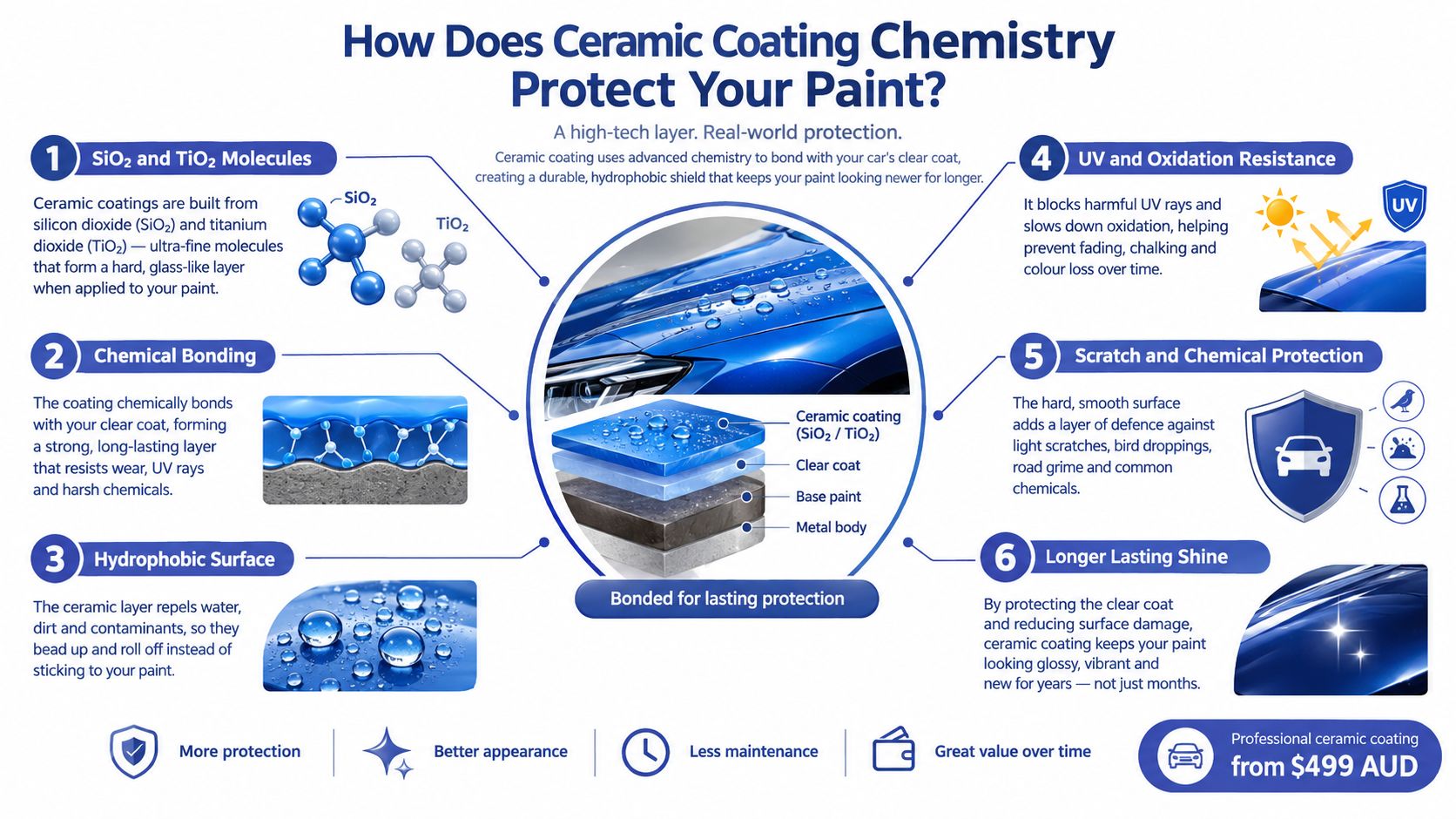
How Does Ceramic Coating Chemistry Protect Your Paint?
The bond is the point
Ceramic coatings are commonly formulated around silicon dioxide (SiO₂) and related silicon-based resins. During curing, those materials form a cross-linked silicon-oxygen network on the clear coat, which is why the coating behaves differently from a temporary wax layer as described in Australian ceramic-coating guidance. The film is chemically bonded, so it doesn’t just sit on top and wash away quickly.
That chemistry changes surface energy. Water and other liquids have a harder time spreading across the panel, so they pull into beads and release more readily. Dirt, road film, and grime still land on the car, but they tend to release more easily during a careful wash.
Why the finish feels slicker
The hydrophobic effect is not self-cleaning. It just reduces how stubborn contamination becomes, which is why coated cars are usually easier to maintain by hand. In real use, that means less dragging of grime across the panel when you rinse and wash, and a lower chance that routine cleaning feels like a battle.
A coating makes maintenance easier because contamination is less likely to stick, not because dirt stops existing.
Hardness ratings such as 9H get mentioned a lot, but they’re formulation- and test-dependent, and they refer to pencil hardness rather than impact resistance. A coating can improve chemical resistance and make the surface feel tougher, yet it still won’t stop a key, branch, or stone impact. That’s the gap between marketing language and actual paint chemistry.
Is Ceramic Coating Better Than Traditional Wax?
If you want the short answer, yes, for durability and maintenance. Wax still has a place when someone wants a simple, familiar gloss boost, but it behaves more like a short-term cosmetic layer than a chemically bonded paint treatment.
| Feature | Ceramic Coating | Traditional Carnauba Wax |
|---|---|---|
| Bond to paint | Chemically bonds to the clear coat | Sits as a temporary surface layer |
| Water behaviour | Strong hydrophobic beading | Beading fades sooner |
| Maintenance effort | Easier over time | Needs more frequent reapplication |
| Chemical resistance | Better resistance to contamination and staining | More limited resistance |
| Gloss retention | Usually holds appearance longer | Gloss tends to drop off sooner |
| Protection type | Environmental barrier, maintenance aid | Cosmetic enhancement |
A coated car still needs washing, but the wash usually feels less punishing. Wax can look lovely right after application, yet it generally asks for more frequent upkeep and gives you less protection against the sort of contamination Perth cars collect on exposed roads.
For a deeper look at how conventional wax behaves alongside coating, see this explanation of liquid car wax and when it makes sense.
Good decision rule: choose wax for a short-term gloss habit, choose ceramic coating when you want the paint to stay easier to maintain.
A coating also makes more sense when you care about long-term wash convenience. That’s the core trade-off, you spend more upfront on preparation and application, then spend less effort fighting grime later. If you want the result to last, professional installation matters because the surface prep and curing stages decide how well the coating performs.
Why Is Paint Preparation Critical Before Application?

Why the coating locks in what’s already there
A ceramic coating does not repair scratches or remove oxidation. If the paint has swirls, haze, bonded contamination, or tired clear coat, those flaws need to be reduced first or they get sealed underneath the coating as Australian coating guidance explains. That is why prep does the heavy lifting, not the final glossy wipe.
The surface also has to be clean enough for the coating to bond properly. That usually means a full wash, decontamination, and paint correction where needed. If a panel still carries old residue or visible defects, the coating cannot turn a rough finish into a better one.
The prep sequence that protects the result
Each step removes a different problem. Decontamination clears embedded grime, clay work lifts bonded fallout, and machine correction refines the clear coat so the coating goes over paint worth preserving.
- Wash first: remove loose dirt so it is not dragged across the paint.
- Decontaminate next: clear away bonded grime and fallout that washing leaves behind.
- Correct if needed: reduce swirls, haze, and oxidation before sealing the surface.
- Apply on a stable finish: the coating should preserve the paint, not hide problems.
If the paint looks rough before coating, it will still look rough after coating, just glossier.
For owners who want the finish to hold up in harsh sun and everyday road use, how paint correction stages improve your finish before coating becomes the right next read. Good preparation is the difference between coating a properly refined surface and sealing visible flaws under a long-lasting layer.
How Long Does a Ceramic Coating Really Last in Australia?
Real-world lifespan depends on how the car lives, not just what’s on the bottle. In Australia, ceramic coating performance is shaped by UV, heat, moisture, and contamination together, and those stresses can age the coating more quickly than a single factor on its own as discussed in Australian durability commentary.
Why Perth conditions matter
Perth vehicles deal with constant sunlight, hot panels, dust, bird droppings, and grime from everyday driving. That mix can push the clear coat and the coating harder than gentle garage storage ever would. The coating still helps, but it isn’t a force field.
A realistic service life is therefore maintenance-dependent, not guaranteed. Regular pH-neutral hand washing, prompt removal of bird droppings and mineral deposits, and avoiding abrasive brushes all help preserve the finish for longer. A coated car that’s washed carefully will usually hold up far better than one that’s run through harsh automated cleaning cycles.
What shortens the life
The coating breaks down faster when contamination sits too long or when washing is aggressive. Acidic deposits from bird droppings, stubborn residue from road film, and mechanical marring from poor wash technique all chip away at the coating’s performance.
For a practical overview of upkeep expectations, you can read this Perth-focused guide on ceramic coating longevity.
Maintenance rule: the coating doesn’t remove washing from your life, it makes the right kind of washing easier and safer.
So the honest answer is this, a coating can last well in Australian conditions, but only if the owner treats it like a protective system rather than a one-time miracle. The more exposed the car, the more disciplined the wash routine needs to be.
Which Vehicles and Drivers Need Ceramic Coating?
Ceramic coating is a practical choice when a vehicle lives in the actual world, not under perfect cover. In Perth, that usually means strong sun, dust, road film, bird droppings, and regular washing. The coating helps the paint shed contamination more easily and keeps maintenance less tiring, but it does not make the surface untouchable.
Best fit situations
Drivers who want easier upkeep get the most value. A coating helps when the car sees repeated exposure and the owner wants the wash process to feel quicker, cleaner, and less punishing on the finish.
It also suits anyone who cares about how the paint looks between washes. On darker colours, freshly corrected paint, or cars that get looked over in daylight, ceramic coating helps the surface hold its gloss and present a cleaner appearance for longer. That is why it appeals to daily commuters, work vehicles, rideshare cars, family SUVs, and enthusiast cars that are maintained regularly.
When it may be overkill
Some vehicles do not need it straight away. If the paint is already heavily worn, the first money is often better spent on inspection and correction before any coating decision. If the car is rarely driven, stays garaged, and is washed carefully only a few times a year, a simpler protection routine can be enough.
- Daily drivers: strong candidates, because they face the most contamination.
- Garaged show vehicles: may need a different protection approach depending on how they are used.
- Work cars and family cars: benefit from easier cleaning and better appearance retention.
- Heavily damaged paint: usually needs correction before coating makes sense.
A ceramic coating is not for every car, and it is not the answer to poor paint in bad condition. It works best on vehicles that are used often, exposed often, and washed often, where easier cleaning and steadier gloss are real benefits rather than marketing talk.
How Do You Maintain a Ceramic Coated Vehicle?
Wash gently, then wash consistently
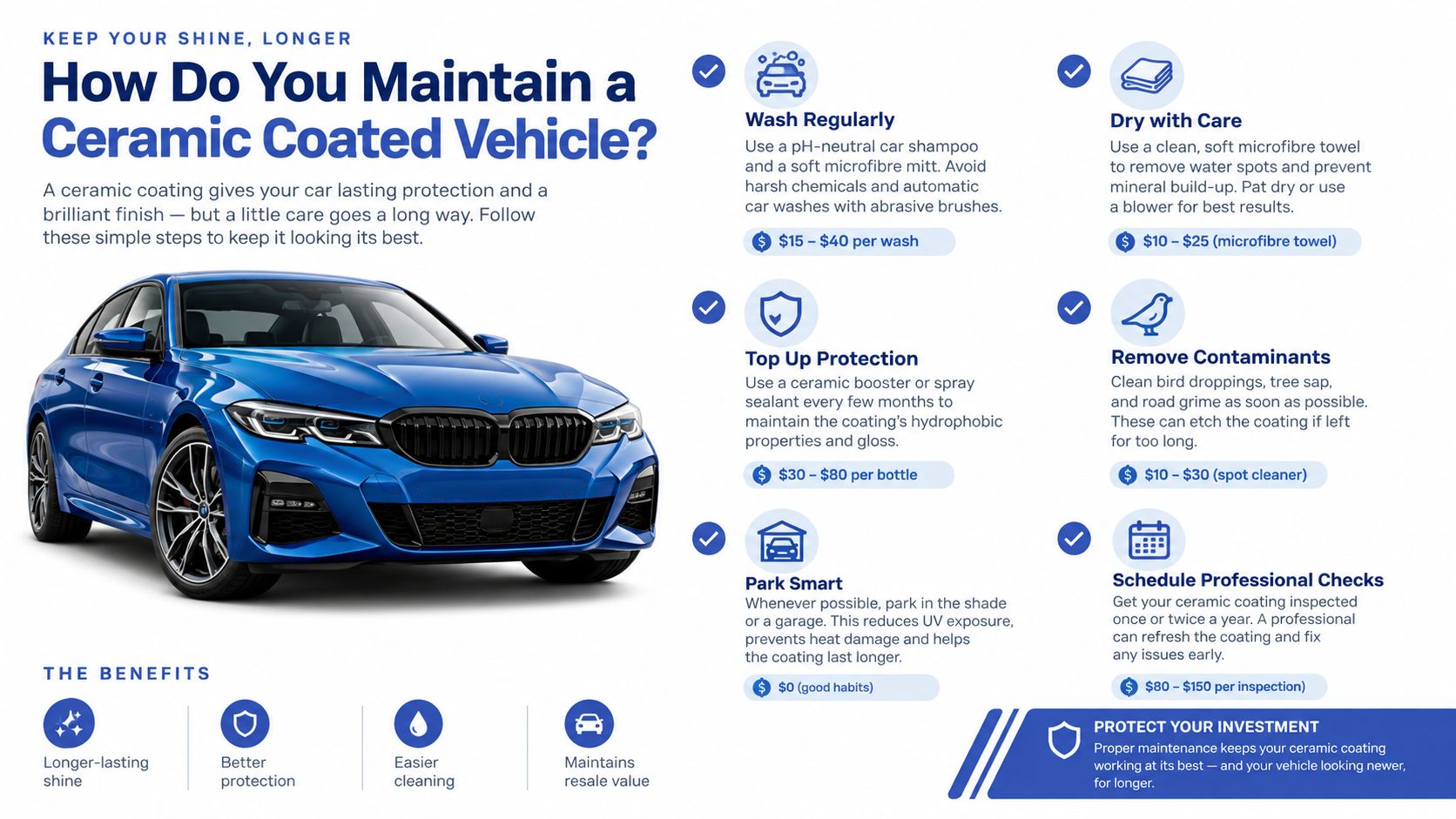
The hydrophobic effect helps dirt and road film release more easily during a careful hand wash, but it doesn’t remove the need for washing because dust and oily contamination still cling to the surface as noted in coating maintenance guidance. A coated car still needs a proper wash routine, just a safer one.
The best habit is simple. Use a careful hand wash, keep your mitts clean, and avoid anything that drags grit across the panel. Harsh brushes and aggressive cleaners work against the coating and shorten the time it stays effective.
Keep the surface chemistry healthy
Use pH-neutral shampoo, rinse thoroughly, and remove bird droppings or mineral deposits quickly. Those contaminants are the ones most likely to sit on the finish, dry hard, and create avoidable damage.
A periodic booster spray can help support the top layer of protection and refresh water behaviour as the coating wears. It won’t replace the coating, but it can help maintain the slick feel and keep the car easier to dry and wash.
For a practical Perth maintenance outline, see this guide to looking after ceramic coating in local conditions.
The goal is not perfection. The goal is to keep contamination off the paint long enough that the coating can do its job.
A coated car rewards consistency. Treat it gently, wash it properly, and keep the contamination off it before it bakes in under the sun.
If you want your paint protected without the guesswork, Prime Shine Hand Car Wash can help with careful hand washing, detailing, paint correction, and ceramic coating support in Westminster. Visit Prime Shine Hand Car Wash to book an inspection or a maintenance wash, and get the right paint protection plan for your car’s condition and how you drive it.