





Most drivers treat paint as the part that needs real protection and the cabin as something to vacuum when it starts looking tired. That’s backwards. In Perth, the interior is a frequently occupied indoor environment that absorbs daily contact, dust, moisture, and odours, and the long-run effect is felt in both comfort and resale presentation.
A typical Australian vehicle is driven about 14,000 kilometres per year according to the valuation guide citing ABS data, so over three years the cabin can see roughly 42,000 kilometres of repeated use and contact with seats, door handles, steering wheels, carpets, and consoles (vehicle valuation checklist). That isn’t cosmetic ageing, it’s cumulative wear. If you want the cabin to hold value and stay pleasant to sit in, interior protection deserves the same seriousness as paint care.
Why Your Cabin Is a High-Exposure Indoor Environment?
A car interior is often treated as a secondary concern. In practice, it is the part of the vehicle people touch, breathe in, spill into, and wear down every day. School runs, commuting, grocery trips, and weekend travel all deposit crumbs, sand, skin oils, pet hair, and moisture into the same surfaces again and again.
The point is straightforward, interior condition affects value and visible defects matter to buyers. Smoking odour, pet claw marks, stains, and sticky residue are all specifically recognised as problems that reduce a car’s appeal (vehicle valuation checklist). For Perth drivers, that matters even more because daily use is rarely a short hop. It is often a mix of commuting, suburban distance, and family transport, which means contamination builds gradually rather than all at once.
Exposure budgeting starts with how the car is used
A car used for family transport will collect food residue and passenger contact faster than a weekend-only car. A rideshare or delivery vehicle will see even more high-touch wear because people come and go constantly. The right protection schedule starts with that reality, not with a generic once-a-year detail.
Practical rule: If passengers, pets, or outdoor parking are part of the car’s routine, the cabin needs more attention than the exterior polish schedule alone would suggest.
Heat and air quality add another layer. Perth sun can turn a closed cabin into a hot, enclosed space where materials off-gas more readily and odours linger longer. That is why a clean cabin is about more than appearance. It helps keep the interior more pleasant to sit in and easier to preserve over time. Learn why interior cleaning matters for resale and comfort
Regular vacuuming, fabric or carpet cleaning, leather conditioning, and trim protection are practical responses because they target the surfaces people touch most often. If you want the cabin preserved rather than just freshened for a day, book an interior assessment and look at the vehicle the way a buyer would, through wear, residue, odour, and heat exposure.
What Hidden Air Quality and Heat Risks Lurk Inside?
A parked cabin isn’t just getting hot. It’s becoming a small, enclosed breathing space where pollutants can concentrate and recirculate. Australian field research from Queensland University of Technology found that a vehicle cabin can expose occupants to a meaningful share of their daily airborne pollutants, and that the amount of outdoor air entering the cabin is a key factor in exposure. Australian testing of vehicle air fresheners also found 546 volatile organic compounds, including 30 compounds classified as potentially hazardous (QUT field study).
That matters because heat changes what the materials inside the car do. Research on vehicle cabins found that material surface temperature was the strongest factor affecting VOC emissions, which means plastics, rubbers, textiles, leather, padding, and adhesives can all become part of the problem when a car sits in the sun (PNAS Nexus report). In other words, a shiny dashboard isn’t necessarily a healthy dashboard.
Heat makes material care a health decision, not a styling choice
Australian safety guidance says the temperature inside a parked car can rise to 30-40°C above outside temperature in summer (Queensland Government heat guidance). RACV testing reported that a parked vehicle can exceed 70°C internally when ambient temperature is only 30°C, and Queensland child-safety research found about 75% of the total cabin temperature rise occurs during the first five minutes after parking (RACV testing and Queensland research). That’s why shade, a reflective windscreen cover, and clean, residue-free surfaces matter so much in Perth.
A quick wipe-down doesn’t deal with off-gassing, embedded dust, or heat-stressed materials. It just makes the cabin look less dirty for a moment. A proper deep clean, especially after hot-weather parking, reduces residue on touch surfaces and helps keep the cabin from becoming a chemical trap.
For drivers who want a reset rather than a fresh scent, Prime Shine Hand Car Wash offers interior deep-cleaning services, including steam cleaning for suitable surfaces, which fits this problem far better than masking smells with fragrance. If the cabin has started to feel stale or sticky, book a deeper reset before the heat keeps working on the materials.
See how interior steam cleaning works in practice
The cabin reset starts with source removal
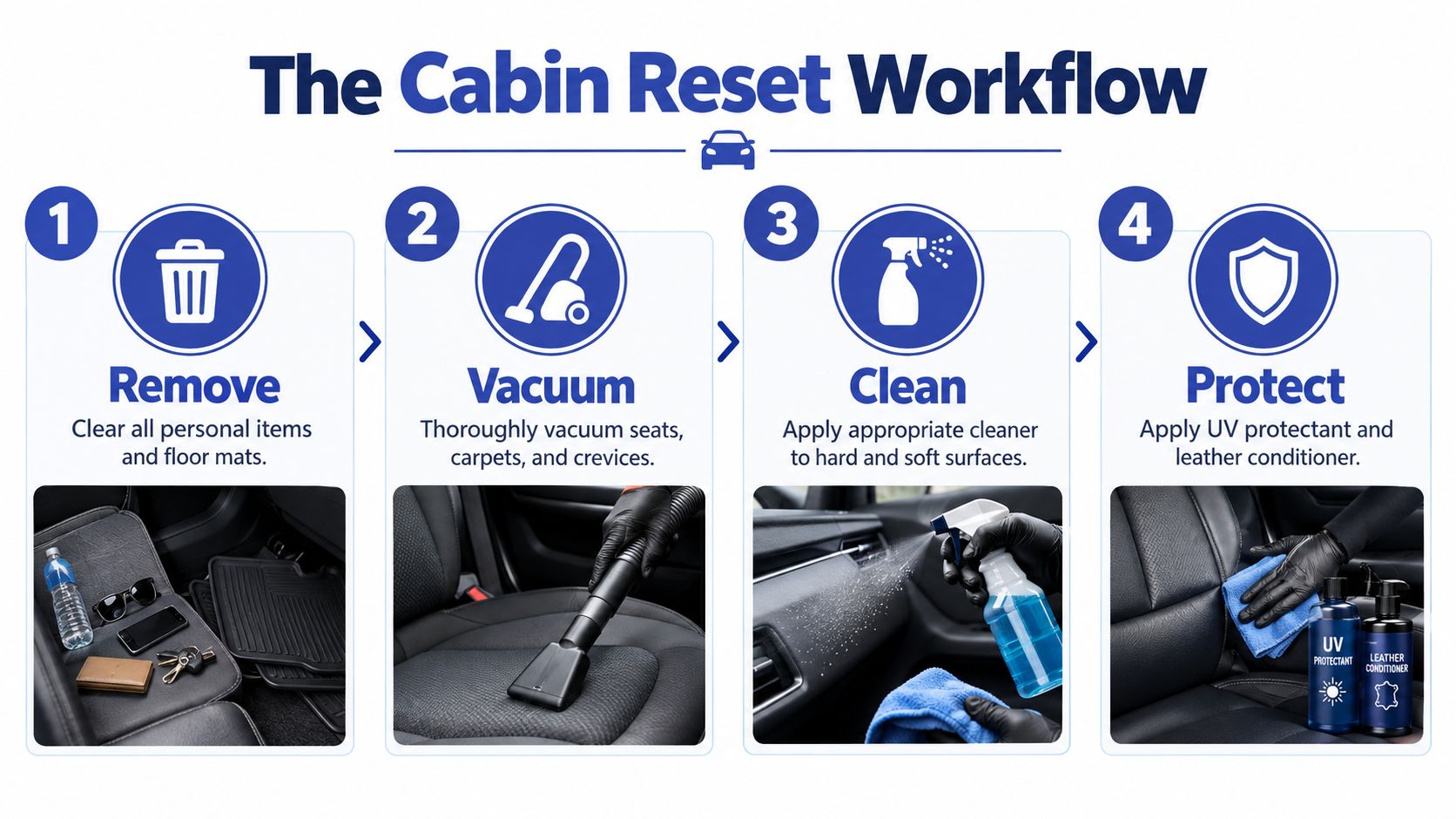
The first move is always to remove what doesn’t belong in the car. Loose rubbish, floor mats, and personal items keep dust trapped and make every later step less effective. Once those are out, the cabin becomes manageable instead of cluttered.
After that, the job is about controlling where contamination goes. Vacuum first, clean top to bottom, and only protect surfaces once they’re clean and dry. That sequence matters because dust and grit behave like fine abrasives, and if you drag them across soft-touch trims or cloth fibres, you’re just grinding them deeper in.
Never fragrance over a dirty cabin and call it clean. If the source is still inside the car, the odour comes back.
The best cabin reset workflow is methodical, not flashy. It removes the load sitting on the surfaces, then deals with the surfaces themselves, then protects the clean finish from the next round of heat and contact.
Explore Interior Steam Cleaning
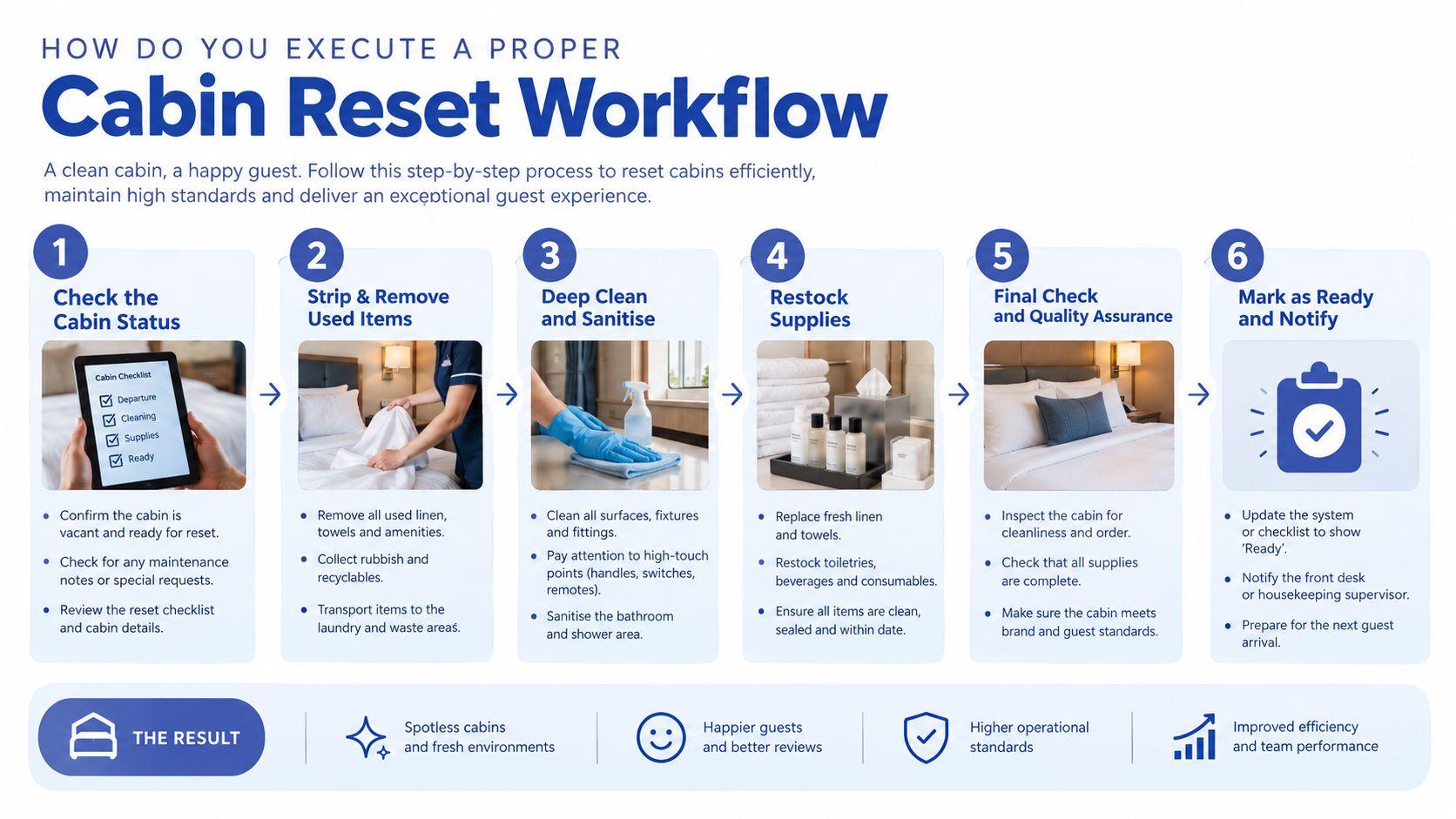
How Do You Execute a Proper Cabin Reset Workflow?
A proper cabin reset follows a fixed sequence rather than relying on quick surface touches. Start by pulling the mats, clearing the boot, and removing loose rubbish so the hidden grit is reachable. Then use the right vacuum attachments for the job. A narrow crevice tool gets into seat rails, stitching, and seam lines. A soft brush head is better for vents, switches, and trim grain because it lifts dust without scuffing the finish. On deeper carpet pile, slow overlapping passes matter more than speed, since the debris sits below the first layer of fibres.
Clean in a way that protects the finish you just exposed
Once the loose contamination is out, work from the upper surfaces down. Dust that falls from the dash or door cards should land on areas that have not been finished yet. Controlled moisture matters just as much. Fabric and carpet should be cleaned with low-moisture extraction or carefully managed agitation, because soaked foam holds water, extends drying time, and can leave the cabin smelling stale after the heat comes back.
The practical sequence stays the same, but the execution decides the result.
- Clear the cabin first. Remove rubbish, loose items, and mats so access is complete.
- Vacuum the hidden reservoirs. Seat creases, carpet edges, under-seat zones, vents, and seams collect the material that keeps returning.
- Wipe from upper to lower areas. That keeps loosened dust off already-finished sections.
- Use low-moisture extraction where it suits the material. Fabric and upholstery need cleaning without driving water into the foam.
- Let the cabin dry fully before judging the result. Damp materials can smell stronger than they really are.
- Check the cabin filter to the manufacturer’s schedule. A clogged filter keeps recirculating contaminants through the cabin.
Drying time changes with heat, humidity, and how much liquid the material took on. In Perth conditions, a closed vehicle can hold warmth long after the work is done, so a cabin that feels “mostly dry” can still release odour once it bakes.
Fragrance is a poor substitute for removal. If the source is still in the cabin, the smell comes back when the interior heats up. A clean reset is about exposure control, cleaner air, and keeping the next round of dust, sweat, and residue from settling into the same places again.
See the Full Interior Cleaning Process
Which Targeted Methods Eliminate Embedded Odours?
Once the basic reset is done, the stubborn jobs show themselves. Smoke residue, pet smells, old food spills, and damp upholstery are separate problems, so each requires a distinct treatment approach. The right method depends on the material, the source, and how far the contamination has moved into the cabin.
Match the method to the material
Leather, synthetic fibres, carpets, and trims behave differently under heat and moisture. Leather needs cleaning and conditioning, not saturation. Carpets and fabric can respond well to steam or controlled extraction if they are dried properly afterwards. Hard plastics and vinyl need residue-free cleaning so they do not end up sticky or glossy in the wrong places.
Household solvents are the wrong tool for most cabin surfaces. They can strip coatings, dull finishes, and leave behind a residue that attracts more dust. Fragrance-heavy products can also make the cabin smell better for a while while the contamination that caused the odour stays in place.
Good detail work removes contamination first, then restores the surface. True protection addresses the source, not the symptom.
Persistent smells usually need enzyme treatment, steam cleaning, and source removal. Pet hair often needs mechanical removal first, then fabric or carpet treatment. Smoke residue is especially stubborn, because it settles into soft surfaces and trim before the smell becomes obvious. If the cabin has both odour and staining, treat both. One without the other rarely lasts. For a practical example of smoke-focused treatment, see smoke odour removal in a practical interior service.
A structured service makes sense here. Prime Shine Hand Car Wash offers interior add-ons such as leather clean and condition, seats/carpet steam clean, and pet hair removal, which suit specific contamination rather than generic refresh work. If the cabin has embedded odours, add the right service to the next visit instead of relying on a quick surface clean.
Book Odour and Stain Treatment
How Should You Budget Your Interior Protection Schedule?
The best protection schedule isn’t tied to a calendar alone. It should follow the way the vehicle is used. A family car that handles school runs and snack spills, a rideshare car that sees constant passenger turnover, and a weekend car parked under cover all need different maintenance priorities.
Use the car’s job to set the interval
The 2021 Census recorded 3,353,737 occupied dwellings with one vehicle, 3,366,738 with two, and 1,745,924 with three or more nationally (ABS census quickstats). That tells you something practical, lots of households are juggling multiple vehicles, and each one has a different contamination profile. The right question isn’t, “How often should I detail the car?” It’s, “What is this car exposed to, and how fast does that exposure build?”
| Vehicle Profile | Primary Contaminants | Recommended Interval | Key Focus Services |
|---|---|---|---|
| Family school-run vehicle | Food crumbs, sunscreen, drink spills, passenger contact | More frequent light cleaning, with deeper resets when staining builds | Vacuuming, carpet cleaning, dash and console wipe-down, stain spot treatment |
| Rideshare or delivery vehicle | Repeated occupants, high-touch contamination, odours | Routine interior maintenance with periodic deep cleaning | Seat crevices, filter checks, steam cleaning, odour source removal |
| Outdoor-parked commuter | Dust, UV stress, heat-related residue | Regular surface care plus heat protection as needed | UV-safe protectant, shade habits, leather conditioning, trim care |
| Weekend or enthusiast car | Lower contamination, but heat and dust exposure | Less frequent cleaning, more attention before and after storage | Dust removal, material protection, seal checks, controlled ventilation |
What you’re budgeting for is not shine. It’s cleanability, odour control, and touch-surface preservation. A cabin that’s easy to clean stays presentable longer, and a cabin that resists stains and residue costs less effort to keep in shape.
If you want that maintenance to be predictable, set up recurring interior care instead of waiting for a problem to become obvious. That’s the difference between staying ahead of wear and chasing it after it has already set in.
Set Up Recurring Interior Care
When Is It Time to Call a Professional Detailer?
DIY maintenance handles a lot, but some cabin problems don’t stay in the “home clean” category for long. Persistent damp smells, deep fabric staining, pet contamination that keeps returning, or cracked and sticky surfaces usually mean the contamination has gone beyond simple surface cleaning. At that point, the right move is controlled extraction, proper chemistry, and drying that doesn’t leave the interior half-finished.
Signs the cabin needs professional intervention
- Odour returns after cleaning. That usually means the source is still embedded in fabric, foam, or trim.
- Stains have set into the material. Once a spill has sunk past the surface, spot cleaning alone often isn’t enough.
- Leather feels dry, cracked, or uneven. That calls for material-specific cleaning and conditioning, not general-purpose spray.
- The cabin feels damp for too long. Over-wetting can create lingering odour and microbial issues.
- Dust keeps reappearing quickly. That can point to neglected vents, filters, or hidden contamination points.
Professional detailing also brings better control over chemistry and drying. A detailer can use pH-appropriate products, the right extraction method, and a drying process that reduces the chance of leaving moisture trapped under carpet or in seat foam. That matters when the goal is to preserve the cabin, not just make it look temporarily fresh.

For sale preparation, lease return, or a full reset after heavy use, a transparent package matters more than a vague promise. Prime Shine Hand Car Wash offers Mini Car Detailing and Full Car Detailing options, along with add-ons for interior protectant, leather care, steam cleaning, and pet hair removal. That combination fits the reality of a cabin that needs more than a wipe-over.
If your cabin has heat damage, lingering odours, or heavy daily wear, book a proper reset with Prime Shine Hand Car Wash and treat the interior with the same care you’d give the paint. Visit Prime Shine Hand Car Wash to choose an inside-and-out clean or a full detailing package that targets the residue, heat stress, and wear that regular vacuuming misses.