














You’ve had the ceramic coating done, the car looks unreal, and now the stress starts. The first wash at home feels riskier than the coating appointment itself. One bad mitt, one dirty sponge, one rushed dry in the sun, and suddenly you’re wondering if you’ve just scrubbed away the finish you paid to protect.
That concern is fair. Ceramic coatings make washing easier, but they don’t make the paint untouchable. Hand car detailing for a coated vehicle is less about aggression and more about control. The wash has to remove grime without grinding it into the surface, and the dry has to preserve gloss without leaving faint marks that only show up later under harsh light.
Protecting Your Investment Why Ceramic Coatings Need Special Care
A ceramic coating is a protective layer, not armour plating. It helps the surface shed water, keeps routine grime from sticking as stubbornly, and gives the paint that crisp, glassy look owners notice straight away. What it doesn’t do is stop poor technique from inflicting damage.
The mistake I see most often is treating a coated car like it can handle any wash method because the paint is “protected”. That’s backwards. A coating rewards careful washing and punishes lazy contact. If you drag grit across the surface, use harsh detergents, or let mineral-heavy water bake on the panels, the coating may still be there, but its slick feel, beading, and clarity won’t look the way they should.
Consumer interest in proper exterior care hasn’t gone away. The global car detailing services market was valued at USD 41.40 billion in 2024 and is projected to reach USD 58.06 billion by 2030, growing at a CAGR of 6.0%, with exterior detailing services accounting for approximately 64% of market share in 2024 according to Grand View Research’s car detailing services market report. That lines up with what coated-car owners already know. Exterior finish matters, and people notice when it slips.
What the coating needs from you
A coated vehicle needs a wash process that does three things well:
- Removes loose contamination first so your wash media isn’t doing the scraping
- Uses low-risk contact with clean mitts, lubricated shampoo, and disciplined panel-by-panel washing
- Dries safely so you don’t undo a careful wash at the final stage
Practical rule: Wash for preservation, not for speed.
A lot of owners also assume they need strong chemicals because the car is dirty. Usually, they need the opposite. Good prep, enough lubrication, and patience beat brute force every time.
If you’re still deciding how to protect the paint long term, it helps to understand how a professional-grade ceramic coating service fits into ongoing maintenance. The coating makes cleaning simpler, but only if the wash method respects the surface sitting on top of your clear coat.
Gathering Your Arsenal for a Safe Wash
A ceramic-coated car that still looks clean can scratch faster than many owners expect. Fine dust, road film, and brake residue do the damage during contact, not because the coating failed, but because the wash setup asked too much of the mitt.
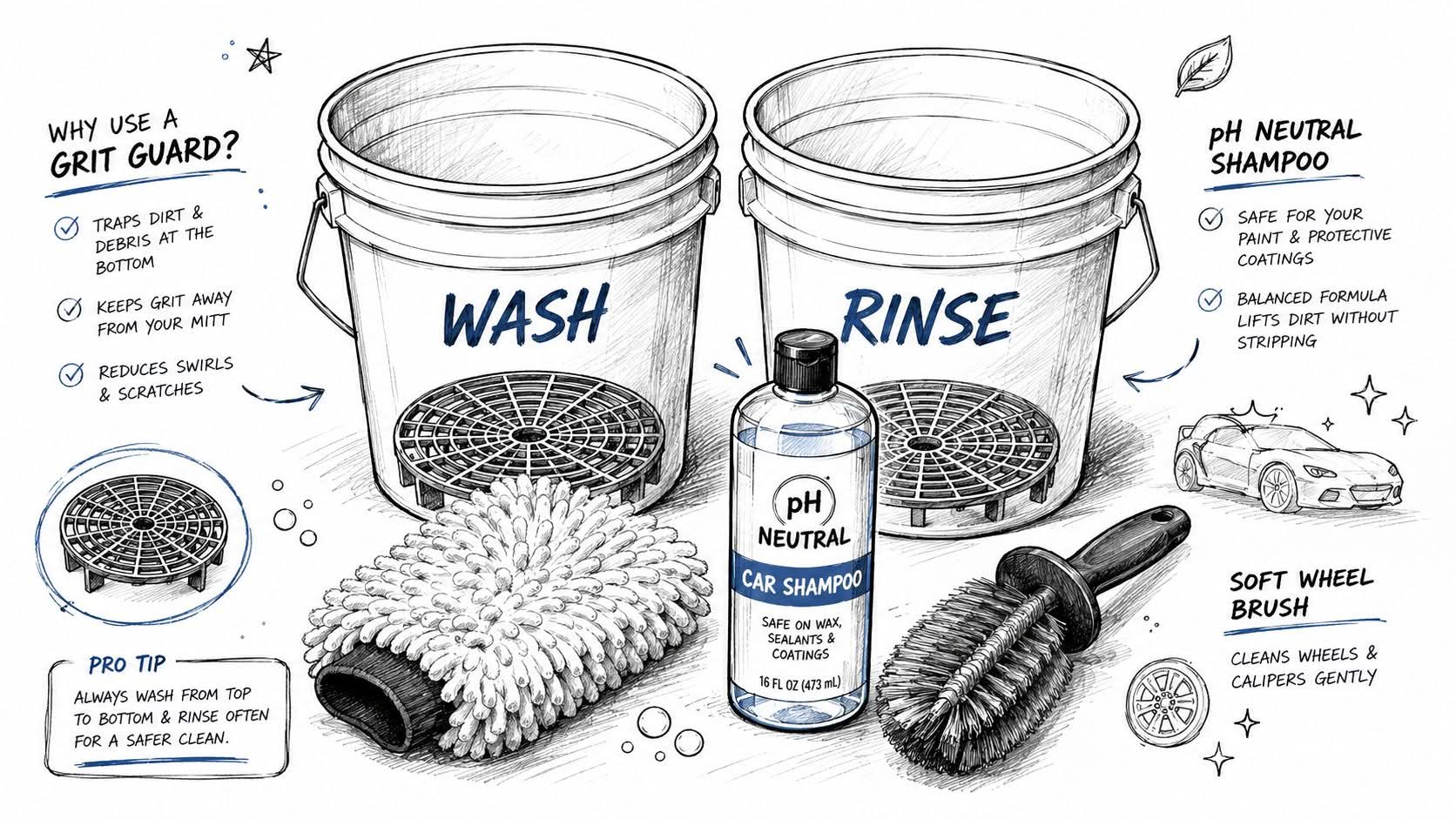
The goal here is simple. Reduce friction, separate dirty jobs from clean ones, and keep contaminated tools away from coated paint. If the kit is wrong, good technique only goes so far.
For ceramic-coated paint, use:
- Two buckets with grit guards to keep settled dirt away from the mitt
- A pH-neutral car shampoo that cleans without loading the surface with gloss agents or heavy residue
- A foam cannon or pump sprayer to lay down pre-wash solution before contact
- Several plush microfibre wash mitts so one mitt is not dragging accumulated grime around the whole car
- A hose or pressure washer with a gentle rinse pattern to flush debris without forcing it across the paint
- Separate wheel tools so brake dust stays off the bodywork
Pre-wash equipment matters more on a coated vehicle than many owners realise. Ceramic coatings release dirt better than bare paint, but they still sit over clear coat. If grit stays on the panel until the hand wash stage, the coating cannot protect you from poor wash contact. For a broader look at safe at-home technique, our hand car wash guide for a perfect shine pairs well with the coated-car steps in this article.
Treat wheels as a separate job from the start. Brake dust is abrasive, and the brushes, mitts, and towels used on wheels should never cross over to paint, glass, or gloss trim.
A simple setup works well:
- Bucket one: Paint shampoo
- Bucket two: Rinse water
- Wheel kit: Separate brush, separate mitt, separate towel
- Drying stack: More than one towel, because one saturated towel stops drying safely and starts dragging moisture around
Clean gear is part of the wash.
If a mitt hits the ground, rinse it thoroughly or swap it out. If a towel feels stiff, overloaded, or questionable, retire it from paint duty and use it on jambs or lower trim instead. Those small decisions prevent the kind of light marring that owners usually notice only after the car is dry and back in the sun.
Some jobs also stop being sensible DIY work. Heavy brake dust buildup, neglected lower panels, or contamination that does not rinse free often needs stronger decontamination steps and more time than a maintenance wash. In those cases, Prime Shine Hand Car Wash handles the wash, wheel cleaning, tyre dressing, and higher-level detailing with the separation and paint-safe process a coated vehicle needs.
Mastering the Two-Bucket Hand Wash Method
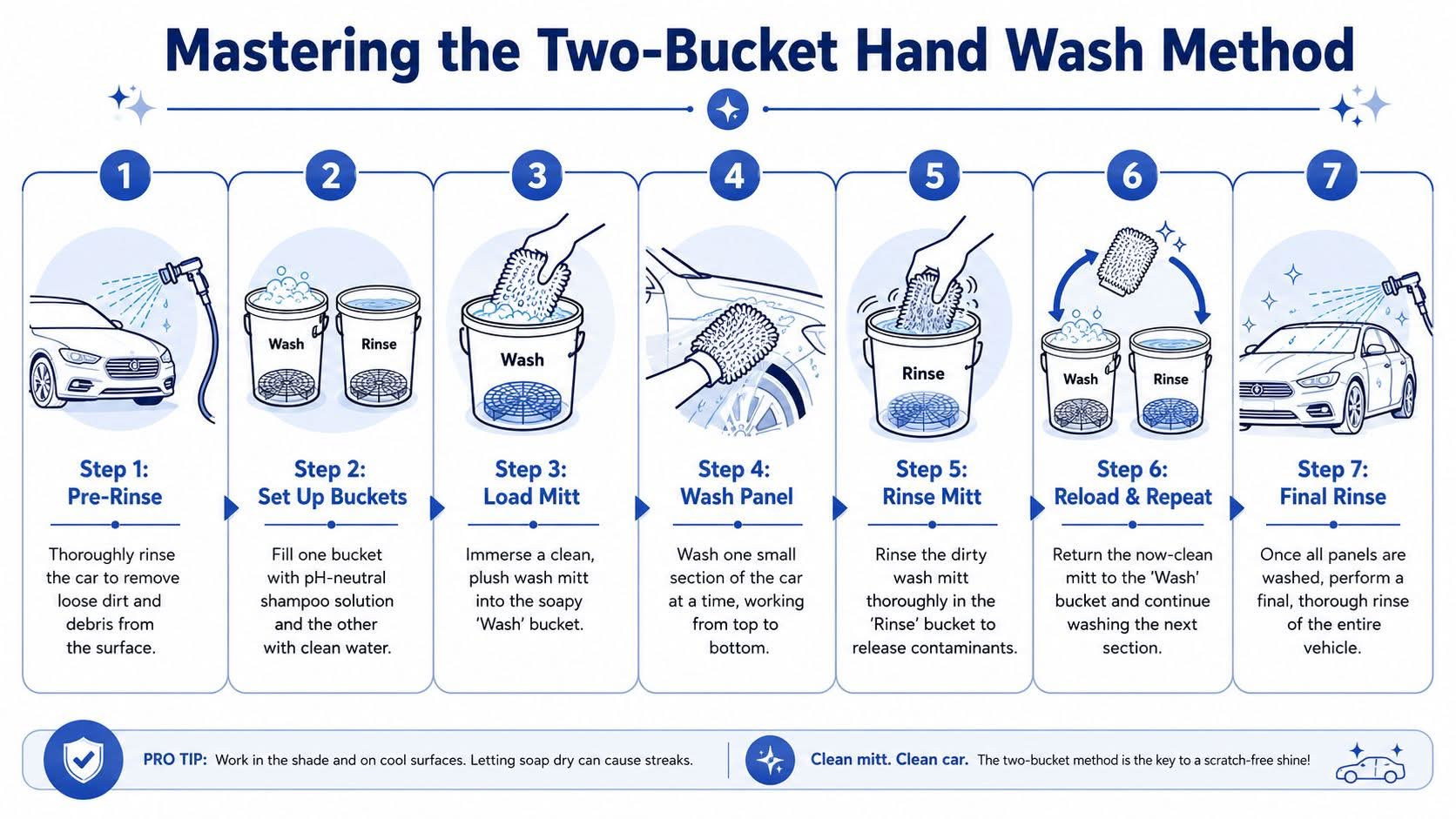
The two-bucket method isn’t complicated. It’s just disciplined. One bucket stores your shampoo solution. The second bucket is there to rinse dirt out of the mitt before it goes back into the wash bucket. That single habit keeps contamination off the paint.
To see the method broken down visually, this infographic shows the flow clearly.
How the wash should actually flow
Start with a full rinse. Don’t peck at panels with a weak splash and call it done. Give the vehicle enough water to remove loose dust, soften grime, and flush debris from panel gaps, badges, and trim lines.
Then apply your pre-wash foam and let it dwell briefly. You’re not trying to let it dry. You’re giving it a chance to loosen contamination so the rinse that follows takes more dirt away before your mitt ever touches the car.
When you begin contact washing, work from the top down. Roof first. Glass. Upper doors and guards. Lower doors, rear bumper, and the dirtiest lower sections last. Those lower areas collect the heaviest grime, so they should never be first in line.
The motion matters too:
- Load the mitt in shampoo and let it carry plenty of lubrication.
- Wash one small section using straight passes rather than circles.
- Rinse the mitt thoroughly in the clean-water bucket.
- Agitate against the grit guard to release trapped dirt.
- Reload with shampoo and move to the next section.
Think of the rinse bucket as where you clean your tool, not where you pause. That mindset keeps the process consistent.
If you want a broader walkthrough on wash technique, this detailed hand car wash guide for 2026 is useful alongside the coated-car approach here.
Shampoo Selection for Ceramic Coatings
| Do Use | Don’t Use |
|---|---|
| pH-neutral shampoo that offers good lubrication | Harsh household detergents that strip, dry, or leave the surface dull |
| Dedicated car wash products made for regular maintenance | Strong degreasers for routine washing on coated paint |
| Clean-rinsing formulas that don’t leave heavy film | Wash-and-wax blends that can mute the coating’s natural behaviour |
| Products suited to frequent maintenance | Anything with unknown additives that leaves residue behind |
A coated car doesn’t need a syrupy shampoo to look glossy. The coating already supplies much of the visual sharpness. Your shampoo’s job is to clean safely and rinse freely.
What to watch while you wash
A wash can look fine in the moment and still create problems if you ignore small warning signs.
- Mitt drag: If the mitt stops gliding, add more lubrication or re-rinse the panel.
- Heat on the paint: If the panel feels hot, move the car or wait. Soap and water drying too quickly create avoidable trouble.
- Dirty lower sections: Change mitts if needed. Don’t expect one mitt to safely handle the cleanest and filthiest zones.
- Badge and mirror runoff: Contamination hides in crevices and can reappear as streaks. Re-rinse those areas before drying.
Straight-line motions won’t make bad technique safe, but they do reduce the visual mess if you miss something tiny. Circular scrubbing tends to advertise every mistake.
Good hand car detailing always feels a bit slower than a rushed driveway wash. That’s normal. The pace is part of what keeps the finish right.
The Art of a Scratch-Free Dry and Gloss Boost
Most wash damage happens after the rinse. Owners get the cleaning stage right, then ruin the finish with an old chamois, a cheap towel, or fast wiping on a panel that still has leftover contamination.
Why old-school drying causes trouble
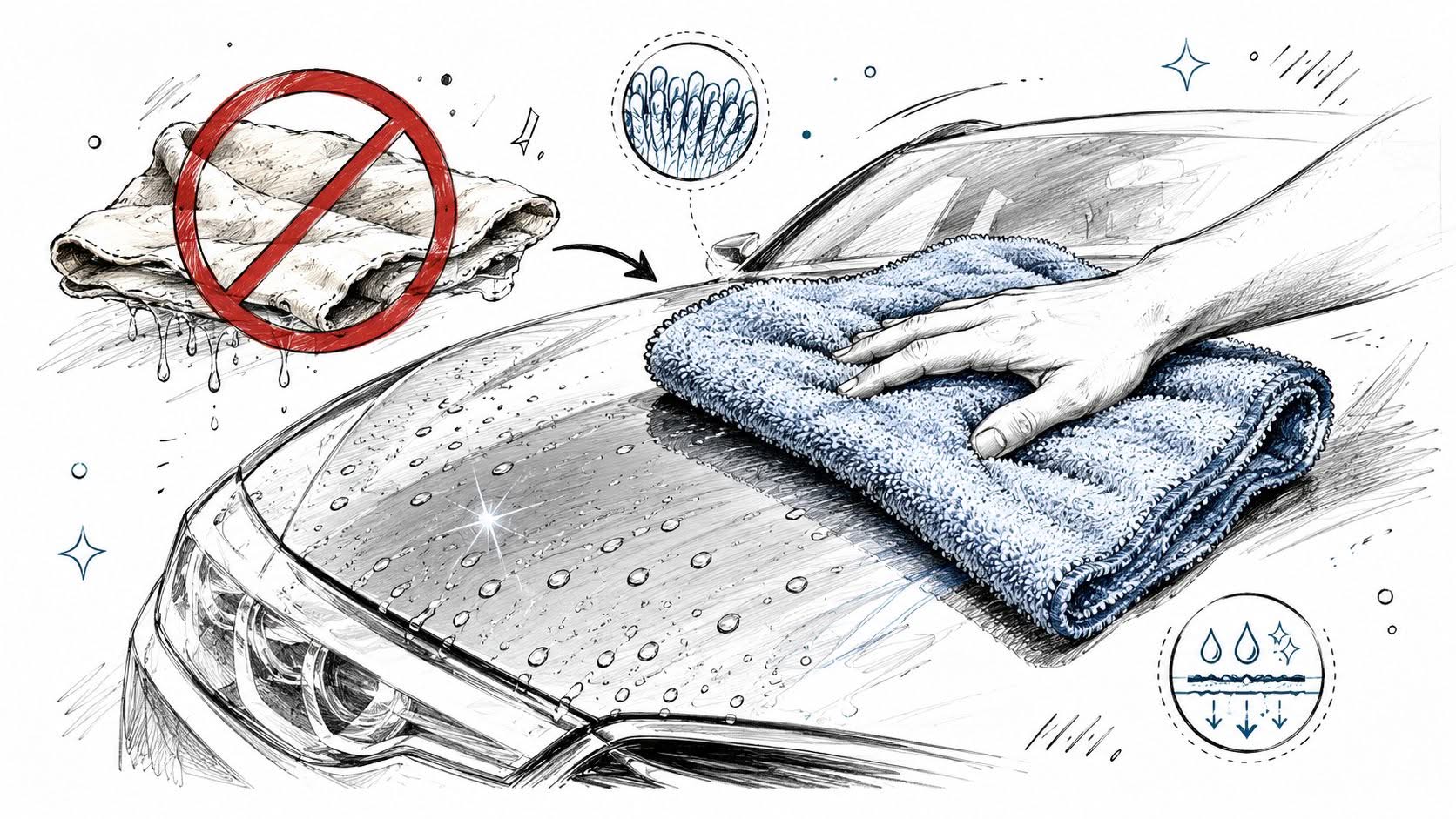
Traditional chamois drying is still common because it’s familiar, not because it’s the safest option. The problem is simple. A chamois tends to drag across the surface. If there’s any fine residue left behind, you’re now towing it over coated paint under hand pressure.
That’s exactly what you don’t want on a ceramic-coated vehicle. The coating can help release water, but it won’t stop friction from creating light marring if the drying method is rough.
Drying should remove water with as little friction as possible.
Safer ways to dry a coated car
The first option is forced air. A dedicated car dryer or even a clean leaf blower can push water out of mirrors, grilles, trims, badges, and wheel nuts without touching the paint. On a freshly coated or well-maintained car, this method is especially effective because water tends to gather into beads that move easily.
The second option is a large, high-pile microfibre drying towel used with restraint. Lay the towel on the panel, pat or gently pull it across with almost no pressure, then move to a dry section of the towel. If the towel is saturated, swap it out. A heavy, soaked towel becomes clumsy and less safe.
A practical drying sequence looks like this:
- Blow out crevices first so hidden water doesn’t run down later
- Dry the glass and horizontal panels early because they hold standing water longest
- Finish lower sections last since they’re more likely to carry leftover grime
- Use separate towels for wheels, jambs, and paint
Add gloss without masking the coating
A good drying aid or ceramic maintenance spray can help here, but it has to be used correctly. These products add lubrication during the final wipe, make towel movement smoother, and can sharpen the slick feel of the coating after the wash.
What they shouldn’t do is become a shortcut for poor washing. If the surface isn’t clean, spraying more product on it won’t make it safe.
Use a light mist on either the towel or the panel, then spread gently and flip the towel often. If you find yourself buffing hard to remove residue, you’re using too much product or working in poor conditions.
For most owners, the biggest change that improves results is this: stop dragging drying material across the whole car in one go. Dry one section cleanly, inspect it, and move on. That habit protects gloss far better than speed ever will.
Troubleshooting Water Spots and Light Contamination
Even a careful wash won’t stop every nuisance. Hard water, hot weather, bug residue, and parked-under-a-tree luck all have a way of testing the finish between proper washes.
When water spots show up anyway
Water spots form when water evaporates and leaves minerals behind. On a ceramic-coated car, owners often assume those spots should just rinse off because the coating beads water. Sometimes they do. Sometimes the minerals stay put and need help.
The safe approach is simple:
- Wash or at least rinse the affected area first if there’s dust on it.
- Use a coating-safe water spot remover on a cool panel.
- Work one small section at a time with a soft microfibre towel.
- Wipe gently, then level the area with a clean side of the towel.
- Rinse or neutralise if the product directions require it.
If the spotting has baked in after repeated sun exposure, don’t jump straight to aggressive polishing. Start mild and inspect carefully under good light.
Water spots are easier to remove early than after they’ve sat through heat cycles.
Bird droppings sap and bug residue
These need urgency, not force. Bird droppings are especially risky because they can etch if left sitting. Tree sap and bug remains also harden quickly, which tempts people to scrape. Don’t.
Keep a small emergency kit in the car:
- Quick detail spray or rinseless solution in a small bottle
- Two or three soft microfibre cloths
- Disposable gloves if you prefer cleaner handling
The method is gentle. Saturate the contamination first. Let the liquid soften it. Lift rather than grind. Fold the towel to a clean face as you work. If it resists, re-wet and wait longer.
For light bonded contamination that doesn’t respond to ordinary washing, caution matters. Heavy decontamination can push you into clay-bar territory, and that’s where many at-home jobs go sideways if the paint isn’t assessed properly first.
Your Maintenance Schedule and When to Call the Pros
You wash the car on Sunday, it looks sharp again, and the coating is beading nicely. Three weeks later, the lower doors feel gritty, bug residue has dried on the front end, and the gloss is still there but the finish no longer looks clean. That is the point where good maintenance protects the coating, and delayed maintenance starts making the next wash harder than it should be.
Ceramic coatings cut down effort. They do not remove the need for a routine.
A realistic routine for most drivers
For a coated daily driver, washing every two to four weeks is a sensible baseline. Tighten that schedule if the vehicle lives outdoors, does regular freeway runs, or is often parked under trees. Ceramic-coated cars release dirt more easily than bare paint, but if grime, minerals, and organic fallout sit too long, the coating loses that clean, slick look people expect from it.
Between proper washes, keep an eye on the small things that turn into bigger jobs:
- Remove fresh bird droppings, bug residue, and sap early so they do not bake onto the surface
- Watch how the car sheets and beads water because a sudden drop in performance can mean contamination is masking the coating
- Wash your towels and mitts correctly since dirty wash media causes avoidable marring
- Check the lower panels, rear bumper, and wheels because they usually collect the heaviest film first
That last point matters more than many owners realise. If those areas are heavily loaded, the rest of the car usually needs attention too, even if the upper panels still look presentable.
Jobs that are better left to skilled hands

The line between safe DIY maintenance and risky correction work is where many coating owners get caught out. Washing, drying, and quick contamination removal are manageable at home if the technique is sound. Clay work, machine polishing, and defect removal are different jobs. Done carelessly, they can mark the paint, reduce coating performance, or force unnecessary correction.
Industry guidance on hand detailing methods has noted that poor clay use before polishing contributes to post-polish defects. That tracks with what experienced detailers see in practice. A car that only needed a careful decontamination wash can end up needing paint correction because someone chased roughness too aggressively.
Bring in skilled help when:
- The paint still feels rough after a careful wash and you are considering claying the car
- Water spots have etched into the surface and mild spot removers are no longer working
- Swirl marks show up in direct sun or under strong lights
- The coating seems flat or inconsistent and you need to know whether the issue is contamination, wear, or both
- You are short on time and know the job will be rushed if you do it yourself
That last one is practical, not a shortcut. A ceramic-coated car responds well to careful maintenance, but rushed washing is how towels get dropped, dirty mitts get reused, and drying marks get left behind.
DIY care makes sense when the goal is to preserve a healthy coated finish. Professional detailing makes more sense when the job involves diagnosis, decontamination, polishing, or any step where getting it wrong costs more than the service.
If your coated car needs more than a maintenance wash, or you’d rather hand the risky parts to experienced detailers, Prime Shine Hand Car Wash provides Perth drivers with hand washing, detailing, paint correction, and paint protection services from its Westminster site, with online booking available seven days a week.