





In Perth, the best time to wash your car is early morning or late afternoon in the shade, and winter sprinkler bans run from 1 June to 31 August. Avoid the strongest WA summer heat where possible, but do not leave bird droppings, tree sap, dust or road film sitting on the paint just because the clock says it is an inconvenient time.
You know the situation. The car is covered in Perth dust, the bonnet feels hot, and a bird has left a mark near the windscreen. You pull out the hose at midday, work quickly, and still finish with pale rings across the doors. The wash looked successful while the car was wet, then the sun dried every mineral mark into view.
The best time to wash your car isn’t controlled by the clock alone. Panel temperature, direct sunlight, contamination and local water rules all affect the right decision. A shaded late-morning wash can be safer than an early wash in full sun, while prompt cleaning is more important than perfect timing when droppings or sap are already baked onto the surface.
Why Timing Matters More Than You Think?
A Perth driver can start washing a cool car in the morning and still create problems by moving it into direct sun halfway through the job. Shampoo begins drying on the bonnet, rinse water flashes away from the glass, and the final towel picks up a gritty mineral residue instead of clean water. The issue isn’t that the wash was too short. The issue is that the surface became too hot before the water and products were removed.
Australian car-care guidance recommends washing in shade, early morning or late evening because hot panels make shampoo and rinse water dry too quickly. In Queensland, Western Australia and South Australia during summer, direct sunlight can leave minerals from the water on the paint as the water evaporates, creating visible spotting. Australian car-care guidance on avoiding heat and water spots supports the practical rule used in detailing bays every day: wash a cool panel, keep it wet, and dry it promptly.
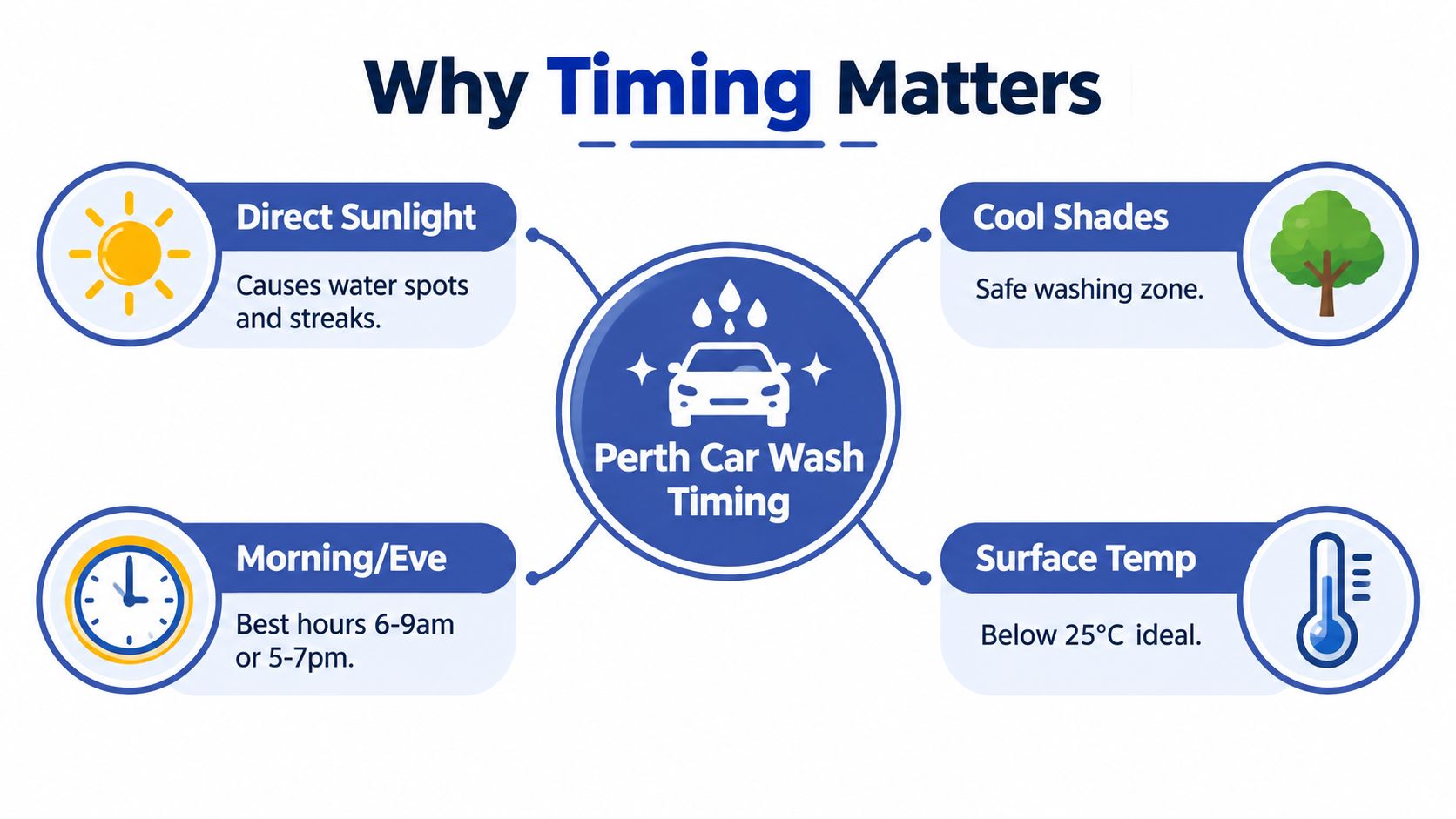
Practical rule: If the paint is hot to the touch, don’t start with the bonnet. Move the car into shade, cool the surface with clean water, or wait until conditions improve.
Heat is the real clock
Evaporation speed is the mechanism behind most timing mistakes. As panel temperature rises, water disappears faster and leaves dissolved minerals behind. If product dries before you rinse it, residue can remain on the clear coat. Australian detailing advice recommends washing one panel at a time, keeping the surface wet and drying immediately with microfibre after rinsing. Professional Australian car-care guidance on hot panels and water spots explains why a cool, shaded surface gives you more control.
Early morning and late afternoon are useful starting points because they often reduce heat and glare. They aren’t magic hours. A cloudy day or a shaded driveway may provide better conditions than a fixed time in full sun. Perth’s strong UV exposure also means tree sap and bird droppings can harden quickly, so delaying a wash indefinitely can create a different kind of paint problem.
RACV advises washing a car promptly after hot and dusty driving conditions, and recommends rinsing each section before soap dries, followed by gentle blotting with a microfibre towel. RACV’s professional car detailing advice reinforces the balance: avoid heat where possible, but remove damaging contamination before it sits on the finish.
For a more detailed maintenance rhythm, see this guide to how often you should wash your car. Then check the paint before choosing the hour. If the car is cool and the surface is shaded, wash it. If a fresh dropping is already drying, spot-clean that area rather than waiting for an ideal window.
What Actually Determines Interior Cleaning Costs?
Interior cleaning costs don’t follow a single formula because the cabin’s condition changes the work involved. A compact vehicle with loose dust and a few crumbs needs a different process from a family SUV with embedded food residue, pet hair and stained fabric. The fair question isn’t just, “What does an interior clean cost?” It’s, “How much correction does this interior need?”
A basic interior service may cover vacuuming the seats, carpets and boot, along with dusting the dash, console and trims. That suits a car that receives regular care and has ordinary daily-use debris. It won’t necessarily remove odour sources, hair trapped in fabric or marks that have migrated below the surface.
A deeper service involves more inspection and targeted work. Vehicle size affects how much surface must be cleaned, while condition determines how much time the operator spends on crevices, seat rails, mats, door pockets and fabric. A large cabin isn’t automatically dirty, but it gives the cleaner more area to inspect and finish.
What changes the quote
-
Vehicle size: Larger SUVs, people movers and utes can require more product, reach and working time than a small hatchback.
-
Material type: Leather, vinyl, fabric and carpet respond differently. Leather may need cleaning and conditioning, while fabric may require extraction or steam treatment.
-
Pet hair: Hair caught in carpet fibres can’t be treated like loose dust. Removal needs focused brushing, vacuuming and inspection.
-
Staining: A fresh surface mark may respond to careful cleaning. Older or heavily worked-in stains may need a dedicated treatment, with no guarantee that every mark will disappear.
-
Starting condition: Crumbs, sand, muddy footwear and spilled drinks all increase the preparation required before the final wipe-down.
Prime Shine’s menu separates routine inside-and-out cleaning, premium wash work, mini detailing and full detailing, with add-ons for areas such as leather, seats, carpets, pet hair, trim and interior protection. Its Perth car detailing cost guide is useful because it frames the decision around service scope and vehicle condition rather than treating every cabin as identical.
Before booking: Photograph the seats, carpets and boot in normal light, then describe the worst problem clearly. “Interior needs a clean” is less useful than “pet hair in the rear carpet and a drink stain on the passenger seat.”
Spend on the problem, not the label
A full detail isn’t automatically better value for a well-maintained car. If the exterior is already presentable and the cabin only has loose debris, targeted interior work may be enough. Conversely, choosing a basic vacuum for a vehicle with embedded hair or staining can create a disappointing result because the service was never designed for that condition.
Ask what the package includes, what the add-ons address and whether the quoted price changes after inspection. Transparent starting prices help, but the final scope should reflect the actual vehicle, not a generic promise.
Steam Cleaning vs Basic Vacuuming Which Is Right For You
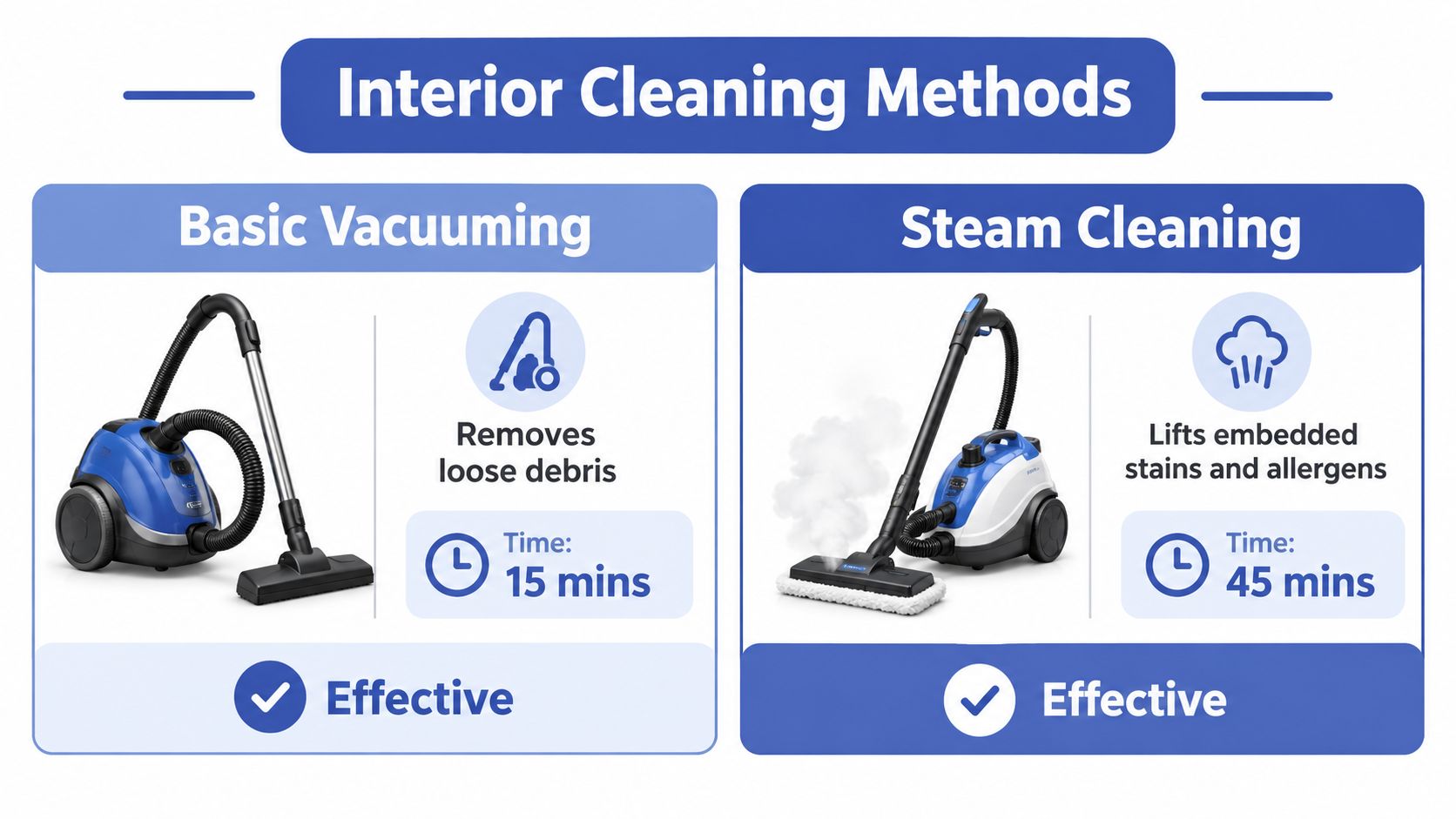
Basic vacuuming and steam cleaning solve different problems. Vacuuming removes loose particles from carpets, seats, mats, boot areas and gaps. Steam cleaning is a deeper treatment for material that holds embedded grime, stains or allergens. Choosing between them starts with the condition of the interior, not the name of the service.
A rideshare or delivery vehicle that receives regular cleaning may only need vacuuming and surface dusting during routine visits. A family car with dried mud, food residue or pet hair needs more attention because the debris has worked into fabric and carpet. Vacuuming can remove what sits on top, but it won’t always release what the fibres are holding.
Basic vacuuming suits maintenance
Choose basic vacuuming when:
-
The debris is loose: Dust, crumbs, sand and dry dirt can often be lifted without wet treatment.
-
The cabin is maintained regularly: Frequent light cleaning prevents material from becoming heavily embedded.
-
You need a refresh: A vehicle being used daily can benefit from a quick reset before the interior becomes difficult to manage.
Vacuuming also helps reveal the true condition of the upholstery. Once loose material is removed, the operator can see whether remaining marks need a separate treatment. That prevents you from paying for deeper work before the cabin has been properly assessed.
Steam cleaning suits embedded problems
Steam cleaning is more appropriate when fabric, carpet or hard-to-reach surfaces hold marks that ordinary vacuuming can’t lift. It can help address embedded stains, allergens and pet hair, but it isn’t a guarantee that old discolouration or permanent damage will vanish. The operator still needs to match the method to the material and condition.
The trade-off is time and scope. Deeper cleaning requires preparation, focused treatment and careful drying, so it isn’t the sensible choice for every routine visit. If only the mats are affected, targeted work may be enough. If the seats, footwells and boot all show heavy buildup, a broader interior detail is more logical.
Prime Shine describes its steam cleaning approach for car interiors alongside other interior options. Use that distinction when booking. Tell the cleaner whether you’re dealing with loose dirt, a visible stain, pet hair, odour or a combination, because each symptom points to a different level of work.
Choose the least intensive service that solves the actual problem. Upgrade when the debris is embedded, not simply because a deeper package sounds more thorough.
Smart Ways to Save on Professional Car Cleaning
Saving money on car cleaning doesn’t mean choosing the shortest service every time. It means paying for the work your vehicle needs and avoiding treatments that don’t address the problem. A routine cabin refresh, a targeted pet-hair removal and a full reset all have different purposes.
Start with a quick inspection before you book. Open every door, check under the front seats, look at the boot and run your hand over the carpets. Note whether the issue is loose debris, staining, hair, surface dust or paint contamination. That description helps the operator recommend a suitable package instead of adding unnecessary work after arrival.
Use a simple selection process
-
Separate routine dirt from restoration work. If the interior only has dust and crumbs, choose a maintenance-level clean. Save deep treatments for embedded contamination.
-
Bundle related jobs when the car needs them. A vehicle requiring seat and carpet treatment may be better suited to a broader interior service than several disconnected minor appointments.
-
Target the worst areas first. If the rear carpet contains pet hair but the front cabin is clean, ask about pet-hair removal rather than assuming the entire interior needs restoration.
-
Keep the exterior request specific. A hand wash may be enough for road film and dust. A dull finish with light swirls points towards paint preparation or correction, which is a different objective.
-
Maintain the result at home. Remove rubbish promptly, shake out mats, wipe spills before they dry and avoid letting dust build up in seams. Small habits reduce the need for intensive cleaning.
Prime Shine’s published menu includes hand washing, inside-and-out cleaning, premium wash work, mini detailing, full detailing and add-ons such as leather conditioning, steam cleaning, pet-hair removal and interior protectant. That structure makes it easier to buy a defined service rather than an unclear bundle.
Don’t select wax, polish, paint cleaning or protection because the names sound valuable. Choose them when the paint condition and your maintenance habits justify them. A car exposed to Perth dust may benefit from consistent washing and careful drying before it needs more corrective work.
Booking habit: Describe the condition first, then ask which service removes that condition. The cheapest useful service is better value than a larger package that leaves the actual problem untreated.
Choose the Right Cleaning Service
How to Choose the Right Service For Your Needs?
The right service sits where three things overlap: the car’s condition, the result you want and the time you can give the job. A quick exterior clean and a sale-ready presentation are not the same request. Neither is a dusty cabin and a cabin with embedded pet hair.
Begin with the outcome. If you need the car presentable after a dusty week, an exterior hand wash with wheel and tyre attention may be appropriate. If the cabin contains crumbs, sand and ordinary daily debris, an inside-and-out service can address the visible buildup. If stains, hair or neglected surfaces dominate, choose a deeper interior option rather than expecting a standard vacuum to do restoration work.
Match the service to the evidence
| Vehicle condition | Sensible starting point | What to clarify |
|---|---|---|
| Dust, road film and ordinary exterior grime | Hand wash and rinse | Whether wheels, tyres and drying are included |
| Loose crumbs, dust and boot debris | Interior vacuum and surface clean | Whether mats and the boot are included |
| Embedded hair or fabric marks | Targeted deep interior treatment | Which materials will be treated |
| Dull paint or light surface defects | Paint cleaning or correction consultation | What improvement is realistic |
| A car needing a broad reset | Full inside-and-out detailing | The exact areas covered and preparation required |
Timing still matters. Book for a period when the car can be handled away from harsh direct sunlight where possible, particularly for exterior washing. If a bird dropping or tree sap is fresh, deal with that contamination promptly rather than waiting for a perfect appointment window. A professional can help you balance surface condition with the practical timing of the clean.
Ask better questions before paying
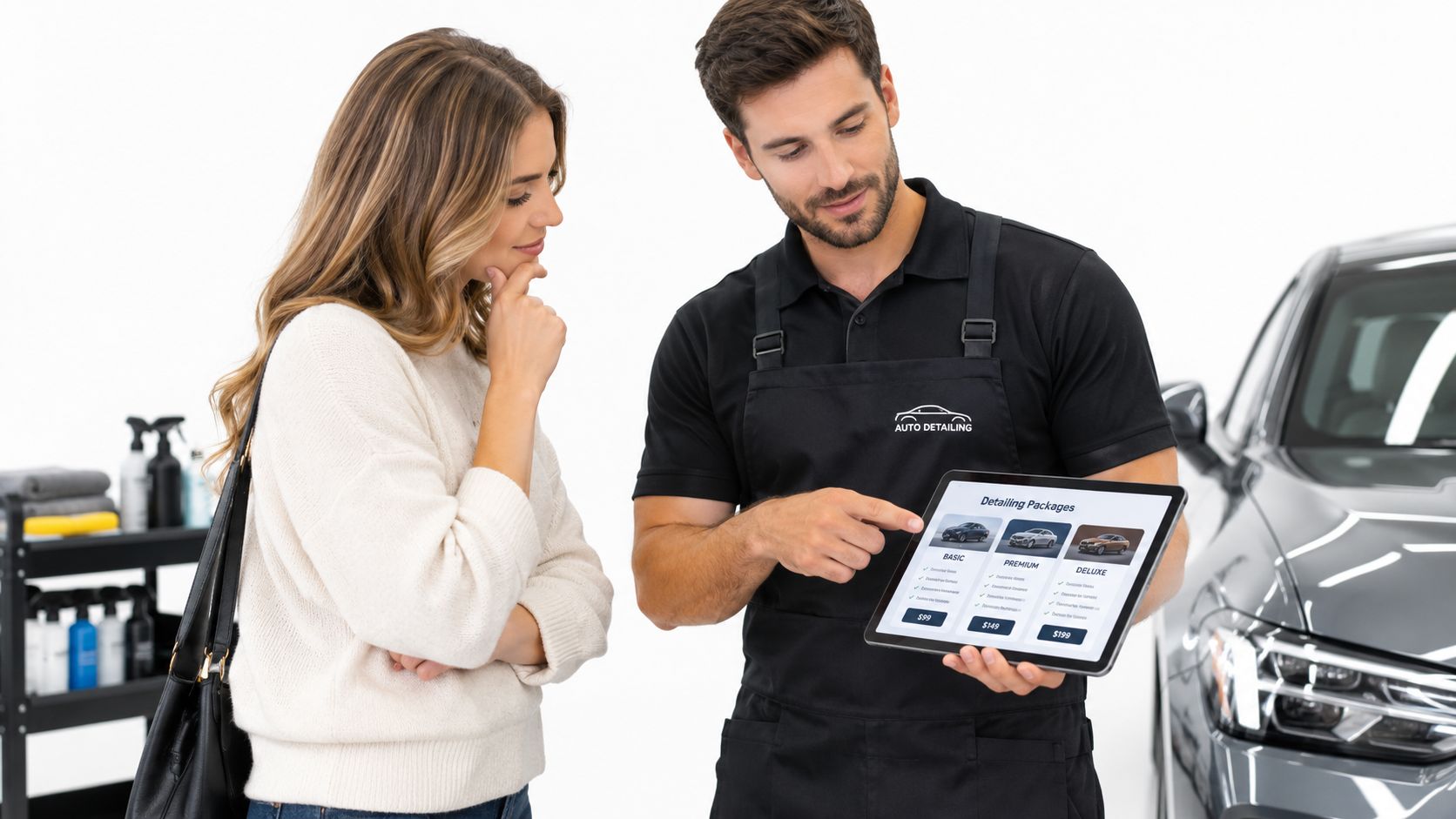
Ask whether the service is hand washed, what happens to the wheels and tyres, whether the boot is included, and how the operator handles stains or pet hair. For paint work, ask whether the goal is cleaning, gloss improvement, swirl reduction or longer-term protection. Those are separate outcomes and shouldn’t be treated as interchangeable.
For an ordinary maintenance clean, avoid paying for correction when the paint only needs careful washing. For a neglected vehicle, don’t choose a light service and expect it to deliver a reset. A clear diagnosis protects your budget and gives the detailer a fair chance to produce the result you actually want.
Book the Right Detailing Service
Why Professional Care Beats DIY In Perth Climate?
DIY washing works when the car is cool, the surface is shaded and you have enough time to keep each panel wet and dry it properly. Perth often gives you the opposite conditions. Dust settles into seams, heat accelerates drying, and strong sunlight exposes every missed rinse mark.
A professional hand wash gives the operator control over the sequence. Wheels can be addressed before clean paintwork, panels can be washed in manageable sections, and the surface can be dried before minerals remain behind. Hand-wash methods also avoid the automated brush contact that can introduce unwanted marks, provided the operator uses clean equipment and sensible technique.
The professional advantage isn’t just convenience. It’s controlled contact, controlled drying and a process matched to the condition of the vehicle.
Interior work benefits from the same discipline. A household vacuum can remove loose debris, but it may not reach seat rails, tight seams or embedded hair effectively. A professional can inspect the cabin, identify whether the problem needs vacuuming or deeper treatment, and avoid using an unsuitable method on leather, fabric or trim.
For anyone attempting the job at home, the practical process is covered in this guide to washing your car from the inside the right way. The fundamentals remain simple: work in shade, clean one area at a time, rinse before products dry, and use gentle microfibre drying rather than dragging grit across the paint.
Water rules also deserve attention. In Western Australia, the Bureau of Meteorology notes that winter sprinkler bans apply to scheme and bore water users from 1 June to 31 August each year, while current Perth-area rules still allow washing a car with a hose. The cited water-restrictions guidance also describes circumstances where a bucket, high-pressure cleaning device or commercial car wash can be used at any time, while a trigger-nozzle hose at home may be limited to pre-rinsing and rinsing under the cited scheme.
That means the legal question isn’t always “Can I wash the car?” It may be “Which method is permitted here, and what runoff or restriction applies?” Victoria’s permanent rules allow a vehicle to be washed with a trigger-nozzle hose at any time, and its Stage 2 rules permit washing at home with approved methods or at a commercial car wash. Victoria’s permanent water-saving rules and Stage 2 vehicle-washing guidance show why drivers should check local conditions rather than copy advice from another state.
Prime Shine Hand Car Wash offers hand washing, interior and exterior detailing, paint correction and paint protection in Perth, with online booking for a scheduled clean. Visit Prime Shine Hand Car Wash to choose a service that matches your car’s condition and arrange a wash at a practical time.