



You pull into a Perth car wash on a Saturday morning because the ute looks dusty, the rims are dull, and the windscreen has a stubborn film on it. You want the outside cleaned properly before the beach run, but you also want to know whether the service will really touch the bird mess near the mirror, the brake dust on the wheels, and that scratch by the handle that’s been annoying you for weeks.
That’s where What Is Included in an Outside Car Wash? gets misunderstood. An exterior wash is a cleaning service, not a repair service, and the value is in removing loose contamination, restoring a presentable finish, and doing it without harming the paint. In Australia, that matters because professional washing is usually an occasional maintenance task, with customers averaging 10.6 washes per year compared with 13.6 in the United States (Australian Car Wash Consumer Study).
What Drivers Usually Expect From an Outside Car Wash?
A lot of drivers roll in with a clear mental checklist, even if they can’t name it. They want the paint to look glossy, the wheels to come back dark instead of brown, the tyres to look dressed, and the glass to stop streaking in the afternoon sun.
The quiet checklist in most heads
That list usually includes a few hopes that don’t belong to washing at all. People expect bird droppings to be gone, bugs to lift off, and the car to look “fresh” enough that the scratch near the door handle feels less obvious.
Practical rule: if a mark is sitting on top of the paint, a wash might remove it. If the mark has changed the paint itself, the wash is only the first step.
An outside car wash sits in the middle of the car-care ladder. It should handle visible contamination on the body, glass, wheels, and tyres, but it shouldn’t be sold as a cure for swirl marks, oxidation, or damaged clear coat. That’s the boundary most customers miss, and it’s why a quick wash can feel disappointing when someone expected a light correction service.
Why the name causes confusion
The phrase sounds broad, but the service tier isn’t. A drive-through rinse, a hand wash, and a longer hand-finished exterior clean can all wear the same label while delivering very different results.
The useful question isn’t “Did they wash it?” It’s “What parts of the exterior did they clean, and what problem were they never meant to solve?” That’s the right way to judge whether the result matched the ticket you paid for.
The Core Cleaning Steps in a Proper Exterior Wash
A good exterior wash follows a sequence, and the order matters as much as the products. The point is to remove dirt without dragging grit across the clear coat.
Start with a rinse before any contact
The first move should be a thorough rinse or pre-rinse to lift loose road film, dust, and grit. RACV recommends rinsing before touching the paint, using a pH-neutral shampoo, separate wash and rinse water, clean mitts, and washing in the shade to reduce swirl marks and water spotting (RACV guidance).
That’s not fussiness, it’s paint care. If abrasive particles stay on the panel and then get dragged by a mitt or sponge, they can leave fine marks in the clear coat.
Then wash from cleaner panels to dirtier ones
A proper hand wash should move across the body in a way that limits cross-contamination. Roof, bonnet, and upper panels usually come before lower sills and rear sections, because the lower areas collect more road grime.
Wheels belong in their own step, not the same mitt used on the paint. Brake dust and road contamination sit heavily there, so dedicated brushes or cloths are the safer approach. Tyres are finished separately with dressing or shine, then the whole car is rinsed clean and dried with a non-abrasive towel or blower so water spots don’t set in.
For a closer look at the kind of hand-wash workflow customers should expect, see this Perth hand car wash explainer.
A clean finish starts before the mitt touches the paint.
The Hidden Side of an Outside Car Wash Most Customers Miss
The part most customers never see is what happens to the dirty water. In Western Australia, liquid waste must not go into stormwater drains, soakage pits, gullies, or open drains, because residues can reach wetlands, waterways, or groundwater (WA guidance).
What a compliant wash bay actually does
A properly managed wash area usually sits on a hard, impermeable surface with drainage directed to collection, settlement, or approved wastewater handling. Perth-area guidance says wash bays should be graded toward a collection point or channel connected to a sediment trap or pump tank, with a minimum floor and drainage-channel grade of 1:80 (WA guidance).
That matters because the runoff isn’t just soap and water. It can carry dirt, oils, tyre particles, and suspended grit. Australian environmental guidance also treats vehicle wash water as a pollutant pathway, which is why wastewater control is part of the service, not an optional extra.
Why this matters to regular drivers
A hand wash on a driveway or lawn may look harmless, but the runoff still has to go somewhere. NSW EPA guidance recommends washing in a designated bay where wastewater is collected and directed to sewer under trade-waste arrangements, and it urges customers to choose facilities that recycle water when possible (NSW EPA guidance).
So the key question isn’t only whether the car was shiny at the end. It’s whether the operator managed the buckets, chemicals, and runoff in a way that fits the site and protects the environment.
Choose a Professional Car Wash
How an Outside Wash Compares to Other Wash Packages?
Outside wash, inside and out, premium wash, and mini detail all start from different expectations. The jump from one to the next is mostly about labour, time, and how deep the clean goes.
| Service | Outside Wash | Inside and Out | Premium Hand Wash | Mini Detail |
|---|---|---|---|---|
| What it covers | Exterior body, glass, wheels, tyres | Exterior plus cabin vacuum and dusting | Fuller hand wash with added finish work | Exterior refresh with deeper presentation work |
| What it skips | Interior cleaning, correction work | Paint correction | Major correction work | Full correction or full interior reset |
| Best for | Everyday maintenance | Busy families and commuters | Drivers who want more finish | Pre-sale or tired-looking cars |
| Main result | Clean and presentable | Clean inside and out | Cleaner, glossier appearance | Stronger visual reset |
Where the line usually sits
An inside and out wash adds the cabin, so you’re paying for vacuuming, dash dusting, console wipe-downs, and a broader reset of the car’s feel. A premium hand wash pushes further into finish and gloss, but it still isn’t the same as defect correction.
A mini detail is where the service starts to move beyond simple cleaning. It can include more preparation, more time on presentation, and a better result on paint that’s looking tired, but it still doesn’t replace a proper correction package.
Simple rule: cleaning removes dirt, protection shields the surface, and correction changes the paint finish itself.
Compare Wash and Detailing Options
What an Outside Wash Will Not Fix?
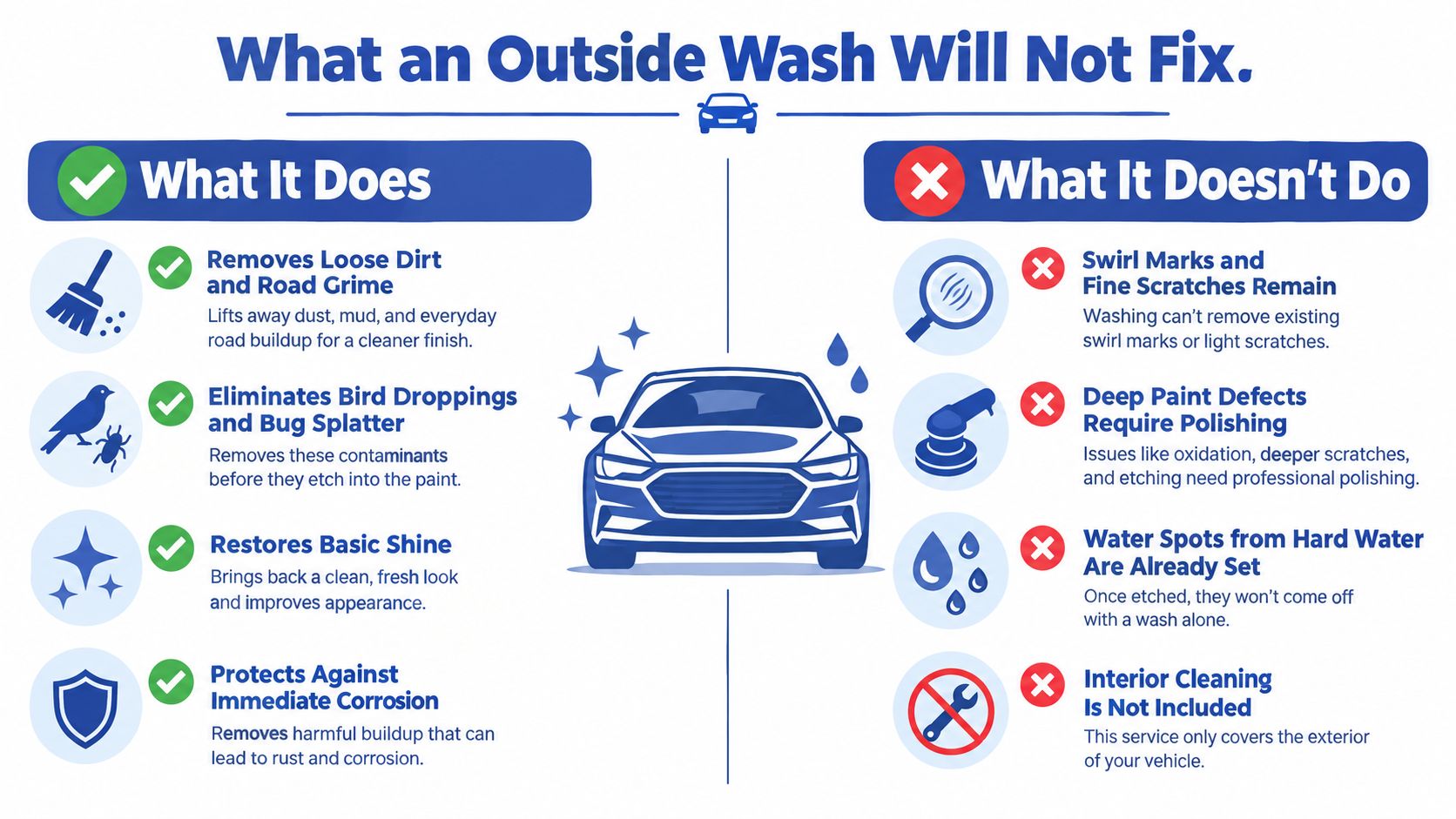
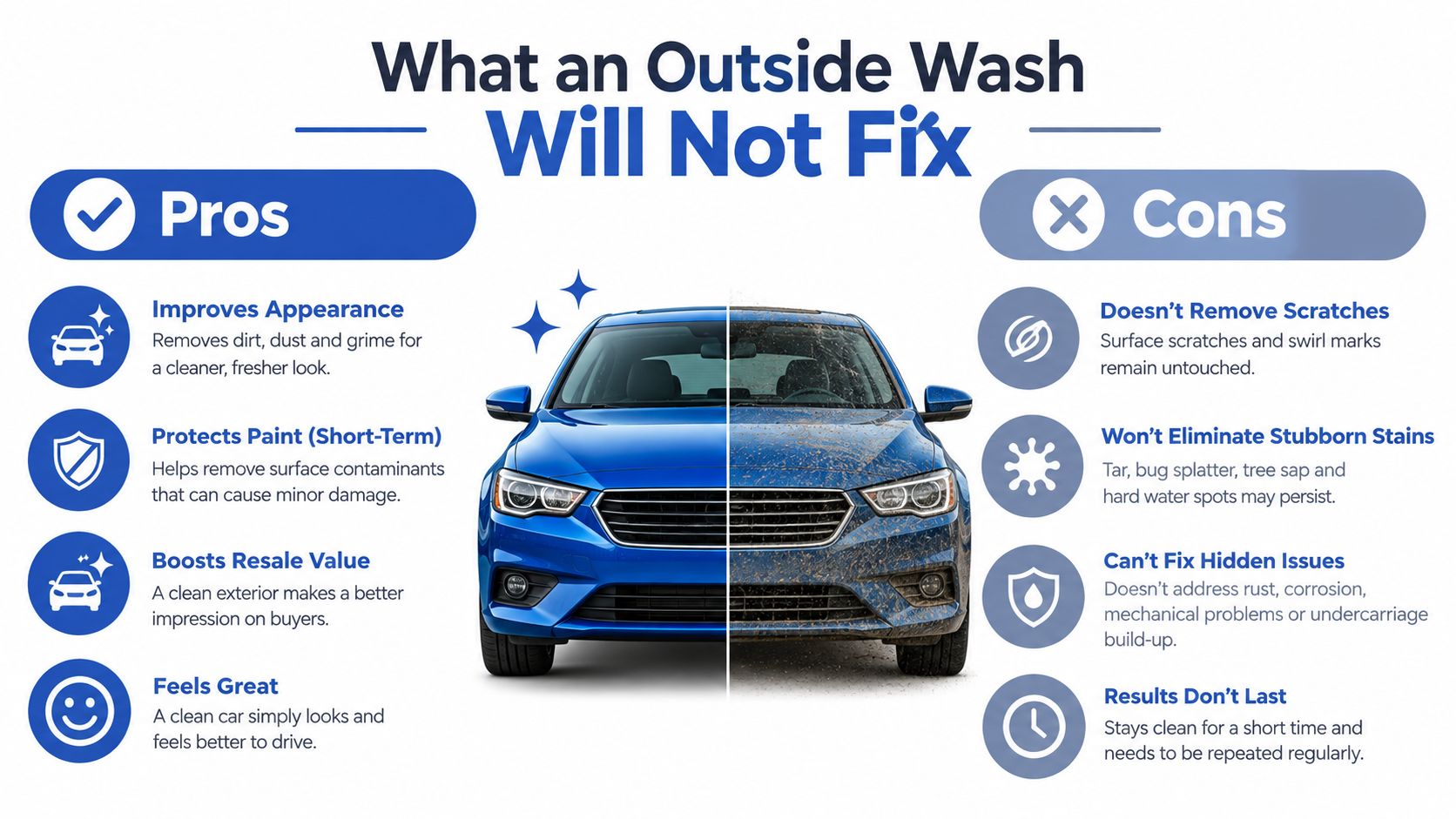
A wash can make a car look cared for, but it can’t reverse damage in the clear coat. That’s where a lot of disappointment starts, because the car suddenly looks cleaner and the deeper flaws become more noticeable.
The marks that stay behind
Swirl marks, fine scratches, oxidation, and etched water spots won’t disappear just because the vehicle has been washed. Bird etching, tar, bonded fallout, and old automated-wash scarring are different problems, and they need a different treatment path.
For paint defects, the answer is correction, not washing. That means compounding, machine polishing, or a more involved refinishing process depending on how deep the damage goes. A wash can help reveal the condition of the paint, but it won’t erase the defect itself.
Why this boundary matters
Customers often expect a wash to “bring the shine back” as though shine and correction are the same thing. They’re not. A wash removes contamination sitting on the surface, while correction removes or refines the damaged top layer of paint.
If the paint needs correction rather than cleaning, this paint correction guide for Perth drivers is the right next read.
An outside wash also won’t replace ceramic coating, fix faded trim, or undo water spots that have already baked into the surface. It is maintenance, not restoration.
Outside Wash vs Wax vs Cut and Polish vs Ceramic Coating
These services often get bundled together in conversation, but they solve different problems. The cleanest way to think about them is sequence, not competition.
| Service | Purpose | Lasts | Removes Scratches | Boosts Gloss | Typical Price (AUD) |
|---|---|---|---|---|---|
| Outside Wash | Remove surface dirt and road film | Short term | No | Yes, lightly | Varies by vehicle and package |
| Wax | Add temporary gloss and surface protection | Short term | No | Yes | Varies by product and application |
| Cut and Polish | Reduce fine defects and refresh paint | Longer than a wash | Yes, for light defects | Yes | Varies by paint condition |
| Ceramic Coating | Add durable paint protection | Long term | No | Yes | Varies by prep and coating choice |
The order that makes sense
Wash first. Correct second. Protect last. That sequence matters because polish and coating both rely on a clean surface, and neither one works as intended if dirt is still sitting on the paint.
A wax sits closer to the maintenance end of the scale. It adds gloss and a sacrificial layer, but it doesn’t erase damage. A cut and polish is different because it refines the surface, which is why it belongs in the correction category rather than the cleaning category.
For drivers comparing protection options after a wash, this ceramic coating guide explains the next step more clearly.
Explore Ceramic Coating Options
Choosing the Right Service for Your Vehicle and Routine
The suitable exterior service depends on how you use the car, where it sits overnight, and how long it has been since its last proper clean. A daily commuter, family wagon, rideshare vehicle, and sale-ready hatch face different demands, so one package will not suit every routine.
Match the wash to the use case
Daily commuters often need regular outside washes because dust, insects, and wheel grime collect quickly. Family vehicles may need exterior care alongside an interior reset, since seats, trims, and floor areas usually become untidy before the paint does.
Rideshare and taxi cars spend more time on the road and carry more passengers. Frequent exterior cleaning, combined with periodic cabin resets, helps manage that heavier use. For guidance on frequency suited to Perth conditions, see how often you should wash your car in Perth.
A vehicle being prepared for sale usually needs more than a standard wash. A clean exterior improves the first impression, while light correction or trim finishing may be appropriate if the paint looks tired. Those additions address presentation, not mechanical condition.
Use three checks before choosing: when the car was last washed, which roads it regularly travels, and whether the problem is loose surface dirt or deeper visual fatigue.
| Driver Profile | Recommended Outside Wash Frequency | Key Add-On Services |
|---|---|---|
| Daily commuter | Regular maintenance washes | Wheel clean, tyre shine, occasional decontamination |
| Family vehicle | Regular exterior care | Interior reset, seat and trim cleaning |
| Rideshare or taxi | Frequent exterior refreshes | Cabin reset, wheel and wheel-well attention |
| Vehicle for sale | Pre-listing exterior wash | Light correction, trim dressing, tyre finishing |
A practical Perth example
A car parked outdoors near busy roads can collect marks and film faster than one kept under cover. For a vehicle carrying children, pets, or work gear, the cabin may deserve priority. A car being photographed for sale may call for presentation work beyond routine maintenance.
A practical choice is a standard outside wash for ongoing upkeep, or a mini detail when the car needs a more complete refresh before sale or an important occasion. Prime Shine Hand Car Wash in Westminster provides a setting where that choice can be made according to the vehicle’s condition and intended use.
Find the Right Wash for Your Routine
Setting Realistic Expectations From Your Next Exterior Wash
A standard outside wash should leave the car cleaner, brighter, and easier to live with. It should remove loose dirt, road film, bug splatter, and light dust from paint, glass, wheels, and tyres, then finish with a streak-free dry if the process is done properly.
What to expect after you leave
It should not remove swirl marks, oxidation, deep scratches, bonded tar, or etched water spots. It also won’t replace wax, sealant, or ceramic coating, because those are separate layers with different jobs.
A freshly washed car usually looks its best for a short stretch before daily driving adds film back to the panels. In Perth, that’s especially true when the car is parked outdoors or used on dusty roads.
Good expectation: a wash keeps a vehicle presentable. It doesn’t make damaged paint behave like new paint.
The easiest way to book well is to ask three things before you pay. First, what’s included in the exterior package. Second, whether the provider uses a compliant wash bay or equivalent runoff control. Third, whether decontamination or correction should be booked separately if the paint needs more than cleaning.
If your car just needs a proper exterior reset, Prime Shine Hand Car Wash can handle the hand wash, wheel clean, tyre shine, and dry without turning a maintenance visit into a guess. If you want to separate a basic outside wash from deeper detailing or paint work, visit Prime Shine Hand Car Wash and choose the service that matches the car’s actual condition.