







Perth’s 726.9 mm of average annual rainfall and approximately 78.2 measurable-rain days mean ceramic coating can make routine cleaning easier, but it won’t make your car scratch-proof or maintenance-free. Its real job is to create a bonded, hydrophobic surface that helps resist contamination, UV-related deterioration and water retention while making careful washing less demanding.
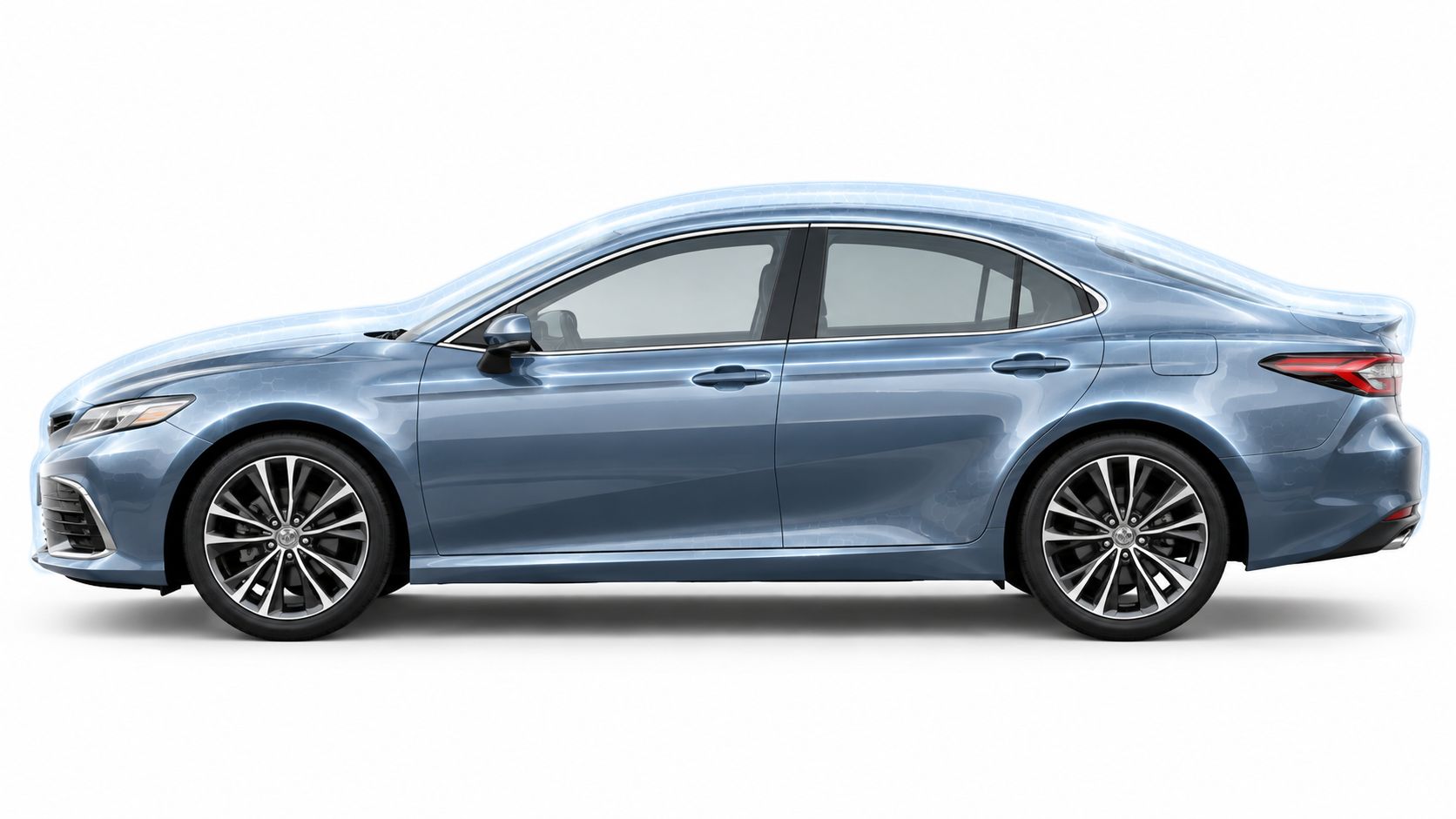
The popular advice says ceramic coating creates a permanent force field around your paint. That description sounds impressive, but it sets customers up for disappointment. A properly applied coating is a transparent, silicon-dioxide-based layer that chemically bonds or cross-links with the clear coat after curing. It lowers surface energy, encourages water to bead and run off, and makes loosely attached grime easier to remove.
That’s useful in Perth, where cars move between dry, dusty conditions and wet-road exposure. The Bureau of Meteorology records monthly rainfall averages ranging from 2.4 mm in January and 3.2 mm in February to 142.0 mm in July and 124.1 mm in August for Perth Metro observations from 1993 to 2026. The result is not a self-cleaning car. It’s a car that can be easier to wash when the owner follows a low-abrasion maintenance routine.
The eight practical benefits are:
- Contamination resistance: Bird droppings, insects, road film and environmental residue may release more easily.
- Hydrophobic behaviour: Water beads and runs off rather than spreading across the surface.
- Reduced washing effort: Routine hand washing can become quicker and gentler.
- Improved appearance: A prepared surface can look deeper, clearer and glossier.
- Chemical resistance: The coating can provide a sacrificial layer against selected contaminants.
- UV-resistant protection: It can help slow oxidation and gloss loss, but won’t guarantee no fading.
- Less wash-related micro-damage: Careful washing is easier to maintain, but poor technique can still mark paint.
- Longer-term condition preservation: The value lies in prevention and upkeep, not guaranteed resale returns.
If your car needs easier maintenance between professional cleans, Prime Shine Hand Car Wash can assess its condition and explain whether ceramic coating, Cut & Polish or a simpler hand-wash service fits best. Explore Prime Shine’s ceramic coating and booking options before choosing a package.
1. Does Ceramic Coating Actually Protect Your Paint?
Ceramic coating protects paint in a narrow, useful way. It adds a bonded surface layer that helps with contamination, weathering and wash maintenance. It does not repair existing defects, and it does not turn paint into a scratch-proof surface.
That distinction matters before any product touches the car. If the paint already has oxidation, wash marring or deeper defects, those marks stay visible under a clear coating unless the surface is corrected first. Proper decontamination removes bonded fallout and residue. Machine correction, where needed, improves the finish before the coating locks that condition in.
For Perth vehicles, the practical benefit is easier management of real exposure. Dry dust, road grit, coastal residue and wet-season grime still land on the paint. The coating changes how strongly some of that contamination sticks, so a careful wash can remove it with less effort. It cannot stop damage caused by poor technique. If grit is dragged over a dry panel, the paint can still mark.
What the barrier can and can’t do
Use ceramic coating for the jobs it handles:
- It can help with contamination: Bird residue, road film and general grime may release more easily during a safe maintenance wash.
- It can improve upkeep: A slicker surface can reduce drag during hand washing and drying.
- It can’t stop impacts: Stone chips, key marks and deeper scratches call for another form of protection.
- It can’t replace paint correction: Clear coating over defects preserves those defects.
Service life also varies. Professional systems in Australia are commonly described in the one to five years range, depending on the product used and the paint preparation carried out, according to this Australian ceramic-coating market overview. Treat that as a broad product range, not a fixed outcome for every car.
In practice, ceramic coating suits owners who want less fight during routine washing and better control over contamination and UV exposure. It is a sensible choice for an outdoor daily driver, a newer vehicle you want to keep tidy, or a corrected car whose finish you want to maintain. If your priority is impact resistance rather than easier maintenance, read this paint protection versus ceramic coating guide for Perth drivers before choosing.
Book a Ceramic Coating Assessment
2. Is Water Beading Useful, or Just Visual Theatre?
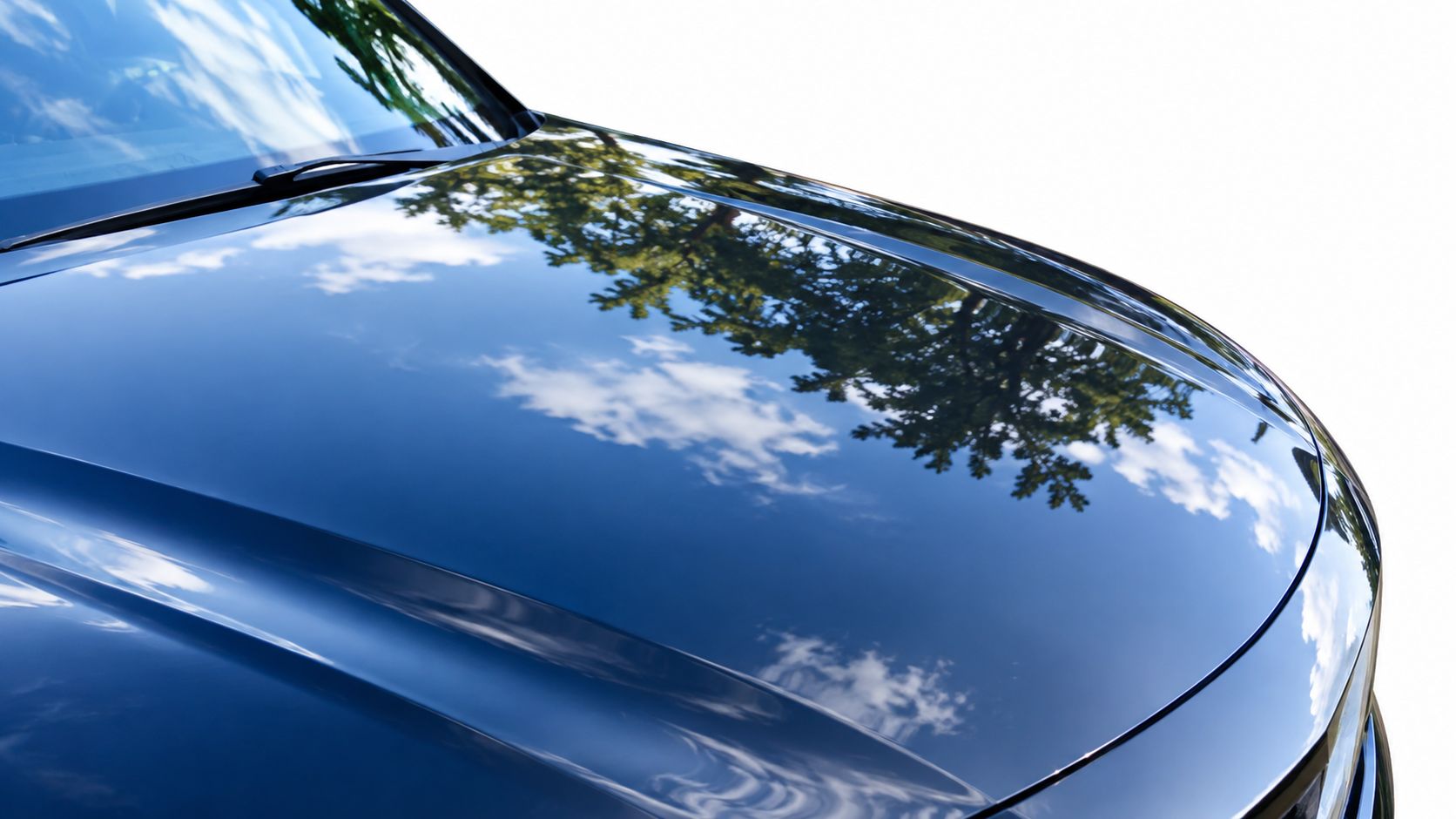
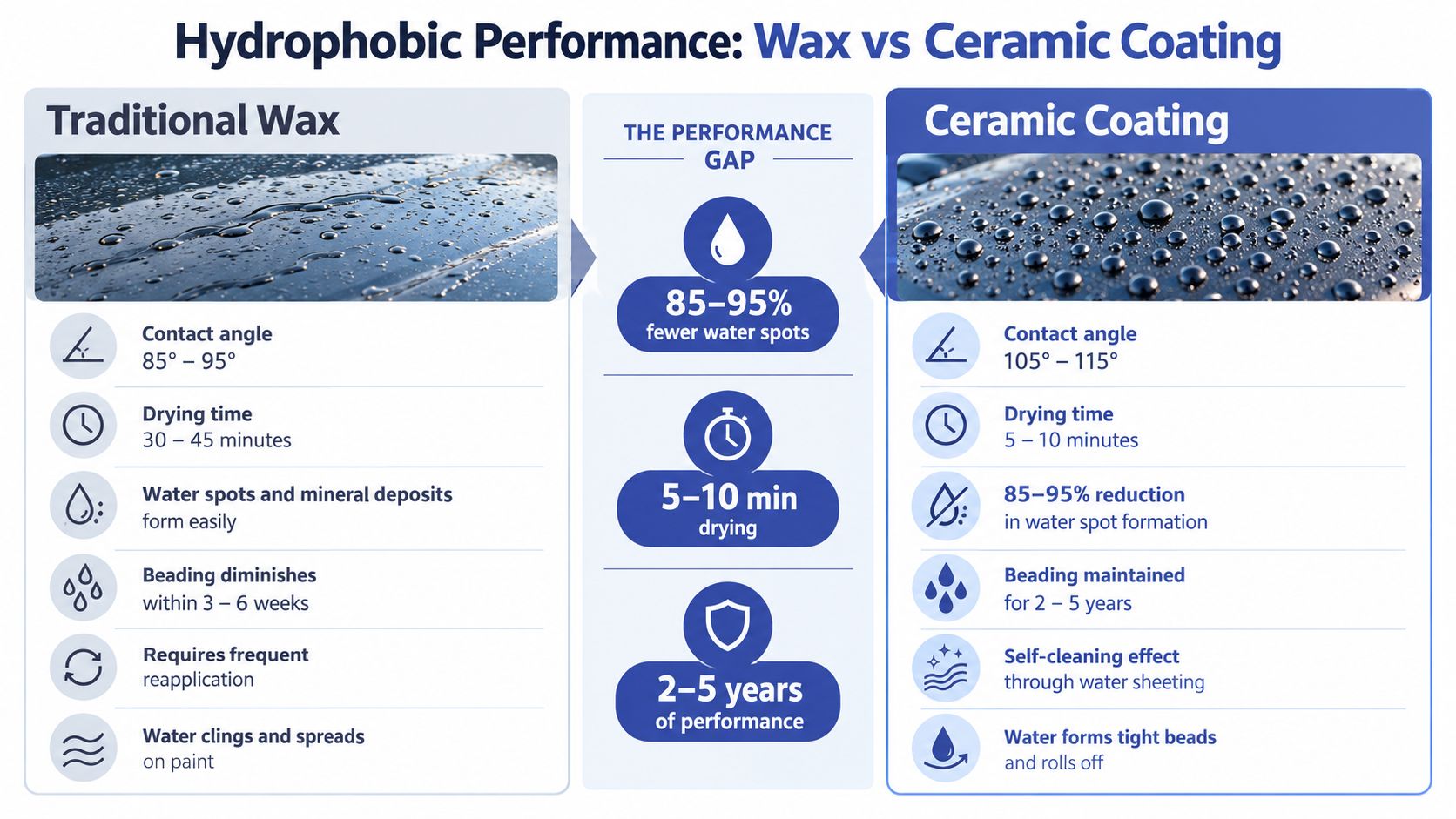
Water beading is the most obvious ceramic-coating benefit, but it’s also one of the most misunderstood. A cured coating creates a lower-energy surface, so water tends to form beads and run off instead of spreading across the paint. Some loosely attached dust and grime may leave with that water.
The practical payoff is easier maintenance. After rain or washing, less water may remain spread across the panel, and a clean, compatible drying towel can move across the surface with less resistance. That doesn’t mean water spots are impossible. Mineral-rich water, salt, oily film and baked-on residue still need safe removal.
A coated vehicle can also appear less hydrophobic when the surface is dirty. Contamination temporarily masks the coating’s water behaviour, so a proper maintenance wash may restore beading without requiring another coating application.
How to use hydrophobic behaviour properly
- Rinse before contact: Remove loose grit before touching the paint with a wash mitt.
- Dry deliberately: Use clean microfibre towels rather than leaving water to evaporate in direct sun.
- Treat beading as a signal: A change in water behaviour can prompt inspection, but it isn’t a complete diagnostic.
- Keep washing: Beading doesn’t remove brake dust, tree sap, oily traffic film or baked-on contamination.
Practical rule: Water that beads beautifully still needs to be dried carefully. A bead can leave a mineral mark if it sits on hot paint and evaporates.
This benefit suits coastal drivers, rideshare operators and anyone who washes a vehicle regularly. It’s less valuable to an owner who expects the car to stay clean without washing. Prime Shine’s regular hand-wash service can help maintain the surface without introducing the aggressive brushes that often create avoidable defects.
View Hand Wash and Maintenance Options
3. Can Ceramic Coating Really Reduce Washing Effort?
Ceramic coating helps most with wash effort when the actual problem is bonded grime, not neglect. It gives dirt, road film and light environmental fallout less bite on the surface, so a proper rinse and careful hand wash usually get the paint clean with less repeated rubbing. That matters because reduced scrubbing lowers the chance of adding wash marks while you clean.
For Perth drivers, that benefit is practical rather than dramatic. A car parked outside will still collect dust. A rideshare vehicle will still pick up traffic film. A family car used for school runs and shopping will still need regular washing. The coating suits owners who want easier maintenance and a more controlled wash routine, not owners expecting the car to stay clean on its own.
The trade-off is simple. If you wash badly, the coating will not save the finish. Dirty wash media, harsh chemicals and brush-contact washes can still put swirls into coated paint. In practice, coating reduces effort best for owners willing to keep the process gentle and consistent.
A lower-abrasion routine works better
Use the coating to make each wash safer and more predictable:
- Pre-rinse first: Remove loose grit before any contact with the paint.
- Use pH-neutral chemistry: Strong products can strip protection from the maintenance routine and create unnecessary drying issues.
- Choose clean wash media: A dirty mitt can still grind contamination into the surface.
- Dry by hand: Controlled drying helps manage spotting, especially on warm panels.
- Avoid automated brushes: Coating does not prevent brush-induced defects.
A useful Perth decision is matching the coating to how the car is maintained. If the vehicle lives outside, gets washed at home, and sees frequent road use, the reduction in wash friction and stubborn residue is worthwhile. If the owner relies on infrequent washes or drive-through brushes, the benefit narrows quickly.
Prime Shine’s guide to maintaining ceramic coating in Perth explains the upkeep side clearly. Set the expectation properly. Coating can make contamination easier to remove and regular washing less of a chore. It does not replace washing, and it does not repair paint that has already been scratched.
Learn About Ceramic Coating Maintenance
4. Does Ceramic Coating Improve Gloss, or Just Add Slickness?
Ceramic coating can improve the visual depth of a vehicle, but the coating doesn’t magically flatten damaged paint. Gloss depends heavily on the condition underneath. Swirls, oxidation, bonded contamination and haze scatter reflected light. Applying a transparent coating over those defects preserves them beneath the new layer.
That’s why paint correction often produces the most dramatic visual change. A Cut & Polish service can reduce suitable swirls and light scratches, while decontamination prepares the surface for a cleaner bond. The coating then helps preserve the corrected appearance and adds its own clarity and slickness.
Black, dark blue and red paint often reveal the difference most clearly because uneven reflections show under strong Perth sunlight. Silver and white vehicles can also benefit, particularly when the surface has lost clarity through traffic film or neglected washing. The result should be described as deeper gloss and easier upkeep, not a guaranteed showroom transformation.
Match the finish to the customer’s reason
- For enthusiasts: Correct the paint first, then protect the finish you’ve created.
- For sellers: Improve presentation accurately, without implying that coating repairs defects.
- For rideshare drivers: Maintain a clean, reflective exterior that supports a professional appearance.
- For daily drivers: Prioritise cleanability over chasing a permanent show-car finish.
Regular hand washing with compatible products protects the appearance better than an occasional harsh clean. If the vehicle already looks dull, ask for a condition assessment before selecting ceramic coating. The right sequence may be paint cleaning, Cut & Polish, then coating, rather than coating alone.
Explore Cut and Polish or Coating Services
5. Can Ceramic Coating Resist Bird Droppings and Road Film?
Contamination resistance is one of the most useful benefits in real ownership. A ceramic coating can make it harder for some environmental residue to bond tightly to paint, giving the owner a better chance of removing it before etching occurs. It’s a sacrificial surface, not an exemption from chemical damage.
Bird and bat droppings deserve prompt attention because deposits can permanently mark paint on a sun-heated panel. Australian automotive guidance recommends removing acidic or alkaline contamination, including droppings and insect residue, promptly, as explained in this report on bird damage to automotive paint. Heat can dry or bake a deposit onto the clear coat, making gentle removal more difficult.
Perth’s coastal and industrial environments can also place salt, fallout and oily road film on the vehicle. The coating may reduce adhesion, but it won’t neutralise every contaminant. A neglected coated car can still stain, etch or develop deposits that require specialist treatment.
The safe response is speed, not force
- Remove droppings promptly: Soak and lift contamination rather than rubbing it dry.
- Rinse salt and residue away: Don’t allow deposits to sit through repeated heat cycles.
- Avoid aggressive scrubbing: More pressure can create scratches while trying to remove a chemical mark.
- Correct existing etching properly: Cleaning won’t always restore damage that has already altered the finish.
A coating buys you easier removal and some resistance. It doesn’t buy permission to leave contamination on the paint.
This benefit suits cars parked beneath trees, vehicles used near the coast and fleets exposed to urban road film. A pre-coating clay or decontamination treatment can help prepare the surface, but the exact preparation should follow an inspection rather than a fixed package assumption.
Book a Paint Inspection or Detail
6. Does Ceramic Coating Protect Against Perth Sun?
UV protection claims need qualification. A coating can help resist UV-driven breakdown and slow oxidation or loss of gloss, but it shouldn’t be sold as a guarantee that paint will never fade. Formulation, film thickness, preparation, application quality, parking conditions and maintenance all affect the outcome.
The Australian Radiation Protection and Nuclear Safety Agency notes that people who spend significant time in motor vehicles can receive high solar UV exposure, while laminated windscreens and window tinting substantially reduce UV entering the cabin, as set out in its technical radiation protection publication. That evidence concerns human exposure, but it reinforces why prolonged Australian sunlight is a relevant ownership consideration.
For exterior paint, ceramic coating is best understood as a UV-resistant sacrificial surface over the factory clear coat. It may help slow deterioration, but it can’t reverse existing oxidation or restore colour that has already been lost.
Use coating as one part of sun management
- Apply before visible damage: Prevention is more effective than trying to correct severe fading.
- Correct oxidation first: A coating won’t hide a chalky or degraded clear coat.
- Use shade when available: Covered parking reduces the exposure burden on the whole vehicle.
- Keep the surface clean: Contaminants can intensify deterioration when heated by direct sun.
- Set realistic expectations: Don’t promise complete prevention of fading or oxidation.
Prime Shine’s explanation of ceramic coating and the Perth sun is useful for owners comparing coating with broader protection habits. Outdoor parking, regular washing and prompt contamination removal still matter, especially for daily drivers, families and rideshare vehicles.
See Perth Ceramic Coating Advice
7. Will Ceramic Coating Stop Swirls and Light Scratches?
No. Ceramic coating isn’t scratch-proof, and it won’t stop stone chips, deep gouges, key damage or careless contact. Its hardness can provide some resistance against routine surface abrasion, but the coating remains a thin surface layer. If a wash mitt carries grit across the panel, technique still matters.
Many ceramic-coating explanations go too far. Hardness, gloss and beading aren’t interchangeable with impact protection. Independent testing is commonly framed around resistance to selected chemicals under ASTM D1308-20, not immunity from every type of scratch or chip, as reflected in the technical material from Diamond Plate.
Perth’s dry dust and red dirt make wash discipline especially important. Loose particles can become abrasive when dragged across paint, so pre-rinsing, clean wash media and controlled drying remain essential even after coating.
Protect the coating from the habits that damage paint
- Wash with low abrasion: Use a clean mitt and suitable shampoo.
- Avoid brush washes: Automated brushes can create swirl marks.
- Dry with clean microfibre: Replace towels when they become loaded with residue.
- Correct before coating: Existing swirls need paint correction, not concealment.
- Consider film for impact risk: Drivers focused on stone-chip protection should investigate a film-based product rather than expecting ceramic coating to perform that role.
Prime Shine’s hand-wash-only approach suits owners who want to maintain a coated finish without automated brushes. The coating helps preserve good technique. It can’t rescue bad technique.
Compare Paint Protection Options
8. Can Ceramic Coating Extend Paint Life and Preserve Value?
Ceramic coating can help preserve paint condition by reducing the rate at which contamination, UV exposure and poor washing degrade the surface. That’s a sensible long-term benefit. A better-maintained finish may also present more attractively when the vehicle is sold or returned, but no coating guarantees a higher selling price.
The service is most defensible when the owner intends to keep the vehicle clean. A coating left under bird droppings, salt residue and abrasive dust won’t deliver its potential. The owner must still wash, dry and inspect the car, particularly after periods of heavy outdoor exposure.
Professional guidance commonly places Australian ceramic systems within a service-life range of roughly one to five years, depending on the product and preparation, as noted in this guide to how long ceramic coating lasts. The coating’s practical lifespan can differ from the owner’s experience of beading, gloss and cleanability, so maintenance records and condition checks are worthwhile.
Who benefits most from the investment?
- New-car owners: Protect a clean, well-prepared finish before contamination and washing defects accumulate.
- Lease drivers: Maintain presentation through the ownership period, without assuming the coating prevents every return charge.
- Fleet and rideshare operators: Reduce the effort needed to keep frequently used vehicles presentable.
- Enthusiasts: Preserve a corrected finish with regular careful washing.
- Owners of neglected paint: Start with decontamination and correction advice before committing to coating.
The financial case should be assessed individually. A coating makes more sense for someone who values appearance and maintenance convenience than for an owner who rarely washes the car or plans to sell immediately.
Check Ceramic Coating Packages
8-Point Comparison: Ceramic Coating Benefits
| Item | Implementation complexity | Resource requirements | Expected outcomes | Ideal use cases | Key advantages |
|---|---|---|---|---|---|
| Superior Paint Protection | High, professional application & paint correction recommended | Upfront $200-$800; periodic professional reapplication after expiry; pH-neutral maintenance | Nano-ceramic bond; 2-5 years protection vs contaminants and UV | Coastal Perth, luxury cars, fleets, lease returns | Long-term paint preservation; reduces waxing; chemical resistance |
| Exceptional Water Beading & Hydrophobic Performance | Moderate, correct application and curing needed | Included in coating cost; regular pH-neutral washes; distilled final rinse recommended | Contact angle ~105-115°; 85-95% fewer water spots; faster drying (5-10 min) | Areas with hard water/coastal salt, frequent rain, rideshare/fleet | Dramatic water-spot reduction; quicker drying; visible beading |
| Dramatically Reduced Maintenance Burden | Low ongoing, initial pro application advised | Initial $400-$1,200; hand wash 30-60 min monthly; pH-neutral products | Saves 20-30+ hours/year; fewer professional polishes; lower yearly costs | Busy owners, families, rideshare drivers, fleet operators | Significant time and cost savings; predictable simple maintenance |
| Enhanced Gloss & Aesthetic Appeal | Moderate, best results after Cut & Polish (additional step) | Cost for paint correction if needed; regular microfibre washing | 20-40% increased gloss; mirror-like finish maintained 2-5 years | Luxury vehicles, dealers, show cars, resale prep | Deeper colour, showroom finish, improved curb appeal and resale |
| Chemical & Contaminant Resistance | High, requires thorough decontamination before application | Coating cost; prompt washing after exposure; occasional clay bar/decon | Repels bird droppings, tree sap, salt and industrial fallout; easier removal of contaminants | Coastal/industrial areas, parking under trees, high-exposure fleets | Prevents permanent etching; reduces expensive paint correction |
| UV Protection & Fade Prevention | Low-Moderate, professional application recommended | Upfront coating cost; regular maintenance washes; reapply at end of service life | Maintains colour vibrancy; prevents photo-oxidation for 2-5 years | Perth's intense sun, dark-coloured cars, long-term owners | Preserves colour, prevents fading and oxidation; protects resale value |
| Swirl Mark & Light Scratch Prevention | Moderate, pre-correction advised to remove existing damage | Initial correction cost if needed; correct wash technique (two-bucket, microfibre) | 9H hardness equivalent; minimal new swirl marks; fewer correction sessions | Hand-washers, show cars, rideshare, fleets | Reduces micro-scratches and swirl marks; maintains gloss longer |
| Extended Paint Lifespan & Resale Value Preservation | Moderate, professional application and documentation advised | Investment $600-$1,200; maintain records; regular hand washes | 2-5 years of preserved paint condition; potential 15-25% resale premium | Lease returns, used car dealers, fleet asset managers, long-term owners | Protects investment; reduces depreciation; supports premium resale |
Which Car Care Option Fits Your Vehicle?
The best service depends on the problem in front of you. A ceramic coating isn’t the right answer to every dirty, dull or damaged vehicle, and choosing it before inspecting the paint can create unnecessary cost.
For routine exterior dirt, road film and brake dust, choose a hand wash. An Inside & Outside Car Wash suits a daily-use vehicle with cabin and boot buildup, while a Premium Car Wash or Mini Car Detailing works when you want a quicker refresh with added gloss. These services address current dirt. Ceramic coating addresses longer-term paint maintenance after suitable preparation.
A Full Car Detailing service is better for a vehicle that needs a reset-level clean inside and outside. If the cabin has embedded pet hair, fabric marks or heavy interior residue, targeted pet-hair removal or steam cleaning may solve the problem more effectively than adding exterior protection. If the paint has swirls, light scratches, oxidation or dullness, Cut & Polish should come before ceramic coating.
Prime Shine Hand Car Wash operates from 9/436 Wanneroo Rd, Westminster, WA 6061, with hand-wash-only methods and no automated brushes. The business offers itemised packages with published starting prices, online booking and vehicle-condition-based pricing, so you can compare the actual service required rather than choosing a coating based on a generic promise.
A practical decision guide
- Choose a hand wash when the exterior is dirty but the paint is otherwise in sound condition.
- Choose Inside & Outside Car Wash when cabin dust, crumbs and boot buildup are part of the problem.
- Choose Premium Car Wash or Mini Car Detailing for a quick appearance refresh.
- Choose Full Car Detailing when the vehicle needs a deeper reset inside and outside.
- Choose Cut & Polish for suitable swirls, light scratches and dull paint.
- Choose Ceramic Coating when you want longer-term protection, easier water release and more manageable maintenance.
- Choose pet-hair removal or steam cleaning for targeted interior contamination.
If the coating is suitable, ask what preparation is included, what maintenance the product requires and how the business assesses service life. Book an assessment with Prime Shine or select the appropriate hand wash, detailing, correction or ceramic-coating service online. The right package should match your vehicle’s condition, parking environment, driving pattern and willingness to maintain it.
Ceramic coating works best as part of a complete care plan. It can improve cleanability, protect against selected environmental exposure, support gloss retention and make careful washing more rewarding. It can’t repair existing paint damage, prevent every scratch, stop stone chips or eliminate routine maintenance.
Visit Prime Shine’s Westminster location seven days a week for hand washing, paint correction, detailing and paint protection options. Compare the itemised package, preparation requirements, maintenance advice and booking convenience before committing, then choose the service that solves the specific problem your car has.
Prime Shine Hand Car Wash offers careful hand washing, Cut & Polish, full detailing and ceramic coating for Perth drivers who want easier maintenance without exaggerated protection claims. Visit the Westminster site to book an assessment or select the service that best fits your vehicle’s condition.