







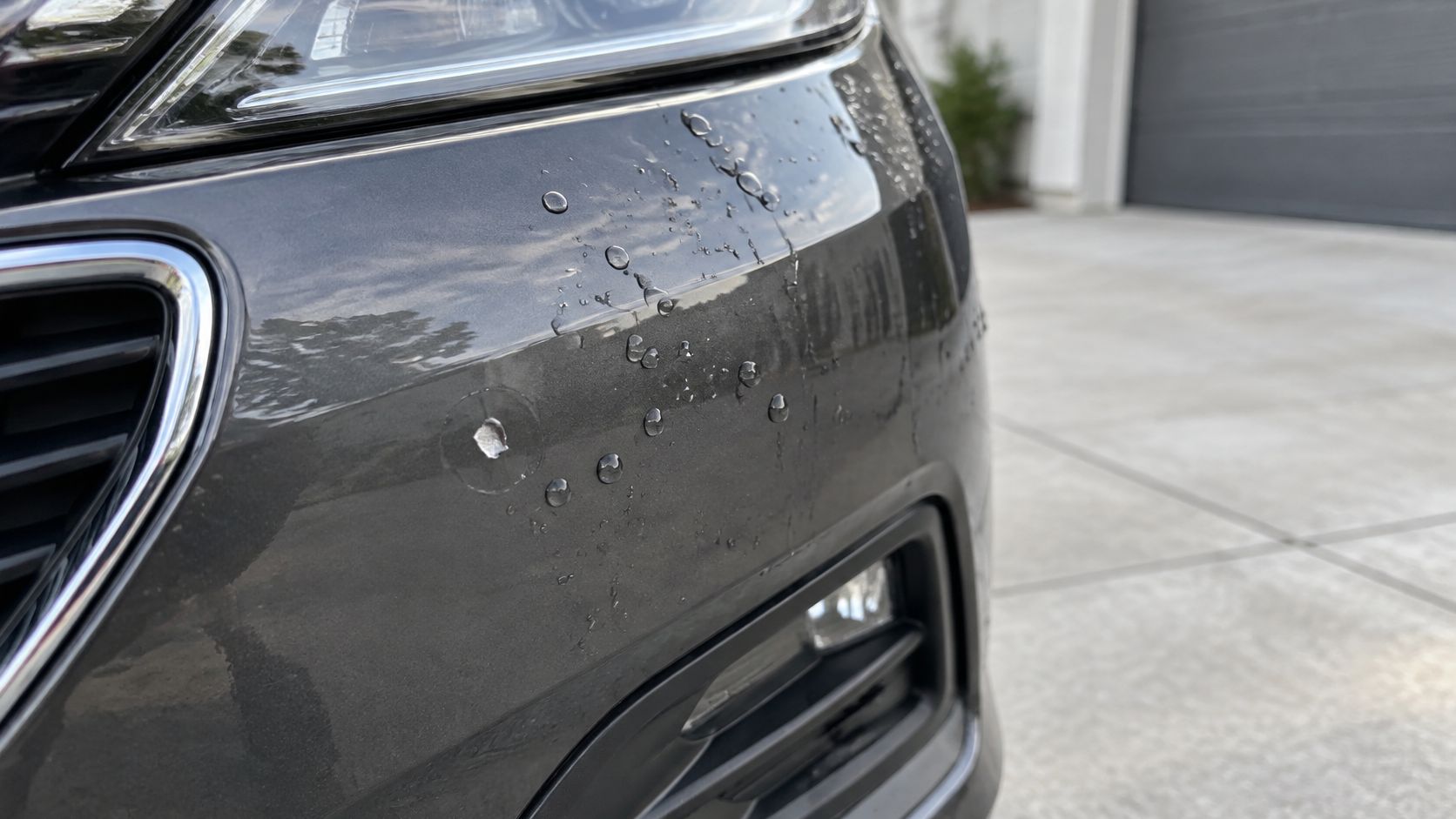
You’ve just washed the car on Saturday morning, and by Sunday afternoon there’s a fresh stone chip on the bonnet, water spots on the roof, and road film already clinging to the doors. If you’re weighing up ceramic coating vs PPF in Perth, that mix of damage is exactly why the choice gets confusing. One product is built for impact. The other is built for surface behaviour, gloss and easier washing. Buying the wrong one doesn’t mean you’ve wasted your money, but it does mean the damage you care about most can still happen.
I wouldn’t decide this car by car. I’d decide it panel by panel, starting with where stones hit, where you park, how long you’ll keep the car, and what the warranty really covers.
Not sure which panels need film? Book a panel by panel paint assessment today.
How Do Ceramic Coating and PPF Compare at a Glance?
PPF is a physical thermoplastic urethane film bonded over the paint, while ceramic coating is a thin chemically bonded layer over the clear coat, so neither is a simple upgrade of the other. The Bonafide Research Australian ceramic coatings market assessment describes ceramic coating as valued for gloss, water beading, contaminant repellency and reduced washing effort, not as a substitute for a physical impact barrier against stone chips. PPF adds a thicker sacrificial layer to selected painted areas such as front bumpers, bonnet leading edges and mirrors.
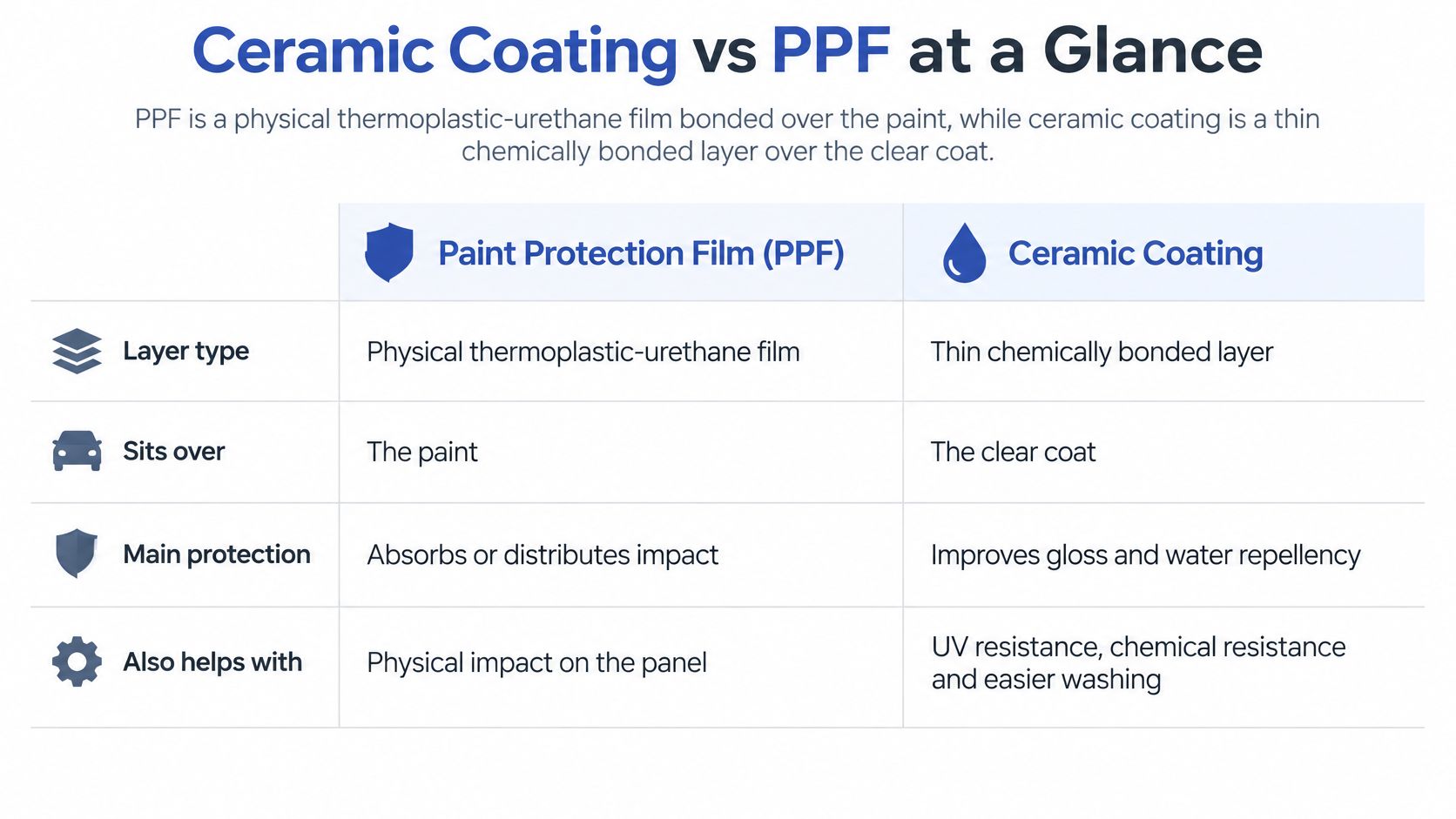
Ceramic Coating and PPF at a Glance
| Criterion | Ceramic coating | Paint protection film |
|---|---|---|
| Core mechanism | Chemically bonded layer over the clear coat | Thermoplastic urethane film bonded over the paint |
| Typical thickness | Much thinner than film, not a physical barrier | About 150 to 200 microns |
| Stone chip protection | Limited, coating hardness doesn't stop rock impact | Designed to absorb stone chips and road debris |
| Gloss and water beading | Strong gloss enhancement and hydrophobic beading | Gloss depends on film finish, beading is secondary |
| Starting price in Australia | From AUD 850 for packages | From about AUD 1,500 for front end installation |
| Stated durability | 5 to 7 years, per installer claims | 10 year consumer warranty on some films |
| Day to day upkeep | Easier washing, prompt contaminant removal still needed | Careful washing, regular checks of film edges |
| Reversibility | Needs professional removal before film is fitted | Removed by an installer, with some risk to paint |
Those starting prices come from installer reports in different Australian locations, so treat them as reference points, not Perth quotes. Vehicle size, paint condition and correction work will move the final figure.
Want a price based on your actual panels? Request a panel by panel quote today.
The working rule is simple. There’s no overall winner, only a match between the damage you fear most and the protection you buy. If chips keep you awake, film belongs in the conversation. If washing effort, gloss and contamination are the main annoyance, ceramic coating usually makes more sense.
Explore paint protection options
Which Damage Does Each One Actually Stop?
Start with the stone chip, because it exposes the biggest myth in this comparison. A coating can carry a pencil hardness rating above 9H and still fail against a rock thrown up at freeway speed. That rating measures scratch marking under a standardised pencil test. It doesn’t mean the thin bonded layer can absorb impact energy before the paint underneath fractures.
OptiVan’s Australian comparison of ceramic coating and PPF puts PPF at typically about 150 to 200 microns thick and describes it as designed to absorb or distribute damage from stone chips, road debris, scuffs and minor abrasions. Premium films may also use heat activated self healing topcoats for light surface marks. Ceramic coating, by contrast, improves gloss, water repellency, UV and chemical resistance, and wash efficiency.
Worried about freeway stone chips? Book an inspection of your high impact panels today.
Threat by Threat Protection
| Threat | Ceramic coating | Paint protection film |
|---|---|---|
| Stone chips on bonnet and bumper | Not stopped, a stone can damage paint under the coating | Absorbs most impacts, the main reason to choose film |
| Light swirls and scuffs | Little physical protection, gloss may look better | Self healing topcoats on premium films can heal light marks |
| Road film and brake dust | Reduces adhesion, easier to wash off | Film surface cleans with ordinary washing, no repellency claim |
| Bird droppings and bug residue | Hydrophobic surface, prompt removal still needed | Protects paint beneath, prompt removal still needed |
| UV fading and chemical exposure | UV and chemical resistance is a core benefit | UV resistant construction per Australian technical information |
| Water spots and mineral deposits | Reduced bonding and easier removal, spots still possible | Doesn't prevent all staining, spots still need removal |
For Perth sun specifically, it’s worth reading how ceramic coating performs against Perth sun exposure before assuming any coating makes outdoor parking consequence free. UV resistance helps slow clear coat degradation, but it doesn’t cancel heat, mineral water or contamination left baking on the surface.
Park outdoors every day? Ask for a protection plan matched to your parking conditions.
The practical split follows the table. Put PPF where impact risk concentrates, including the leading bonnet, bumper, mirrors, guard edges and door cups. Put ceramic coating where the goal is cleaning ease and gloss across the wider painted surface. A garaged car doing short suburban trips faces a different threat mix from a ute running regional roads weekly, and your spend should reflect that.
If a product claim doesn’t name the failure mode it prevents, treat it as marketing, not protection.
See how coating handles Perth sun
How Long Does Each Last and What Warranty Backs It?
Durability isn’t a single number. It’s a set of conditions covering installation quality, exposure, washing method and what the warranty excludes. The 3M Australia PPF Series 150 product page advertises a 10 year consumer warranty, subject to the manufacturer’s warranty conditions and authorised installer requirements. That figure doesn’t promise protection against every type of damage.
Ceramic coating packages commonly carry stated protection of 5 to 7 years, but real world life depends on contamination removal, washing method and sun exposure. If you’re comparing claims, this guide on how long ceramic coating lasts is useful background before you accept a headline figure at face value.
Comparing warranty claims? Bring the paperwork in and get the exclusions explained plainly.
Durability and Warranty at a Glance
| Option | Stated durability | Warranty basis | What shortens it |
|---|---|---|---|
| Ceramic coating | 5 to 7 years, per installer claims | Installer terms on the quote, no confirmed figure | Neglected contamination, abrasive washing, skipped decontamination |
| PPF (3M Australia Series 150) | 10 year consumer warranty | Authorised installer, manufacturer conditions, listed exclusions | Edge lifting, staining, harsh chemicals, poor maintenance |
Consider two Perth cars. One sits outside all year near the coast, gets washed monthly and collects bird droppings between washes. The other sleeps in a garage and does weekend kilometres. The same coating won’t age the same way on both. A high mileage rideshare vehicle adds frequent washing, passenger scuffs and constant road film, so its protection wears against a harsher duty cycle again.
Keeping your car long term? Book a durability assessment based on how you actually drive.
Before you pay, read any warranty with four questions in mind.
- Who issues it: Confirm whether the manufacturer, the installer or both stand behind the work.
- What’s covered: Ask specifically about adhesion failure, edge lifting, staining and yellowing.
- Does it transfer: Check whether coverage passes to a buyer if you sell.
- What care is required: Get the washing and chemical rules in writing, not verbally.
What Does Each Option Really Cost in Perth?
Starting Prices by Coverage Level
| Option | Starting price (AUD) | Stated protection | Best coverage use |
|---|---|---|---|
| Ceramic coating package, per Protekt Auto's 2026 pricing | From 850 | 5 to 7 years stated | Gloss and easier washing across painted panels |
| Full front PPF, same installer report | From 1,750 | 10 year warranty | Bonnet, bumper and front guards on freeway driving |
| Front end PPF, per J Bros 2026 Australian pricing | From about 1,500 | Film warranty term confirmed on your quote | Budget impact protection on the most exposed panels |
| Track pack PPF, per Mirror Finish Detail's 2026 price guide | From 4,000 plus GST | Film warranty term confirmed on your quote | Bonnet, bumper, guards, mirrors, A pillars and lower side skirts |
| Full body PPF, same J Bros report | Over 5,000 | Film warranty term confirmed on your quote | Whole car impact protection for prestige or long term ownership |
These are reference points from installers in different locations, not Perth quotes. Your final price depends on vehicle size, paint condition and whether correction is needed first. For local budgeting, work through this ceramic coating price guide for Perth drivers before comparing quotes line by line.
Need a Perth price, not an interstate estimate? Request your panel by panel quote today.
The hidden cost drivers catch people out. Paint correction before either product adds labour when swirls, oxidation or bonded contamination are present, because coating or film over defects locks them in. Removing an existing ceramic coating before film is fitted is another paid step. Applying ceramic over film later adds product and labour again, so sequencing decisions made cheaply today can cost you twice.
A track pack figure looks steep until you notice it covers only high risk panels. The cost per protected area is lower than a full body number suggests, and the unprotected panels can still receive ceramic coating. That’s the economic logic of the panel by panel approach. You’re buying expensive impact protection only where impacts concentrate.
Working to a set budget? Ask which panels give you the most protection per dollar.
Frame it by budget tier. Ceramic coating is the lower entry price for gloss and easier washing. Front end PPF is the entry point for genuine chip protection. Full body film is a long term or prestige decision, and I’d only recommend it when the car’s value and your ownership horizon justify covering panels that rarely take a hit.
Which Option Looks Better and Is Easier to Maintain?
Neither product makes paint damage proof, and the fine print says so. Detail X’s published Australian protection terms caution that PPF may not prevent all impacts, punctures, staining, lifting, edge wear, harsh chemical damage or poor maintenance damage. The same terms note ceramic coating doesn’t prevent all scratches, stone chips, water spots, etching or staining. Anyone selling you near zero upkeep is skipping that page.
On appearance, ceramic coating adds gloss and a slick finish across the painted surface, which is why coated cars look freshly detailed after a wash. PPF’s look depends on the film finish and how cleanly it sits at edges and seams. A well installed film is hard to spot. A poorly finished edge collects grime and announces itself.
Want the gloss without the guesswork? Book a wash and paint assessment today.
Upkeep is where both products live or die. Bird droppings, bug residue and tree sap need prompt removal on either surface, because hydrophobic behaviour buys you time, not immunity. Some aftercare terms also restrict washing, harsh chemicals, pressure washing or heavy rain during curing. If you can’t follow ideal aftercare, PPF is more forgiving against stone chips, while coating is better understood as a cleaning and chemical resistance aid.
Follow a safe method such as these seven steps for washing a ceramic coated car, and wash with controlled water use. The ACT water conservation requirements for vehicle detailing identify 105 litres per vehicle as a best practice target and state high pressure low volume cleaners should have a flow rate of 10 litres per minute or less.
Not confident washing a coated car at home? Book a careful hand wash instead.
Runoff matters too. Victorian EPA vehicle washing guidance advises washwater must not flow into stormwater drains because it can carry grease, oil, detergent, paint residues, metals and litter. Treat those interstate figures as benchmarks and check current Western Australian council rules for your area.
Keep the rhythm simple. Hand wash regularly with non abrasive technique, inspect film edges monthly for lifting or trapped grime, and plan periodic decontamination before any reapplication. That routine does more for real world lifespan than any headline durability claim printed on a brochure.
Can You Combine PPF and Ceramic Coating Safely?
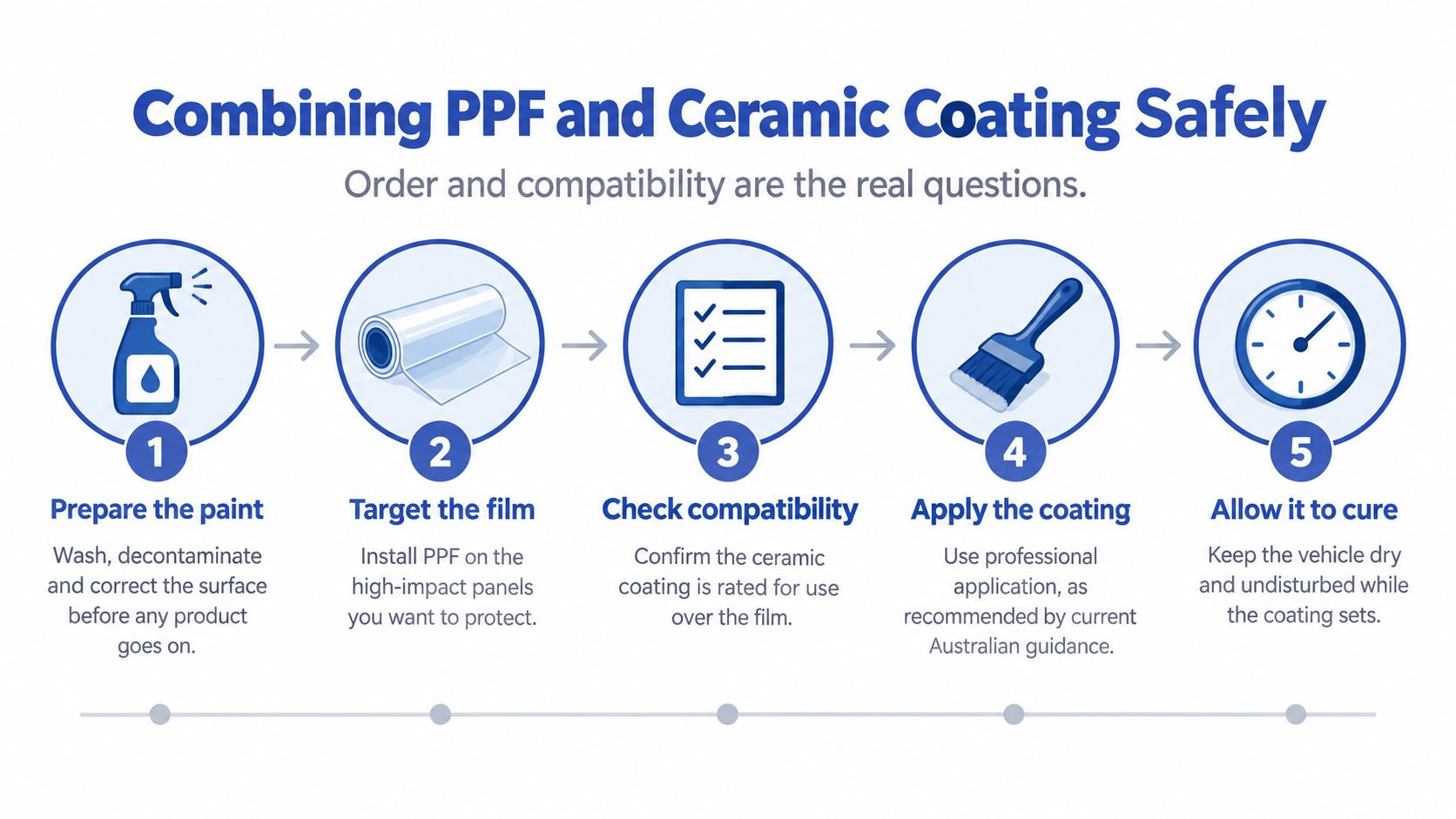
Yes, in a targeted way, but order and compatibility are the core questions. The 3M Australia paint protection film information supports ceramic coating being applied over its PPF after installation, while current Australian guidance states existing ceramic coating should be professionally removed before PPF is installed. Coating first and filming later is therefore the expensive sequence. Film needs a clean, compatible surface, and coating over film is a separate compatibility decision, not an automatic step.
Planning both products? Book the sequence consultation before any coating goes on.
The Sequence That Avoids Rework
- Inspect and map: Assess the paint and mark the impact prone panels.
- Correct the paint: Decontaminate, clay and cut and polish where swirls or bonded contamination exist.
- Confirm removal: Check whether any existing coating must come off before film.
- Install PPF: Fit film to the bonnet, bumper, mirrors and guard edges.
- Check compatibility: Confirm the installer approves ceramic coating over that specific film.
- Apply ceramic coating: Coat the remaining paint and, where approved, the film.
- Record responsibility: Note who warrants adhesion, edge lifting, staining and future removal.
The risk sits in step seven. A split installation can mean split warranty responsibility, where the film installer blames the coating and the coating installer blames the film prep. Get both responsibilities in writing before you pay, including who pays for removal if a panel needs repair later.
Want one clear warranty conversation? Ask for the combined plan in writing today.
Practical rule: If you think you might want film within the next year, don’t coat first. You’ll pay to remove what you just paid to apply.
Which Protection Should Your Car Get and How Do You Book It?
Daily Drivers and Families
If the car commutes on the freeway and parks outdoors, I’d put PPF on the bonnet, bumper and mirrors and ceramic coating on the rest. The film handles the chip zone, the coating keeps school run grime and road film easier to shift. For mostly garaged urban use with short trips, ceramic coating alone is often enough, because your impact exposure is low and washing ease delivers the daily benefit.
Family car doing freeway kilometres? Book a front panel protection assessment today.
Prestige and Enthusiast Owners
For a car you’ll keep long term, full body PPF protects original paint everywhere, but it’s the highest spend. The alternative is PPF on high risk panels with ceramic coating over the remaining paint for finish depth. Either way, careful hand washing matters most, because enthusiasts notice wash induced swirls long before they notice anything else. Don’t undo expensive protection with a gritty sponge.
Rideshare, Delivery and Fleet Operators
For working vehicles, I’d choose front end PPF for chip control at a predictable cost per vehicle, with ceramic coating to speed up washing between shifts. Downtime weighs as heavily as protection here. A vehicle off the road for multi day full body film loses earning time, so targeted coverage that installs faster usually wins the business case.
Running a work vehicle? Ask for a fast turnaround protection plan today.
Sellers and Lease Returns
If you’re preparing for sale or lease return, ceramic coating suits the goal. It improves appearance and washing ease, which is what a buyer sees at inspection. Add PPF only where a lease condition or an expected buyer makes documented chip protection worthwhile. Spending prestige money on a car you’re handing back rarely returns its cost.
The principle underneath all four cases is the same. Road and parking conditions decide the answer more than the car’s price. A modest hatch doing daily freeway kilometres behind trucks needs impact protection more than an expensive coupe that leaves the garage twice a month.
Your Decision Checklist
- Choose PPF on high impact panels: Freeway driving, outdoor parking, regional roads or a prestige car kept long term.
- Choose ceramic coating: Gloss, washing ease and a sale ready finish matter most, with limited chip risk.
- Choose the combination: You want front end chip protection plus cleaning ease across the remaining paint.
- Choose neither yet: Paint needs correction first, or you’re selling soon and won’t recover the spend.
Matched your car to a checklist option? Book the corresponding service online today.
In Westminster, Prime Shine Hand Car Wash at 9/436 Wanneroo Rd, WA 6061 offers Ceramic Coating and Cut & Polish paint correction, which can prepare paint before protection goes on. Starting prices are published and online booking is available seven days a week. When you enquire, confirm whether PPF is installed in house or arranged through a partner, and request a panel by panel quote because prices vary with vehicle condition.
The studio’s record includes 200+ Google reviews, 5+ years in service and 2,500+ vehicles detailed, all using hand wash methods without automated brushes. That matters for coated and filmed cars, where wash technique protects the investment you just made.
Ready to protect the right panels first? Book your paint assessment online now.
Whether your car needs ceramic coating for gloss and easier washing, correction before film, or a panel by panel plan that combines both, Prime Shine Hand Car Wash can assess your paint in Westminster and give you a straight quote based on how you really drive and park. Book online seven days a week, bring your warranty questions with you, and leave with protection matched to the damage your car really faces.