







You washed the car on Sunday. By Thursday the rims are matte grey again, and a finger around the barrel comes back black. That film is not ordinary road dirt. It is brake dust, and Perth traffic plus coastal air makes it stick faster than a quick rinse can handle.
Ceramic coating rims is a contamination-control treatment. It makes washing easier and slows how brake dust bonds to the finish. It does not stop kerb rash, stone chips, or corrosion that has already started.
Why Perth Rims Turn Grey So Fast?
A freshly cleaned rim can look dull again after a week of stop-start driving. As the brakes heat up, friction material wears from the pads and iron particles shed from the rotors. The particles settle across the wheel face and around the caliper, mixing with road grime and coastal moisture to form a dark film. Left in place, this contamination can etch the finish.
Perth’s coastal air adds salt to the mix, while damp grime can keep parts of the wheel wet after the rest of the car dries. Wash the wheel face, barrel and accessible brake components regularly, before dirt becomes encrusted.

What the grey film does to the finish
The dust sits on lacquer, paint or powder coat. Iron particles can oxidise and leave the surface rougher, so each wash may need more effort. A coating can make contamination easier to remove, but it will not prevent kerb rash, stone chips or corrosion already present.
A coating controls what sticks. It does not stop a kerb, a stone, or damage already in the metal.
If the rims look tired only between washes, coating may help with upkeep. Cracks, bends or corrosion need attention first, not a coating.
Check the rim before you book a coating. Grey dust is a cleaning problem. Cracks, bends, and deep corrosion are a wheel problem.
Explore wheel coating in Perth
What a Ceramic Coating Actually Does to a Rim?
A wheel coating bonds to the wheel’s existing surface layer. It forms a barrier that helps resist brake-dust buildup, road grime, salt, tar, and water. It does not soak into alloy or rebuild damaged areas. The Australian nano-ceramic description outlines this bonding process, but the practical result depends on having a clean, sound finish before application.
The coating sits over the finish already on the rim. It will not fill etching, remove corrosion, or restore burnt clear coat. Dirt and contamination left behind remain beneath the coating, so clean and prepare the wheel first rather than sealing grime in.

Why water behaviour changes the wash
Hydrophobic behaviour helps make routine washing easier. Water beads and runs off, taking some lighter particles with it, so less forceful scrubbing is needed. The rim still needs regular washing, and heavier brake dust may need an appropriate wheel-cleaning product. Australian wheel-protection guidance notes that wheel-cleaning products can be used on coated wheels.
- Less adhesion: brake dust and road film are less likely to grip the coated surface.
- Easier rinse-off: water can remove lighter grime before brushing is needed.
- No repair: kerb rash, etching, existing corrosion, and clear-coat failure remain.
Practical rule: coat a clean, sound finish. Coating controls contamination; it does not prevent kerb damage, stone chips, or repair existing corrosion.
If the barrels are still rough after a wash, decontaminate first. The coating bonds to the surface underneath, so remove embedded contamination before application.
Ceramic Coating Compared with Wax and Wheel Sealants
After a week of stop-start traffic, the front rims can be coated in brake dust while the rears still look presentable. That difference matters more than a hardness rating: front wheels often take more brake heat and contamination, particularly on performance, towing, or frequently driven cars.
Wax, sealant and ceramic coating all make cleaning easier for a time, but they do not last equally well under those conditions. Wax is quick to apply and suits a short-term gloss boost. A liquid car wax is a different choice from protection made for wheels. Sealants generally last longer than wax, though heat and repeated washing wear them down. Wheel-specific ceramic products are generally formulated for the heat and contamination found around brakes, but advertised durability varies with preparation, curing, brake load, and wash chemistry.
| Option | Heat Tolerance | Typical Durability | Cleaning Effort | Best For |
|---|---|---|---|---|
| Carnauba or liquid wax | Low, may soften near brake heat | Short, often weeks | Moderate, reapplied often | A quick gloss between proper jobs |
| Wheel sealant | Better than wax, still limited | A few months if the wheel stays cool | Lower until the film wears | Newer rims with light braking |
| Wheel-specific ceramic | Designed for brake-heat exposure | Often marketed around a year or more, depending on conditions | Lowest while the bond remains | Daily drivers that collect brake dust |
Those durability ranges are guides, not guarantees. A cool rear wheel may keep a sealant longer than a front wheel exposed to hard braking. Wheel-specific ceramic usually outlasts wax and sealant on hard-working front rims, provided the surface is prepared and the coating is maintained with suitable wash products.
None of these options prevents kerb rash, stone chips or existing corrosion. A coating controls how readily dirt and brake dust cling, so routine cleaning takes less effort. It does not repair physical damage or remove the need to wash the wheels.
Choose for the wheel that gets hottest. A front rim in Perth traffic has a different workload from a lightly used rear, and the coating still needs sensible maintenance.
Which Wheel Materials and Finishes Suit Coating?
Painted alloy rims are usually suitable for ceramic coating once their surface is sound. Powder-coated wheels can also take a coating if the finish is intact and not chalking. Lacquer and clear coat need a closer check: lifting or failed lacquer will not hold a fresh layer reliably. Polished or bare metal is more delicate, and a machined face should only be coated while its finish remains sound.
On Australian alloy rims, brake dust can lodge in lacquer, painted, and powder-coated finishes. As iron particles oxidise, they can increase staining and roughness and contribute to corrosion. A hydrophobic layer helps more contamination rinse away, but it cannot restore the original finish or protect against kerb rash, stone chips, or existing corrosion. The wheel’s finish and condition still set the limits.

Why the wheel underneath still matters
Australia has regulated light-alloy road wheels for more than 50 years. The first edition of AS 1638 was approved in 1974. AS 1638-2008 was approved on 1 February 2008 and published on 6 March 2008. The standard addresses fracture toughness, intergranular corrosion, stress corrosion, and surface corrosion, and distinguishes aluminium-alloy wheels from magnesium-alloy wheels. Its specified aluminium alloys were selected for consistent casting, strength, toughness, and corrosion resistance.
A coating sits over the existing finish. It cannot repair structural damage or make a cracked, distorted, or non-compliant wheel safe.
Coat sound paint, powder coat, or intact lacquer. If the finish is lifting or the rim is distorted, have it assessed before applying a coating.
Explore ceramic coating options
How Ceramic Coating Is Applied to Wheels?
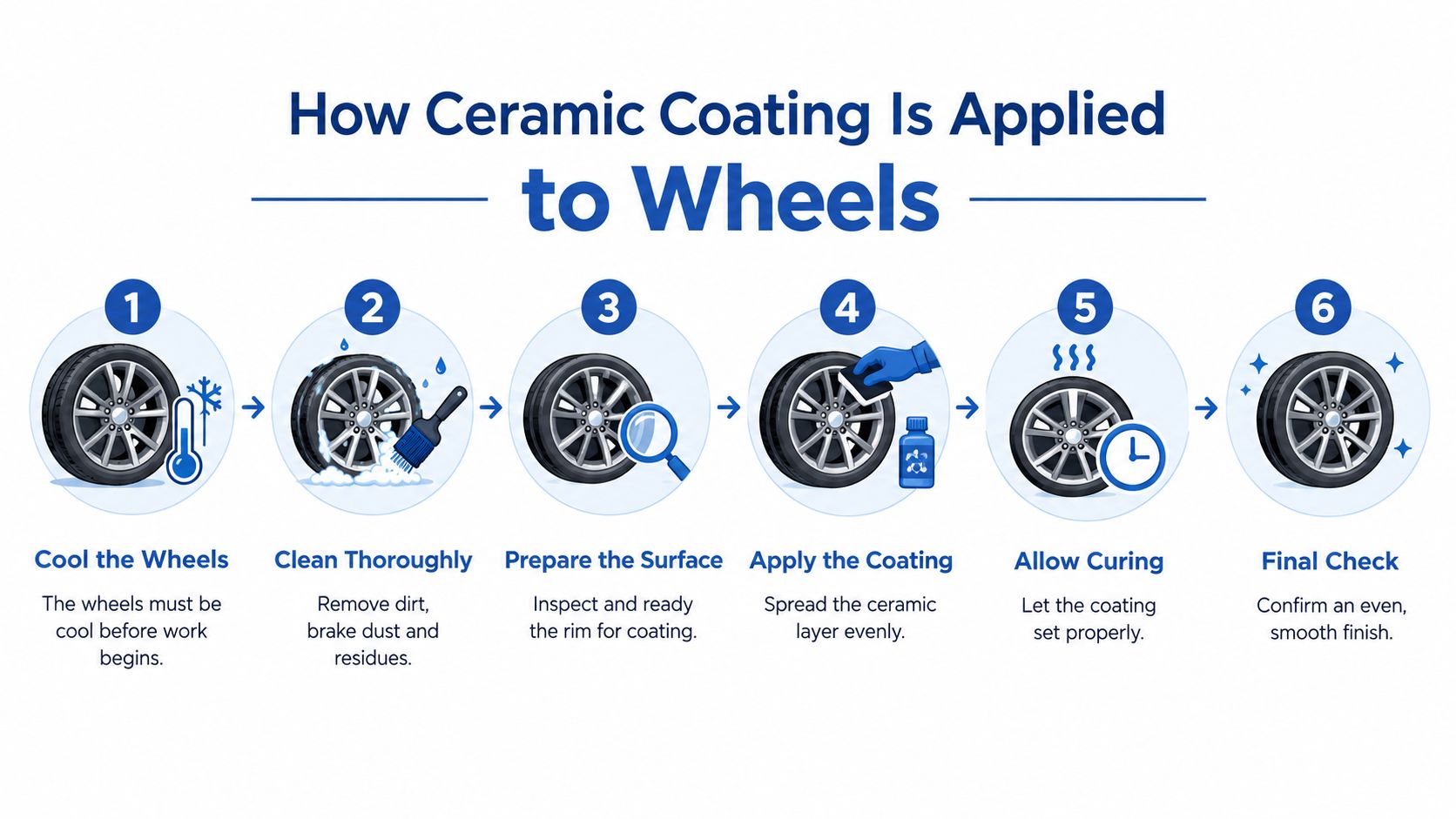
The result is decided before the coating touches the rim. Wheels must be cool. Iron fallout has to come off, then clay or a chemical decontamination where the surface still feels rough. Oxidation and bonded residue are polished only as far as the finish allows. The last wipe should leave nothing behind, because trapped dust stays under the barrier.
The sequence that actually matters
- Cool the wheels. Heat makes cleaners flash off and coatings grab unevenly.
- Remove iron and brake dust. A wash alone leaves metallic fallout in the pores of the finish.
- Decontaminate and correct. Clay or chemistry, then polish only the oxidation you can safely remove.
- Wipe residue-free and coat. Spread a wheel-specific product evenly, panel by panel.
- Cure to the data sheet. Detergent and rain wait until the maker’s cure window has passed.
- Check the finish. High spots and missed edges show up once the wheel is viewed in daylight.
A wheel-specific formula is preferable to a general paint coating because it is built for brake dust, road grime, hydrophobicity, and high temperatures. A DIY kit can look fine on a new, undamaged rim if every stage above is done properly. It falls short when fallout is embedded, lacquer is thin, or the owner rushes the cure. Polishing before coating is the same discipline as paint correction that protects clear coat: you remove only what the surface can spare.
Do not coat a hot, dusty wheel at the end of a driveway wash. Cooling, iron removal, and a residue-free wipe decide whether the bond is worth having.
DIY Wheel Coating or Professional Application
The choice comes down to three questions. How much preparation do these rims need? Is there rash, oxidation, or corrosion already? Do you want a documented cure, or are you happy to manage that yourself?
DIY suits newer rims with an intact finish, when you will do full iron removal and accept a service life that depends on your prep and your wash habits. It is a poor fit when barrels are stained black, lacquer is peeling, or a kerb has cut through to metal. Coating over those defects hides them until the failure gets worse.
What a workshop visit should include
A useful booking inspects cracks, bends, and corrosion before any coating is discussed. Preparation should cover cooled wheels, iron removal, decontamination, and a residue-free surface, then a wheel-specific product cured before the car goes back into rain or a harsh wash. Hand washing matters here, because brush tunnels and aggressive acids shorten a coating and mark exposed lacquer.
Prime Shine Hand Car Wash, at 9/436 Wanneroo Rd, Westminster, is one local option for that kind of work. The business hand-washes only, with no automated brushes on the wheels, and offers interior and exterior detailing, paint correction, and ceramic coating aimed at durability, water beading, and easier maintenance. Starting prices are published, booking is online, and the workshop is open seven days.
Ask whoever you book how they remove iron, whether damaged rims are coated or referred for repair, and when the car can be washed again. Those answers matter more than a durability number on the bottle.
Choose DIY for clean, undamaged rims you are willing to prep fully. Choose a detailer when contamination is bonded or the wheel needs an honest inspection first.
Maintaining Coated Rims and Realistic Longevity
A coated rim still needs regular washing. Brake dust builds up quickly on Perth roads, especially on front wheels that handle more braking heat. The coating helps grime release with less effort, but dust left in place can still become harder to remove. Rinse before it builds into a stubborn layer.
Use pH-neutral shampoo and soft wash media. Acidic or caustic cleaners and abrasive brushes can wear the coating or mark exposed lacquer. Rinse the wheel face and inner barrel, where dust and road grime collect out of sight. Follow these safe washing steps for a coated car to keep contact gentle and avoid scrubbing dry contamination.
What still has to be cleaned by hand
A coating reduces the effort needed to clean a wheel; it does not remove the need to wash it. Brake dust and iron fallout still need prompt attention, and bird droppings should be washed off rather than left to sit. Use a suitable wash method and soft contact instead of reaching for a harsh cleaner when grime does not lift straight away.
Coating life depends on preparation, curing, wheel position, brake use, and the chemicals used during later washes. Treat any advertised service life as a guide, not a promise. Front wheels often face more heat and brake dust than rear wheels, while a car used heavily around Perth may need more frequent cleaning than one driven occasionally.
- Regular rinse: wash before brake dust has time to build up or mark the finish.
- Neutral shampoo: avoid acidic or caustic wheel cleaners on coated faces.
- Soft media: use a wash mitt or soft brush, and never wipe dust off a dry wheel.
- Prompt cleanup: remove bird droppings and iron-rich fallout before they sit for long.
- Separate repairs: coating does not fix kerb rash, stone chips, or existing corrosion. Repair damage before recoating.
Wash gently and regularly. Harsh chemicals and abrasive scrubbing can shorten the coating’s useful life, so adjust the routine to the wheel’s condition and how the car is driven.
Your Next Step for Coated Rims in Perth
Coating controls contamination and simplifies cleaning. It does not repair or armour the wheel.
Clean, undamaged rims can be coated after proper decontamination, either carefully at home or in a workshop. Rims with kerb rash, cracks, deformation, or serious corrosion need assessment and repair first. Coating should not hide a defect or stand in for a proper wheel check.
Replacement aluminium-alloy rims are treated as safety-critical parts. The National Code of Practice for Light Vehicle Construction and Modification requires replacement rims to meet an approved standard, suit the hub and axle, use the correct bolt or stud pitch-circle diameter, and be centred by the proper hub or centre-spigot method. Wheel and tyre rules in Australia have developed since 1971, covering rim design, tyre strength, inflation, speed ratings, and permitted combinations. A coating does not make an incompatible or damaged wheel roadworthy.
If the finish is sound, book a decontamination and a wheel-specific coating. If it is not, book the inspection and sort the damage before anyone talks about durability. Perth drivers can start with a ceramic coating service in Perth and ask for the wheels to be assessed before the product goes on.
Inspect first, coat second. That order keeps a maintenance layer from covering a wheel that should be repaired.
Prime Shine Hand Car Wash in Westminster hand-washes cars seven days a week and can assess alloy rims before any ceramic coating goes on. The coating service is built around easier cleaning and water beading, not around hiding kerb damage or corrosion. Book a wheel inspection and coating through Prime Shine Hand Car Wash.