


You’ve washed the car, cleared out the takeaway bags, wiped the dash, and maybe even hung a freshener from the mirror. Then you close the door, come back an hour later, and that smell is still there. For a lot of Perth drivers, that’s the reason behind the search for Hand Car Wash Near Me. It isn’t only about shine. It’s about finally getting rid of a cabin smell that keeps coming back.
That smell might be old coffee in the seat foam, damp carpet under the mats, smoke in the headliner, pet oils on the rear seat, or stale air sitting in the vents. A normal wash helps with what you can see. Odour problems usually live where you can’t.
Why Does Your Car Still Smell After a Wash?
A common local pattern goes like this. A family car gets a quick clean before school pickup or weekend errands. The exterior looks better, the rubbish is gone, the mats get a shake, but the cabin still smells sour. People often assume the wash “didn’t work”, when the issue is that washing the surface and removing the odour source are two different jobs.
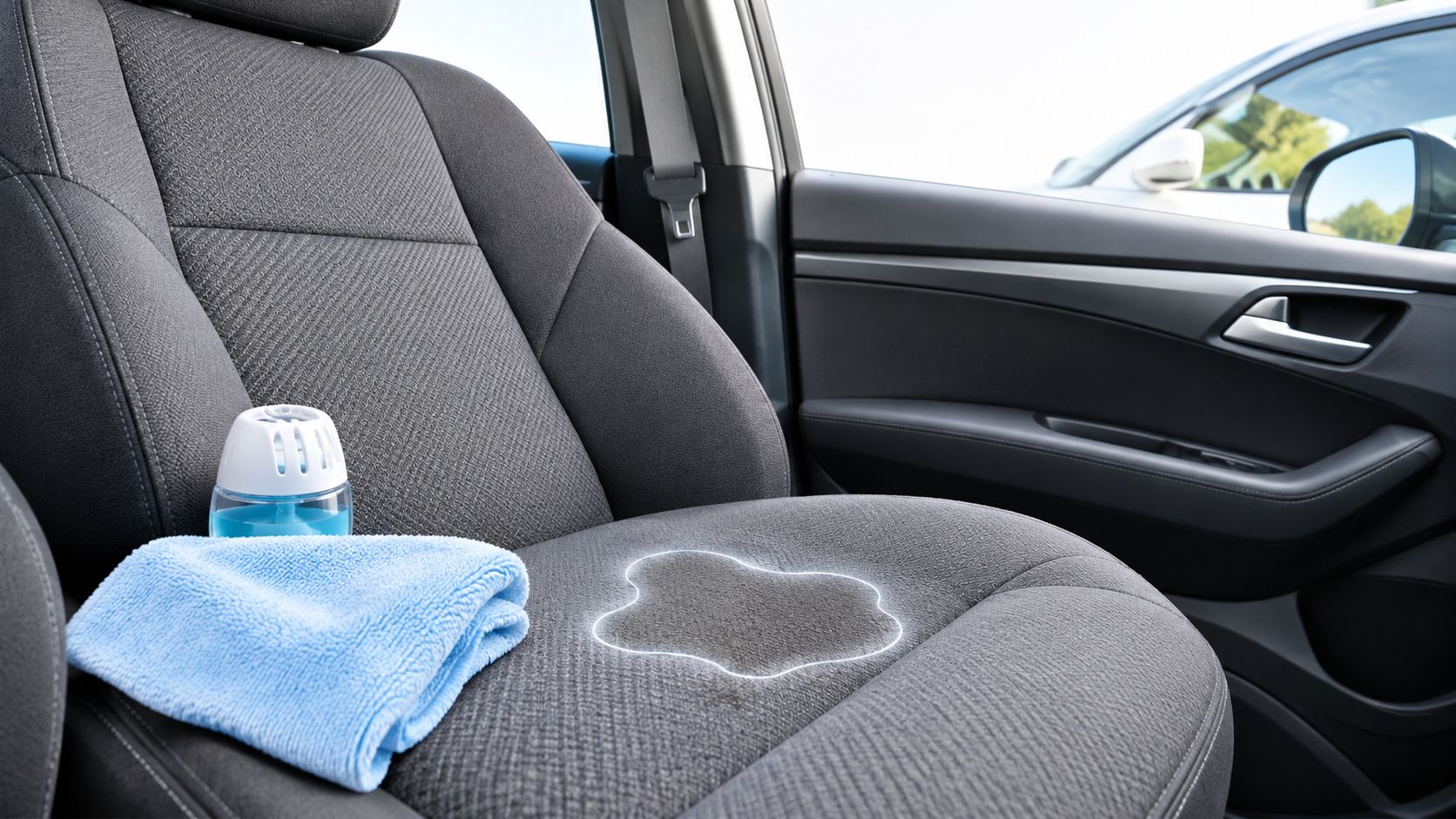
If milk tipped into a child seat weeks ago, the smell won’t sit neatly on top of the fabric waiting to be wiped away. It moves down into stitching, padding, carpet underlay, and sometimes into places you can’t reach by hand. The same goes for smoke, pet smells, and dampness. You remove the visible mess first, but the smell lingers because tiny residue remains trapped.
What a wash removes and what it leaves behind
A hand wash usually takes care of dust, loose grime, fingerprints, crumbs, and day to day buildup. That matters. It gives you a clean starting point and stops extra dirt from mixing with any treatment you use later.
But a wash alone won’t always fix:
- Seat and carpet contamination from spills
- Vent odours from stale moisture
- Headliner smells from smoke or long-term buildup
- Boot odours from sports gear, groceries, or pet bedding
Lasting freshness usually starts when you stop asking, “What smells nice?” and start asking, “What exactly is causing this smell?”
That’s why odour work usually falls into four broad options. Sprays can neutralise or mask. Enzyme treatments target organic residue. Ozone or similar treatments can help with embedded smells after a thorough clean. Charcoal helps absorb lingering odours over time.
If smoke is your main problem, it helps to read a more focused guide on removing smoke smell from your car, because smoke behaves differently from food spills or damp carpet.
There’s another local reason this matters. Australia’s vehicle fleet reached 21.74 million registered motorised road vehicles on 31 January 2024, and Western Australia accounted for 2.53 million registered vehicles according to the figures cited at Finance King’s summary of BITRE vehicle statistics. Perth has no shortage of daily-use cars collecting school spills, beach sand, wet towels, takeaway smells, and work-vehicle grime.
How Do Car Odour Eliminators Actually Work?
Most confusion starts with one simple mistake. People treat every odour product as if it does the same thing. It doesn’t.
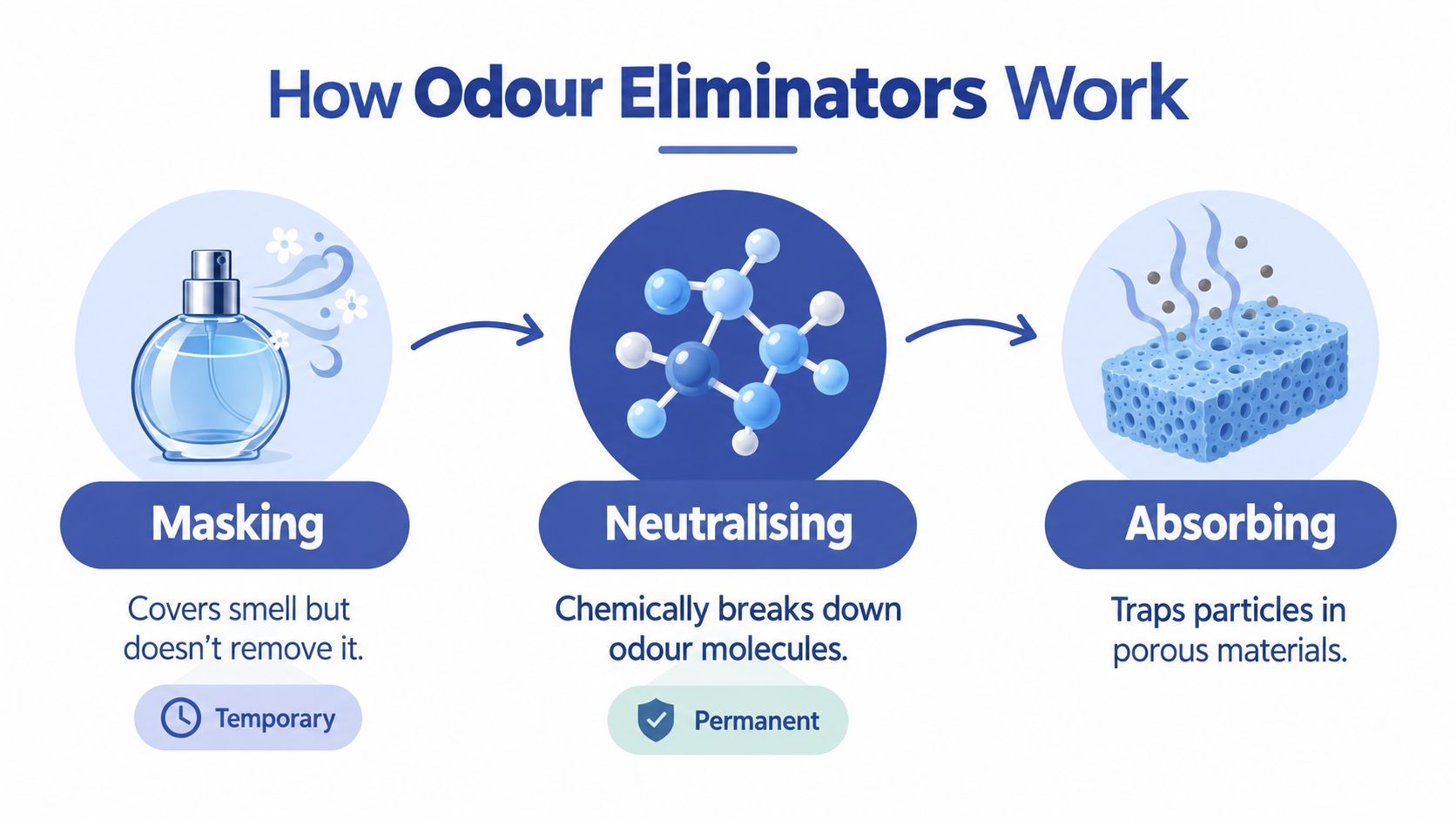
Why perfume fades but the smell returns
Think of a bad odour like muddy water in a sponge. If you spray perfume over the sponge, the sponge still holds the dirty water. For a little while, your nose picks up more perfume than stink. Then the added scent fades and the original smell comes back.
That’s what masking does. It changes what you notice, but it doesn’t always change what’s in the material.
Neutralising is different. It aims to react with the odour compounds so they no longer smell the same way. Absorbing works differently again. It draws odour particles into another material, such as charcoal. Breaking down residue is another step again, where enzymes digest the leftover organic matter creating the smell in the first place.
Why some smells cling longer than others
Porous materials are the main reason odours linger. Cloth seats, carpet, underlay, roof lining, and foam all hold onto contamination far more stubbornly than hard plastic trim. That’s why a vinyl cupholder may wipe clean fast while the carpet under it still smells days later.
A few practical factors change results:
- Dwell time matters. Some products need time sitting on the source to work.
- Airflow matters. A closed car can trap moisture and stale compounds.
- Temperature matters. Heat can make hidden odours release again.
- Soil level matters. Spraying onto dirty fabric often wastes product.
Practical rule: Remove as much physical contamination as possible before you try to neutralise the smell.
That’s where proper interior cleaning comes in. Vacuuming, extraction, and heat-based cleaning can remove material that a deodoriser alone can’t touch. If you want a plain-language look at that process, this guide on how steam cleaning a car interior works is useful because it shows why heat and agitation often come before odour treatment, not after.
The four families in plain language
Here’s the simplest way to think about them:
- Sprays work fast and are good for light, recent smells.
- Enzymes suit organic mess such as food, milk, or pet accidents.
- Ozone-style treatments suit deeper smell problems after a deep clean.
- Charcoal helps with ongoing maintenance and mild lingering odour.
None of them is magic. The right one depends on what caused the smell, where it’s hiding, and whether the material has been cleaned first.
Which Type of Odour Eliminator Should You Choose?
Choosing well is less about brand names and more about matching the method to the source. If you pick the wrong tool, you can spend time and money without changing much.
Start with the smell’s origin
If the odour comes from fresh, light, non-sticky airiness, a quick neutralising spray may be enough. If it comes from organic residue such as milk, food, or pet accidents, enzymes usually make more sense. If the smell has soaked into multiple surfaces for a long period, stronger cabin treatment may be needed after deep cleaning. If the interior is mostly clean but still gets a faint stale note between washes, charcoal is often the simplest maintenance option.
| Odour Eliminator Types Compared by Source and Use | |||
|---|---|---|---|
| Eliminator Type | How It Works | Best For | Watch Out For |
| Chemical spray | Neutralises or masks odour on contact | Mild stale smells, quick refreshes, touch points | Can fade quickly if source remains |
| Enzyme cleaner | Breaks down organic residue | Milk, food, vomit, pet accidents | Needs correct dwell time and surface prep |
| Ozone or ion-style treatment | Targets odour through cabin-wide treatment after cleaning | Embedded smoke, heavy lingering odours | Needs careful handling and ventilation |
| Activated charcoal | Absorbs odour gradually from the air | Ongoing maintenance, mild residual smells | Too slow for serious contamination |
When a spray is enough
A spray works best when the cabin is already fairly clean and the odour is light. Think takeaway smell after one trip, mild gym-bag odour in the boot, or stale air after the car has been shut up for a few hot days. It’s a quick option, but it’s often temporary if fabric or foam still holds contamination.
When enzymes make more sense
Enzymes are the practical answer for biological mess. Spilled milk, food drips, pet accidents, and other protein-based residue can keep smelling long after the visible mark fades. The cleaner isn’t perfuming the area. It’s working on what’s left behind.
That also means the area should be vacuumed or cleaned first, then treated properly. If you spray over dirt, you’re asking the product to fight through a barrier.
If the smell started with something that could rot, sour, or feed bacteria, enzyme treatment is usually the first place to look.
When cabin-wide treatment is worth considering
Smoke is the clearest example. It doesn’t sit in one neat patch. It can settle through fabric, lining, plastics, and airflow pathways. In those cases, a bigger treatment can help after interior cleaning has already removed loose contamination.
That’s also where trim care matters. If you’re treating smells inside the cabin, it helps to understand what products are safe for plastics, vinyl, and finished surfaces. This car interior protectant guide is useful for that part of the puzzle.
Where charcoal fits
Activated charcoal isn’t the hero treatment for major odour problems. It’s the quiet maintenance tool. Use it after the main cause has been cleaned and treated, especially if you want help with residual moisture feel or a faint stale cabin smell that tends to build up over time.
The commercial side of this matters too. Australian industry framing cited by BizBuyScore’s market summary notes that the hand wash and full-service segment sits at about 11% of revenue share, while self-service bays sit at 38%. That gap helps explain why many “near me” pages push convenience and price but don’t spend much time explaining where careful manual cleaning and odour work add value.
Are Odour Treatments Safe to Use With Hand Washing and Detailing?
Safe odour work is mostly about sequence, surface compatibility, and water control. Problems usually start when someone sprays first, cleans later, or uses a product that’s too harsh for the material underneath.
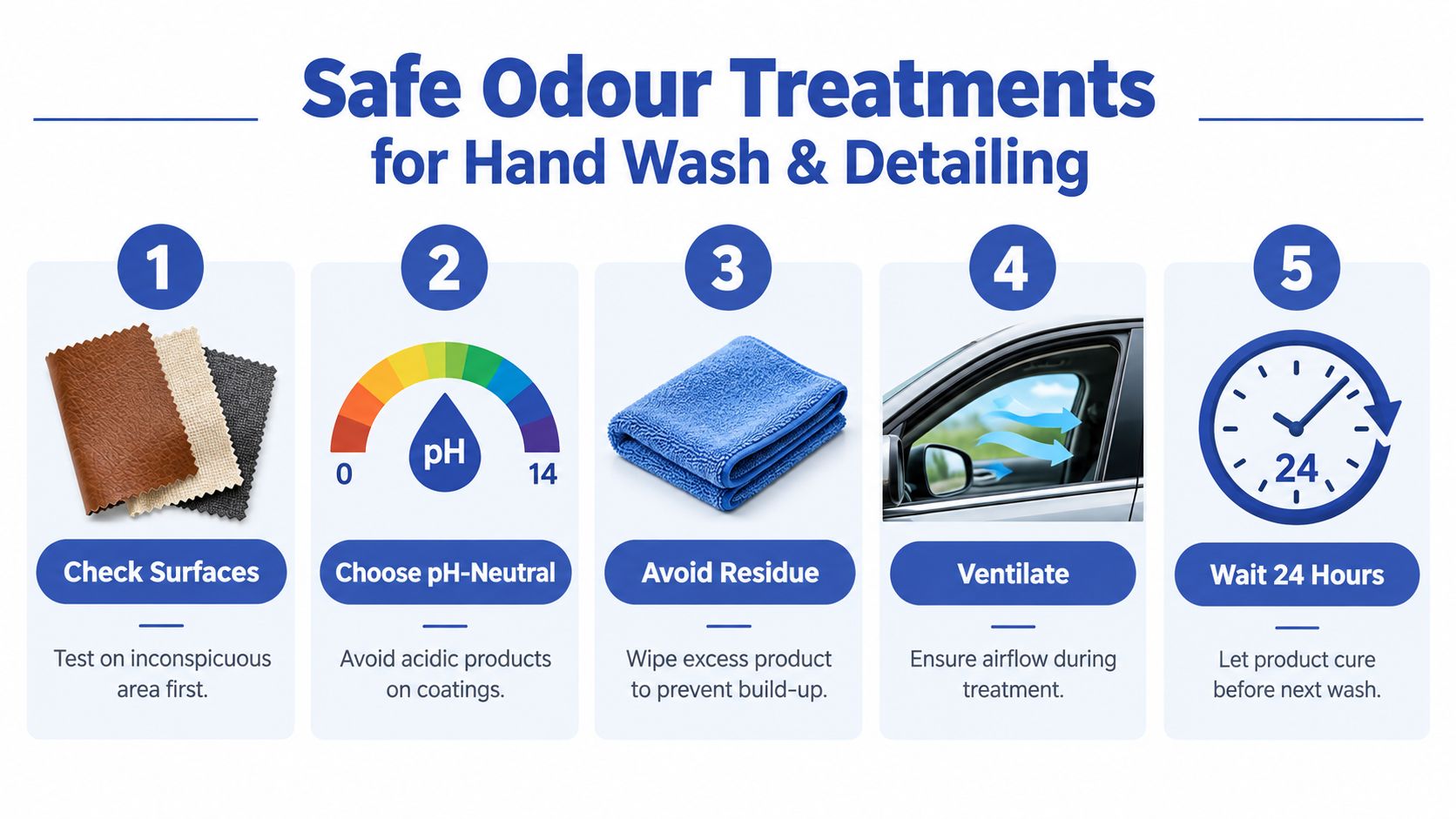
What should happen before treatment
Dry soil should come out first. Vacuum loose debris. Remove pet hair. Clean sticky residue. If the carpet is damp, address the moisture issue rather than trapping it under fragrance. Odour products work better on a surface that isn’t covered in dust, oils, or crumbs.
Then check the material. Leather, coated trims, fabric, and delicate headliners don’t all react the same way. Test in a discreet area when you’re unsure.
Why product choice matters on paint and trim
The same logic applies outside the cabin. Harsh household cleaners can create new problems while you’re trying to solve another one. Guidance cited from Drive’s article on dishwashing liquid and car washing notes that dishwashing liquid strips protective coatings from paint. For hand washing and detailing, that’s why pH-appropriate automotive products matter. You don’t want an odour fix on the inside paired with unnecessary paint wear on the outside.
A careful workflow often looks like this:
- Clean first with vacuuming, wiping, or steam where suitable
- Treat second with the odour method matched to the source
- Dry properly so moisture doesn’t restart the problem
- Protect surfaces with products suited to automotive materials
A strong smell after treatment often means one of two things. The source wasn’t fully removed, or the cabin wasn’t dried and ventilated well enough.
Why WA rules make professional wash sites more practical
This is the part many local pages skip. In Western Australia, washing practices and wastewater handling aren’t just convenience issues.
The Water Services Regulations 2013 state that a person must not wash a motor vehicle except to the minimum extent necessary to enable the vehicle to be driven safely, and then only by using a bucket of water and a cloth, as set out in the Western Australian regulations document. That’s a strong reason many drivers look beyond driveway washing when they want a more complete clean.
Perth guidance also says car-washing wastewater must not go into stormwater drains and should be directed to sewer if it meets requirements, according to the City of Perth stormwater guidance. For a proper wash-down setup, WA water quality guidance says cleaning should occur on a contained impervious pad that drains to detention and treatment facilities, with high-pressure water, steam cleaning, or scrubbing listed as first-choice methods in the WA wash-down facility guidance.
How Do You Match the Right Solution to the Odour Source?
The fastest way to make the right choice is to ask three questions. Where is the smell strongest? What caused it? How long has it been there? Those answers usually point you toward the right method.
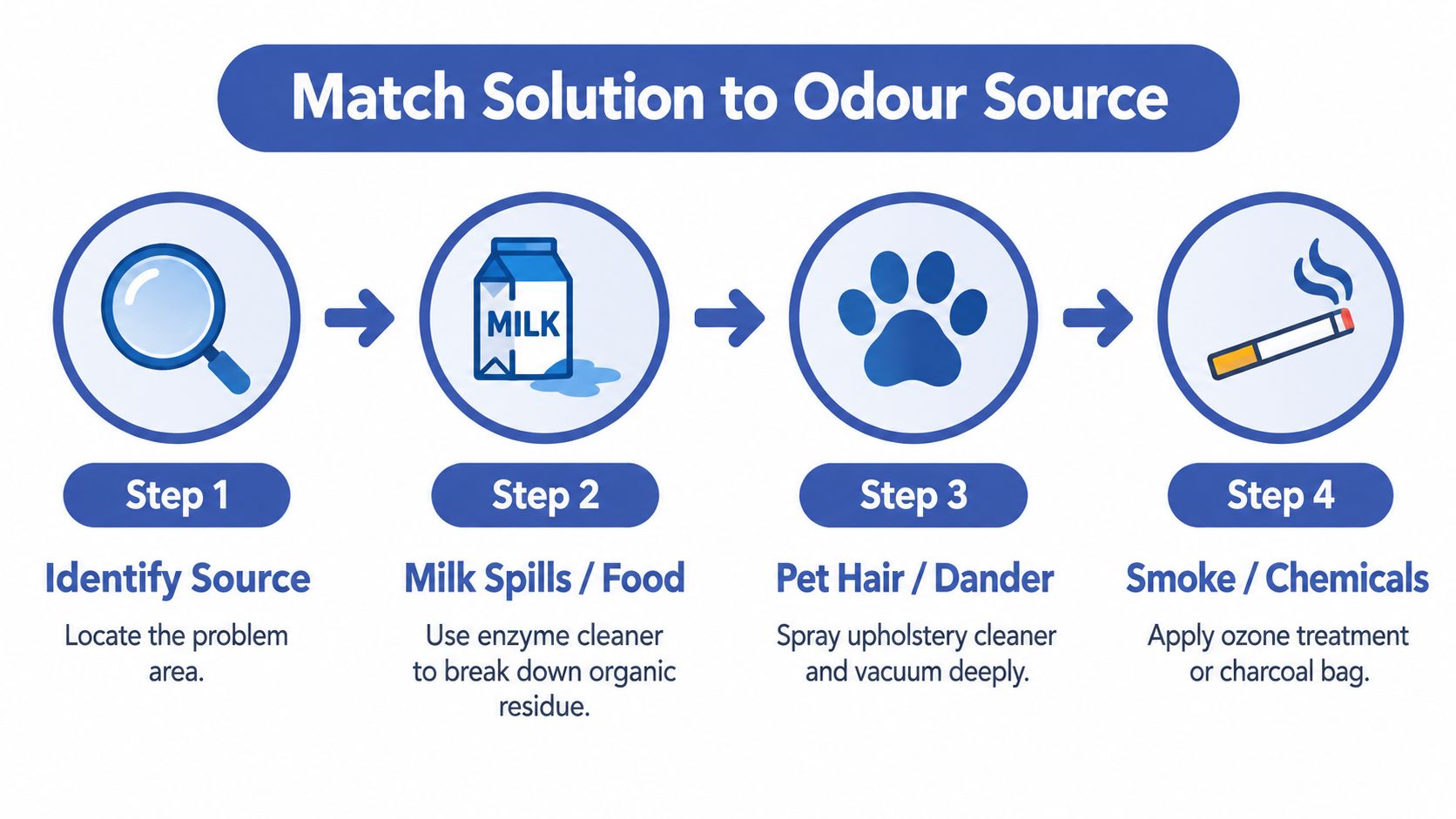
Four common Perth-style scenarios
Milk or food spill in the back seat
This is classic enzyme territory. The smell may seem gone after wiping, then return in heat because residue remains lower in the fabric or foam. Clean the area thoroughly, then use an enzyme treatment with proper dwell time. If the spill reached under a child seat or into carpet edges, deeper interior work may be needed.
Pet smell and fur buildup
Here the odour source is often a mix of hair, dander, oils, and trapped dust. Start with hair removal and serious vacuuming. Then clean the affected fabric. If you’re dealing with fur in seams, carpets, and the boot, this guide on removing pet hair from car seats, carpets and boot areas helps because odour treatment won’t do much until the physical debris is out.
Smoke smell
Smoke is broad and clingy. It can sit in cloth, lining, and ventilation paths. A quick spray usually disappoints here. Deep interior cleaning first, then a stronger whole-cabin approach, gives you a more realistic shot at lasting improvement.
What about mouldy or musty smells
Musty odour usually points to moisture, not just dirt. Check mats, carpet edges, under seats, and the boot. If the air-con smells stale when it first starts, the issue may sit around the ventilation system or moisture left in the cabin.
Use this mini flow:
- Find the area where the smell is strongest.
- Identify the type. Organic, smoky, chemical, or damp.
- Remove the physical cause before deodorising.
- Choose the treatment that matches the residue, not just the smell.
- Dry and ventilate so the problem doesn’t restart.
If the source is still in the car, “stronger fragrance” usually just means “stronger mix of two bad smells”.
A simple maintenance mindset
Charcoal works well once the main issue is already under control. Keep it for steady background support, not rescue work. Enzymes are for contamination. Deep cabin treatments are for stubborn saturation. Sprays are for light correction and finishing.
That decision process matters in a country where regular car use is the norm. National analysis cited by the WA Department of Licensing vehicle statistics page found 87.6% of households had at least one car, 53% had two or more, and the average household owned about 1.8 vehicles. In regional Australia, the share with two or more vehicles was 55%. More cars in daily rotation usually means more chances for school spills, work-gear smells, pet transport, and quick cleans that miss the deeper source.
Get Help With Pet Hair and Odours
What Does a Hand Wash and Detail Add That Sprays Alone Cannot?
Sprays don’t vacuum crumbs out of seat rails. They don’t remove sand from carpet pile. They don’t pull pet hair from the boot lining. They don’t dry a damp underlay. That’s why hand washing and detailing matter in odour work. They create the clean foundation that odour treatment depends on.
What each service level changes
An Outside Car Wash helps with exterior grime, wheel cleaning, tyre shine, and quick drying. It won’t solve an interior smell, but it suits drivers who only need the cabin treated separately.
An Inside & Outside Car Wash adds interior and boot vacuuming plus dusting on the dash, console, and trims. That’s often the minimum useful level when a smell is linked to crumbs, dust, loose debris, or boot mess.
A Premium Car Wash includes full inside-and-out cleaning plus hand wax and polish. For drivers who care about the whole vehicle presentation, it combines a cleaner cabin with protected paintwork.
When you need more than a refresh
A Full Car Detailing service makes more sense when the vehicle needs reset-level attention inside and out. Stubborn odour jobs often land here, because deep cleaning is usually part of the solution.
Add-ons matter too:
- Seats and carpet steam clean when fabric holds the problem
- Leather clean and condition when odour sits on used interior surfaces
- Pet hair removal when hair and dander are part of the issue
- Interior protectant when you want easier wipe-downs after cleaning
For paint-sensitive vehicles, hand-only methods also matter because the owner often wants careful washing while the cabin is being corrected. If you’re local to Westminster, Prime Shine Hand Car Wash is one factual option for that kind of workflow. It offers hand wash, detailing, steam-clean related add-ons, pet hair removal, and interior protectant with published packages and online booking from its Westminster site.
Good odour correction often looks boring at first. Vacuuming, agitation, wiping, steam, drying, then treatment. That boring order is what makes the smell less likely to return.
Why this matters in a crowded market
The category is substantial. The Australian market for car wash and detailing services was valued at $613.7 million in 2025 according to IBISWorld’s market size reference for car wash and detailing services. In an established market, clear package choices and transparent service steps matter because people aren’t only choosing a wash. They’re choosing how much correction their car needs.
Ready to Choose the Right Fix for Lasting Freshness
If you remember one rule, make it this one. Find the source before you pick the product. A smell from fabric residue needs a different answer from a smell caused by trapped moisture or long-term smoke.
For light cabin odour, a neutralising spray may be enough. For food, milk, or pet-related contamination, enzymes usually fit better. For embedded smoke or broad lingering odour, deeper cabin treatment after proper cleaning is often the realistic path. For maintenance after the main issue is solved, charcoal is the quiet helper.
A safe DIY approach is simple:
- Check the source first
- Clean the affected area before treatment
- Test products on a discreet patch
- Dry and ventilate the cabin properly
- Stop if the smell keeps returning from the same spot
Australia’s water guidance also helps explain why many drivers prefer a professional wash rather than a home workaround. Choice reports that a bucket-and-sponge wash uses about 100 L, a hose with trigger nozzle about 120 L, an ordinary hose 150 to 500 L, while a low-flow high-pressure cleaner can use about 23 L per wash, according to Choice’s water-saving home guide. That’s one reason controlled wash methods matter when you want a thorough clean without relying on broad driveway hosing.
If your car only needs a light refresh, start small and be methodical. If it smells stronger every hot afternoon or every time the doors stay shut, that’s usually your sign to step up from DIY masking to proper interior correction.
Prime Shine Hand Car Wash provides hand washing, interior and exterior detailing, steam-clean related add-ons, pet hair removal, paint correction, and protection from its Westminster location in Perth. If you want help matching a smell problem to the right cleaning and odour-treatment workflow, visit Prime Shine Hand Car Wash and choose the service level that fits your vehicle’s condition.