







You’ve probably had this moment already. The car looks clean in the driveway, then the afternoon sun hits the bonnet and every swirl, wash mark, and dull patch jumps out at once. If you’ve been searching what is paint correction, the short answer is that it’s a controlled way to bring gloss back by removing defects in the clear coat, not by hiding them.
For a Perth driver, that matters because the finish can look fine under shade and still be tired under direct light. This guide breaks the process down in plain English, from what correction does to what it can’t fix, how much clear coat it spends, and when it’s worth doing before you add protection. If you are comparing options, you can also read our guides on cut and polish in Perth, safe paint correction methods, and paint correction pricing in Perth.
Introduction to What Paint Correction Really Means
A freshly washed car can still look tired in Perth sunlight. The paint may be clean, yet swirls, light scratches, and haze keep breaking up the reflection, so the finish reads flat instead of clear.
That is usually the moment owners start asking why the paint still looks wrong. Paint correction answers that by working on the clear coat itself, the thin top layer over the colour. Australian detailing sources describe it as a specialised machine-polishing process that restores gloss and clarity by removing swirl marks, light scratches, oxidation, and similar surface defects (source).
Practical rule: if the paint looks dull in sunlight but feels smooth after washing, the problem is usually in the clear coat, not sitting on top of it.
Washing removes dirt. Correction removes a thin layer of damaged clear coat so the surface reflects light more evenly again. It is a reset, not a disguise. It also has to be treated as a limited resource, because the clear coat is the car’s outer protection and every correction uses a little of that usable layer.
A proper answer to what is paint correction starts there. You are not chasing perfect paint at any cost. You are deciding how much clear coat to spend, which defects are safe to remove, and whether correction plus protection is a better result than wax alone for Perth conditions. Before booking, it also helps to understand the difference between paint correction and cut and polish and what ongoing ceramic coating maintenance looks like after the work is done.
What Is Paint Correction and How Does It Restore Gloss?
A car can look washed and still feel tired in Perth sun. The paint may be clean, yet swirls, haze, and light scratches keep breaking the reflection, so the finish looks flat instead of crisp.
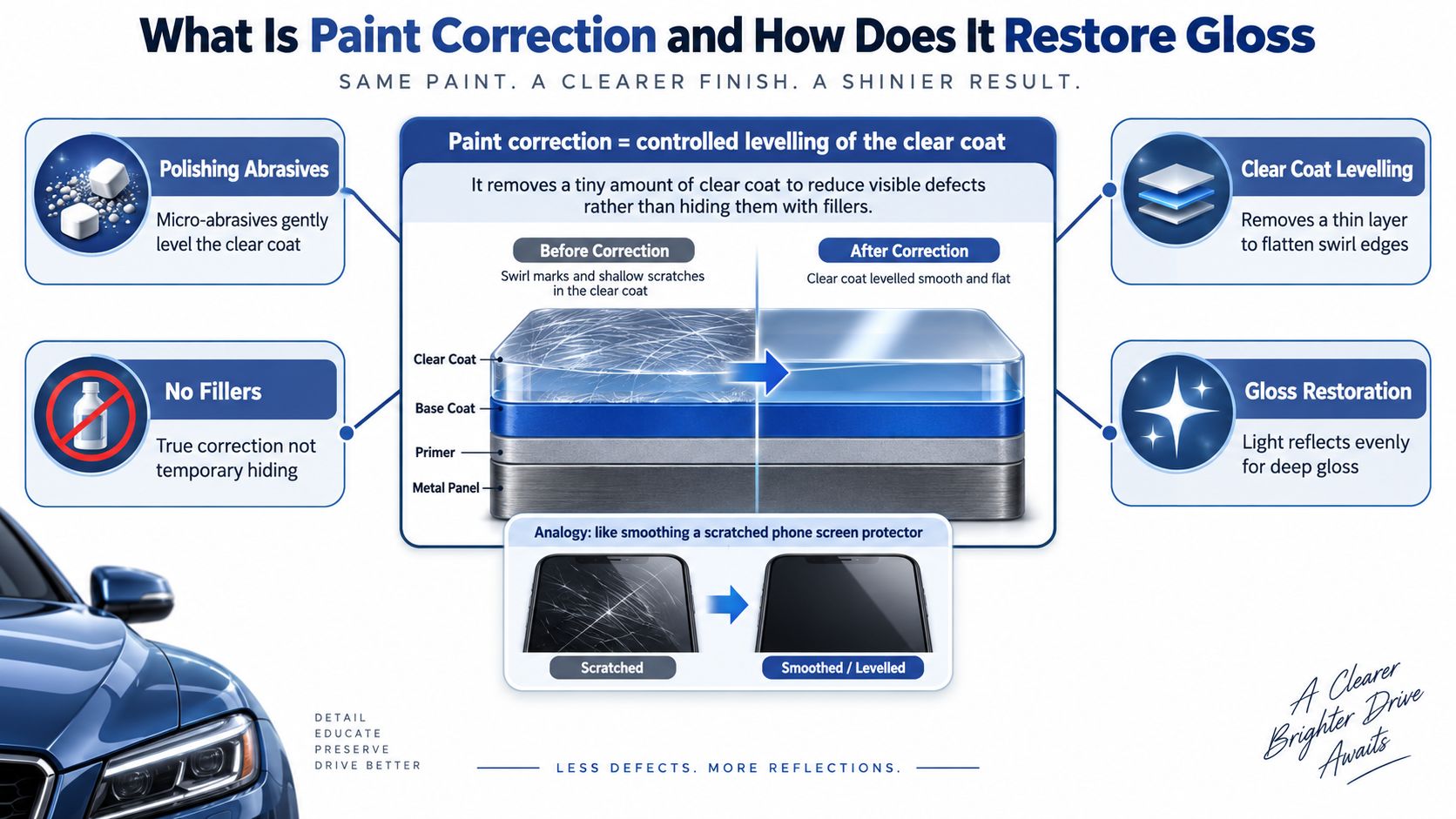
Paint correction is controlled levelling of the clear coat. The defects you see sit in the upper part of that layer, so the process gently removes the damaged high points until the surface reflects light more evenly. That is why gloss returns, because the paint is not being dressed up for a short time, the surface itself is being refined.
A scratched phone screen protector shows the idea clearly. If the scratches are only on the surface, covering them does not fix them, levelling the surface does. Paint correction works the same way on automotive clear coat, but the margin for error is much smaller because that layer is thin and worth protecting.
What the machine is actually doing
The process uses abrasives, usually in compounds and polishes, with a machine and the correct pad. Australian detailing guidance describes correction as a controlled abrasive process that levels the clear coat rather than masking defects, and notes that a one-step polish typically removes about 0.5 to 1 micron of clear coat, while a two-stage correction removes about 1 to 3 microns total (source). That matters because the clear coat is a limited budget, once it is spent, it cannot be replaced by polishing.
A separate Australian guide notes that professional correction usually removes only 0.5 to 3 microns depending on the level of work (source). The point is not to chase every defect. It is to remove what can be safely corrected and leave enough clear coat for future protection.
A filler can make paint look better for a moment. Real correction changes the surface profile so light travels across it more evenly. When the surface is flatter, gloss returns because the eye stops picking up tiny shadows from swirl edges and scratch walls.
The safest result usually comes from the least aggressive method that still removes the defect.
Why compounding and polishing are not the same thing
Compounding is the cut. It removes more material and suits deeper defects. Polishing is the refine stage. It clears haze, machine marks, and the softer finish left after cutting. Australian service models commonly group this into staged work, where a one-step correction can take about 3 to 6 hours, while multi-stage work takes longer and costs more.
That is why a good result can look simple from the outside but comes from careful choices underneath. You are not just chasing shine. You are deciding how much clear coat to spend now, which marks are too deep to remove safely, and whether correction plus protection gives better value than wax alone for Perth conditions. If you want a deeper look at process and risk, see our guide on how to do paint correction without damaging clear coat.
How Does Paint Correction Differ From Polishing and Waxing?
These three services get mixed up because they can all make paint look better. The primary difference is what happens to the defect itself. Wax mainly adds gloss and a bit of temporary masking. Polishing can improve the surface, but that does not always mean the mark is truly removed. Paint correction is the defect-focused option, where the aim is to remove swirl marks and light scratches through measured abrasion.
A simple way to separate them is to ask what job you want done. Are you hiding, improving, or removing? Wax has a role if you only want light marks to look softer for a short time. Polishing suits paint that needs a cleaner finish and some visible improvement. Paint correction is the choice when you want the marks taken out of the clear coat, as long as the paint still has enough clear coat left to work with. If you are weighing services, our Perth cut and polish guide can help clarify where each option fits.
Paint Correction vs Polish vs Wax at a Glance
| Service | What It Does | Defect Removal | Durability |
|---|---|---|---|
| Paint Correction | Levels the clear coat to remove visible defects | High, when defects are safely within the clear coat | Lasts as long as the finish is maintained and protected |
| Polish | Improves gloss and can reduce minor haze | Light to moderate, depending on product and technique | Shorter than correction, unless paired with protection |
| Wax | Adds shine and can hide very light swirls | Minimal, mostly visual masking | Temporary, needs regular renewal |
For a Perth-focused walkthrough of the broader cut-and-polish idea, see guide to cut and polish for Perth drivers. The short version is straightforward. Wax protects and beautifies. Polish refines. Correction removes defects.
That distinction matters before you book anything. A car with light washing haze may only need enhancement. A darker vehicle with obvious swirl patterns in sunlight often needs defect removal. If the finish is already thin, or the damage is too deep, even a good polish will not safely erase the mark.
Good buying question: “Do I need a cosmetic boost, or do I need the defect actually removed?”
Choosing the wrong service usually shows up later. Waxing over damaged paint can make it look better for a while, but the marks are still there. Correction costs more because it does more work, and that makes it the better call only when the paint condition justifies the clear-coat spending. If cost is part of the decision, review current cut and polish costs in Perth before booking.
What Happens During a Professional Paint Correction Service?
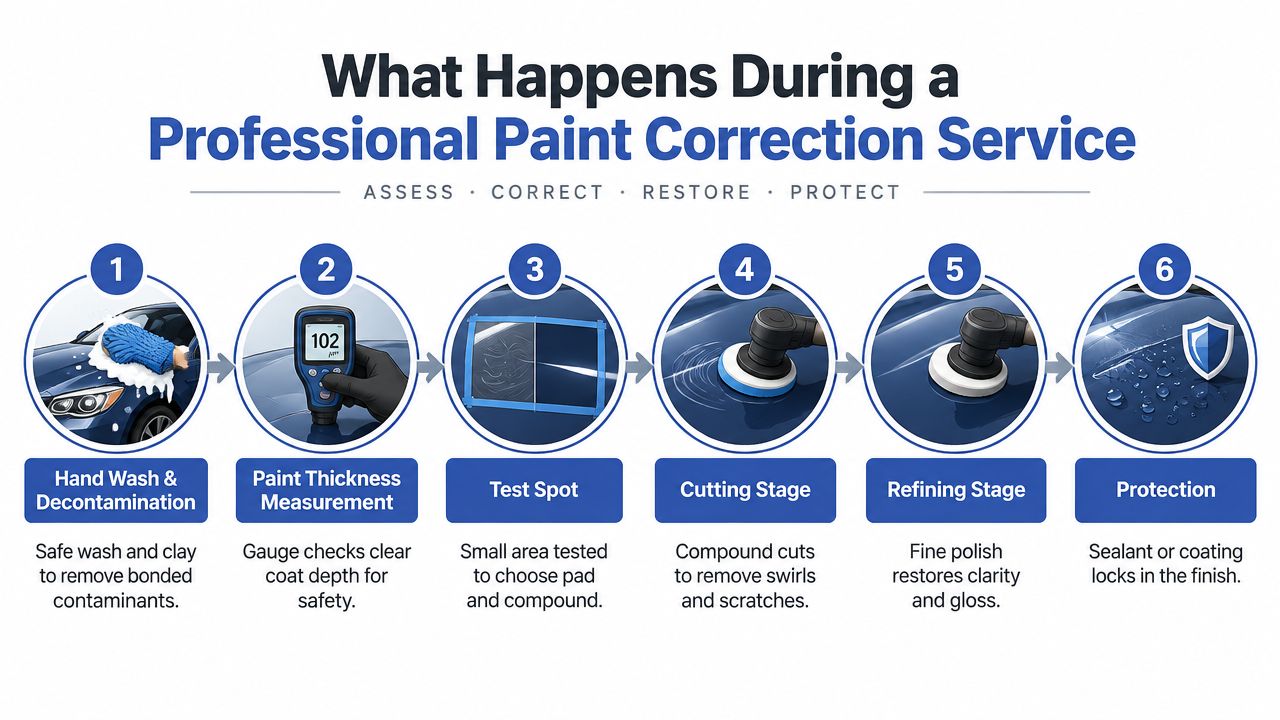
A proper correction day should feel measured, not rushed. The car is washed and decontaminated first so the paint can be inspected without dirt hiding the condition. From there, the technician checks the finish, takes paint-thickness measurement, then uses a test spot to find the least aggressive pad-and-compound combo that still removes the defect. The workflow then moves into cutting, refining, and a final inspection (source).
The sequence that protects the clear coat
Measuring before polishing matters because clear coat is the working layer, and the amount available can vary from panel to panel. Prior repairs and factory variation change the margin, so one area may tolerate more work than another. A useful way to think about it is simple, every correction spends a little of that clear-coat budget, and the goal is to spend only what the paint can safely give up.
That is why a test spot comes next. The technician starts with the gentlest setup that might solve the defect, then inspects the result. If the mark clears properly, that same approach can be used across the panel. If it does not, the process steps up in small stages instead of jumping straight to a heavy cut.
What the cutting and refining stages are for
Cutting does the main defect removal. Refining clears the haze left behind by compounding and brings back clarity, because a heavier pass can leave the surface cloudy if it is not followed by a finer polish. Professional technique uses overlapping passes, controlled machine speed, and finishing polish to restore optical clarity while keeping removal as low as possible (source).
That approach separates proper correction from a quick machine buff. The goal is not just gloss under workshop lights. It is even, clean-looking paint in sunlight, where swirls and haze usually show up first.
Clean paint first. Measure second. Cut only as much as the test spot proves you need.
For a plain-language guide to safe technique and clear-coat care, see how to do paint correction without damaging clear coat. If you plan to protect the finish afterward, it is also worth reading our ceramic coating maintenance guide for Perth drivers.
What Can Paint Correction Fix and What Are Its Limits?
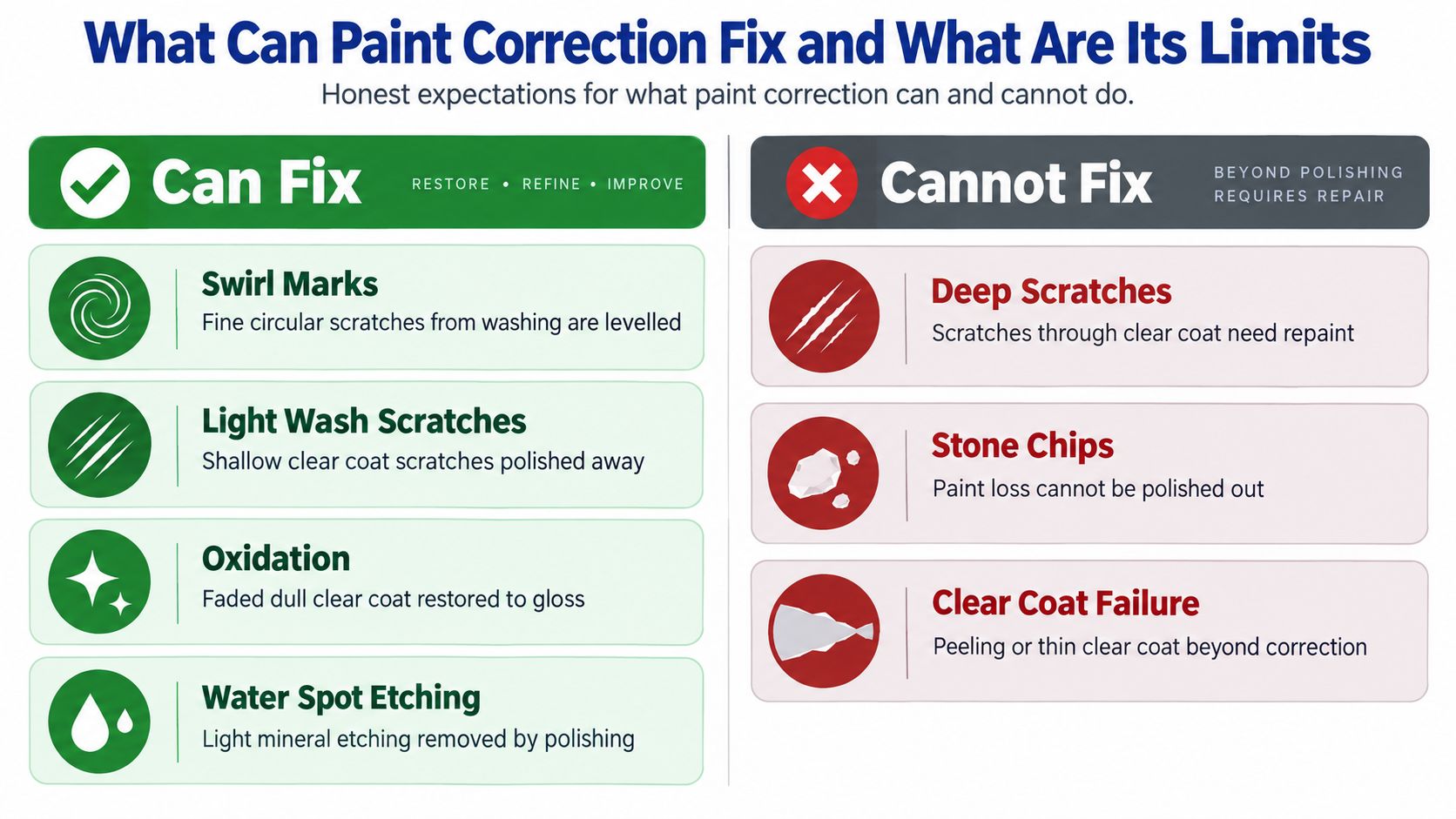
A freshly washed car can still look tired under Perth sun, because the problem often sits in the clear coat, not on top of it. Paint correction targets that top layer and can remove a lot of everyday defects, including swirl marks, light scratches, oxidation, water-spot etching, and haze through controlled machine polishing.
What usually improves well
The best results usually come from marks that have not broken through the clear coat. Washing swirls, light wash scratches, dullness, and some mineral or bird-dropping etching often respond well, because polishing levels the surface and restores clarity instead of hiding the damage. A WA-region source also notes that ceramic coatings bond to freshly polished clear coat, so correction is often the first step before protection goes on (source).
What usually doesn’t correct safely
Deep scratches through the clear coat are a different matter. Stone chips, failing clear coat, peeling paint, and repairs that have already worn thin cannot be fully corrected and may need respray, because the defect sits deeper than the safe polishing layer (source).
The useful question is how much clear coat you can spend without overshooting the mark. That clear-coat budget is limited, so heavier polishing only makes sense when the paint thickness gives enough room to work. As noted earlier, thickness checks help a detailer decide whether a stronger pass is worth the risk, or whether a lighter improvement is the safer call (source).
Rule of thumb: if the defect is below the clear coat, polishing can improve the look, not erase the damage.
That is why the best detailers aim for the safest visible gain, not a promise of perfection. On a daily driver, a lease return, or a panel that has already been repaired once, that may mean leaving a faint scratch alone rather than chasing it into trouble.
A correction plus protection often makes more sense than wax alone in Perth conditions. Correction clears the surface so the paint looks sharper, while protection helps keep that finish easier to maintain. For long-term upkeep, see our guide on how to maintain ceramic coating in Perth and our overview of safe paint correction methods.
How Much Does Paint Correction Cost and How Long Does It Take?
A paint correction quote is really a clear-coat budget with labour attached. The more defects a car has, the more measuring, testing, and refining the detailer needs to do before any polishing starts. Heavier correction also takes longer on hard paint, large panels, and finishes that have been worked on before.
That is why pricing usually moves with the job, not just the vehicle. A simple one-step correction may suit light swirls or a car being prepared for sale, while a deeper correction is reserved for paint that needs more cutting and then refining. For a Perth pricing snapshot, this cut and polish cost guide gives a useful local reference point.
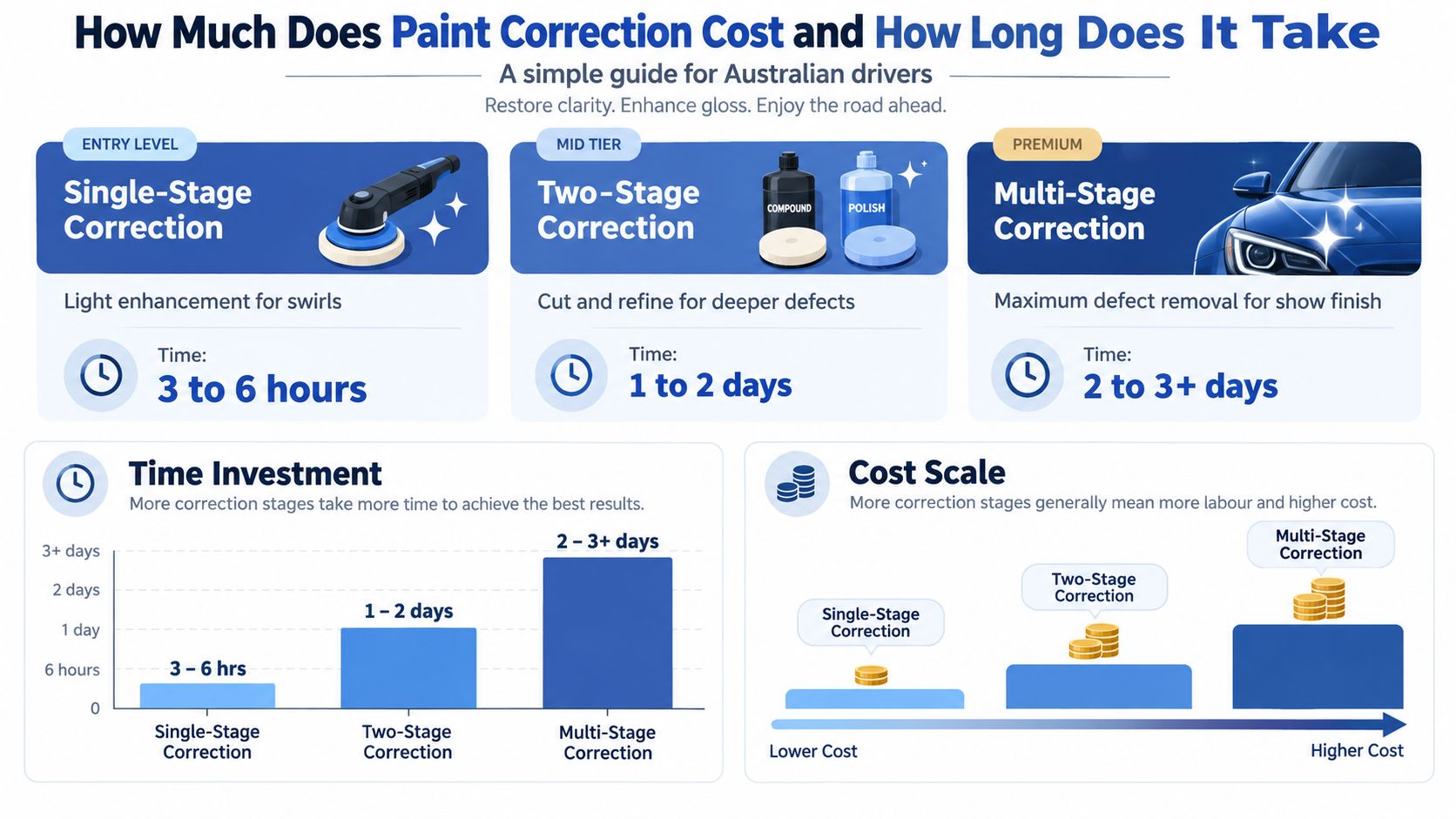
A practical way to read the numbers is by stage. Australian detailing menus commonly show single-stage correction from about A$650 and two-stage correction from about A$950. The same service pages describe a one-step job as taking about 3 to 6 hours, while two-stage and multi-stage work take longer because each pass has to be checked before the next one begins.
What drives the price
Condition matters more than wishful thinking. A panel with light washing marks needs less clear coat removed than one with deeper swirls, old bird-dropping etching, or prior repair work. Larger vehicles also add time because there is more surface to inspect, tape, polish, and wipe down.
The safe approach is to spend only the clear coat you can afford to lose. If the finish is thin or the mark sits too deep, the sensible answer may be to improve the look rather than chase a perfect result. That is the same reason correction is a reset, not routine maintenance.
A corrected finish can hold up well when it is protected and washed carefully. One Australian service page estimates results can last 12 to 24 months, depending on how the car is used and maintained (source).
Which level suits which vehicle
Single-stage correction suits light swirl marks, gloss loss, and basic resale prep. Two-stage work suits paint that needs a stronger cut first, then a finer finish to bring back clarity. Multi-stage correction is for more demanding paint, including badly neglected surfaces or show-focused work.
The main question is not just cost. It is how much visible improvement the paint can safely take, and whether that improvement makes sense for the car’s condition and use. If you are still deciding, compare likely outcomes with our articles on cut and polish costs in Perth and what cut and polish means for Perth drivers.
How Do You Maintain Results After Paint Correction?
Once the clear coat has been levelled, the job shifts to preservation. A corrected finish stays sharp longer when washing is gentle and the protection layer suits the way the car is used. The safe-wash habits in this Perth ceramic coating maintenance guide also apply to freshly corrected paint.
The habits that keep swirls from coming back
A proper hand wash matters because grit dragged across the paint works like fine sandpaper. Use clean microfibre towels for drying, not old cloths that already hold dust. If bonded contamination builds up, remove it before the surface feels gritty enough to scratch during the next wash.
Protection should follow the correction soon after the work is finished. A ceramic coating can bond to freshly polished clear coat, so correction is often the prep step before coating. That gives the paint a harder layer to resist Perth sun, dust, and frequent washing, while also making upkeep easier. If you need a maintenance routine, start with our guide on how to maintain ceramic coating in Perth.
A simple aftercare checklist
- Wash gently: Use clean wash media and avoid harsh rubbing on dry paint.
- Dry safely: Remove water with fresh microfibre towels, not worn cloths.
- Inspect in light: Check for new marks in sunlight or under a focused lamp.
- Add protection: Use wax, sealant, or ceramic coating after correction, depending on how long you want the finish to stay easier to maintain.
- Return for review: If the car starts to look dull again or new marks appear, book an inspection before you reach for a heavy polish.
The ownership decision stays simple. Daily drivers, family vehicles, and pre-sale details usually need protection as much as correction. The correction gives you the clean surface, and the protection helps you keep it.
If you want that finish to stay looking clean through Perth conditions, the clear coat needs the right aftercare, not more polishing.
Conclusion
Paint correction is worth it when the goal is to remove swirls, haze, and light clear-coat defects instead of just hiding them for a short time. The real value comes from improving gloss safely, using the least aggressive method possible, and pairing the result with proper protection.
For Perth drivers, that means thinking beyond the shine you see in the shade. A proper correction can make the paint look clearer in direct sunlight, improve resale presentation, and create a better base for wax, sealant, or ceramic coating. The key is understanding the limits, because not every scratch should be chased and not every car needs a heavy correction.
In simple terms, paint correction is less about perfection and more about making smart use of the clear coat you have. When it is done carefully and maintained properly, the result is a cleaner, sharper finish that lasts. If you are ready to compare service options, start with our paint correction cost guide for Perth, then read about safe correction methods and cut and polish services in Perth.