








You park in the driveway, tilt your head at the bonnet, and catch the same thing Perth sun loves to expose, dullness, swirls, and a finish that used to look deeper than it does now. Most drivers jump straight to the wrong question, whether the car needs paint, or whether a quick cut and polish will bring it back. The better question is simpler, what layer of the paint is damaged, and what can be corrected without wasting clear coat?
A proper Cut & Polish is controlled paint correction, not a generic scratch fix. Done well, it can lift gloss, reduce light defects, and make a tired panel look cleaner and flatter, but it only works within limits, and those limits matter more on older daily drivers than many realise.
When Does a Car Actually Need a Cut & Polish?
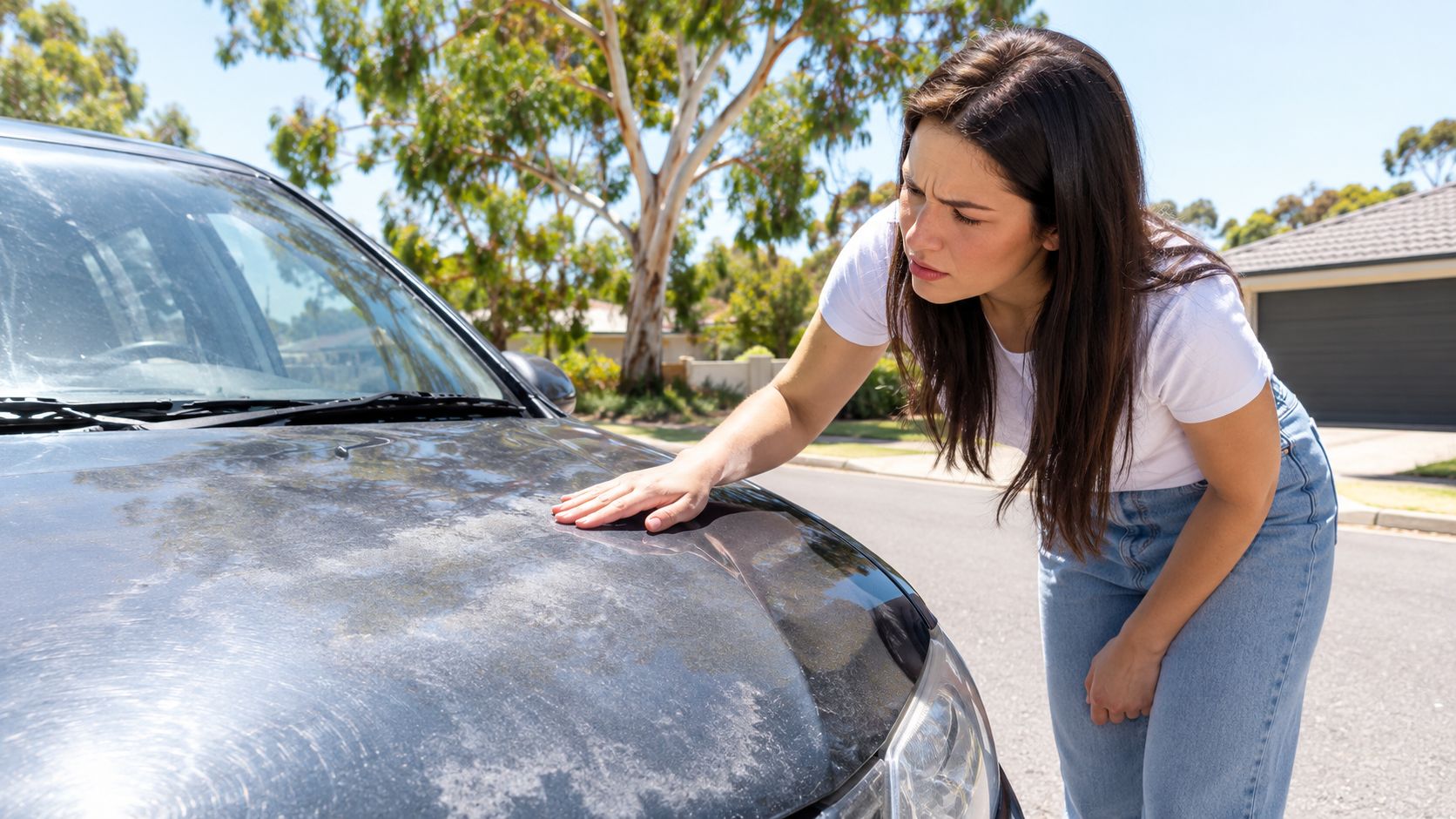
A Perth driver usually notices the problem in bad light first. The car looks fine in shade, then it rolls into hard sun and the bonnet suddenly shows a spider web of wash marks, a faded-looking patch on the roof, or that hazy dullness that makes a well-kept car look older than it is. That’s the point where a cut and polish starts to make sense, especially if the paint still has structure but the surface looks tired.
The signs that point to correction, not repainting
Older paintwork often shows oxidation, swirl marks, water spotting, embedded contamination, and light surface scratches from washing and everyday driving. Those are the kinds of defects that make a correction service relevant, because they usually sit on or near the clear coat, not deep in the colour layer. Australian vehicle data also shows why this comes up so often, the national fleet reached 21.74 million registered motor vehicles on 31 January 2024, and passenger vehicles averaged 11.18 years of age in 2024 (BITRE vehicle registration data).
The simplest self-check is visual and tactile. If the defect looks like a shallow surface mark and does not catch a fingernail, it may respond to polishing. If it catches a nail, you’re usually beyond what polishing can safely remove.
Practical rule: if the finish is dull, swirled, or lightly scratched, a cut and polish may be the right tool. If the panel is chipped, peeled, cracked, or genuinely gouged, you’re in repair territory instead.
For Perth owners, the local context matters too. Western Australia recorded a 3.75% year-on-year increase in motor-vehicle registrations between 2023 and 2024, which means more cars staying on the road long enough to collect visible wear (WA registration figures). If you want a deeper breakdown of stages and realistic results, this guide on paint correction for cars is worth reading before you book.
What Cut & Polish Actually Does to Your Paint?
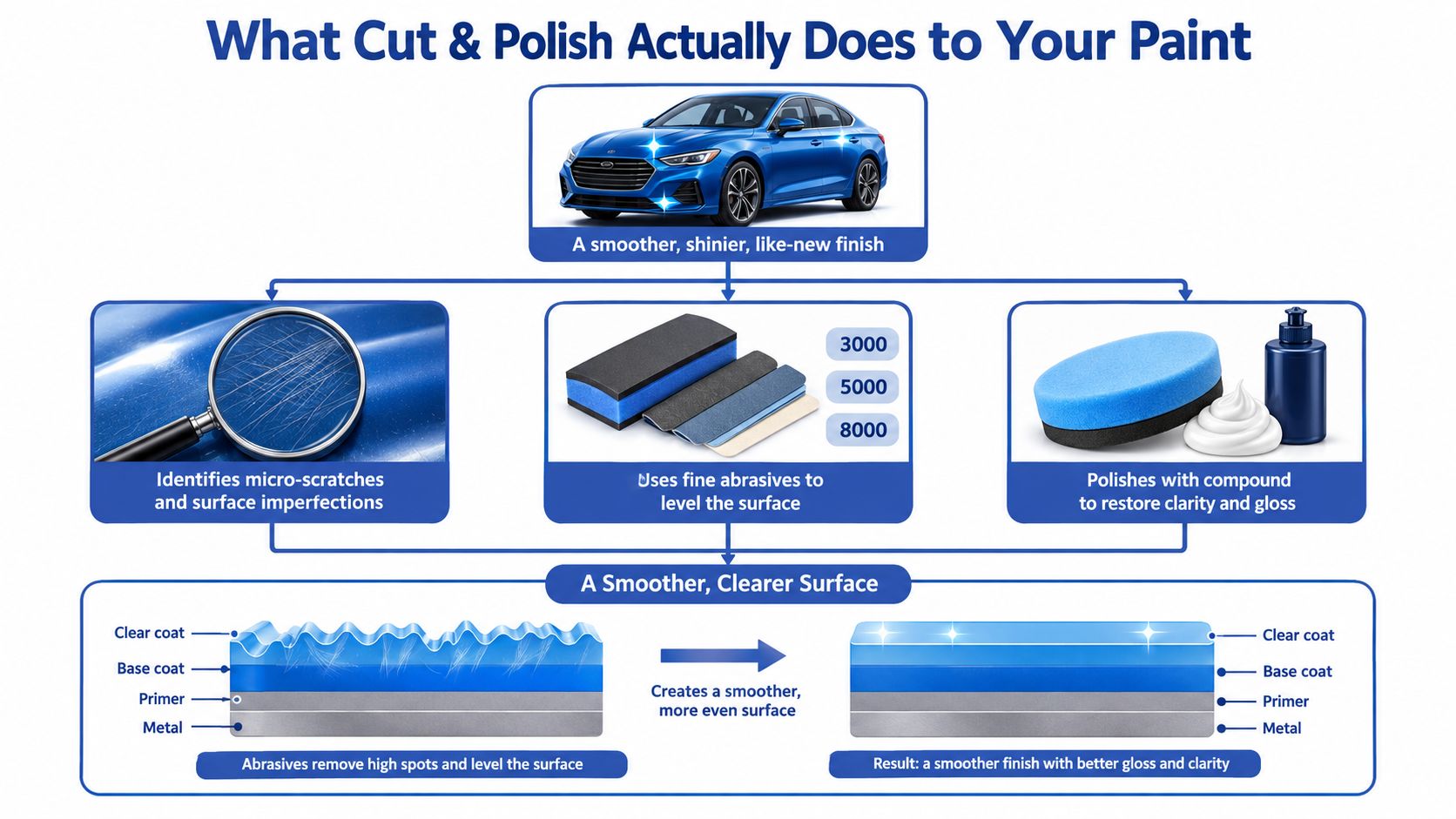
A cut and polish doesn’t fill defects like a glaze. It removes a microscopic amount of clear coat so the surface becomes flatter and reflects light more evenly. That’s why the car looks glossier afterwards, the light stops scattering off tiny ridges and scratches, and the panel reads as cleaner from a few steps back.
Cutting reduces, polishing refines
The cutting stage uses a more aggressive compound and pad to remove visible defects faster. The polishing stage follows with a finer product to reduce haze and sharpen the finish. If you skip the refinement, the panel can look improved in daylight but still carry micro-marring under strong inspection light.
Think of it as controlled levelling, not sanding in the rough sense. The aim is to remove just enough of the surrounding clear coat to blend the defect into the rest of the panel, and nothing more. That’s why the least aggressive combination that achieves the result is the right starting point, not the heaviest compound on the shelf.
Australian detailing guidance notes that roughly 70 to 95% of visible surface defects may be corrected when they remain within the clear coat. That range is useful, but it isn’t a promise. Paint thickness, defect depth, and how the car’s been washed all affect what can be safely improved.
A good correction job looks boring in the process and dramatic at the end. The operator should be working slowly, checking often, and finishing finer than they started.
That’s also why a technical operator tests first rather than commits to a full-panel compound straight away. If a light polish clears the mark, that’s the smarter result, because every unnecessary pass removes more clear coat than the defect required. If you want the paint to survive future washing and sun, preserving thickness matters as much as chasing gloss. For a workshop-level explanation of the process, see how to do paint correction without damaging clear coat.
What’s in a Cut and Polish Kit?
A basic kit and a professional setup often contain the same categories of gear, but they’re not equal in control. A DIY owner usually needs a machine polisher, a small selection of pads, compounds, finishing polish, microfibre towels, masking tape, and some way to inspect the result properly. A working detailer brings the same basics plus better pad choice, better lighting, and the habit of reading the panel before the machine touches it.
What each item actually does
- Compounds: remove the more obvious defects first, especially heavier wash marks and shallow scratches.
- Finishing polishes: refine the surface after cutting and reduce haze or machine marks.
- Cutting pads: provide the bite needed for correction.
- Finishing pads: bring the gloss back after the heavy work is done.
- Microfibre cloths: remove residue without scratching the polished finish.
- Masking tape: protects edges, trim, and vulnerable body lines.
- Panel wipe: clears polish oils so the true finish can be inspected before protection.
- Inspection light: reveals haze, holograms, and leftover defects that daylight can hide.
- Dual-action or rotary polisher: provides the mechanical movement that makes correction possible.
- PPE: keeps compound dust and residue off your hands, eyes, and lungs.
The machine is only part of the system. The difference is how the products are matched to the paint, and how often the surface is checked during the job. A well-set-up workshop can change pads, alter pressure, and step down the abrasive level before the finish suffers.
If you’re buying products for the garage, that’s the main limitation to keep in mind, the kit may cover the basics, but it rarely matches the lighting control, test-panel discipline, and finish inspection that a competent detailer uses every day. For choosing a service instead of building a kit, the guide on choosing the right car polish service is a sensible place to start.
DIY vs Professional Cut & Polish
A DIY cut and polish suits the owner who wants hands-on control, has time to learn, and is willing to start on a test panel. Professional work suits the owner who wants the paint improved with less risk, especially on dark colours, newer finishes, or cars that need to present well in resale photos. Both can work. They solve different problems.
Where DIY and professional work differ
DIY usually keeps the upfront spend lower, but it costs more of your own time and carries a higher chance of uneven results. A professional job costs more at the start, but the operator already knows how the paint is responding, which pad to begin with, and when to stop before the clear coat is taken further than it needs to be. That judgement protects the finish.
The practical difference shows up fast. A first-time DIY correction can leave an owner with decent gloss on one panel and haze, edge marks, or inconsistent cut on the next. A trained detailer is still working within the same clear coat, but the process is controlled from panel to panel, so the outcome is more even.
| Factor | DIY Cut & Polish | Professional Cut & Polish |
|---|---|---|
| Learning curve | Steeper, especially on dark paint | Lower, because the process is already established |
| Finish quality | Can be good with patience | More consistent across panels |
| Risk | Higher chance of holograms or overworking edges | Lower risk when the paint is assessed properly |
| Time | More of your own time | Faster from the owner's point of view |
| Equipment | Limited to the kit you buy | Better pad selection and inspection control |
DIY makes sense for older daily drivers, hobby owners who want to learn the process, and anyone who can treat the first panel as a practice run. Professional correction makes more sense when the paint is newer, the finish has to photograph cleanly, or the car needs to hand over neatly at sale or lease end.
If you want a shop to handle the job, Prime Shine Hand Car Wash is one local option that includes cut and polish in its detailing menu. The better choice is the service that matches the paint’s condition, not the one that treats every car the same way.
How a Cut & Polish Is Actually Done?
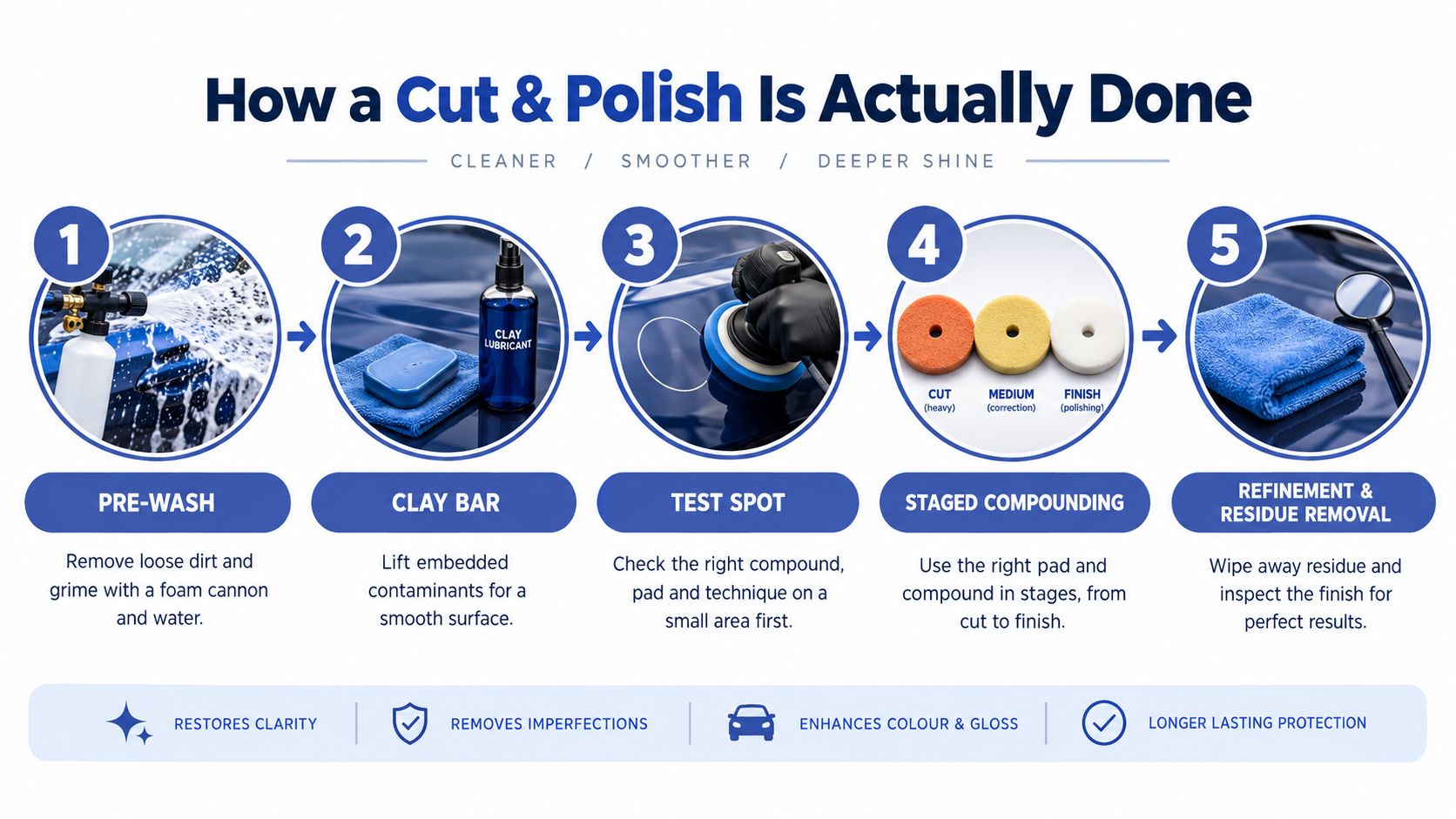
The best jobs start with preparation, not the machine. The car gets washed, decontaminated, and dried properly so grit doesn’t get dragged across the panel while the pad is moving. If there’s bonded contamination, the surface is cleaned first so the abrasive can work on paint, not embedded grime.
The sequence that protects the finish
The most reliable approach is to begin with a test spot. Australian detailing guidance recommends starting that small area with a finishing polish and light pad, then escalating to a compound only if the defect remains. That’s the least-aggressive rule in practice, and it saves clear coat on panels that don’t need a heavier cut.
Once the right combination is found, the machine passes should be slow, overlapping, and controlled. Hard pressure and fast movement don’t improve the finish, they usually just create more heat and more cleanup later. In Perth conditions, that matters even more because work should be done on cool panels and out of direct sun, where product drying and finish damage become more likely.
The panel should guide the tool, not the other way around.
After compounding, the paint is refined, residue is removed, and the finish is checked under an LED or similar inspection light. That inspection step matters because a panel can look strong in daylight and still carry haze or buffer trails under focused light. A true correction is the one that still looks clean when the inspection light hits it.
What Cut & Polish Can and Cannot Fix?
A cut and polish is useful only when the defect is in the clear coat and the paint still has enough material left to work safely. More cutting does not create a better result if the damage has already gone through that layer.
What usually improves
It works well on oxidation, wash marring, light swirls, water-spot etching, and fine scratches in the clear coat. Swirl marks are generally fine, shallow scratches confined to the clear-coat layer, and correction works by levelling the surrounding clear coat with controlled abrasive action (RACV on swirl marks).
What does not
It will not permanently fix stone chips, peeling clear coat, deep gouges, rust, or dents. If the defect catches a fingernail, complete removal by polishing is unlikely because the damage extends beyond the safely correctable layer. In those cases, touch-up, refinishing, or panel repair is the practical path.
A quick pre-book check helps. Take close-up photos in shade and in direct sunlight, then compare what shows up. Shade shows the shape of the defect, while sun exposes how much of it still reflects through the paint. That makes it easier to separate paint transfer, light scratching, and missing paint.
The honest outcome scale is removed, reduced, or visually blended. On an older daily driver, reduced or blended is often the right target, because preserving the remaining clear coat usually matters more than chasing a perfect finish that costs too much paint for too little gain. That is the trade-off experienced detailers manage on every correction job.
How to Time Cut & Polish Around UV, Coastal Air and Resale?
Cut and polish shouldn’t be treated as a one-off miracle. It’s the correction step before protection, and the next decision matters just as much as the polish itself. A corrected panel stays cleaner and looks better for longer when it’s washed properly and protected against future contamination.
Before summer, after grime, or before sale
Perth owners usually think about correction at three times, before hot weather, after winter road film, or before selling the car. Any of those can make sense if the paint is dull, because the goal is to restore clarity before the car keeps taking daily wear. The right timing is the one that lines up with how long you plan to keep the vehicle after the work is done.
Australian paint-correction guidance also warns that ceramic coating is not scratch-proof and does not replace safe washing, so existing swirls should be reduced before coating because protection preserves the prepared finish rather than correcting substantial defects after application. That matters in a city where UV, coastal exposure, and dust all keep working on the surface after the correction is finished. For a Perth-specific perspective on follow-up protection, see whether ceramic coating helps against Perth sun.
The practical sequence is straightforward. Correct the paint only as much as needed, then protect it with the right layer for your use case. If the car is a keeper, think maintenance. If it’s being sold, think presentation. Those are different jobs, and they don’t need the same level of intervention.
Cut & Polish Checklist and Common Questions
A Perth driver usually knows the panel that needs attention before the detailer even sees the car. Send clear photos in shade and in hard sun, note the panels that bother you most, and say whether you are dealing with dullness, swirls, or actual damage. That gives a shop a real starting point, not a guess. After the work, keep the wash method gentle, because corrected paint still marks up if it is treated roughly.
How long does it take? It depends on paint condition and how much correction is needed. A light refresh and a proper defect-reduction job are different appointments.
How often should it be repeated? Only when the finish needs it. Machine correction removes clear coat, so it should be used with restraint, not as routine polishing.
What should I send before booking? Close-up photos of the affected area in shade and direct sunlight, plus a wider shot of the whole panel. If you can, include the year, colour, and whether the mark catches a fingernail, because that helps separate correction from repair.
How do I maintain it? Wash by hand with care, avoid harsh towels, and protect the finish after correction so you are preserving the result instead of starting over.
If you want the job handled locally, Prime Shine Hand Car Wash in Westminster offers hand washing, detailing, cut and polish, and paint protection from a single site. It is a practical option for Perth drivers who want the correction and the follow-up care in one place.
If your paint is looking tired, book a proper inspection before you assume it needs repainting. Prime Shine Hand Car Wash can assess the defects, reduce light swirls and scratches, and help you decide whether correction, protection, or deeper repair is the right next step. Visit Prime Shine Hand Car Wash to check the service options and book a time that suits you.