






You’re under the car-park lights after a dusty drive across Perth, and the bonnet looks clean until you lean closer. Fine arcs catch the light, especially where someone has pushed a gritty sponge across the paint or dried it with a towel that should’ve been retired. The damage usually isn’t caused by washing too often. It’s caused by letting dirt ride along with the wash mitt.
A disciplined two-bucket wash helps reduce that risk, but it isn’t a magic shield against scratches. Perth’s sun, road film and water rules all affect how and where you wash, so the method matters as much as the products.
Why Perth Paint Loses Its Shine So Quickly?
A driver can wash a car on the weekend and still find it looking tired by the next commute. Dust settles on the bonnet and roof, road grime clings to the lower doors, and brake residue builds around the wheels. On a hot day, washing in direct sun can dry soap and water before you’ve rinsed them, leaving marks that distract from the finish.
The frustrating part is that a clean-looking panel can still carry grit. If you wipe it with a dirty mitt, or press harder because the grime isn’t lifting, that grit can leave fine marks in the clear coat. Repeated careless contact can turn those small marks into a web of swirls that shows under car-park lighting. Fixing defects that polishing can’t safely remove may require a different repair approach.
The wash habit matters more than the wash frequency
There’s no need to treat every speck of dust as an emergency. But when it’s time to wash, start by removing loose dirt with a rinse, then keep your wash media clean as you move around the car. A two-bucket routine gives you a simple way to separate soapy wash solution from the water used to rinse dirt out of your mitt.
Perth’s dry conditions also make timing and drying important. Work on cool panels in shade where possible, and don’t leave water to bake on while you finish another job. For a local guide to choosing a wash time, see when to wash your car in Perth.
The point isn’t to promise perfect paint. It’s to make each wash less likely to add fresh marks, so the car keeps its gloss for longer and needs less corrective work.
Find the best time to wash your car in Perth
The Gear That Makes a Two-Bucket Wash Actually Work
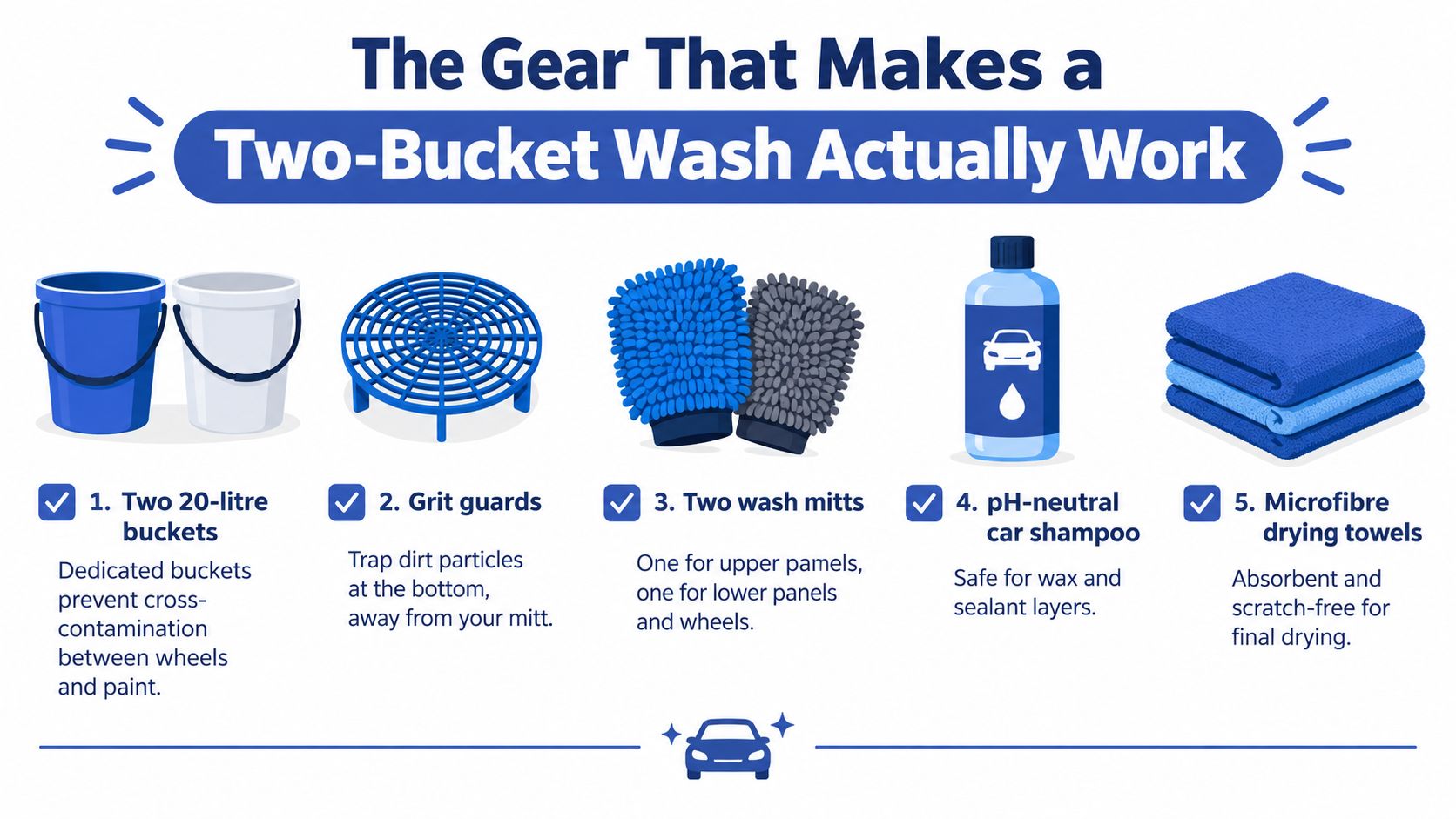
A two-bucket wash depends on clean wash media, not fancy labels on bottles. The buckets and mitts need to keep grit away from the paint, while the soap and drying towels help you move and remove water without unnecessary friction.
Build a kit around separation and control
- Two buckets with grit guards: Use one for wash solution and one for rinsing the mitt. Grit guards sit at the bottom, keeping loosened dirt below the area where you load the mitt.
- A quality wash mitt: Plush microfibre or lambswool holds suds and lifts dirt from the surface. A worn sponge or rough cloth is more likely to drag contamination across the paint.
- A separate wheel setup: Keep a dedicated wheel bucket and wheel mitt. Brake dust and road grime from wheels shouldn’t be carried onto painted panels.
- pH-neutral car shampoo: Choose a product made for vehicle paint that provides lubrication without needlessly stripping existing wax or sealant.
- Microfibre drying towels: Use clean, absorbent towels to remove water gently. A towel that smears or has picked up dirt can undo careful washing.
- A trigger-shutoff hose nozzle: Shut the water off between tasks rather than leaving it running while you work. This also gives you more control over rinsing.
The grit guard and mitt matter more than marketing language on a shampoo bottle. If the mitt holds grit against the paint, a premium soap won’t prevent marring. A quality wash mitt is useful only when you rinse it often and keep it away from wheels and dirty lower panels.
Explore safe washing steps for coated cars
The Wash Sequence From Pre-Rinse to Dry
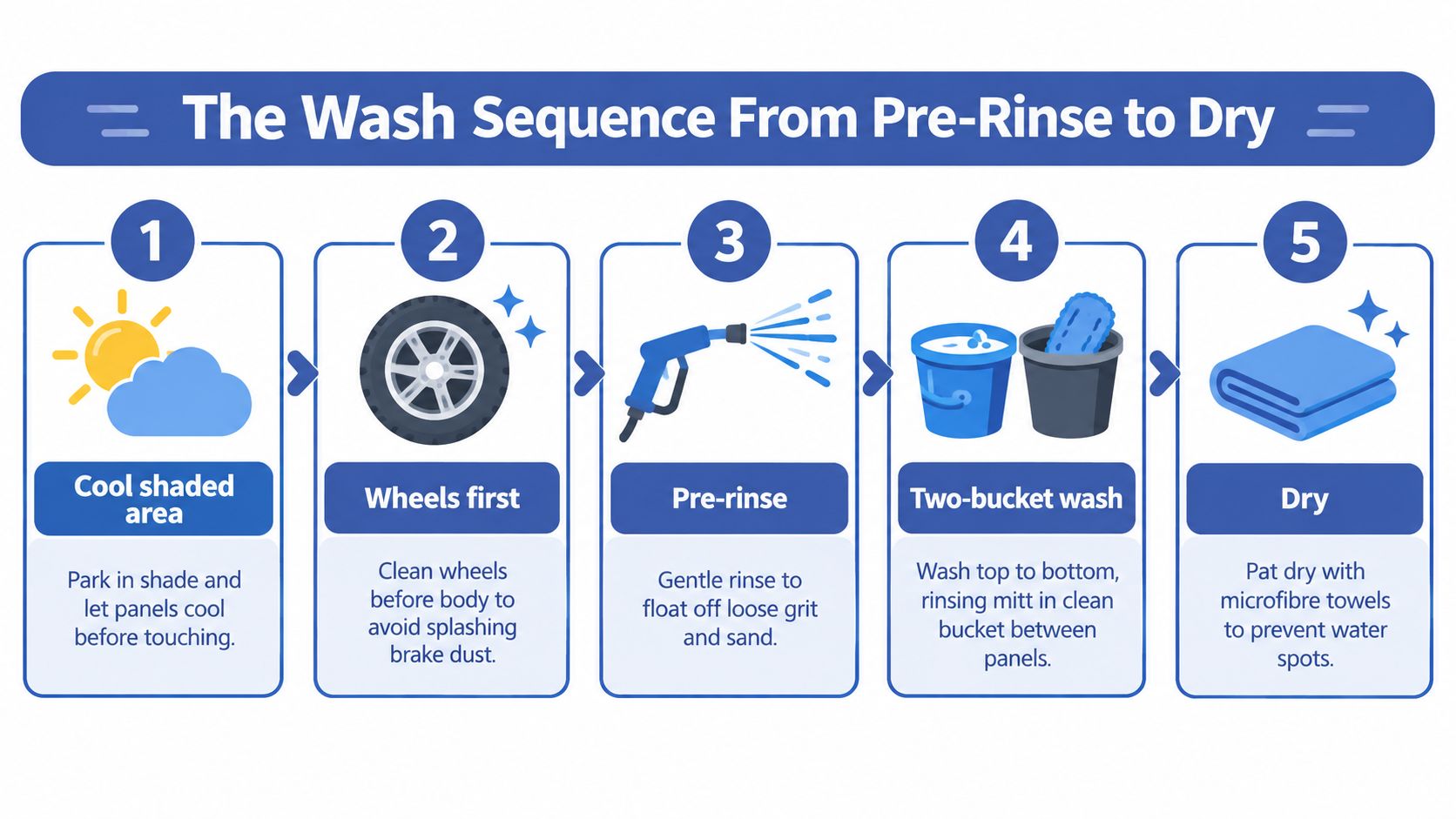
Work in shade and let hot panels cool before touching them. Set up the buckets, mitts and towels before you start, so you don’t leave a soapy panel drying while you search for gear.
Follow a repeatable order
- Clean the wheels first. Use the dedicated wheel mitt and bucket. This keeps loosened brake dust and dirty rinse water from splashing onto bodywork you’ve already washed.
- Pre-rinse the whole car. Use a gentle, thorough rinse to remove loose dust and sand before the mitt touches the paint. Don’t try to scrub dirt away with water pressure or hand contact.
- Wash from the roof down. Load the paint mitt in the soap bucket, then work in straight, overlapping passes. Rinse the mitt in the clean-water bucket after each panel, inspect it, and reload with soap.
- Leave the dirtiest areas until last. Lower doors and bumpers collect more road grime than upper panels. Use light pressure and keep the mitt clean. If it picks up visible grit, rinse it before continuing.
- Rinse and dry promptly. A final rinse that lets water sheet off reduces what’s left on the surface. Pat or gently draw a clean microfibre towel over the panels rather than scrubbing in circles.
Straight passes don’t make scratches impossible, but they make defects easier to spot and avoid the repeated circular motion that can make swirls especially noticeable. Work one section at a time, and don’t let soap dry before rinsing.
Practical rule: If the mitt touches the ground, a wheel or a visibly gritty surface, stop and clean it before it goes near the paint again.
See more safe hand-washing steps
Mistakes That Quietly Destroy a Two-Bucket Wash
Two buckets don’t rescue a wash if the process still drags dirt across the paint. The common failure is treating the buckets as the whole technique, then rushing the parts that control friction.
Check the small habits
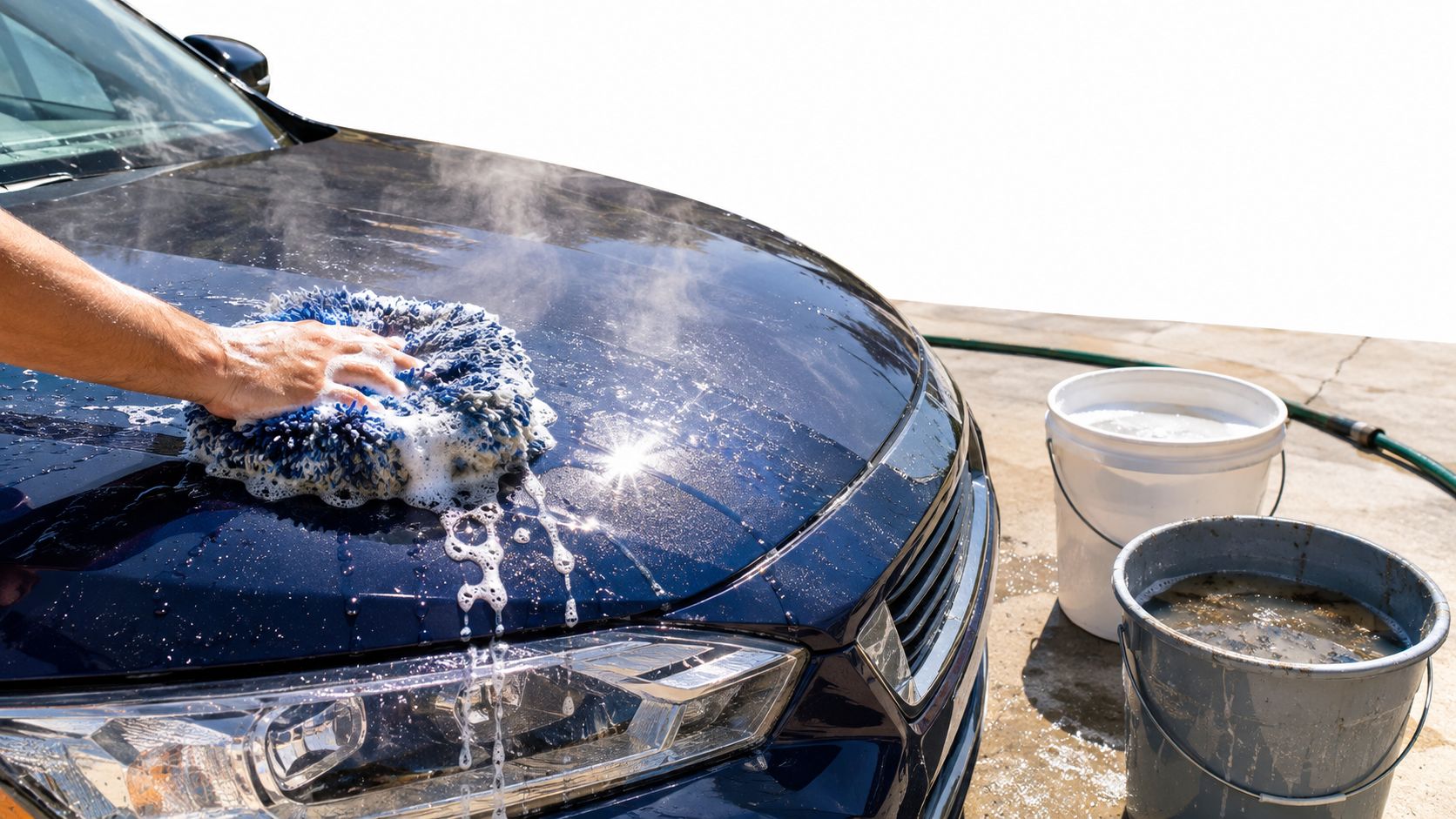
- Washing a hot bonnet in direct sun: Soap can dry before you rinse it, and water can leave marks. Move into shade or wait for the panels to cool.
- Using one mitt on wheels and paint: Wheel grime is abrasive. Keep the wheel mitt separate, even if it looks clean after a quick rinse.
- Drying with pressure: Leaning on the panel or scrubbing in circles adds friction. Use a clean towel and let it absorb water with light contact.
- Keeping a dirty soap bucket in service: Don’t top up a contaminated bucket and assume the fresh water has fixed it. Empty it, rinse it and refill it when the solution is visibly dirty.
- Reaching across the roof by leaning on the car: Use a safe step or work from each side. Body weight can press grit into the paint beneath your clothing or forearms.
Each shortcut can mean more time spent addressing defects later. If the finish already has swirls or light scratches, washing technique and correction are different jobs. Read about paint correction without damaging clear coat before trying to polish deeper marks away yourself.
Pick one habit to fix first. Keeping a separate wheel mitt or moving the wash into shade can make your routine more controlled without turning a simple wash into a complicated project.
Learn how to address existing paint defects
Why Two Buckets Actually Reduce Swirls?
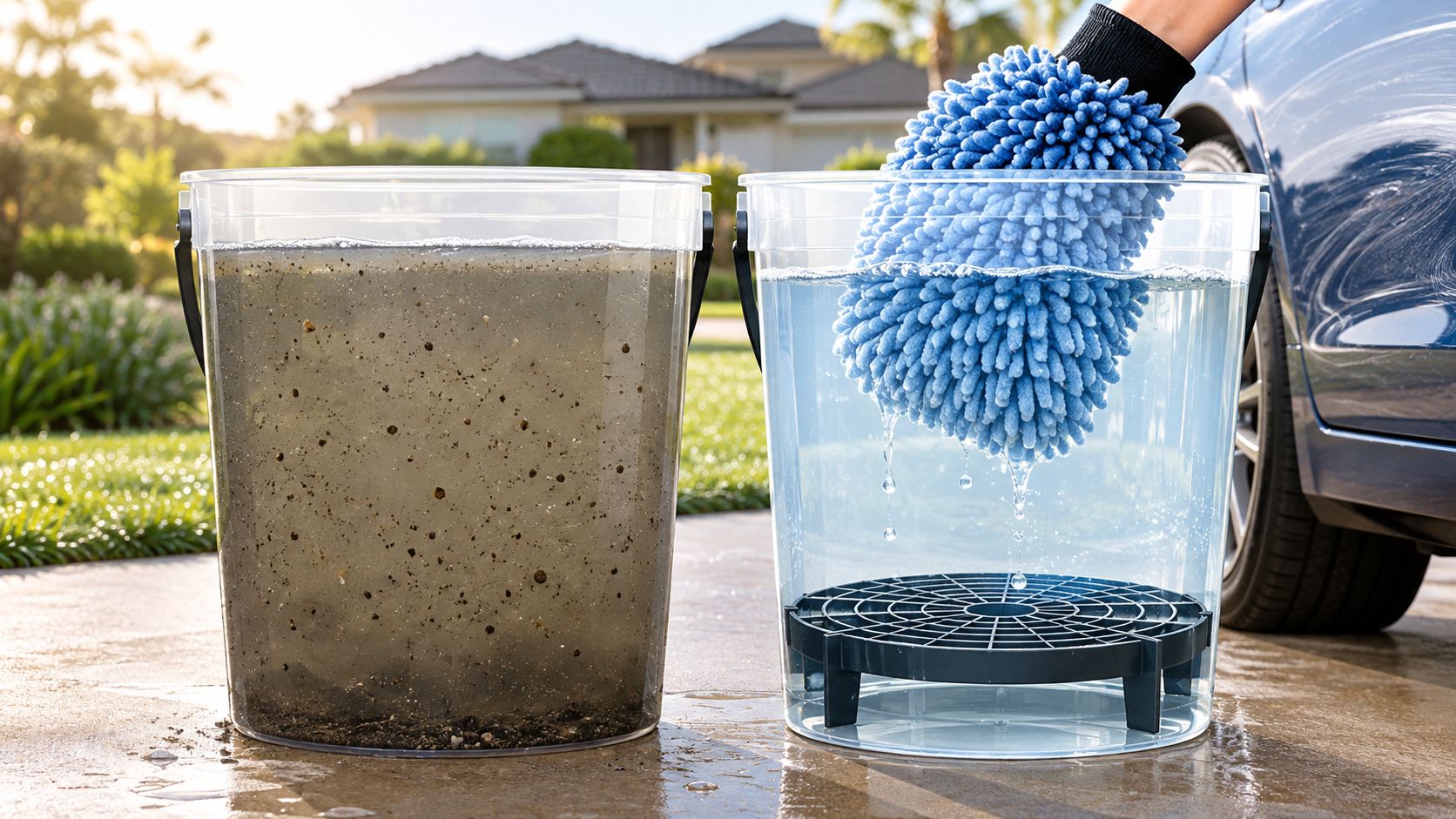
The two-bucket method works by reducing the chance that grit removed from the car goes straight back onto the paint. With one bucket, your mitt returns to the same solution that’s collecting dirt. The next pass can carry that contamination onto another panel.
A separate rinse bucket gives the loosened dirt somewhere to go before the mitt returns to the soapy solution. A grit guard helps keep particles settled at the bottom, away from the mitt. The process isn’t perfect, though. Rinse water can become dirty, and a mitt can still hold grit if you don’t inspect and clean it.
What the method can and can’t do
A careful hand wash can reduce the risk of wash-induced marring. It can’t guarantee swirl-free paint, remove existing scratches or replace careful drying. If a scratch catches a fingernail, polishing may not be the right fix; aggressive attempts to remove it can take away clear coat without delivering the result you want.
Protection has a separate role. Wax, sealant or ceramic coating can make routine cleaning easier and help the finish resist everyday contamination, but protection doesn’t reverse damage that’s already below the clear coat. Apply it after washing and inspecting the paint, following the product’s directions.
The useful claim is modest: two buckets help manage contamination. The result still depends on clean equipment, light contact and sensible expectations.
Find out what to do about existing swirls
DIY at Home or Book a Professional Hand Wash in Perth
Washing at home gives you control over the pace and lets you use your own kit. It also takes time, storage space and care with runoff. A professional wash can suit drivers who’d rather hand over the job, especially when a driveway setup makes water use and drainage difficult to manage.
Western Australia permits car washing with a hose under its water-efficiency rules, but current restrictions can vary by area and season. The Bureau of Meteorology’s Perth water-restriction guidance says washing a car with a hose is permitted in the listed area. Check the current local rules before washing, and use a trigger nozzle rather than leaving water running.
| Factor | DIY Two-Bucket Wash | Professional Hand Wash |
|---|---|---|
| Time and effort | You handle setup, washing, rinsing and drying. | You hand over the work and collect the vehicle when it's ready. |
| Gear and storage | You need buckets, guards, wash media, soap and towels stored at home. | The equipment is provided as part of the service. |
| Water and runoff | You control the method, but driveway drainage may be harder to manage. | A suitable commercial setup can manage wash water through its wastewater arrangements. |
| Finish and scope | The result depends on your technique and the car's condition. | You can select a service that goes beyond an exterior wash when the interior or paint needs attention. |
A driveway rinse can send soap and road dirt towards storm drains. If you can’t control where the runoff goes, consider a commercial wash instead.
For ceramic-coated vehicles, technique still matters. See these safe steps for washing a ceramic-coated car before choosing your home routine. If you prefer to book, Prime Shine Hand Car Wash in Westminster offers hand washing, interior and exterior detailing, paint correction and paint protection.
Explore professional hand-wash services
Building an Ongoing Wash Routine That Protects Your Paint
A good routine should fit how you use the vehicle, not turn car care into another chore. If the car picks up dust and road film during regular commuting, wash it when grime is building up rather than waiting until the contamination is difficult to remove. Use the careful contact method for every wash, and dry the paint instead of leaving water to sit.
Add protection according to the finish and the way you maintain the car. A spray sealant can support easier upkeep; hand wax or polish suits a vehicle that needs a refresh, while ceramic coating is a longer-term option for owners who want simpler maintenance. None of these replaces careful washing, and polishing should be reserved for defects that need correction.
Choose a service that matches the car’s actual condition. An outside wash suits routine exterior care, while an inside-and-out clean addresses cabin dust and debris. For dull paint or light swirls, consider correction only when a wash and protection won’t meet the goal. For a locally relevant wash cadence, use this guide to how often to wash your car in Perth.
Keep your paint-care routine manageable with a careful hand wash, clean wash media and protection suited to your vehicle. Visit Prime Shine Hand Car Wash in Westminster to explore hand washing, detailing and paint-protection services, then book the option that fits your car.